Categories
Recording

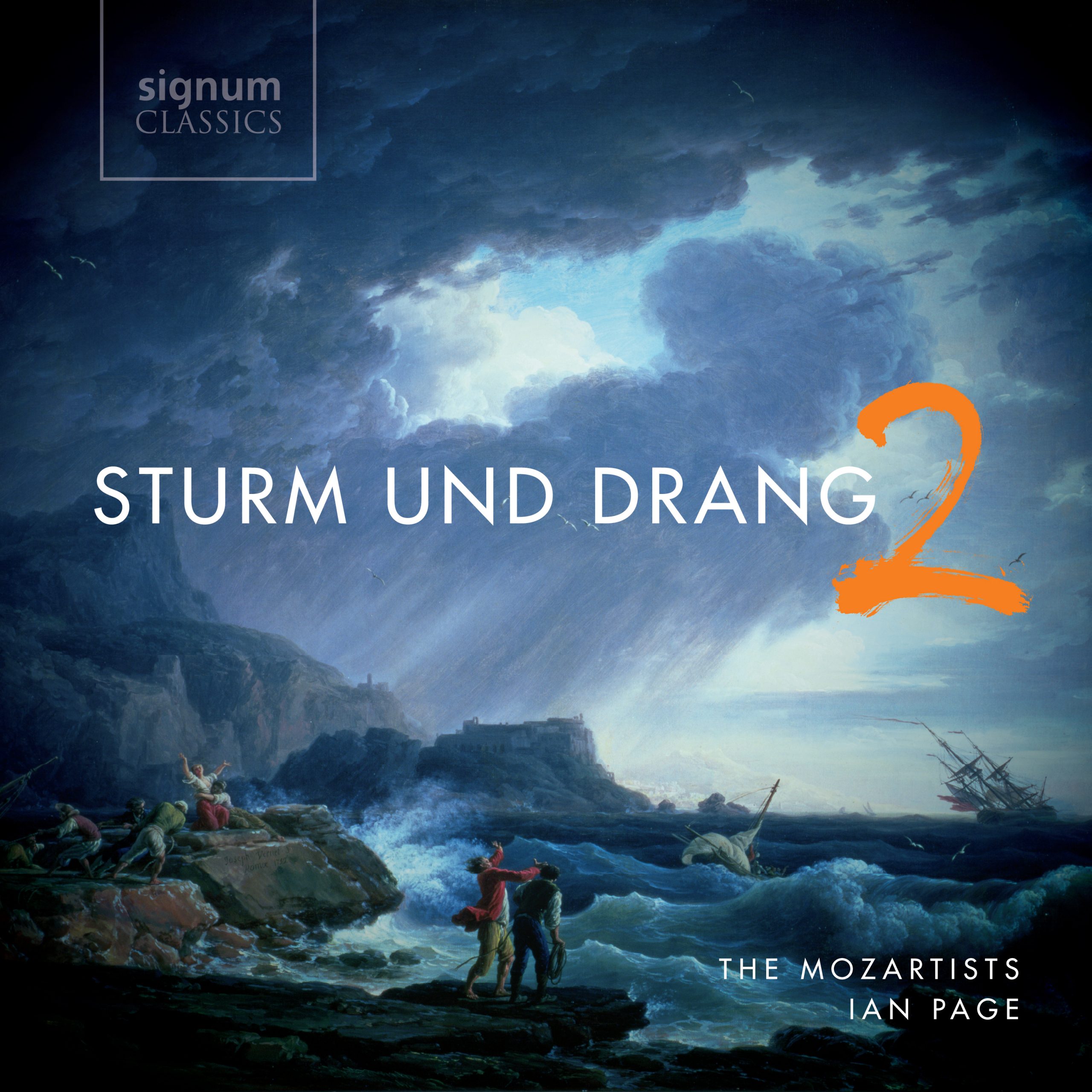
Sturm und Drang 2

Ida Ränslöv mezzo, The Mozartists, Ian Page
71:39
Signum SIGCG 636
Works by Haydn, Gluck, Vanhal, Mysliveček, J. C. Bach

This is the second in a projected series of seven CDs devoted to the so-called ‘Sturm und Drang’ (storm and stress) movement, in fact not a movement at all but an outpouring of passionate, often turbulent emotional outbursts across literature, music and painting primarily between the 1760s and early 1780s. Although the name stems from literature, being particularly associated with Goethe’s Sorrows of Young Werther of 1774, the music associated with it was mostly composed a decade or more earlier. There appear to be no philological links between the literature and the music, Ian Page’s characteristically informative notes suggesting that Sturm und Drang may simply be a reaction against the charm and gentility of the mid-18th century rococo style.

G minor was a key that particularly lent itself to the turbulence of such fierce emotions. The present disc includes particularly fine examples in symphonies by Haydn and J. C. Bach and vocal works by Haydn and Mysliveček.

Haydn’s Symphony No 39 is not only archetypal of the genre, but also the earliest of a group of minor-key Sturm und Drang works (including string quartets and solo keyboard works in addition to symphonies) that form a highly important component of the middle years of his output. It is unusual in its scoring including four horns, a distinction that leads to suggestions that it exerted an influence not only on the minor key symphonies of Vanhal, at least four of which, including d1, are scored for four horns, but also the earlier of Mozart’s G minor symphonies, No 25, K 183, composed in 1773. Incidentally, in my view it is wrong to include Mozart’s great Symphony No 40 in G minor among Sturm und Drang works; its overall sentiment is one of profound universal sadness, tragedy even that goes beyond the stormy, hurtling drama of works of this kind. Equally, Johann Christian Bach’s Symphony in G minor, op 6/6 seems to belong to a less intense side of the genre, placing as its centre of gravity a deeply-felt C minor central movement that opens in the style of an operatic accompagnato before proceeding to a beautifully shaped melody built on ornamental arabesques. The whole symphony is an object lesson for those who think of Bach’s second son as a purveyor of little more than galant pleasantries.

Ian Page’s performances of all three symphonies are exemplary. Outer movements have a tremendous driving force, with fierce chords, highlighted dynamic contrasts – listen to the splendidly judged opening paragraphs of the opening Allegro assai of the Haydn – and fierce tremolandos. Also notable as a feature of the performances is the clarity with which the conductor reveals the contrapuntal detail of passages such as the development of the same movement, the importance given to such writing being one of the characteristic features of Sturm und Drang works. In the slow movements of the Haydn and Vanhal Page finds a lighter touch to reveal necessary respite from the fiery thrust of the outer movements, the pastoral serenity of the splendid Vanhal Andante arioso (with flutes replacing oboes) calling to mind Gluck’s Blessed Spirits. As is his custom, Page includes all marked repeats, especially valuable in the Vanhal, which becomes a far more substantial work than in the performance by Concerto Köln, where the total work clocks in at 14:22 against Page’s 21:49.

As with vol. 1 appropriate vocal works are interspersed with the symphonies. They include two extracts from Gluck’s Paride ed Elena (Vienna, 1770), the affecting aria ‘Fac me vere tecum flere’ from Haydn’s Stabat Mater (1768) and an aria di furia from Mysliveček’s setting of a standard Metastasio warhorse, Semiramide (Bergamo, 1776). They are sung by the young Swedish mezzo Ida Ränslöv, who the biography tells us has already sung a wide range of roles in her capacity as a member of Staatsoper Stuttgart and elsewhere. The voice itself has a lovely quality, displaying a tonal richness and variety of colour that bodes well for her future, though I suspect that might be concentrated on later music. Her interpretations here are satisfactory without showing any truly distinctive features. Ornamentation is extremely sparse and her Italian diction and enunciation suggest little detailed exploration of what lies below the surface of the music. Page gives her excellent support, while it would be wrong to conclude without giving generous recognition of the outstanding orchestral playing throughout.

Sturm und Drang is shaping up to be not only an eminently enjoyable series in its own right but an insightful collection of considerable value. Volume 3 can’t come soon enough!

Brian Robins
Categories
Recording

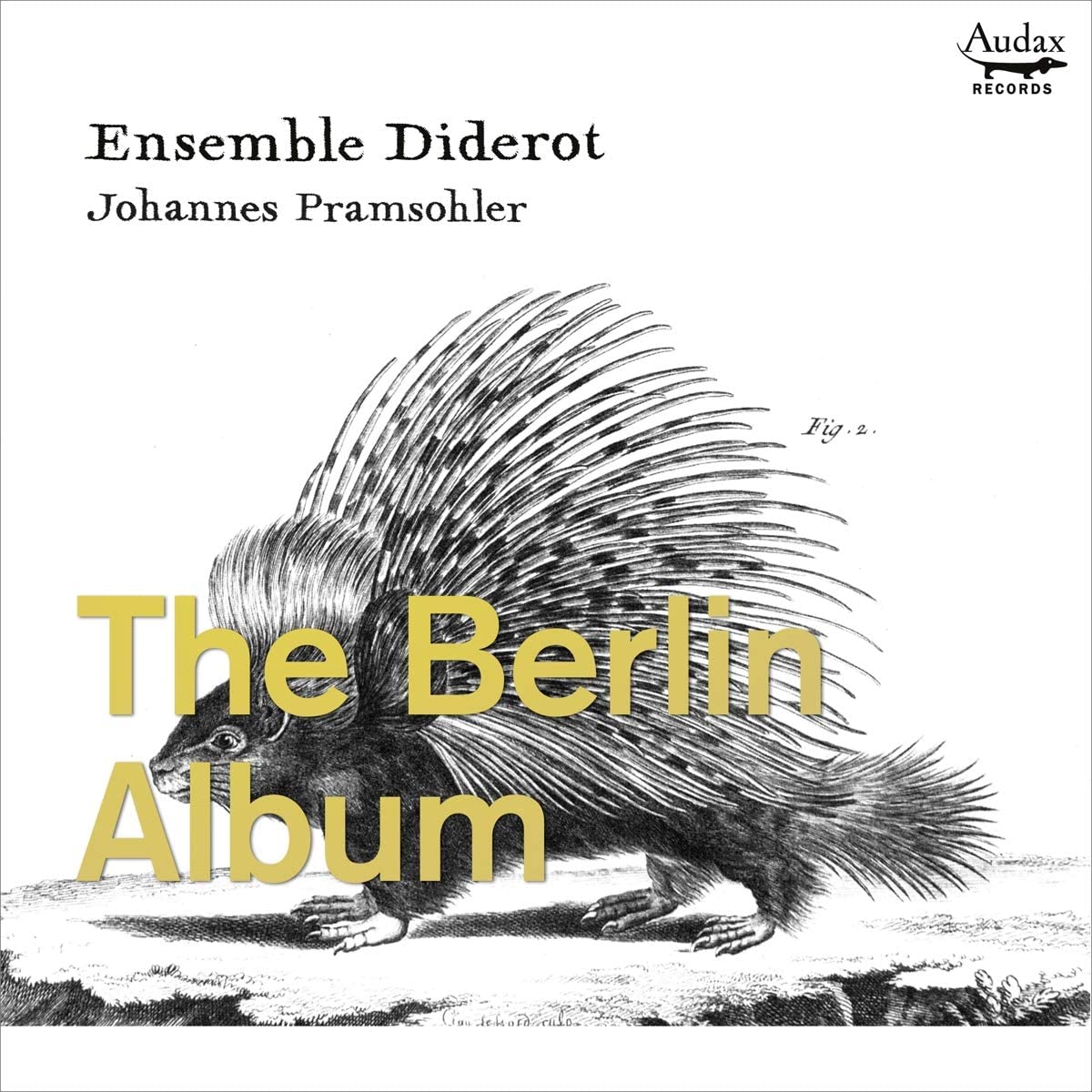
The Berlin Album

Ensemble Diderot
69:19
Audax Records ADX13726

Click HERE to buy this on amazon.co.uk

Like many others who review the recordings that seem to flow unendingly from Audax Records, I really struggle to find words to match not only the super-stylish performances (which are worth paragraph after paragraph on their own) but also the immaculate recorded sound, the casually informative booklet notes inside the instantly recognisable fold-out covers, and the admirable (and rewarding) desire to seek out truly worthwhile works by composers thus far relegated to the footnotes of musical history that deserve to be better known. In this particular case, alongside relatively well-known composers of the “Berlin school” (G. A. Benda, J. G. Graun, J. G. Janitsch and J. P. Kirnberger) one of the musicians rescued from obscurity is the sister of the Prussian monarch (Frederick “the Great”) who, once his bullying father was out of the way, essentially created the musical scene in his capital – Princess Anna Amalia – and another is Johann Abraham Schulz (both of them were Kirnberger students and therefore very capable contrapuntalists).

What I especially love about this recording is that Ensemble Diderot do not shy away from the cadenzas that are hinted at in the sources but rarely embraced as they are by these performers (including the fortepianist!) The interplay between the two violinists is as electrifying as usual and the continuo team don’t so much support as caress and coax even more energy from them. Of the recent albums with geographical themes, I have by far enjoyed this the most; perhaps because I am a great fan of the repertoire. Rarely, though, have I heard it played so absolutely convincingly – I wonder if Benda and Graun, Janitsch and Kirnberger ever sounded as good!

Brian Clark

Categories
Festival-conference

Hands-on Baroque weekend

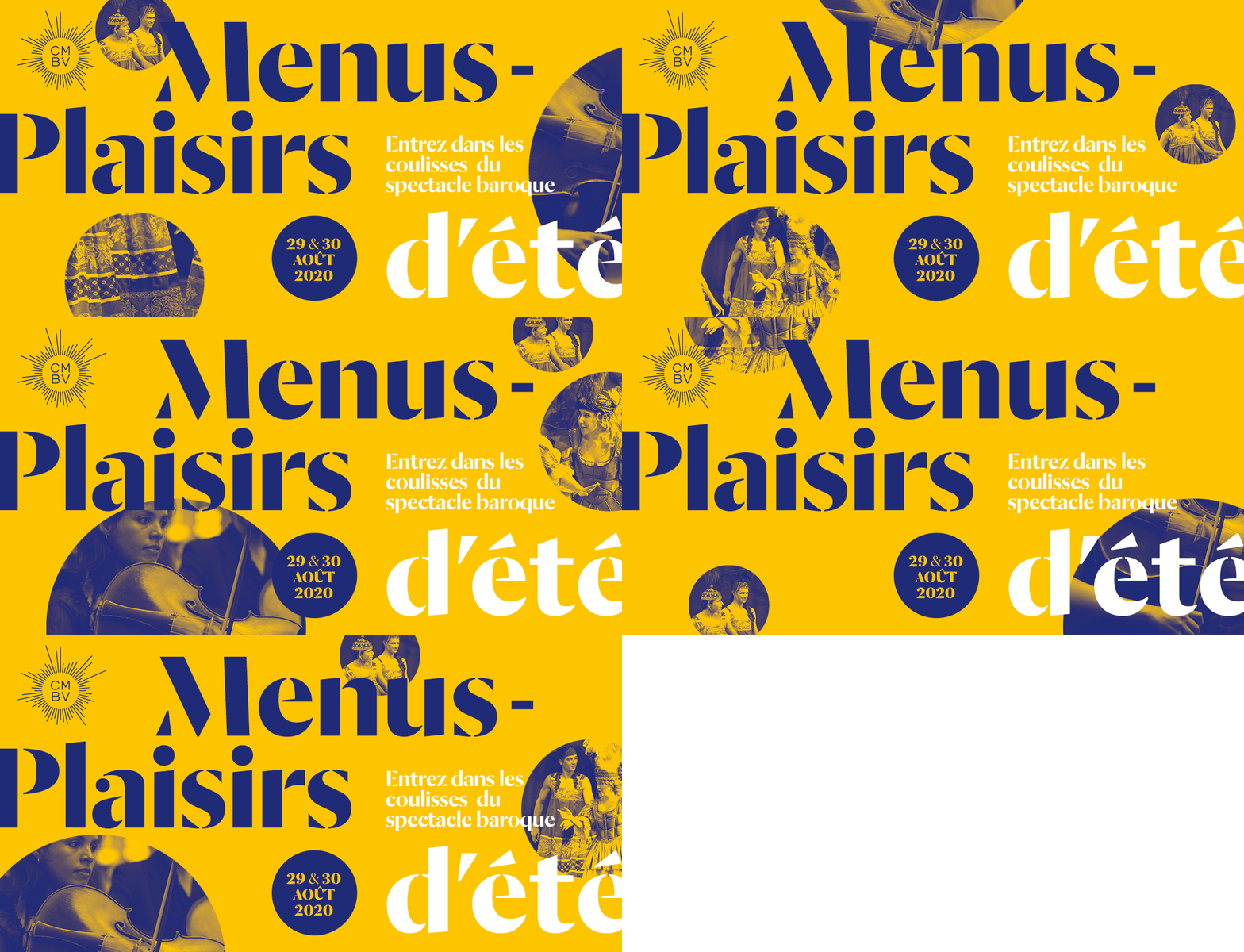
If you’ve ever wondered what it was like to be involved with one of the amazing productions at Versailles during the 17th and 18th centuries, now is your big chance! As one of the re-imagined ways to enjoy artistic ventures, the Centre de musique baroque de Versailles has organised a two-day spectacular during the last weekend in August, in which you (as an individual or a family) can get firsthand experience of making such a thing happen. For more information click HERE.

Categories
Recording

Tullochgorum – Haydn : Scottish Songs

The Poker Club Band, Masako Art
61:38
BIS 2471

Click HERE to buy this on amazon.co.uk

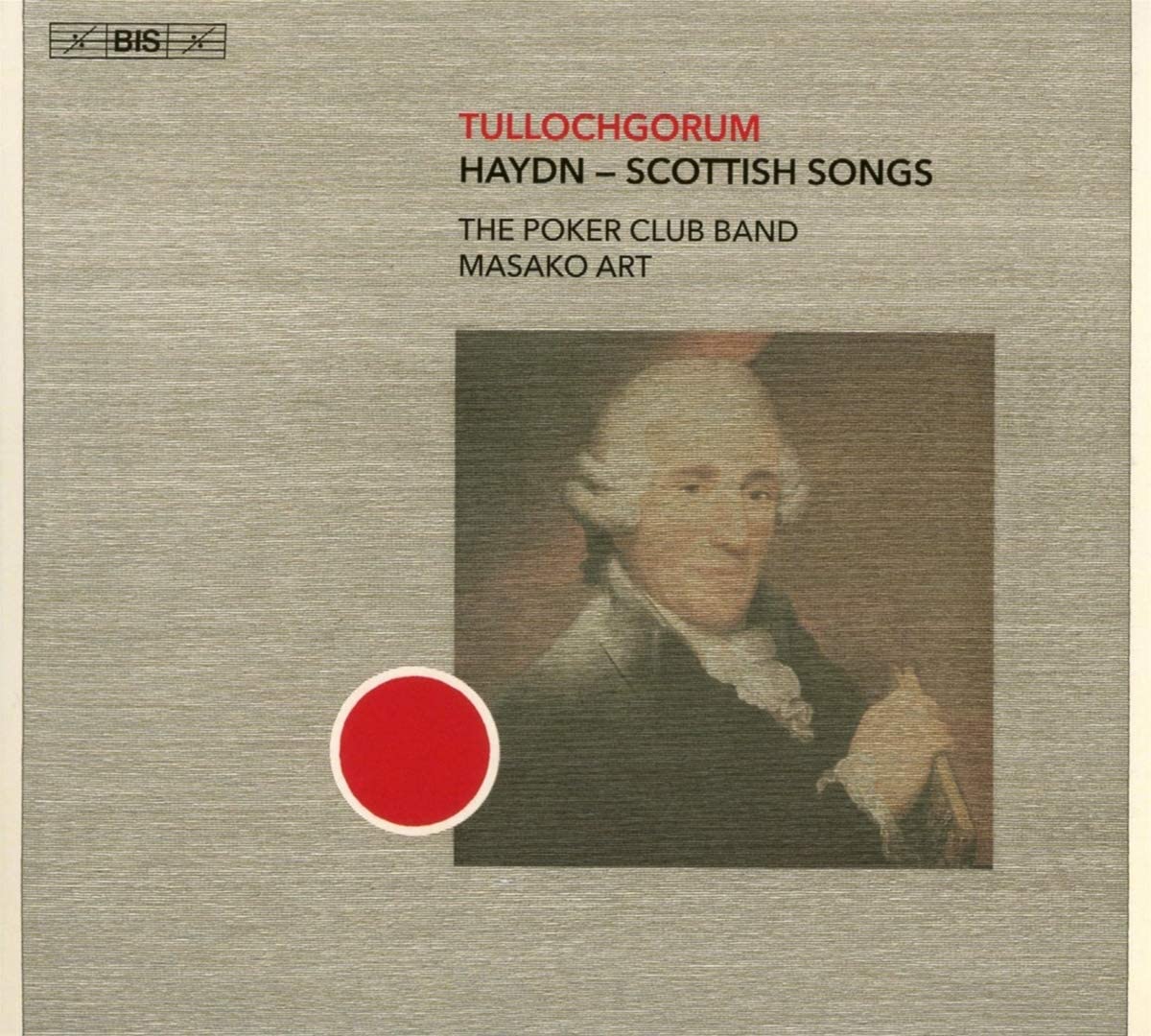
Harpist Masako Art has drawn up an attractive programme of Haydn’s Scottish Song settings, interspersed with instrumental pieces by John Elouis and arrangements of Haydn’s music by Elouis and François de Fossa. The last of these include music from Haydn’s 63rd symphony ‘Roxolane’ and his 82nd symphony ‘L’Ours’ arranged for solo harp by Elouis, and Fossa’s Grand Duo for two guitars arranged from Haydn’s string quartet op 2/2, further arranged by Art for guitar and harp. Art is joined for the duet by guitarist Edin Karamzov on a French guitar of around 1820, while she, in turn, plays a lovely single-action Erard pedal harp of 1809. Art also presents two lovely solo preludes for harp by Elouis. This instrumental music is all beautifully played and powerfully evocative of the early 19th-century drawing room recitals in which they must have featured. As with the Glossa ‘Haydn and the Harp’ CD I reviewed recently, I was struck by just how effective a medium the harp is for Haydn’s music, and Art’s lovely playing served to further convince me. For the Haydn Songs, Karamzov and Art are joined by violinist Sabine Stoffer and cellist Pierre-Augustan Lay of the Poker Club Band, and last but by no means least by vocalist, James Graham. Graham belongs to the traditional Gaelic music scene, and his light tenor voice has a pleasant naïve tone and a winning familiarity with the songs. If his intonation, particularly in the lower range, isn’t always quite perfect, as a native of Lochinver his pronunciation of the texts can certainly be trusted! The lively song “Tullochgoru”m gives this CD its title, and it is rounded off with a traditional Puirt a Beul, the distinctive mouth music of the Highlands, and the traditional Tullochgorum Reel – all fine stuff! The programme comes to a melancholy conclusion with a lovely account by Sabine Stoffer of Niel Gow’s “Lament for his 2d Wife”, an air of almost unbearable poignancy. At first, I thought the acoustic of the Kirche St German in Seewen a little too resonant for a programme, which would have taken place in a domestic salon, but I found this didn’t bother me for long. Finally, a quick shout-out for the ecological packaging of the CD (BIS ecopak), complete with a striking cover design, combining the famous Thomas Hardy Haydn portrait of around 1790 with original artwork by contemporary Highland artist, Alex Dunn.

D. James Ross

Categories
Recording

The Early Horn

Ursula Paludan Monberg, Arcangelo, Jonathan Cohen
78;32
hyperion CDA68289
Music by Graun, Haydn, L & W A Mozart, Telemann & anon

Click HERE to buy this on amazon.co.uk

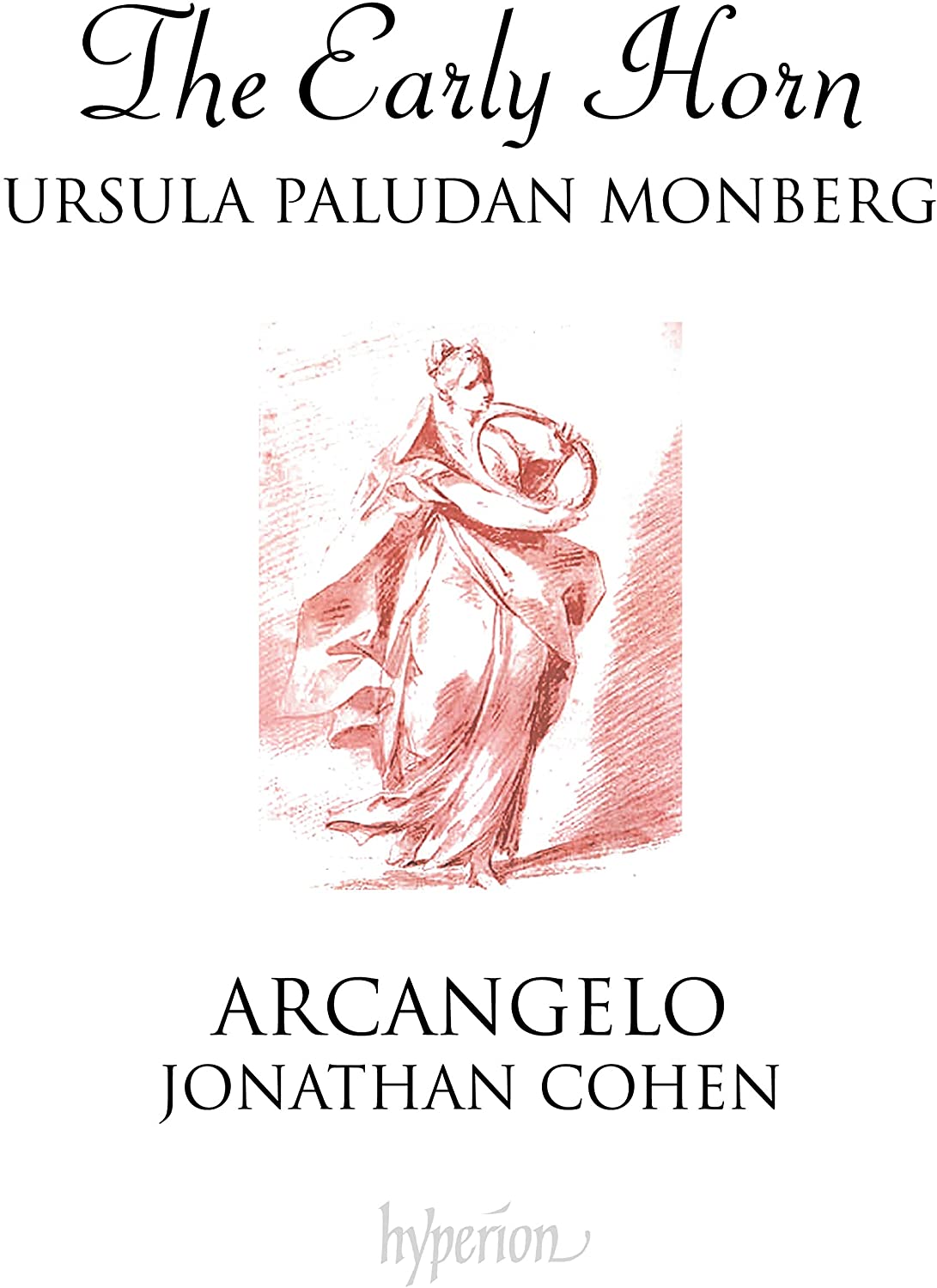
After dropping apparently fully-formed into its role as an orchestral instrument in Handel’s Water Music, the horn very soon became an indispensable part of the Baroque and Classical orchestra. This CD explores its parallel pivotal role in 18th-century chamber music and illustrates how quickly composers cottoned on to the horn’s musical potential, while at the same time the technical developments instigated by players extended the instrument’s range. The opening track is a beautiful sinfonia da camera for horn and strings by Leopold Mozart, while a concerto and a trio by Graun, two anonymous Concerti from a Swedish source, a concerto by Telemann, a divertimento by Haydn and the E-flat-major horn quintet by Wolfgang Amadeus Mozart all chart the horn’s development from Baroque to Classical instrument. The music selected for this CD shares the feature of being delightfully entertaining, while the anonymous concerti for horn, oboe d’amore and continuo and for horn, two oboes and continuo are particularly charming. The concerto for recorder, horn and continuo by Telemann is also predictably accomplished and engaging. Playing a wonderfully coiled Baroque horn, Ursula Paludin Monberg produces a beautifully rounded tone and displays a consummate playing technique. She is ably supported by the players of Arcangelo directed from the harpsichord by Jonathan Cohen. There is a wonderful inevitability about the thoroughly classical strains of the familiar Mozart quintet (K407) with which the CD concludes – we feel we have been informatively conducted from the horn’s early years in serious music to one of the pinnacles of the repertoire.

D. James Ross

Categories
Recording

Passio Iberica

García Fajer: The Seven Last Words of Christ; dos Santos: Stabat mater
Divino Sospiro, Massimo Mazzeo
65:21
Pan Classics PC 10401

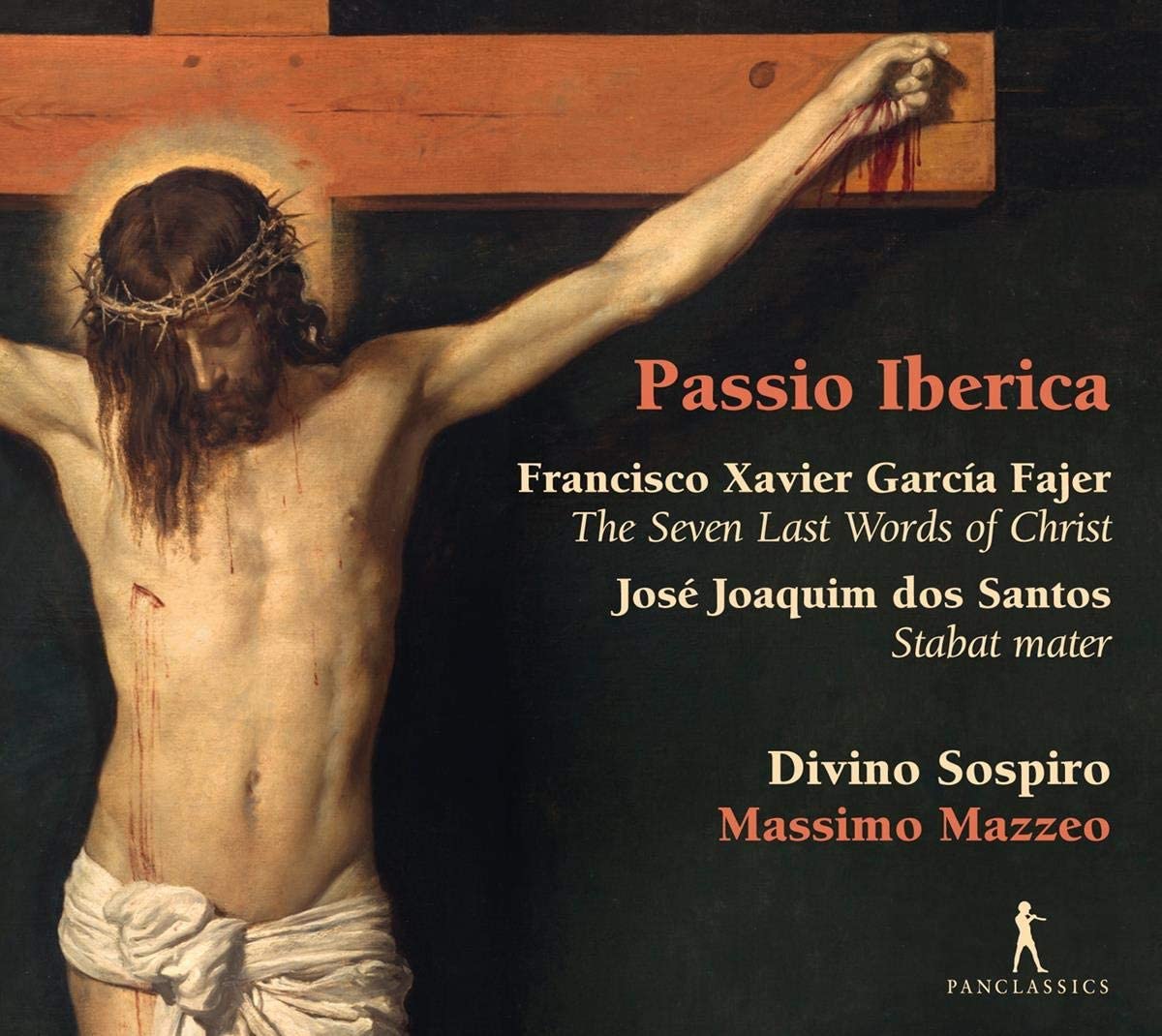
This revelatory CD presents music for Holy Week by two largely unknown 18th-century Iberian composers, Francisco Javier García Fajer and José Joaquim dos Santos. García Fajer’s setting of a Castilian text contemplating the seven last words of Christ on the cross, was written in the wake of and under the influence Haydn’s famous setting of the Seven Last Words of 1792, commissioned by the Brotherhood of Nuestra Señora de la Cueva of Cadiz. García Fajer writes for two soprano voices with strings, and the seven sections all running to just about three minutes each are wonderfully evocative and melodic. He trained in Italy, at the prestigious Conservatorio della Pietà dei Turchini, before embarking on a career which saw him compose operas and oratorios and enjoy considerable success. For the last four decades of his life, he returned to Saragossa Cathedral, where he devoted himself exclusively to composing sacred music. While much of the music in his Siete Palabras is recognisably in the classical Viennese tradition, some of the more contemplative sections are distinctively Iberian and very atmospheric. The Stabat Mater by the Portuguese composer José Joaquim dos Santos for two sopranos, bass and strings of 1792 is also heavily Iberian in style, although it also owes a considerable debt to earlier settings such as that by Pergolesi. Dos Santos never studied in Italy but had close contacts with many musicians who had and was clearly well versed in the Italian idiom. The singing by Bárbara Barradas, Lucia Napoli and André Baleiro and the playing by Divino Sospiro of this unusual and distinctive music is of a high quality, and the recording both gives a context to Haydn’s unusual instrumental Seven Last Words as well as filling in an Iberian dimension to sacred music at the end of the 18th century.

D. James Ross

Categories
Recording

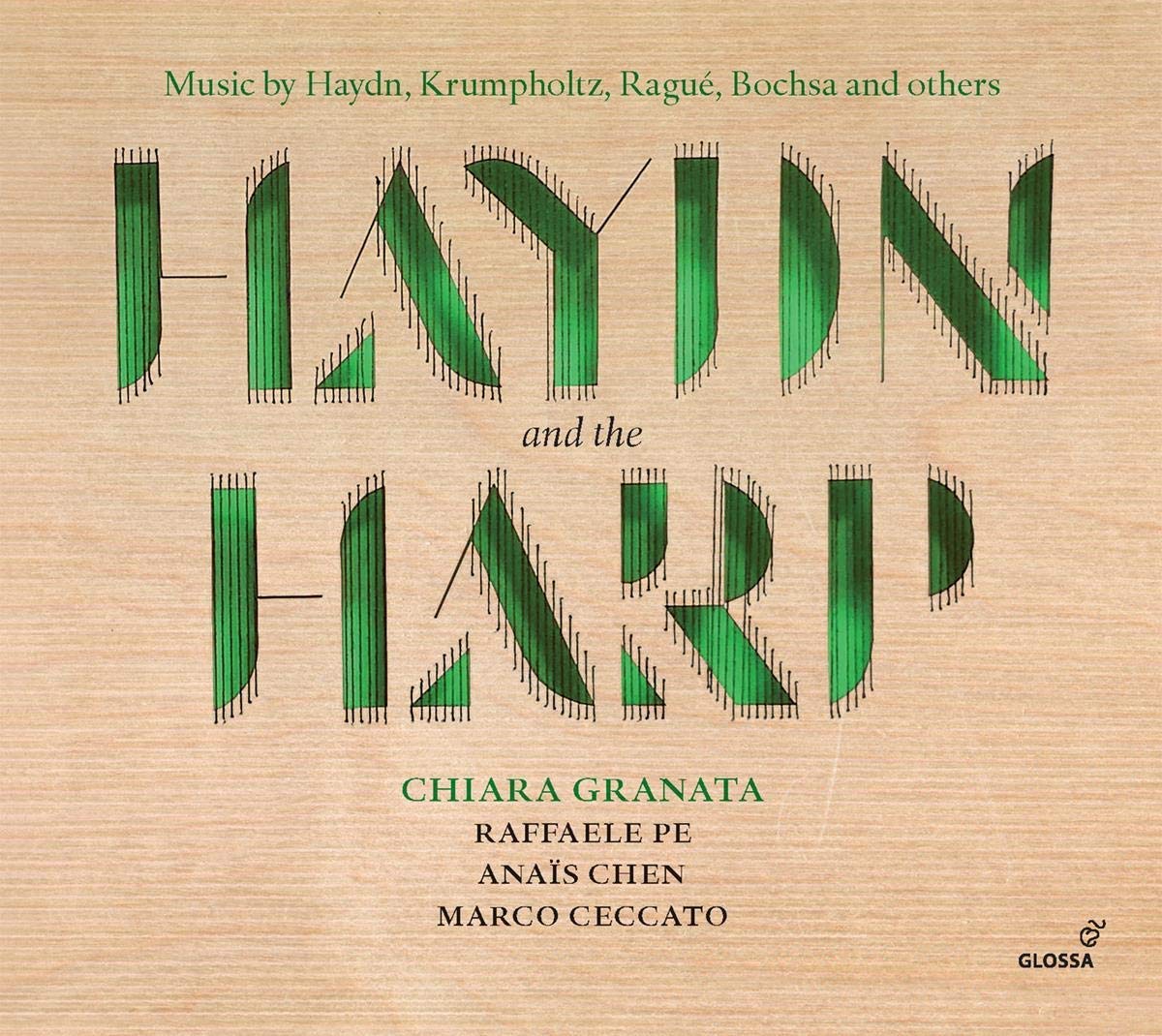
Haydn and the Harp

Chiara Granata harps, Raffaele Pe countertenor, Anaïs Chen violin, Marco Ceccato cello
68:23
Glossa GCD 923517
Music by Bochsa, Eloüis, Sophia Dussek, Haydn, Kozeluh, Anne-Marie & Jean-Baptiste Krumpholtz, de La Manière & Ragué

Click HERE to buy this CD on amazon.co.uk

This CD is a genuine eye-opener. We tend to ignore the instruction ‘for piano or harp’ in the published versions of Haydn’s arrangements of British folk songs, but Chiara Granata has taken it literally and presents here a selection of music by Haydn and his contemporaries. Using two lovely restored harps of 1790 and 1825, she is joined by countertenor Raffaele Pe, violinist Anaïs Chen and cellist Marco Ceccato for these delightful accounts of songs and chamber works. The Haydn songs are beautifully sung by falsettist Raffaele Pe, while particularly intriguing amongst the music by Haydn’s contemporaries, mainly reworkings of the master’s music, are Louis-Charles Ragué’s arrangement for violin and harp of Haydn’s 71st Symphony and Nicolas-Charles Bochsa’s extraordinary medley for harp of melodies from The Creation. From his earliest days at Esterhazy to his late visits to London, Haydn had regular and close contact with amateur and professional harpists, and it seems natural that he would want his compositions to be available for them to perform. In fact, having heard these evocative performances, Haydn’s concise and sparkling idiom seems to lend itself very well to the tone of the harp, and Chiara Granata’s admirable project seems long overdue. Her discovery of the complementary music by Krumpholtz (Jean-Baptiste and Anne-Marie), Kozeluh, Louis-Charles Ragué, Bochsa, Joseph Eloüis, Exupère de La Maniere and Sophia Dussek is a revelation, and the entire programme is wonderfully evocative. The very musical playing and singing of the ensemble make them the ideal advocates for this neglected area of classical music, and the light they shine on it is a revelatory and valuable one.

D. James Ross

Categories
Recording

Campagnoli: 6 Duos for Flute & Violin op. 2

Stefano Parrino flute, Francesco Parrino violin
76:52
Brilliant Classics 95974

Click HERE to buy this CD on amazon.co.uk

Bartolomeo Campagnoli was born in Bologna in 1751, studying in Venice, Padua and in Florence with the great Nardini and befriending Cherubini, before embarking on an international performance career as a violinist, which took him throughout Europe. In a curious moment reminiscent of Ben Franklin’s meeting with Louis XVI, one of Campagnoli’s concerts was listened to by Spohr, who thought his music elegant but rather old-fashioned. Indeed, by the time his op 2 Duets were published in the early 19th century, they were old-fashioned as they had been composed as early as 1780 and had not been cutting edge even then! Spohr’s evaluation of Campagnoli’s music seems to fit these Duos rather well – never dull, constantly imaginative, always tuneful but rather lightweight and belonging spiritually to the 18th century. The brothers Stefano and Francesco Parrino play modern instruments in performances which never lack passion or style, and which are beautifully coordinated. It is not clear the extent to which these Duos represent the sort of repertoire Campagnoli was wowing his pan-European audiences with as he toured from court to court – it is perhaps odd in that event that the violin usually plays the supportive role to the flute. More likely perhaps that this publication was aimed at the burgeoning market for music for amateur players, although the technical demands would limit their relevance to more accomplished and dedicated dilettante players.

D. James Ross

Categories
Recording

Duni: Trio Sonatas Op. 1

Duni Ensemble
48:20
Brilliant Classics 96023
+Contradanze 1m 3m 4 + Minuetto 2, Minuè no 18 and Minuetto

Click HERE to buy this CD on amazon.co.uk

Neapolitan by birth, Egidio Romualdo Duni spent time in the great musical centres of the 18th century, Milan, Rome and London, before moving to Holland for reasons of health and to study at Leiden University and to publish two important collections, his opus 1 Trio Sonatas and Minuetti e Contradanze in 17838/9. The six trio sonatas are all performed here, interspersed with a number of the minuets and contradances. Where Duni had stipulated that his sonatas were for the standard ensemble of two violins, cello and continuo, the DuniEnsemble take a refreshing approach to this Galante music by using flutes and recorders for the melodic lines and a bassoon for the cello, occasionally employing Baroque violin and cello for contrast. The continuo group includes a harpsichord, a mandolin, and Baroque guitar/theorbo. The overall sound is very pleasing and nicely varied, allowing this complete recording of Duni’s opus 1 to benefit from an engaging degree of textural variety. It is perhaps unfortunate that the booklet information as to ‘who does what on what’ is a bit of a mess, and that the translation into English of the otherwise interesting programme is a little garbled – worth spending a little more on the printed material to support what is an excellent recording. The motivations behind Duni’s movements around Europe remain mysterious – he seems to have enjoyed considerable success wherever he went – his opera ‘Demofoonte’, staged in London in 1737, featured no less a figure than the great castrato Farinelli in his retirement performance. That his move from London to Holland seems to have been the result of depression, for which he was seeking help from the famous Dr Boherave, may hint at his failure to settle and to enjoy his success – perhaps the dog-eat-dog musical world of early 18th-century London just didn’t suit him. There is no hint of any dark moods in his published music; is it not trite or superficial either, but rather imaginative and original. And the DuniEnsemble, applying considerable musicality and inventiveness to his music, bring it vividly to life for us.

D. James Ross

Categories
Recording

Haydn: Organ Concertos

Iain Quinn organ, Sophie Gent violin, Arcangelo, Jonathan Cohen
69:41
Chandos CHAN 20118

Click HERE to buy this CD on amazon.co.uk

These works date mainly from early in Haydn’s career and were probably written for performance at Esterházy. The modest demands on the organ, just manuals not pedals, mean that the works are all eminently playable on the harpsichord or fortepiano, although the pieces recorded here sound nicely at home on the organ. Particularly charming is a concerto Hob. XVIII:6 for violin, organ and strings in which the two soloists share the spotlight very equally. As the programme note suggests the plausible total of six concertos for organ by Haydn, it is odd that while we have three recorded here, a fourth is available for download – surely we were looking at a potential double album with all the concerti? Arcangelo play modern instruments, although the strings are gut-strung and the bowing and phrasing are of the period. Although this music is very affable, as with much early Haydn I’m afraid I find it rather bland and notwithstanding fine playing from the soloists and the ensemble I found myself drifting off. Lovers of Haydn’s music will warm to this more than I did, and it does fill a useful gap for me in my appreciation of the composer’s early output.

D. James Ross