Categories
Recording

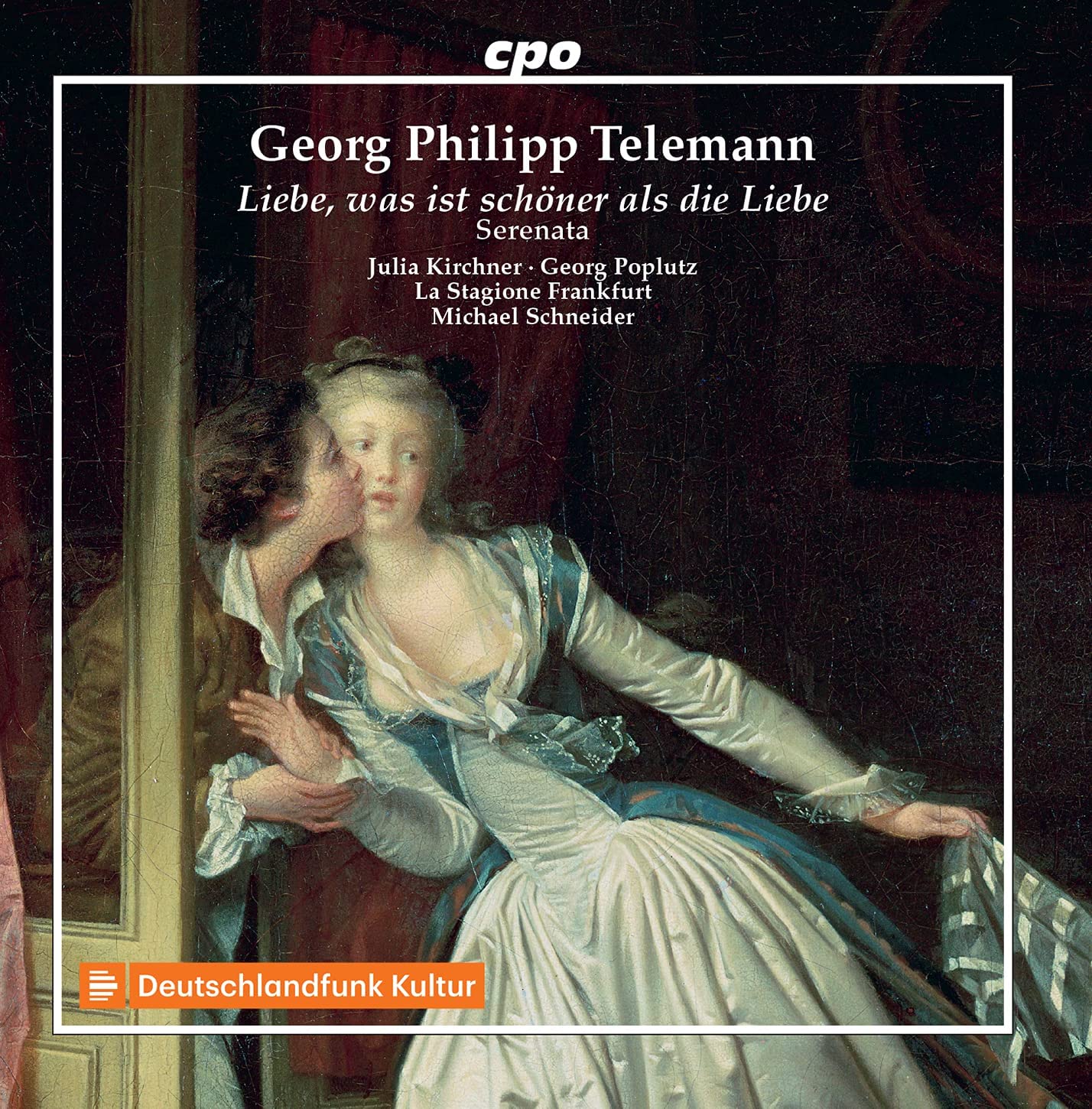
Telemann: Liebe, was ist schöner als die Liebe

Julia Kirchner soprano, Georg Poplutz tenor, La Stagione Frankfurt, Michael Schneider
76:17
cpo 555 300-2

Click HERE to buy this recording at amazon
[Doing so supports the recording company, the artists and this website]

This recording presents one of the rarer genres to which Telemann contributed, the wedding serenata. Intended as evening’s entertainment (presumably for wealth patrons who could afford to pay the musicians required), it is less a mini-opera and more a light-hearted debate on the virtue of love. In response to Ametas the soprano’s opening question “What is more beautiful than love”, the tenor Crito just laughs. They proceed to throw arguments and counter-arguments in a sequence of recitatives and arias, with tempers rising but finally they are reconciled and sing a duet to the newly weds, hoping they will soon have something to rock in the cradle! There follow two solo cantatas with wedding connections, if not as directly as the serenata. “Lieben will ich” was published as the fifth of a sex of six secular cantatas with instruments by the composer in 1731. The tenor must tell the tale and play the two parts! In “Der Weiberorden”, the soprano tells of the “delights” (and otherwise!) of marriage in rather racy language. The disc abounds with charm – Telemann knew how to hold an audience – and all of his fans will have to have this recording.

Brian Clark

Categories
Recording

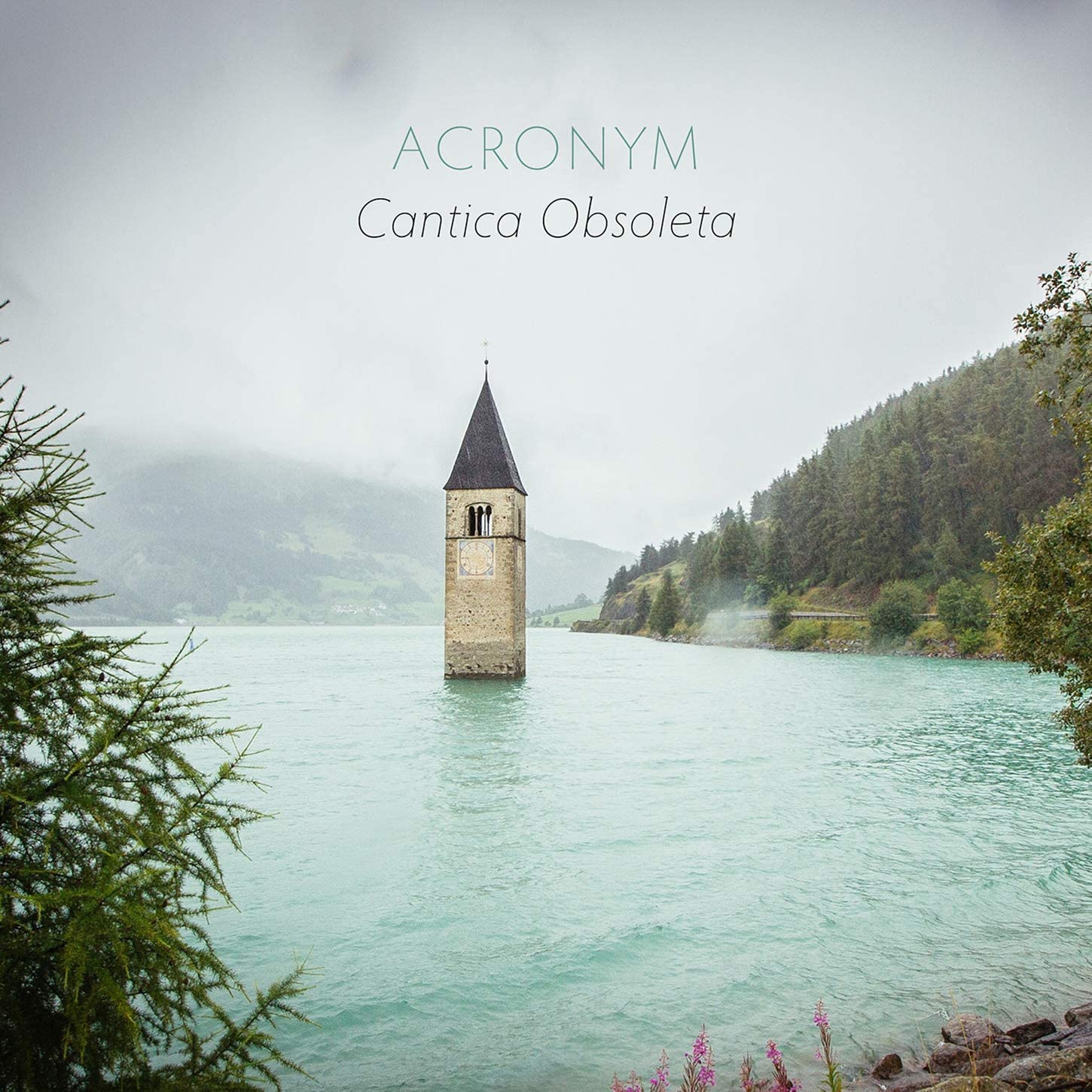
Cantica Obsoleta

Forgotten Works from the Düben Collection
[Hélène Brunet, Reginald Mobley, Brian Giebler, Jonathan Woody SATB], ACRONYM
79:33
Olde Focus Recordings FCR917

Click HERE to buy this recording
[These links support the artists AND keep this site alive!]

As someone who has spent most of his adult life exploring the riches of the Düben Collection, named after a 17th-century family of musicians and music collectors/transcribers, this recording is an absolute joy. Even being fortunate enough to be able to “hear” music just by reading it off the page, nothing beats hearing it played/sung, especially when those performing it are a versatile and committed group like ACRONYM. This is not the first of their discs I have heard (or reviewed), but still I find things in their readings of this repertoire that make me smile. The tone of this recording is set right from the get-go: Schmelzer’s 5-part sonata in D minor takes no prisoners and the fiddlers in particular get stuck right in, and I totally LOVE it! There’s no break before Johann Philipp Krieger’s Cantate domino canticum novum, on whose text the disc’s subtitle is a play. This neatly introduces us to the four singers, whose voices blend well together. Thereafter, we have music by Carissimi (perhaps the only well-known name on the list), Geist (who would have known the Dübens personally), Löwe (whose instrumental music does not deserve the neglect in which it languishes), Capricornus (who should also be heard far more frequently), Flor, a very rare piece from the collection by a female composer, Caterina Giani, Radeck, Ritter and finally Eberlin, who contributes the longest work in the programme at just over nine minutes. In the course of the disc, we have pretty much been put through the emotional wringer – life in the 17th century was tough, and many of the texts set to music tended to be on the bleaker side, which inspired some fantastic works which, in turn, sought to inspire believers. In recording this rich repertoire, ACRONYM will hopefully inspire further exploration of the Düben Collection – and its fellow repositories in Berlin and Dresden. I cannot wait to hear their next CD!

Brian Clark

Categories
Recording

Rigatti: Vespro della Beata Vergine

i Disinvolti, UtFaSol Ensemble, Massimo Lombardi
76:54
Arcana A121

Click HERE to buy this recording on amazon
[Doing so your only means of keeping the site alive!]

When we think of Giovanni Rigatti (if we think about him at all, so overshadowed is he still by Monteverdi, despite the very obvious attraction and quality of his output!), our minds typically turn to the glories of San Marco and the sounds of a multitude of voices with violins, cornetti, trombones and organs. This fabulous recording spotlights his “Messa e salmi ariosi a tre voci concertati, & parte con li ripieni a beneplacito” of 1643 (the year of Monteverdi’s death). It is an incredibly brave thing to do, having just three singers (one of whom is also the director), but it really comes off – the two tenor voices are suitably differentiated to mean that there is always aural interest. The ripieni parts (which are really just reinforcements at structural points in the psalm settings) are taken by cornetto and three trombones. Continuo is provided by viola da gamba, theorbo and organ. The “service” is filled out by plainsong antiphons, organ music by Andrea Gabrieli, Milanuzzi’s setting of Deus in adiuvandum, a sonata by Riccio, motets by Serafino Patta (?!) and Banchieri, a canzona by the latter, a recercar by Francesco Usper and Del Buono (?!)’s hymn, Ave maris stella. The fact that my attention did not wane once in just under 80 minutes is testimony to the quality of both the music and the performances – I really did not want it to end! The recorded sound and the booklet maintain the quality – and when 13 of the tracks are claimed as world premiere recordings, that is all the more impressive. More please!

Brian Clark

Categories
Recording

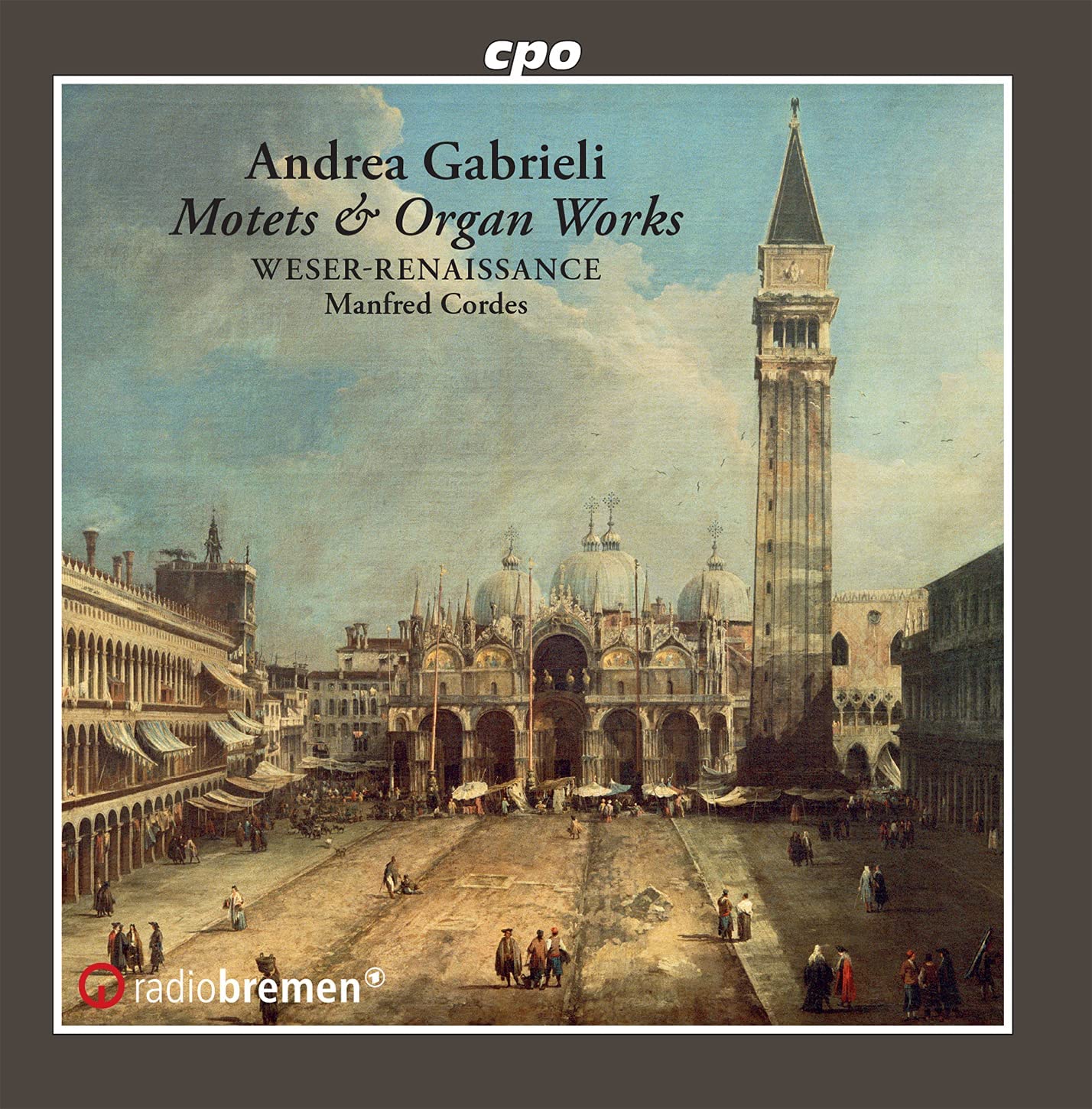
Andrea Gabrieli: Motets & Organ Works

Weser-Renaissance, Manfred Cordes
69:07
cpo 555 291-2

Click HERE to buy this recording on amazon.
[Doing so is your only way to help keep the site alive!]

Like Bach’s sons, Mendelssohn’s sister and Schumann’s wife (among many others), Andrea Gabrieli is one of those unfortunates whose relative has somehow eclipsed their own valuable output. I remember in my first year at university how much I enjoyed playing through volumes of Andrea Gabrieli’s keyboard music as I “taught myself the piano” (anyone who has heard me play know that it’s very much still work in progress…) At the Early Music Society, we played canzonas by Giovanni Gabrieli and it was only much later in life (at the Gloucester courses run by Alan Lumsden and Philip Thorby) that I really came to appreciate just how good a composer Andrea Gabrieli was.

This new recording on cpo confirms everything I ever thought. Veronika Greuel’s incisivce and extensive booklet note contextualises the music, which the one-to-a-part ensemble, mixing voices with a variety of the instruments one would expect (violin, cornetto, three trombones, dulcian, chitarrone and organ), then perform in a suitably “big” acoustic with lots of air around the notes. There are four organ works by the composer, and a fifth an entabulation by the performer (Edoardo Bellotti on a modified reconstruction of a late 17th-century instrument), neatly played and revealing the breadth of the composer’s mastery of styles. All in all, I cannot imagine a better way to advocate for Andrea’s rightful place in the Early Music Hall of Fame.

Brian Clark

Categories
Recording

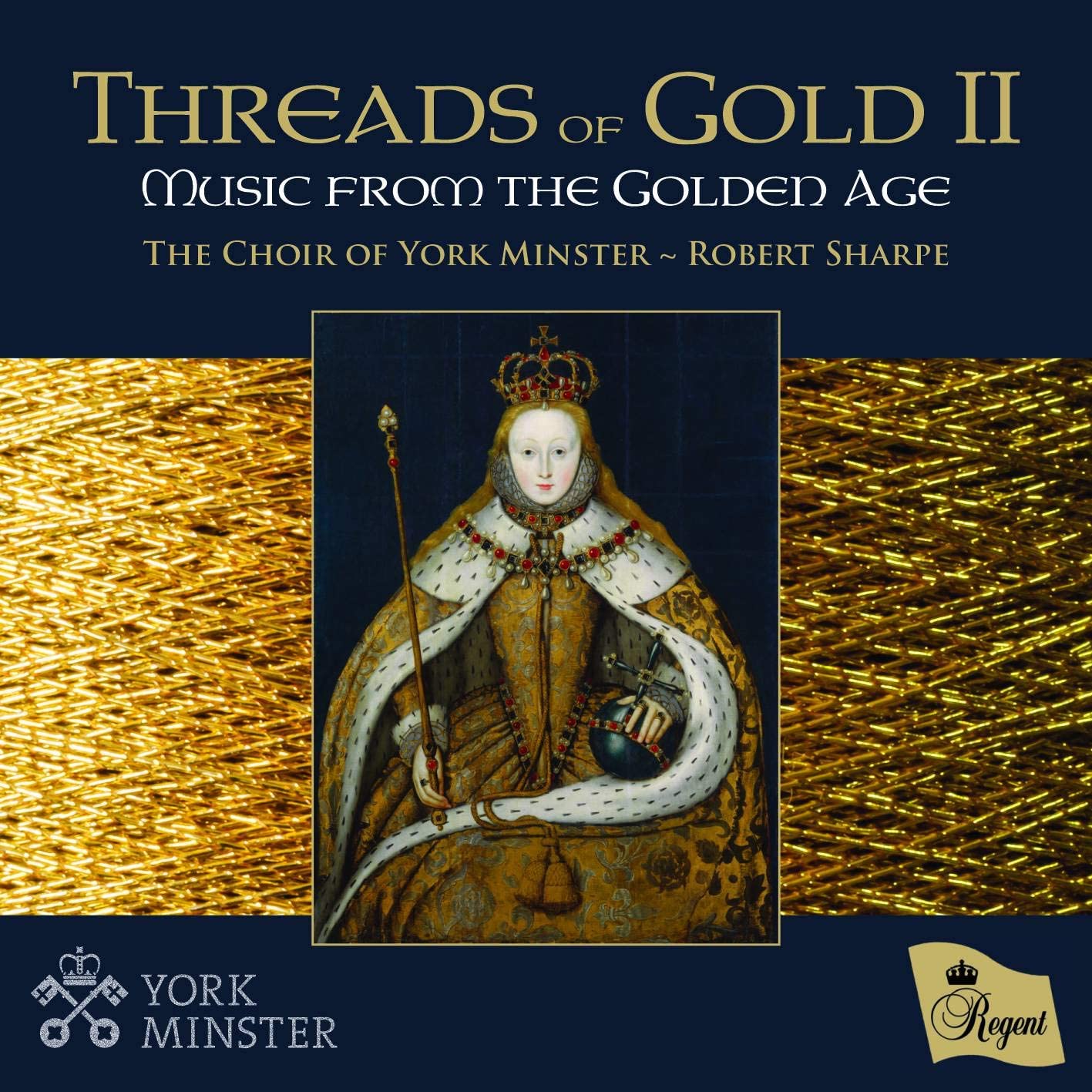
Threads of Gold II: Music from the Golden Age

The Choir of York Minster, directed by Robert Sharpe, Benjamin Morris organ
74:22
Regent REGCD544

Click HERE to buy this on amazon.co.uk
[These sponsored links help the site remain alive and FREE!]

I gave the first disc in this series, recorded during 2016, a favourable review in EMR dated 27 May 2017, tipping my hat in conclusion to the excellent notes provided by John Lees. This time I am commencing with a short paean to John for another fine commentary on the background to, and contents of, a second superb disc. He is entirely accurate and up to date regarding current musical research on the period, yet is circumspect when contemporary documentation is in short supply, as in the case of Tomkins having been Byrd’s pupil. Meanwhile this is all expressed in a style that is reassuringly scholarly and a pleasure to read, something to which those of us who write about music can all aspire.

As it was in the case of the first disc, the high quality of the booklet notes and the music itself and the performance of the music all complement one another. If Tallis and particularly Byrd did best numerically on that outstanding initial disc, with one or two items emerging from “left field”, then it is the young guns Tomkins and particularly Gibbons who do well on this second offering. Yet while it is Gibbons who scores highest with six items, it is Tomkins who emerges with the only actual premiere on the disc: his beautiful verse anthem Praise the Lord O my soul is new to CD, having previously appeared only on a fine LP, never reissued, by Newport Cathedral Choir in 1983 (Alpha APS 343). That said, works such as his powerful full anthem in eight parts O God the proud are risen and a couple of Gibbons’s verse anthems Behold I bring you glad tidings and We praise thee O Father are quite elusive. One of the less familiar Tudor evening services, William Mundy’s In medio chori, was included on the first disc, and another such is selected here, the Latin setting by Tallis. Disc I began and ended with two of Byrd’s greatest Latin works, and the Latin pattern is followed here, with Robert Parsons’ sublime Ave Maria opening the proceedings, and another of Byrd’s masterpieces Peccantem me quotidie bringing them to a conclusion.

The quality of the singing is every bit on a par with that on the preceding disc. Only listen to the exquisite layering in the final chord of Byrd’s Sing joyfully – quite the best unaccompanied ending to this anthem on disc (there is currently a stirring version by Musica Secreta accompanied fittingly by The English Cornett and Sackbut Ensemble on Chandos CHAN 0789) – in which it is so easy for inner parts to be swamped as everyone exhales on the conclusion of Byrd’s short sharp test of vocal endurance; and to the impact of the trebles’ thrilling entry at “O spare me a little” in Gibbons’s Behold thou hast made my days. Meanwhile the full choir can sing with the intimacy that Byrd would have anticipated in performances of Justorum animae whether domestic (it was published in book 1 of Gradualia 1605 and the volume was approved by Richard Bancroft, then Bishop of London) or clandestine (during illegal Roman Catholic masses). Robert Sharp unerringly chooses tempi appropriate to the individual pieces and to the acoustic of the recording venue, while Benjamin Morris’s accompaniments are sensitive and tasteful. Compared with the previous disc, the Choir itself, recorded during 2019, sounds different, as one would expect three years onwards, and the acoustic seems less reverberant – it is stated simply that disc I was “recorded in York Minster” (perhaps the chancel?) whereas disc II is said to have been recorded in the Lady Chapel. The Choir, who can not only blend mellifluously but also project individual parts where necessary, is a credit not only to York Minster but to the Church of England, while the verse passages are sung responsively by soloists, each with characterful voices not drilled to a uniform sound, who are in turn a credit to the Choir. Everything about this disc is distinguished, and it cannot be praised too highly.

Richard Turbet

Categories
Recording

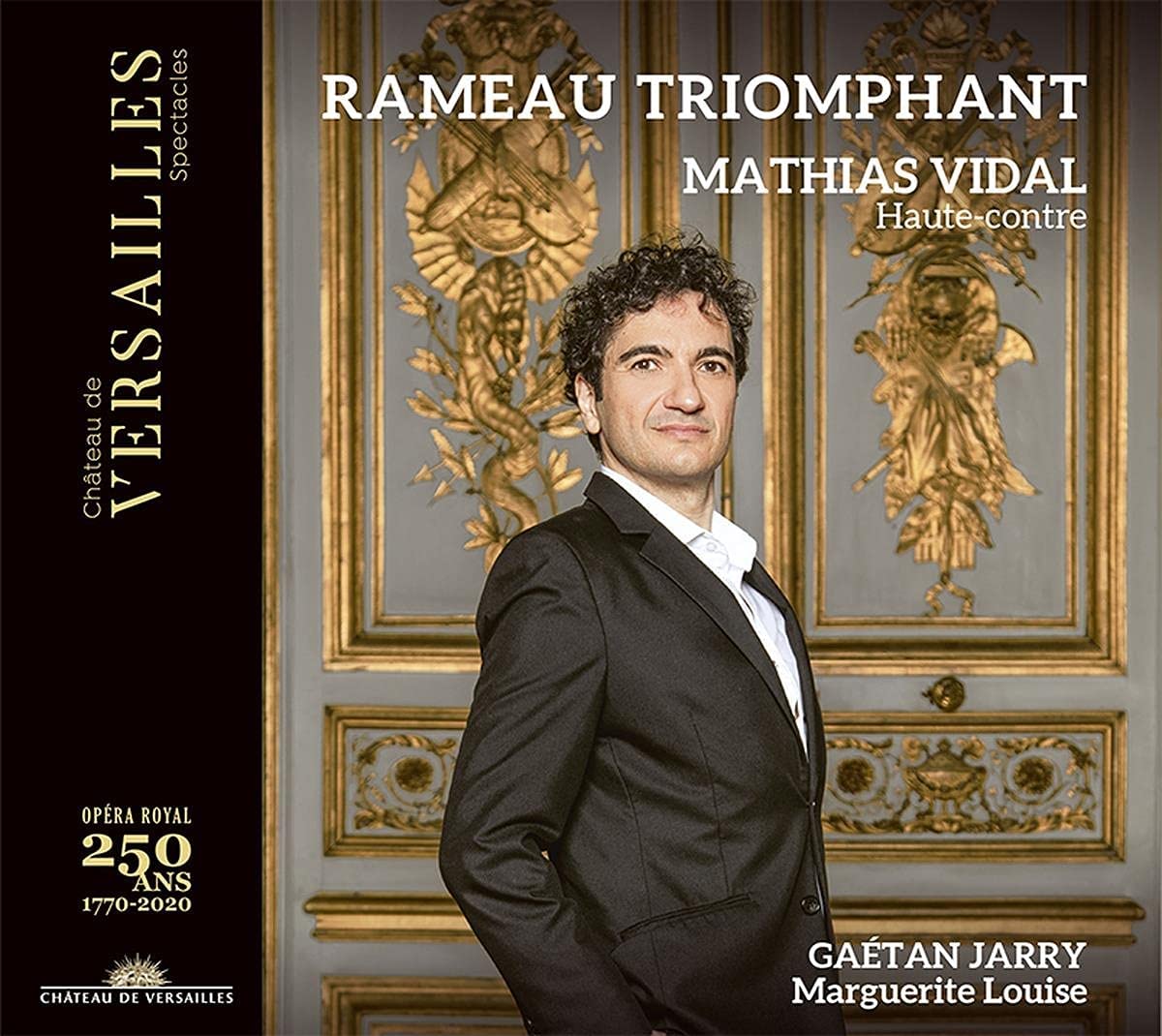
Rameau Triomphant

Mathias Vidal haute-contre, Ensemble Marguerite Louise, Gaétan Jarry
77:20
Château de Versailles Spectacles CVS039

Click HERE to buy this on amazon.co.uk
[These sponsored links help the site remain alive and FREE!]

I love the principle and the content of this recital, especially the inclusion of overtures, dances and ensembles so that we don’t choke on a surfeit of airs. It is a brave singer who undertakes a programme of haute-contre singing in any case, and Matthias Vidal was entitled to any breaks in the recording schedule which the programming allowed him. He certainly has the ranges – vocal and emotional – for these roles but I have to say that I enjoy the singing most when he is not at absolutely full throttle. At this point I find the vibrato just too intrusive alongside the period orchestral sounds, though this doesn’t happen very often. Similarly, the lesser soloists and the choir sound, to me at least, at their best when singing within themselves.

The main booklet (French, English and German) note is in interview style, which will irritate some, though there are some interesting comments from MV on the nature of haute-contre singing. As is, I’m afraid, more common than it should be in Versailles issues, there are some unidiomatic turns of phrase in the English translations of the biographies especially. Nice to see that our hero enjoys Offenbach, though!

 David Hansell

Categories
Recording

Scarlatti | Caldara: Appena chiudo gli occhi

Cantatas for solo voice with violin
Giuseppina Bridelli, Quartetto Vanvitelli
76:57
Arcana A487

Click HERE to buy this on amazon.co.uk
[These sponsored links help the site remain alive and FREE!]

As noted in reviews for EMR down through the years, there is a special art to performing chamber cantatas, one all too frequently not satisfactorily met. They are not, as the impression is often given, operatic scenas, suited to being sung with full-throated dramatic intensity, but rather intimate works invariably composed for princely patrons and intended for a sophisticated invited audience. As such, they demand a subtlety of vocal interpretation and close attention to textural clarity that allows them to communicate directly to their audience. These quite exceptional performances achieve this level to a rare degree.

However, before going into further detail about those performances, a few words about the works. Among the literally thousands of cantatas composed, those for voice with a solo violin are comparatively rare. The scholarly note suggests there may be as few as three examples by Alessandro Scarlatti, two of which are included here. In the striking Dove fuggo? A che penso? the rhetorical questioning of the opening recitative is preceded by fantasia-like flourishes from the solo violin, doubtless a reflection of the deranged state of mind of the girl who wishes to hide herself away from torment. In general, however, in the arias that include the violin, voice and instrument duet on equal, often imitative terms, though in the aria ‘Povera Clori’ from the same cantata the violin reflects the text by acting as an echo, while it complements the more elaborate vocal writing of ‘Zeffiretto amorosetto’ from Caldara’s Vicino a un rivoletto by imitating the ‘augelletto garruletto’ (garrulous little bird) sent by the lover to his beloved. All four cantatas here are fine works, the palm perhaps going to the most extended, Dove fuggo?, an alternation of no fewer than four pairs of recitatives and da copo arias, but although less elaborate Scarlatti’s Appena chiudo, which opens with an instrumental sinfonia and has alternating pairs of recitatives and arias, is an affecting setting of a text in which the sleepless lover is haunted by images of the absent beloved. Also worthy of special mention is the unexpectedly profound aria ‘Ahimé, sento il mio core’ that concludes Caldara’s Vicino.

And that aria provides an excellent entry point to consider further Giuseppina Bridelli’s singing of these cantatas, for several of her strengths are on full show there. Not the least of these is the sheer tonal beauty of her mezzo, which is not only evenly and securely produced across its range, but capable of colouring the text with the finest of shades. Here, too, one notes the exquisite shaping of the long phrase that indelibly paints the word ‘languendo’ (languished), the ravishingly lovely mezza voce, the rock-steady chest notes, and Bridelli’s totally stylish and beautifully articulated ornamentation (which includes trill) of da capos. And throughout all four cantatas, the impression is convincingly conveyed that every word has been given significance, the recitatives projected with excellent diction. In short, these are not only beguilingly lovely performances but a display of the highest musical intelligence.

In addition to the cantatas, the excellent Quartetto Vanvitelli plays a five-movement sonata for violin and continuo by Giuseppe Valentini (1681-1753) taken from his opus 8, published in Rome in 1715. It is particularly notable for its gracious opening Andante, much the most substantial movement, which is played with beautiful pure tone by the Vanvitelli’s violinist  Gian Andrea Guerra. Finally, having so often complained of obtrusive continuo lutenists, it is only fair to make a special point of praising the perfectly judged contribution of Mauro Pinciaroli. This is a special recording in every respect.    

Brian Robins

Categories
Recording

Anachronistic Hearts

Héloïse Mas mezzo-soprano, London Handel Orchestra, Laurence Cummings
76:35
muso mu 045

Click HERE to buy this on amazon.co.uk
[These sponsored links help the site remain alive and FREE!]

Fresh from enjoying Joyce Di Donato’s fabulous new complete recording of Agrippina, I was eased into this CD of Handel operatic arias with the familiar strains of Poppea’s charming “Bel piacere”. A compilation CD such as this relies heavily on the charms of the soprano soloist, and, in this case, we are fortunate to be in the hands of Héloïse Mas, a singer of great musical instinct and superb technique, who like Di Donato is able to bring Handel’s operatic music dramatically to life. Ably supported by the London Handel Orchestra under the direction of Laurence Cummings, Mas conjures up the relevant characters in the course of one short aria and gives expression to their innermost feelings. In among the operatic music are arias from early oratorios as well as a secular cantata, written in Italy in 1707; La Lucrezia, with its narrative of rape and revenge, provides powerful and contrasting emotions for the composer to tap into and for the performers to revel in. All of these performances by Mas demonstrate a voice at the peak of its powers, underpinned with musical and dramatic intelligence, which animates every single moment of this programme.

D. James Ross

Categories
Recording

Al-Basma: Voyage au coeur d’Al-Andalus

ames RossCanticum Novum, Emmanuel Bardon
78:31
Ambronay AMY057

Click HERE to buy this on amazon.co.uk
[These sponsored links help the site remain alive and FREE!]

Under their director Emmanuel Bardon, Canticum Novum continue their exploration of the early music of the Iberian peninsula with this selection of music from Andalusia including Arabic songs and material from the Codex of Montpellier and the Cantigas de Santa Maria. Inhabiting the ground somewhere between traditional and mainstream early performance, Canticum Novum use a variety of vocal techniques and early instruments to bring this music vividly and convincingly to life. What is striking about the integration of early Arabic material with the medieval manuscripts is the cross-fertilisation easily heard between the two worlds. In the Middle Ages, Andalusia was a cultural mixing pot of various ethnicities and nationalities, and this is apparent in this cleverly constructed programme. Recorded in the resonant acoustic of L’Abbaye de Sylvanès, Canticum Novum move seamlessly from solo to ensemble repertoire, genuinely exploring the music and letting it speak eloquently to us down the centuries. Having specialised for many years in this earliest repertoire, they manage to make it sound very natural in performances which belie the scholarship and technical assurance that underlie them.

D. James Ross

Categories
Recording

Campana: Arie a una, due, e tre voci

Ricercare Antico, dir. Francesco Tomasi
64:31
Brilliant Classics 96008

Click HERE to buy this on amazon.co.uk
[These sponsored links help the site remain alive and FREE!]

Born in Rome around 1610, Francesca Campana was known as a singer and spinet player, and her set of Arias in one, two and three parts published in 1629, when she was probably still a teenager, reveals a remarkable facility. While female composers were not unknown in Italy at the time, to have an entire publication devoted to your music as a woman was an unusual tribute and is surely a mark of the respect in which she was held. This is underlined by a letter of recommendation of 1633 in which her playing and singing are specifically and extravagantly praised. Her marriage to the composer Giovan Carlo Rossi seems to mark the end of her own compositional career although she lived on until 1665. The arias in the collection comprise solo airs with accompaniment as well as ensemble pieces we would be inclined to describe as madrigals. The writing is expressive and colourfully evocative – it is likely that Campana was writing largely for her own voice and an ensemble, and would probably have performed this music as well as benefiting from its publication. The performances here are imaginative, delicately ornamented and eloquently presented. The slightly close recording has an unfortunate deadening effect, and, as a result, some tracks sound a little plodding – perhaps a little more ambiance might have helped the music breathe a little more and the voices to ring more pleasingly. The arias themselves are interspersed with a beguiling selection of largely Neapolitan instrumental works from slightly earlier than the Campana pieces. This repertoire is catchy and engaging, and the playing is again charming and provides the perfect foil to the arias.

D. James Ross