Categories
Recording

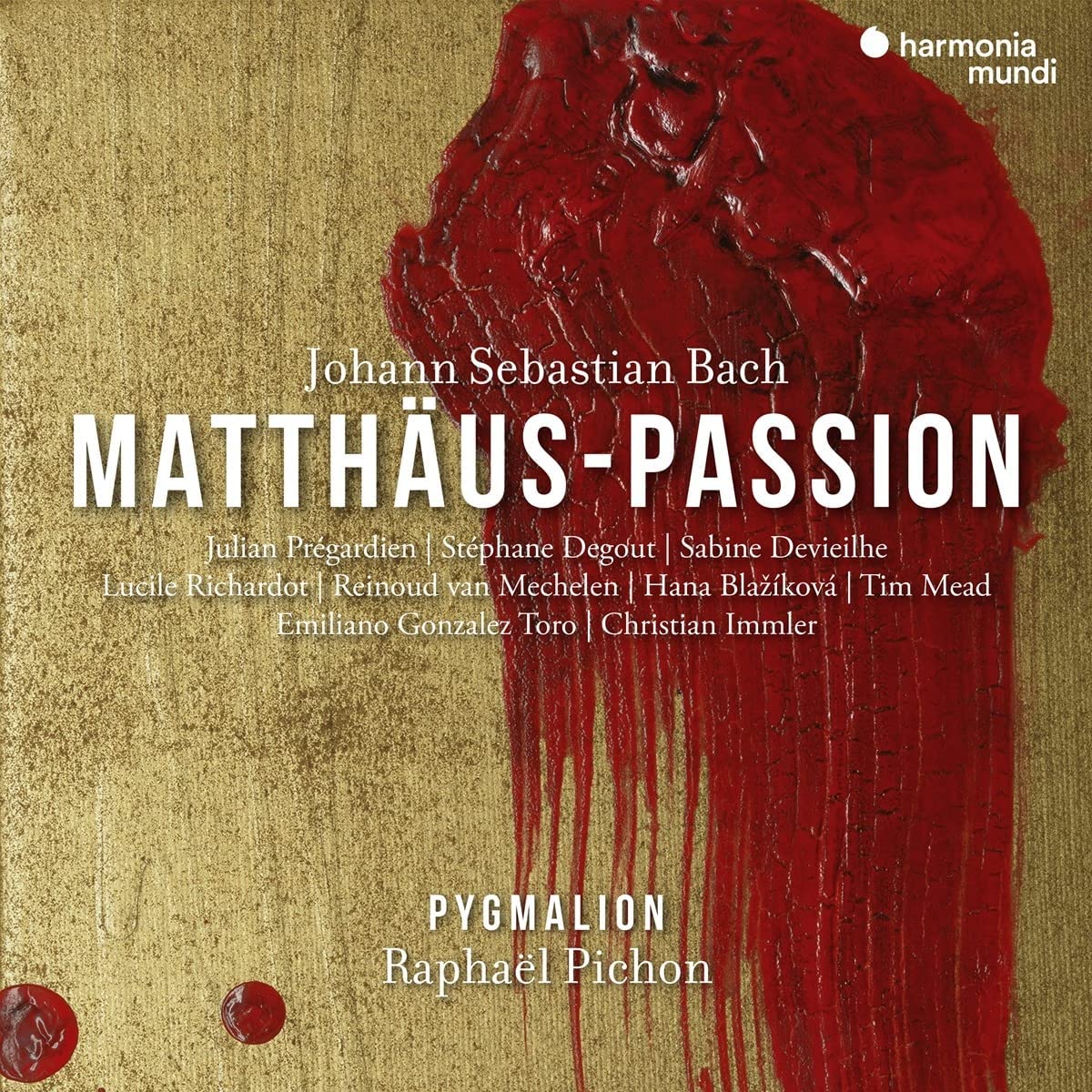
Bach: Matthäus-Passion

Julian Prégardien, Stéphane Degout, Sabine Deveilhe, Lucile Richardot, Reinoud van Mechelen, Hana Blaz>iková, Tim Mead, Emiliano Gonzalez Toro, Christian Immler, [Maîtrise de Radio France], Pygmalion, Raphaël Pichon
162:00 (3 CDs in a card box)
harmonia mundi HMM 902691.93

Click HERE to buy this on amazon.co.uk
[Sponsored links like this provide a VERY small income for the people who maintain the site]

This splendid recording of the St Matthew Passion by Raphaël Pichon’s Pygmalion has been a long time in gestation. It is worth the wait. First, it is technically excellent: clean, well-balanced and every line can be heard without distortion. Second, the dramatic structure of the work – so different from the St John – is carefully thought through and well-presented in a series of scenes between two book-ends: the Preparation of the Passover, the Garden, at the High Priests’, before Pilate, the Cross and the Burial. But most importantly, this is the first recording of the St Matthew that I have encountered where real care has been taken to match the quality of the singing voices to the resonance and sound quality of the period-instrument bands, and the result is arresting.

The forces are quite large. Each line in the two choirs is led by the concertisten singer who sings the arias allocated by Bach to each choir, and each choir has five soprano, two alto, two tenor and four bass ripienisti singers in addition, so the choral sound – though fairly substantial – matches the ‘solo’ singing. The only singer excluded from the choro is the Evangelista, Julian Prégardien, whose place leading the tenors of choir 1 is taken by the admirable Reinoud van Mechelen, whose high voice has that distinctively clean yet mellifluous ring. It is he and the alto of choir 1, Lucile Richardot, who exemplify the vocal style that Pichon is after. When I first heard Buß und Reu, I was convinced that the pure, slightly nasal, ringing tone was a male voice. Richardot matches the flutes so well, but is equally flexible and commanding with the strings in Erbame dich: these two are exactly the type of voices that work for me.

Sadly, the standard set by Richardot and van Mechelen is not met by the soprano or the bass of choir one. For all her admirable phrasing in Ich will die mein Herze schenken, Sabine Devieilhe is unable – or unwilling? – to control the wobble in her voice. Singing in duet with Richardot in So ist mein Jesus nun gefangen – taken at a spanking pace with elegant ornaments and cracking interjections from the 2nd choir – she manages better, so it is a real pity that she falls back on modern, singerly sounds as her default option. The other weak link is the B1, Stéphane Degout, singing Jesus and those choir 1 arias. His voice, though rich and characterful, sounds plummy and bottled – a throwback to the singing style of an earlier period and out of kilter with the razor-sharp strings (3.3.2.1.1 in each band) who provide the halo round Jesus’ music.

The concertisten in choir 2 are well known soloists in Bach’s music. Hana Blažíková in Blute nur, Tim Mead in Können, Tränen and Christian Immler in Gerne will and Gebt mir produce quality performances that match the instrumental colour splendidly. The tenor Emiliano Gonzales-Toro was known to me chiefly as the singer/director of his own version of the Monteverdi Orfeo, but is equally admirable here in Geduld. All these singers make this recording outstanding for their ability to subsume their soloistic persona into the overall sound pattern Pichon is creating. The choruses have edge and bite, and many of them are refreshingly brisk. Chorales are treated to their own persona, and are an integral part of the whole drama rather than the boring but necessary hymns between the real music that they can so often become.

Julian Prégardien is a wonderful story-teller, at once tender and dramatic, and with a feeling for the shape and import of each phrase within the whole narrative: his diction – a significant feature of every singer in this recording – is outstanding. It is this sense of drama that pervades this recording and provides its distinctive and very French take on the Great Passion. Apart from the full libretto, translated into both French and English, which occupies pages 38 to 105 of the substantial 111-page booklet in rather grey, arty typeface – so not easily readable –, there is room only for a basic list of players and singers together with one of those composite and very French interviews with Pichon and Prégardien about how they planned their take on the Matthew over a number of years. There is nothing about the music itself, its sources, versions, transmission and readings; nor about the singers, players, instruments or chosen temperament; nor about the key musical decisions such as when and where to use dual accompaniment, adding the harpsichord of choir 2. The basso continuo instruments are listed as a group together as in Bach’s very first version as well as with their respective orchestras – theorbo and organ with choir 1 and organ and harpsichord with choir 2. Why and where are the bassoons (present in both orchestras) added or do the violas da gamba play in more than the specific arias where they are scored? All of this suggests to me that Pichon is more interested in dramatic affekt than in serious HIP scholarship and I am left with a lot of unanswered questions. This is not necessarily a bad thing, but the buyer should beware.

Nonetheless, and despite my personal reservations about the suitability of two of the singers (which listeners may not share), this is an outstanding performance by any standards, and I warmly encourage everyone to buy it. It is on three CDs and is a real bargain, and the thought that has gone into its preparation and direction makes a welcome change from many of the more lumbering and dully correct performances to which we are often treated. I find the style, tempi and continuity convincing, while stripping away the varnish of respectability brings a glow of excitement to the treasure that lies beneath.

David Stancliffe

Categories
Uncategorized

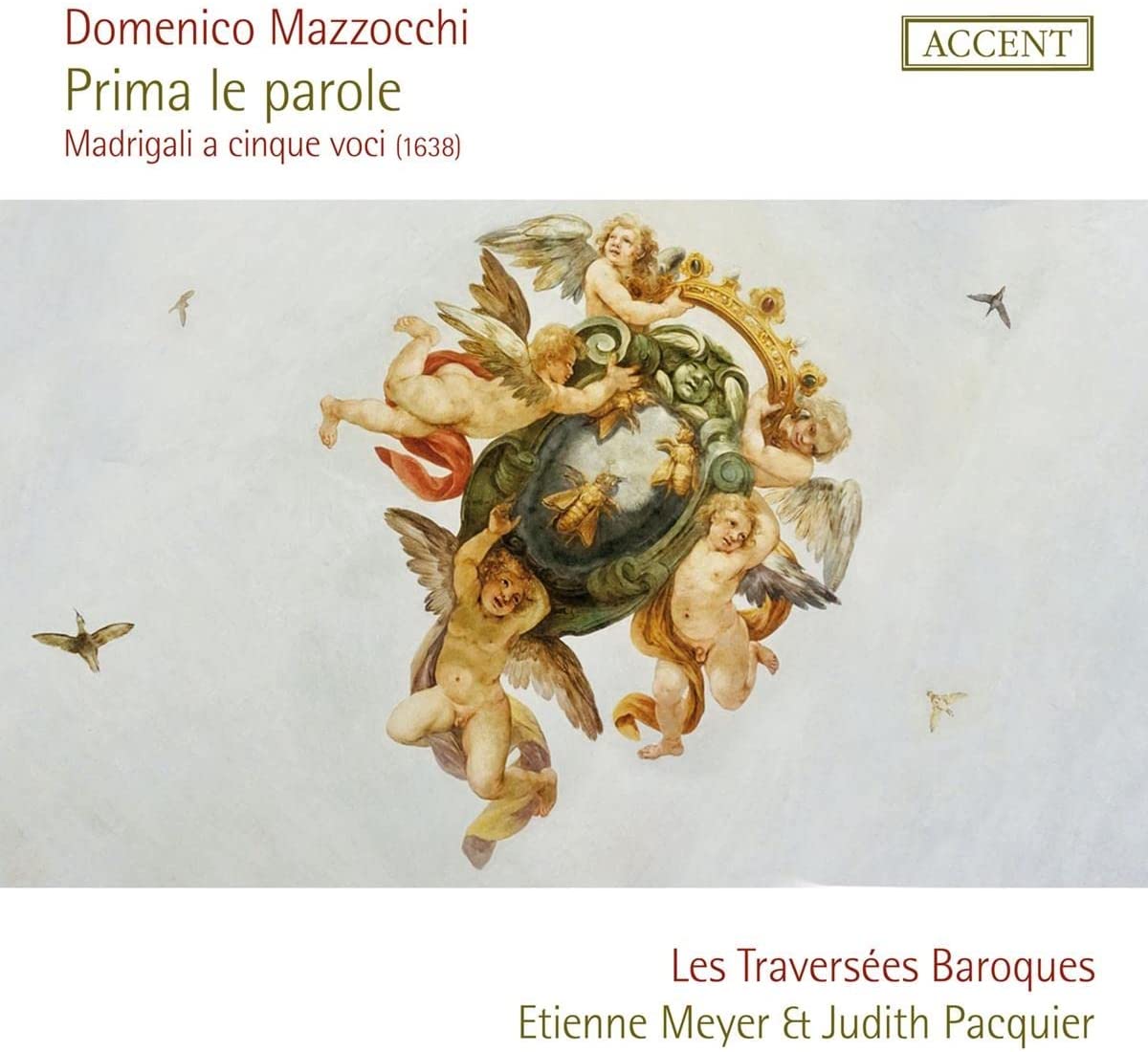
Dominico Mazzocchi: Prima le Parole

Madrigali a Cinque Voci, Roma 1638
Les Traversees Baroques, directed by Etienne Meyer
52:47
ACC 24384

Click HERE to buy this recording on amazon.co.uk
[Doing so helps maintain this free-to-view site…]

Over-petalled garlands of lyric poetry by Tasso, Ciampoli and others are responded to in the most extraordinary ways by Domenico Mazzocchi. This Roman composer is less known than his older contemporary, Monteverdi, whose influence can be heard, extended by later developments and by Mazzochi’s own fecund imagination. We need not hear the words to know that here we are descending a staircase of sleep or despair, there on a mountain top, open to breezes or distant echoing valleys. Particularly vivid are the tumbling mountain streams, swathes of swaying flowers and rumbles of bad weather – and all symbolic of course of the one universal topic. These effects are wonderfully enhanced by the imaginative choices of instrumentation in the continuo mix and concerted instrumental parts. A remarkably flowing and lyrical cornett sound, along with truly breath-inspired recorder playing, judicious use of dulcian and a varying spectrum of continuo sounds provides appropriate background canvasses for the vivid vocal parts. These vary from dramatic dialogues to rich quintets, sung with not a little ebullience. Another illuminating recording from this creative ensemble.

Stephen Cassidy

Categories
Recording

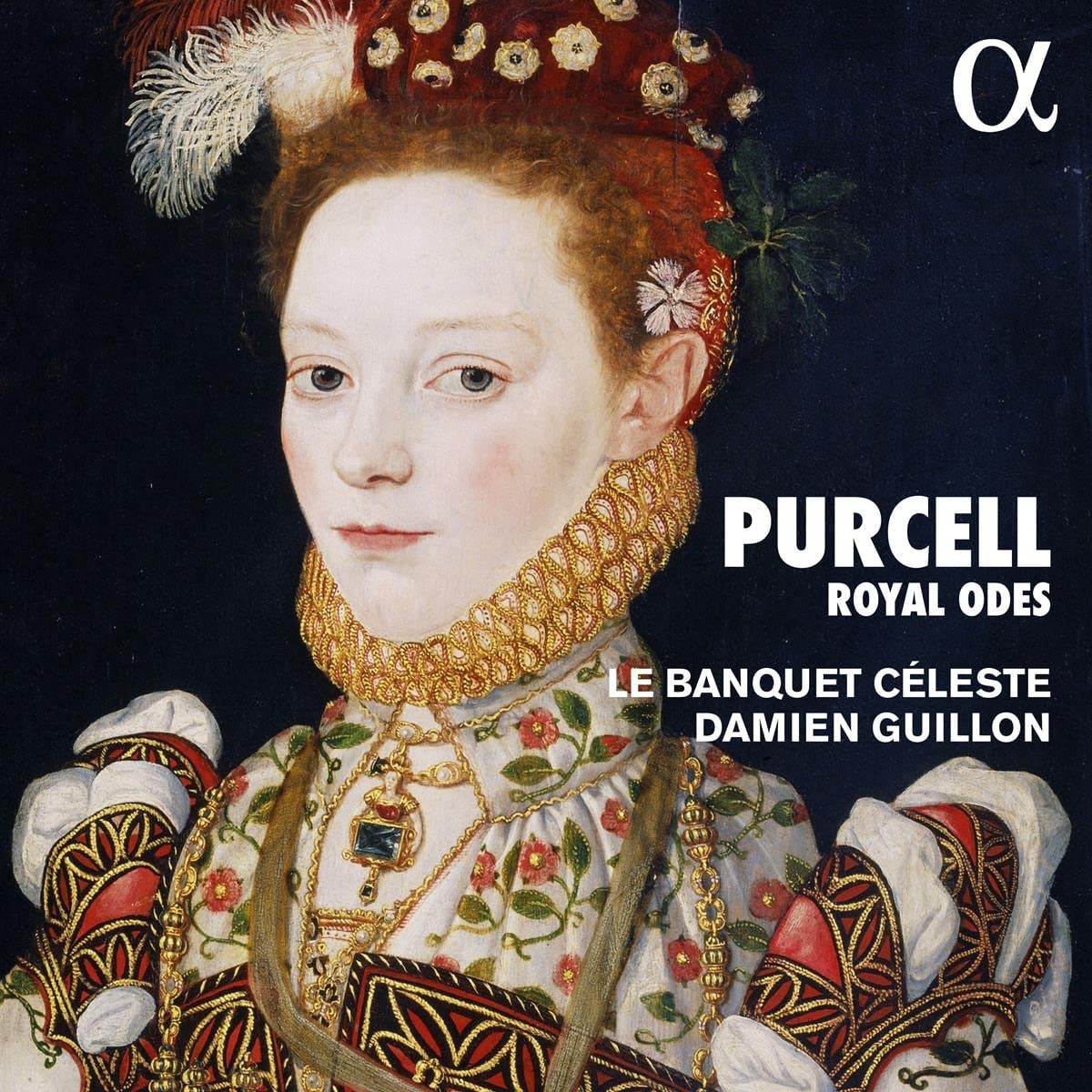
Purcell: Royal Odes

Le Banquet Céleste, Damien Guillon
63:23
Alpha Classics ALPHA 780

Click HERE to buy this recording on amazon.co.uk
[These sponsored links keep this site FREE TO VIEW]

I have recently rather late in the day encountered ‘Perpetual Night’, the superlative CD (harmonia mundi) of 17th-century English repertoire by mezzo Lucile Richardot and Sebastien Daucé’s Ensemble Correspondances. Now here’s another disc from a distinguished French vocal ensemble to demonstrate compellingly how flawed our thinking is when we take on a proprietorial attitude to our own early music. That applies especially to Purcell, who many mistakenly tend to regard as quintessentially English and in so doing overlook the influence in his work of both French and Italian music.  

If Continental influences are undeniably at work in Purcell’s music, the concept of the celebratory royal ode was an entirely English one, though one might perhaps find some analogy in the sycophantic opera preludes addressed to Louis XIV by Lully and his contemporaries. Today their principal interest, leaving aside the astonishing quality – out of all proportion to their occasional purpose – of the music Purcell provided for them, is their commentary on and reflection of historical events. Thus of the three odes included here ‘From those serene and rapturous joys’ (Z 326) is the welcome ode for Charles II composed in 1684, in the September of which the king returned to Whitehall following a summer spent partly in Winchester, thus the poet John Flatman’s references to the ‘rapturous joys a country life alone can give’. Rather less easily explained are the references to the raising of Lazarus. But it’s a splendidly variegated work, with a French overture, florid Italianate solo airs, and a very English ground bass in the superb bass air ‘Welcome as soft refreshing showers’. The welcome ode for 1683, ‘Fly, bold rebellion’ (Z 324) is also linked to a specific historical event, in this case the so-called Rye House plot, a thwarted attempt to kill both Charles and his brother James earlier in the year. There is not unexpectedly considerable menacing tub-thumping, but the jewel of the work is the exquisite trio for two sopranos and countertenor, ‘But heaven has now dispelled’, in this performance the delicately interwoven filigree of the voices and ethereal lightness of touch forming a striking contrast with much of what has gone before.  

With the third and longest of these odes, ‘Why are all the Muses mute?’ (Z 343) we come to the first welcome ode Purcell composed for a new king, James II after his accession to the throne in 1685. The anonymous text is ostensibly largely a panegyric, though not without barbs and ambiguities, in which the new and unpopular Catholic monarch is throughout addressed as Caesar. Its opening is unique. Instead of the expected overture, we are drawn into the work by an introverted solo for high tenor set to the words of the ode’s title, here beautifully done with rapt concentration by Nicholas Scott. Only after this verse does Purcell introduce an instrumental prelude. Other highlights in a remarkable piece include ‘Britain, that now art great’, a ground bass air for countertenor – in this case, another of the CD’s stars, Paul-Antoine Bénos-Djian – succeeded by a ravishingly lovely orchestral ritornello.

The scale of the performances is similar to that employed by Robert King in some of his more recent re-recordings of the royal odes. That is to say two voices per part in choruses and single strings per part. King himself has recorded ‘Why are all the Muses?’ in this way, which reflects the kind of forces Purcell would have employed. Comparisons are fascinating, with Guillon generally taking a more lively approach than the latter-day King, whose stellar group of soloists are inevitably more individualistic than Le Banquet Céleste’s beautifully tuned and integrated ensemble. Both approaches have their own value, with the mostly French performers relishing the marvellous expressive qualities inherent in Purcell’s writing and, unsurprisingly, the strong feel of dance it includes. An outstanding disc that underlines convincingly the fundamental fact Purcell is fully exportable to and performable by our near-neighbours. Coincidentally, while working on this review a newsletter from Le Banquet Céleste arrived in my in-box. Upcoming are two concert programmes devoted to 17th-century English music. And that can only be good news for all of us.

Brian Robins

Categories
Recording

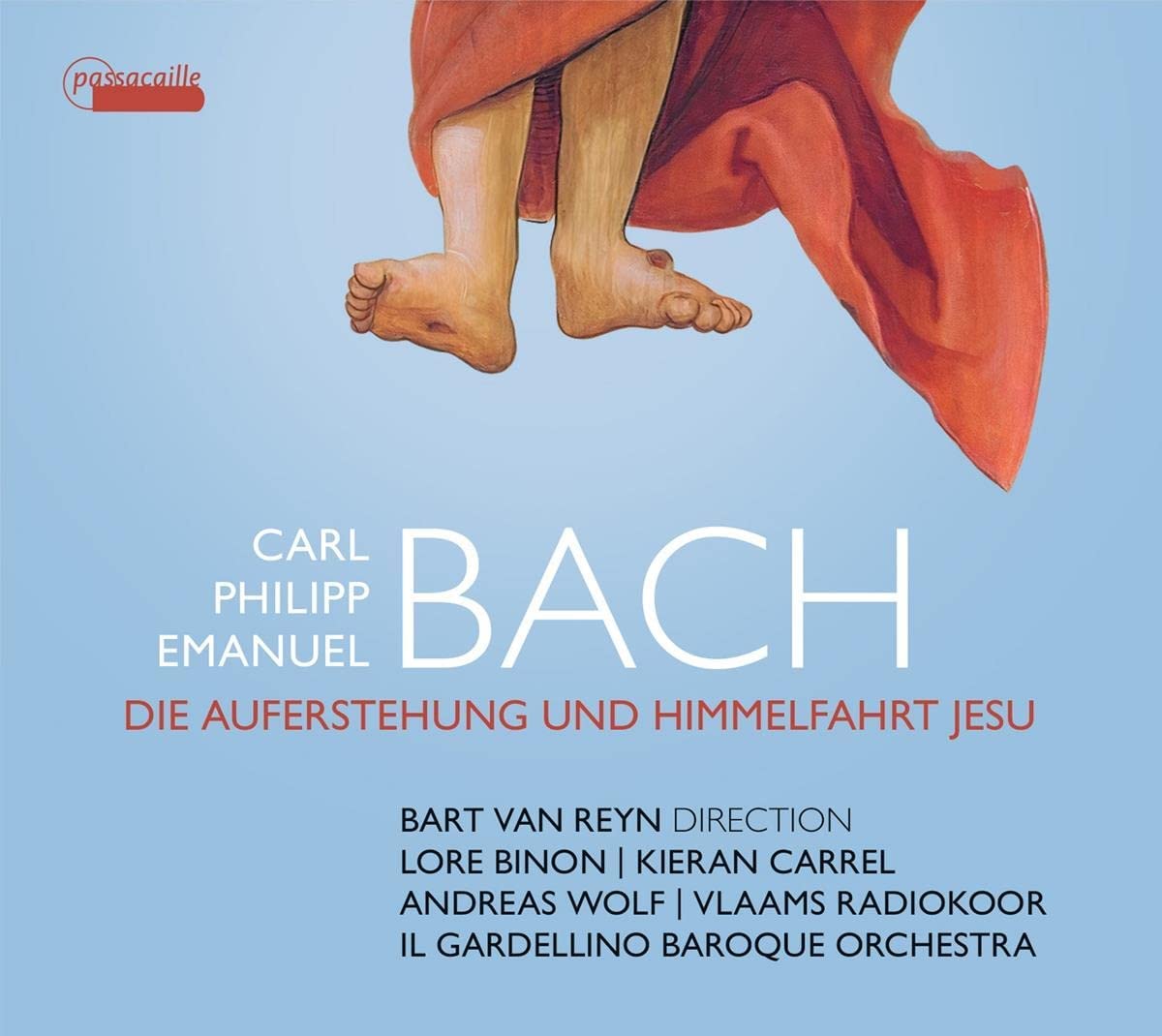
C. P. E. Bach: Die Auferstehung unf Himmelfahrt Jesu

Lore Binon soprano, Kieran Carrel tenor, Andreas Wolf bass, Vlaams Radiokoor, Il Gardellino Baroque Orchestra, conducted by Bart van Reyn
69:15
Passacaille 1115

Click HERE to buy this on amazon.co.uk
[These links help keep this site FREE TO VIEW]

In the press release the flautist and co-founder of Il Gardellino Jan de Winne speaks of CPE Bach’s oratorio Die Aufferstehung und Himmelfahrt Jesu as a ‘forgotten masterpiece’. Masterpiece? Yes, indeed this iconic work can deservedly be accorded such an epithet. But forgotten? That’s hardly an apt description for a work that has received distinguished recordings from such notable directors as Philippe Herreweghe (Virgin Classics) and different performances by Sigiswald Kuijken on CD (Hyperion) and DVD (Euroarts).

Composed in Hamburg in 1774, it has in keeping with the spirit of the times in north Germany a poetic rather than liturgical text, in this case, one by Karl Wilhelm Ramler that had been previously set by other composers including Telemann and Graun. It takes an overtly emotional response to the events of the resurrection and ascension of Christ, in addition to a long recitative for bass at the start of the second of the oratorio’s two parts recapitulating the events of and leading up to the Crucifixion. The recitative, which is part narrative and part direct speech is divided into alternating passages of plain recitative and accompagnato, thus contradicting the impression given in the libretto that it consists near wholly of the latter. It is a text well suited to both the ‘Sturm und Drang’ of the 1770s and Bach’s employment of the related Empfindsamkeit, the highly expressive sentimental style particularly fashionable in Berlin and north Germany. Thus the work encapsulates both these elements in the bass’s first aria ‘Mein Geist, voll Furcht und Freude’ (My soul, full of fear and joy), the conflicting yet at the same time parallel emotions expressed in music of quasi-Romantic turbulence and intensity. Exhilarating, mystical and tender by turn, Die Aufferstehung looks both back to the world of Bach’s godfather Telemann in its use of such a device as its ritornello chorus and forward to that of Haydn’s Creation and Beethoven. The latter indeed looms large over the concluding numbers, the bass aria ‘Ihr Tore Gottes’, all brass fanfares and dynamic thrusting against restraint, and the final chorus with its unison passages for male chorus and vigorous fugue.

The performance holds up well against its distinguished predecessors. Bart Van Reyn’s direction and the fine playing of Il Gardellino capture well the varied moods of the work and while his chorus may not quite match the very best groups it is well balanced and responds with both fervour and, where needed, a sensitivity clearly apparent as early as the lovely opening chorus, ‘Gott, Du wirst seine Seele’. Tempos are on the whole well judged, though the fugue that concludes Part 1 sounds rushed and consequently untidy. Unusually most of the important solo work is given to the male soloists, the soprano not appearing at all in Part 2. The singing of bass Andreas Wolf is outstanding – rounded and richly toned, while articulating both text and music with clarity. Kieran Carrel is a light lyric tenor who sings extremely capably without quite effacing memories of Christoph Prégardien, Herreweghe’s soloist. Lore Binnon sings the little allotted to the soprano with an appealing purity and freshness, although her ornaments are not always confidently turned. As is so often the case, there was sadly no evidence of a vocal trill throughout the entire performance.

This finely executed and dramatically convincing Die Auferstehung can certainly stand alongside the earlier versions of one of Bach’s most influential and significant choral works.

Brian Robins

Categories
Concert-Live performance

ST JOHN’S SMITH SQUARE EASTER FESTIVAL – VOX LUMINUS

For obvious reasons, St John’s Smith  Square is an ideal venue for a festival of sacred music for Holy Week. This Easter Festival, which took place between 10 and 17 April, featured a broad mix of repertoire from across the centuries, the concert on 14 April with the vocal ensemble Sansara and Fretwork illustrating the eclectic nature of the festival by including works by the Tudor composer Robert White and Arvo Pärt. Unsurprisingly early music was well represented, with concerts including Pergolesi’s Stabat Mater (Anna Devin and Hugh Cutting), Handel and Vivaldi (his Stabat mater, RV621 with Hilary Cronin and Cutting again, the former a Handel Festival prize winner, the latter a Ferrier award winner). Perhaps the most ambitious event was the candlelit late-night concerts by Sansara of Gesualdo’s tormented Tenebrae Responsories, given in a candlelit liturgical context over three nights. More traditional Easter fare featured in a Bach St John Passion (Polyphony and OAE under Stephen Layton), before the festival was brought to a conclusion by the Belgian-based ensemble Vox Luminus, under the unobtrusive direction of bass Lionel Meunier.

It was this concert that we were able to attend along with an audience that was disappointingly sparse given Vox Luminus’s present eminence among vocal ensembles. I suppose Westminster is perhaps not a place of choice for many potential concert-goers to be on an Easter Sunday afternoon. Sadly, too, the level of Schütz’s box-office appeal in this country is far from commensurate with his greatness as a composer, so that his profoundly affecting Musicalische Exequien was the centrepiece of the concert may also have proved a deterrent. A German requiem, the work was commissioned from Schütz for his own funeral obsequies by a German nobleman. In this performance, it was given within the context of a funeral, including the opening chorale ‘Mit Fried und Freud’ that accompanied the funeral procession into the church, and to conclude the exquisite German setting of the ‘Nunc dimittis’, which employs evocative in lontano effects, here most atmospherically brought off. It was an award-winning recording of the work in 2012 that first brought Vox Luminus to wide notice. With its alternation of tutti ensemble movements and Favoriten passages for one or more soloists, the Musicalische Exequien is ideally suited to the strengths of Vox Luminus, which over the years have cultivated the individuality of the singers, all of whom are required to undertake solo parts, within integrated ensemble singing in which the personality of each singer remains paramount. At St John’s, ensemble was further tested by a visitation to Vox Luminus of the Covid curse, necessitating several late replacements. It barely showed, the rare odd slip being of the kind that can occur at any time. Far more importantly, with the slight caveat that the ensemble’s principal soprano slightly tended to dominate the texture in ripieno passages, this was overall a deeply sensitive and moving performance that so obviously came from the heart.

Much the same can be said of the two Bach cantatas that made up the programme. Both ‘Christ lag in Todes Banden’, BWV4 and the so-called ‘Actus Tragicus’ (‘Gottes Zeit ist die allerbeste Zeit’), BWV106 are among the earliest cantatas Bach wrote and works that owe more to 17th-century predecessors such as Schütz and Buxtehude than the more modern type of Italianate cantata adopted by Bach in his later Leipzig cantatas. BWV106 is a funeral cantata probably composed during Bach’s brief Mühlhausen period (1707-08) for obsequies the details of which are unknown. Scored for minimal forces – SATB ‘choir’ – here of course rightly single voices per part – with solo interjections and just pairs of recorders (instruments associated with death during this period) and viola da gambas, and continuo. More consolatory than dramatic, the performance achieved a wonderfully intimate and inward-looking perspective on death, particularly touching in the exchange between the bass and the alto soloist’s chorale that immediately precedes the final chorale.

BWV4 could not have been a more appropriate choice to round off the programme, it being a cantata for Easter Sunday, the exact year of composition also not established, though it probably dates from his Weimar period (1708-13). It is cast in the form of a set of chorale variations, the melody retained throughout the seven verses which are varied both melodically and in their scoring and vocal disposition. Meunier here went with a larger-scale reading, employing three voices per part, doubtless so as to include all his performers, which caught the vibrant celebratory nature of the cantata effectively. This richly rewarding concert was rounded off by an encore in the shape of Buxtehude’s cantata, termed ‘aria’ in manuscript sources, ‘Jesu meines Lebens Leben’, BuxWV62, which is set over an ostinato bass. The timeline between Schütz and Bach was thus neatly bridged.

Brian Robins

Categories
Festival-conference

Les Traversées 2022

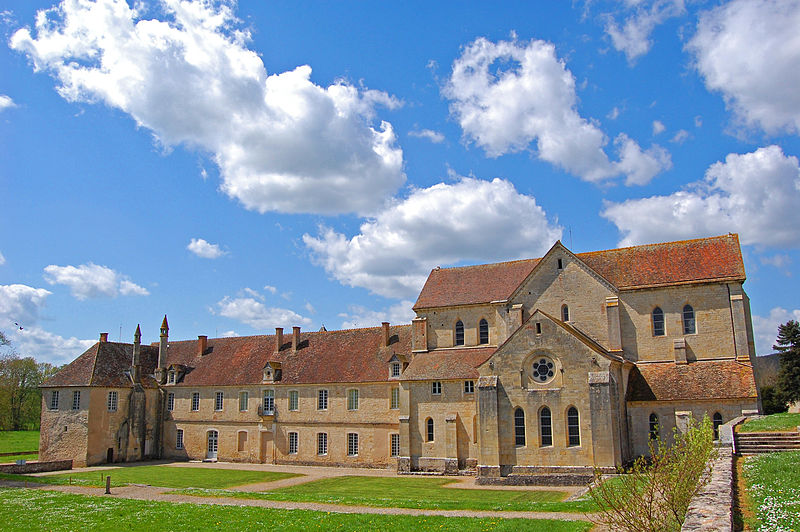
If you happen to be anywhere near the Abbaye Noirlac in central France on any Saturday between 18 June and 16 July 2022, be sure to check out this festival schedule: Les Traversées 2022 – with three events on each date and the option to include a picnic in your ticket price, this sounds like a marvellous way to spend a summer’s evening. Highlights for early music fans will be Aliotti’s “Il Trionfo Della Morte” on 25 June, and a St John Passion by Les Surprises on 16 July.

Categories
Recording

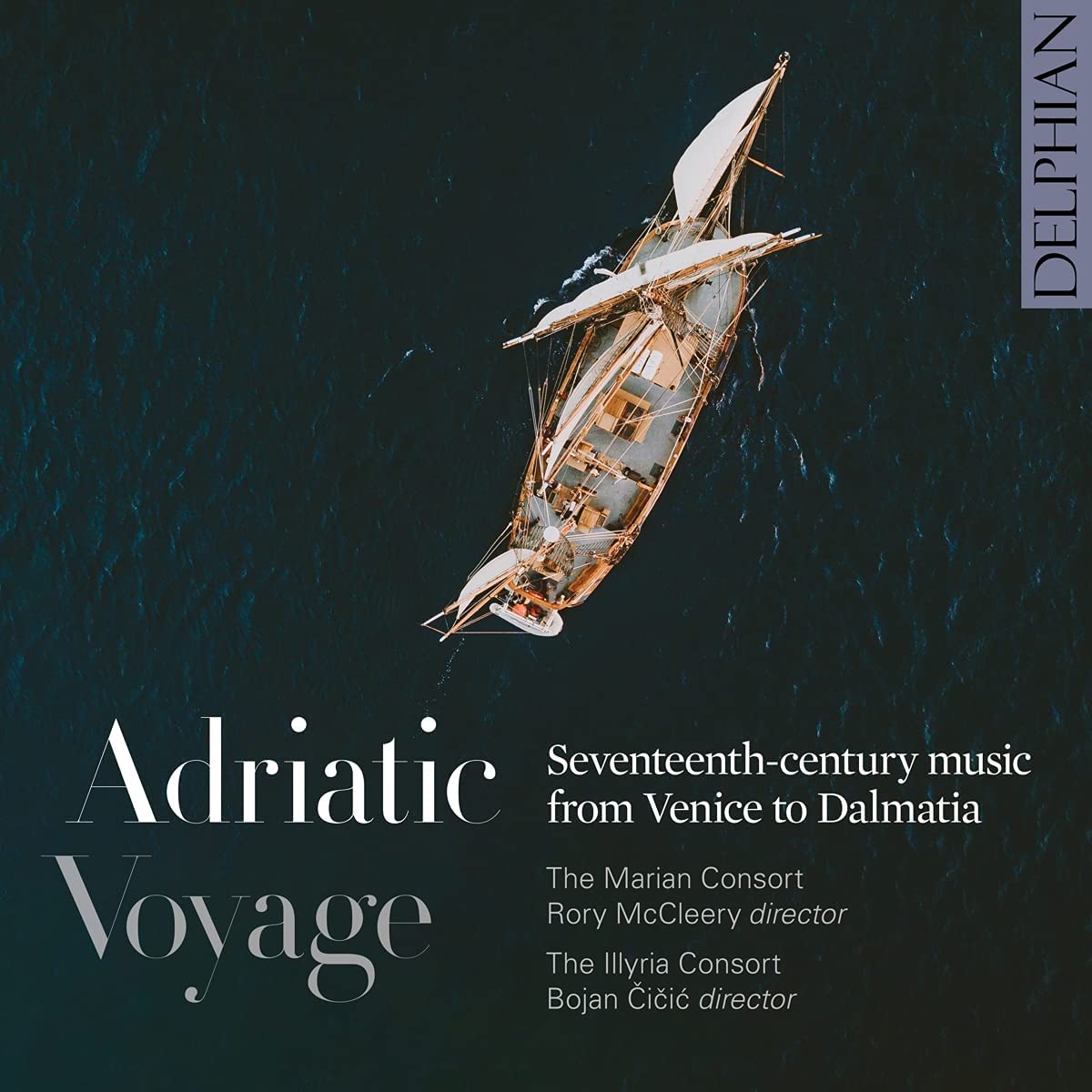
Adriatic Voyage

Seventeenth-century music from Venice to Dalmatia
The Marian Consort, dir. Rory McCleery | The Illyria Consort, dir Bojan Čičić
58:26
Delphian DCD34260

Click HERE to buy this recording on amazon.co.uk
[These sponsored links keep this site FREE to access!]

The premise behind this excellent recording is simple: it traces the musical connections between Venice and its dominions on the Dalmatian coast. The detailed booklet describes the historical background and the music presented. And what music! The five singers of The Marian Consort are individually very stylish singers, not afraid of using vibrato ornamentally but never allowing it to impact the tuning of their faultless ensemble singing. The aptly named Illyria Consort provides both the harmonic support the singers need in their solos and duets, and the glitter in the larger pieces, with Čičić’s violin and Gawain Glenton’s cornetto stylishly improvising around their lines. I was surprised to discover that only four of the 18 tracks are premiere recordings, but then with music of this quality (and there are some stunning pieces, such as Jelich’s beautiful tenor duet, Bone Jesu) it should not have come as a shock. Topped an tailed by arguably the best-known Dalmatian composer of the day, Francesco Usper (aka Sponga), this disc deserves all the awards it will undoubtedly garner.

Brian Clark

Categories
Recording

Unsung Heroine | Vision

The Imagined Life and Love of Beatriz de Dia
The Imagined Testimony of Hildegard of Bingen
The Telling
74:37
First Hand Records FHR123

Click HERE to buy this on amazon,co.uk
[Using these sponsored links keeps this FREE site alive]

The genesis of this CD is by no means simple, so it is important to give an outline of it here. In May 2021, one of the two singers of the ensemble The Telling, Ariane Prüssner, died prematurely and unexpectedly. The Telling had specialised in touring dramatisations of narratives compiled from early musical sources, and their latest two projects had been Unsung Heroine and Vision (detailed above). The soundtracks to arthouse films, these performances were recorded mainly in single takes and never intended for release in CD form. The music on the CD is extracted from larger works and verses are omitted, and where Hildegard left more than enough music to speak entirely with her own voice, Beatriz left only five songs, and her ‘life’ is eked out here with music by various other more familiar male troubadours. Fine musicians all, The Telling provide dynamic and convincing performances of this music which need no apology, and – notwithstanding the unusual and sad circumstances surrounding it – this is a very worthwhile project and a suitable testimony to the remarkable individual talents of Ariane Prüssner, but also to the combined dynamic of this distinctive ensemble. These two imaginative and dramatically effective sequences of vocal and instrumental music shed a valuable light on two musically gifted women, one very familiar and one still relatively unknown.

D. James Ross

Categories
Recording

Ou beau chastel

Leuven Chansonnier vol. 2
Sollazzo Ensemble
53:50
passacaille AMY059 | PAS 1109

Click HERE to buy this on amazon.co.uk
[Using these sponsored links will keep this FREE site alive!]

The Sollazzo Ensemble return to the Leuven Chansonnier for a second selection from the 62 works it records. Alongside the established composers (Ockeghem, Caron, Frye, Morton, and Busnoys), there is anonymous music which has not been found in any other source, and which supplies the title for their CD. The Ensemble provides convincing and musically engaging accounts of this important music, although just occasionally I felt that some of the songs were a little over-interpreted, with some unidiomatic vocal swooping and portamenti. This is living music, and performers who are undeniably very familiar with the repertoire must be permitted to interpret it meaningfully, but I felt that some of the mannerisms in the vocal contribution sounded disconcertingly out of period. That aside, these are bold and effective interpretations, and it is good to report that the ‘new’ anonymous material is every bit as fine as the established, ‘named’ music – but for the whim of the copyist, we might be adding to the output of one of the familiar masters here, or perhaps more intriguingly even adding to the panoply of the masters of the period. I found it particularly exciting to hear a very persuasive account of Walter Frye’s ubiquitous three-part setting of Ave Regina performed by voices and wind instruments – the performances in the 1980s (by, amongst others, René Clemencic) of the music of this period combining wind instruments and voices were often dismissed as eccentric at the time, but with the welcome challenging of the ‘a cappella orthodoxy’ may prove to have been a perfectly viable and plausible performance option. 

D. James Ross

Categories
Recording

Mirabilia Musica

Echoes from late medieval Cracow
La Morra
61:05
Ramée RAM 2008

Click HERE to buy this from amazon.co.uk
[These sponsored links help keep this site FREE]

In a fascinating programme note, La Morra’s director Michal Gondko draws attention to an account of around 1470 by Filippo Buonaccorsi (aka Callimachus) of music in Cracow, at that time the capital of Poland, as well as the two seminal manuscripts from which the music on this CD is extracted. The major discovery is the composer Mikołaj Radomski (fl c1425), who contributes an impressive polyphonic Gloria and a Magnificat, and who may also be ‘Nicolaus’, the composer of keyboard pieces and whose Nitor inclite is performed here. Also impressive is music by Petrus Wilhelmi de Grudenz, given a stunning performance, as well a strikingly original Gloria by Antonio Zacara da Teramo. The singing and playing of La Morra is of a very high order throughout, and they give very persuasive performances of this unusual repertoire. It can scarcely come as a surprise that an important kingdom such as Poland would at this time have boasted a thriving musical culture, but it is exciting to have this confirmed in these excellent performances of superb music from the period, which was either composed in Cracow or certainly performed in it. 

D. James Ross