Categories
Recording

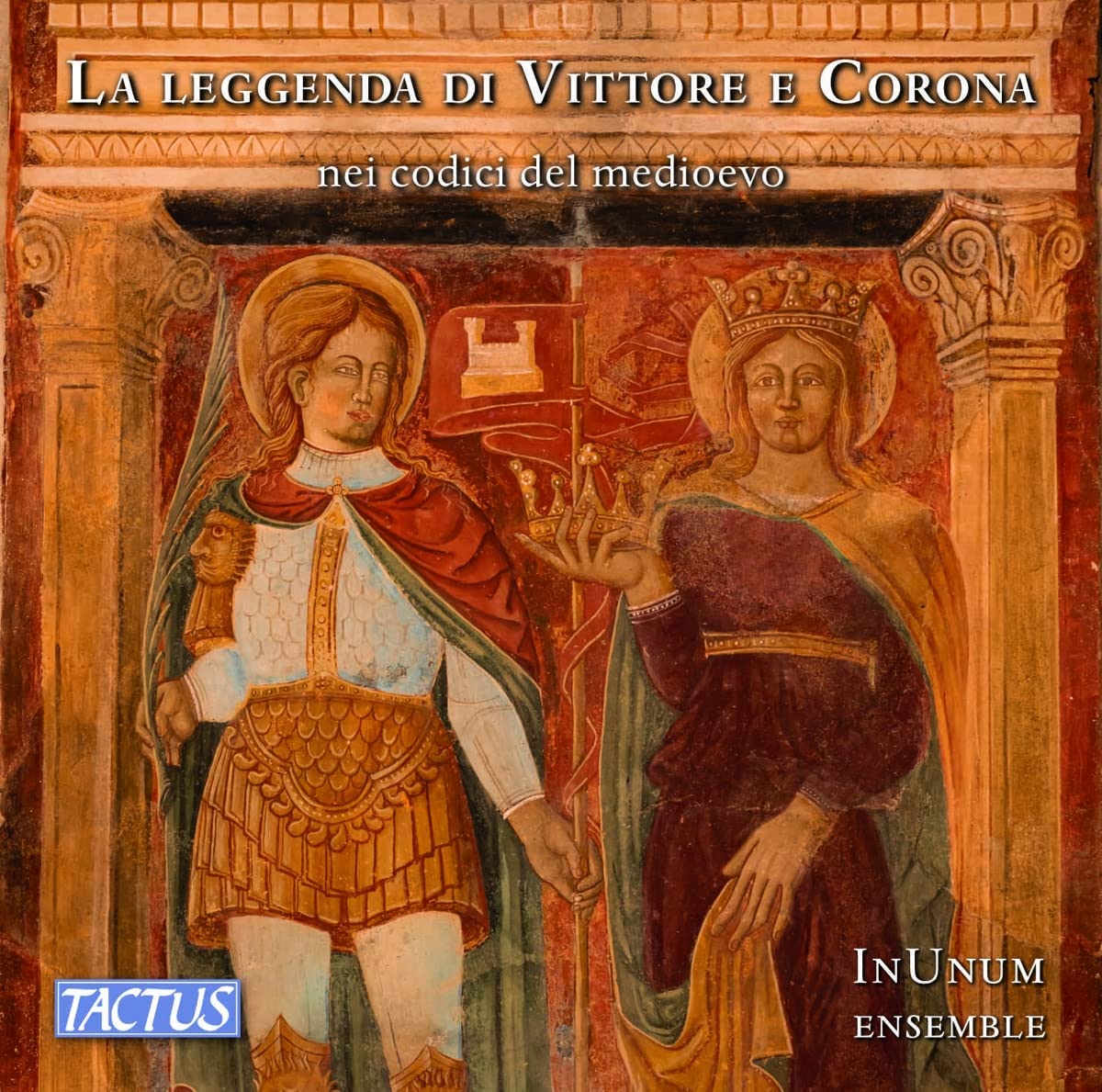
La leggenda di Vittore e Corona nei codici del mediovo

InUnum ensemble
53:04
Tactus TC 220002

Click HERE to buy this album on amazon.co.uk
[Doing so supports the artists, the record company and keeps this site available – if no-one uses these sponsored links, this ad-free site will disappear…]

The magnificent Renaissance and Baroque music associated with St Mark’s Basilica in Venice can overshadow its earlier repertoire, and this liturgical music from the 13th century, associated with the legend of the martyrs Victor and Corona is a revelation. The template for Christian martyrs from Roman times who were made the subject of Medieval cults consists of them expressing their beliefs in ways incompatible with the pagan Roman Empire and then undergoing unspeakable tortures before their faith is vindicated. This is the case with Victor and Corona, although they are unusual in suffering in parallel with one another – twice the bravery and twice the suffering. The versatile InUnum Ensemble mainly sing unaccompanied – monody with drones and simple polyphony – as well as playing a variety of instruments. The singing is absolutely beautiful, expressive and clear as a bell, with perfect intonation. The instruments – percussion, harp, organistrum, organ, vielle and recorders – are judiciously and cleverly employed to enhance the power of the textual narrative, and I found myself drawn into these extended legends. Understandably, the extensive texts are not printed in the programme booklet, but are available online – having recently been at work on the equally gory cult of St Katherine (she of the wheel), I preferred to draw a veil over the more gruesome details of what poor Victor and Corona were subjected to. Inevitably in a CD of this sort of repertoire, we are ultimately reliant on the skills and musicality of the singers, and I was utterly beguiled by the singing of the InUnum Ensemble, as well as being thoroughly persuaded by the manner of presentation of the repertoire and the discerning use of instruments. In a telling footnote emphasising the vulnerability of such early repertoire, the manuscript was stolen from St Mark’s around twenty years ago – fortunately, it had by that time been scanned. My mind turned to the wealth of repertoire from this period which has not yet been scanned, nor even catalogued.

D. James Ross

Categories
Recording

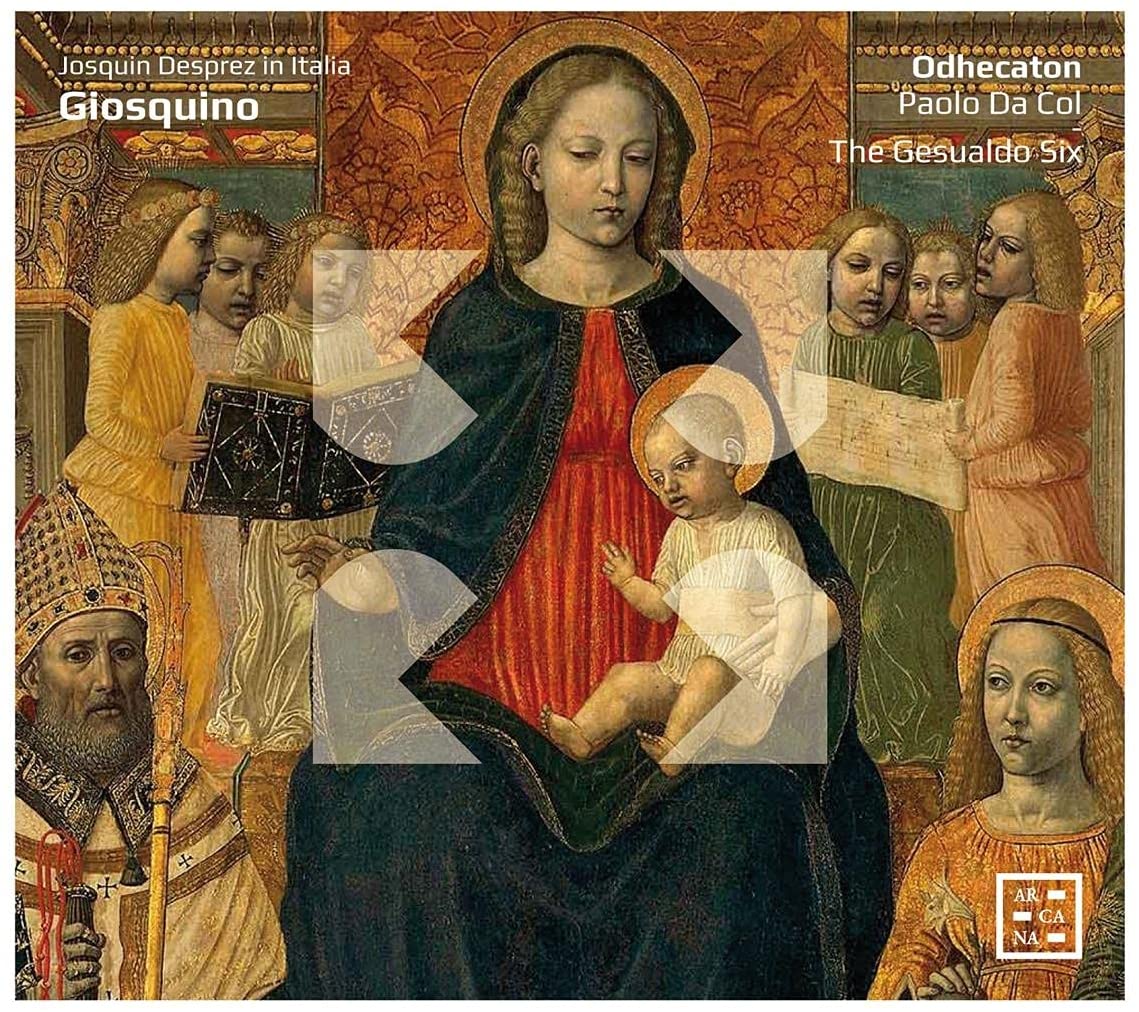
Giosquino

Josquin Desprez in Italia
Odhecaton, Paolo Da Col, The Gesualdo Six, [La Reverdie, La Pifarescha]
77:17
Arcana A489

Click HERE to buy this recording on amazon.co.uk
[Doing so supports the artists, the record company and keeps this site available – if no-one buys from these sponsored links, this ad-free site will disappear…]

Coinciding as it does with the reopening of the Burrell Collection in Glasgow, with its magnificent Renaissance tapestry featuring Hercules, dux Ferrara, one would like to think this similarly magnificent recording featuring Josquin’s Mass Hercules dux Ferrariae might have found its way into the gift shop. If you like your Josquin big and muscular, this is the recording for you. Looking at things through musicological glasses, we know that the ducal court of Ferrara possessed the musical resources to stage events of this stature, so the only consideration is whether Josquin’s music is effective, performed by these large forces. I think that the approach here, using as many as twenty voices for full sections, with solo voices emerging to perform the more intricate passages works extremely well. The otherwise detailed programme notes are inexplicably uninformative about the role played by the wind instruments – I am sure that the voices are supported by cornets and sackbuts in several tracks, and one photo of the recording sessions would seem to confirm this. If this is indeed the case, the blend of voices and brass is exemplary, and again highly effective. I have to say, I felt the two short instrumental tracks sound a little out of place in this programme of largescale sacred music. The programme ends with Josquin’s extraordinary 12-part setting of Inviolata, integra et casta in which all the vocal and instrumental forces combine in a dramatic performance tour de force. I have recently suggested that this work dates from later in Josquin’s life, and through his pupils kicked off the early 16th-century vogue for works in many voice parts (Brumel, Gombert, Carver – www.earlymusicreview.com/robert-carver-exploring-his-aberdeen-connections) – Camilla Cavicci’s programme note points to the interest in the cult of Franciscan immaculatism at the court of Ferrara as a possible alternative context for the work. Either way, it makes for a dramatic conclusion to this fine CD, and provides more persuasive evidence for the more flamboyant and lavishly scored performance of works from the 15th and 16th centuries.

D. James Ross

Categories
Recording

Handel: Messiah

Eboracum Baroque, Chris Parsons
132:08 (2 CDs in a card triptych)
1 98000 82190 6

If you would like to by this, you can use the Twitter handel @eboracumbaroque

Whenever I am presented with a new version of a frequently-recorded work such as Messiah, my first question has to be what does this performance add to the body of existing recordings? After I have expressed my admiration for this project, conducted under the most difficult pandemic conditions and representative of the sort of ‘can-do’ attitude which has seen us through the worst of Covid restrictions, I have to report that this recording doesn’t really add much at all. Although its virtues are several, the problems with it are – I fear – predominant. It is a reduced-forces performance (the oboes are dropped and everything else is one-to-a-part), by its own admission unlike any performance from Handel’s time, providing us with what the performers hope will be ‘an exciting take on Handel’s masterpiece’. While the singing of a line-up of young soloists, who double as chorus, is generally perfectly presentable and the instrumental playing is effectively detailed, the latter is underpowered and the former is undistinguished – and neither of these features is adequate in a field of superb performances. While audiences would have been forgiving of the occasional blurring due to social distancing in a live performance, this is harder to condone or live with in a recording. Problems are compounded with the ‘popping’ of a mic in several of the choral tracks. I wanted to be more positive about this crowd-funded recording by what is clearly an enterprising and excitingly talented young ensemble out of York University, but perhaps pressing ahead with a recording of an established classic in these far from conducive conditions was a mistake.

D. James Ross


Categories
Recording

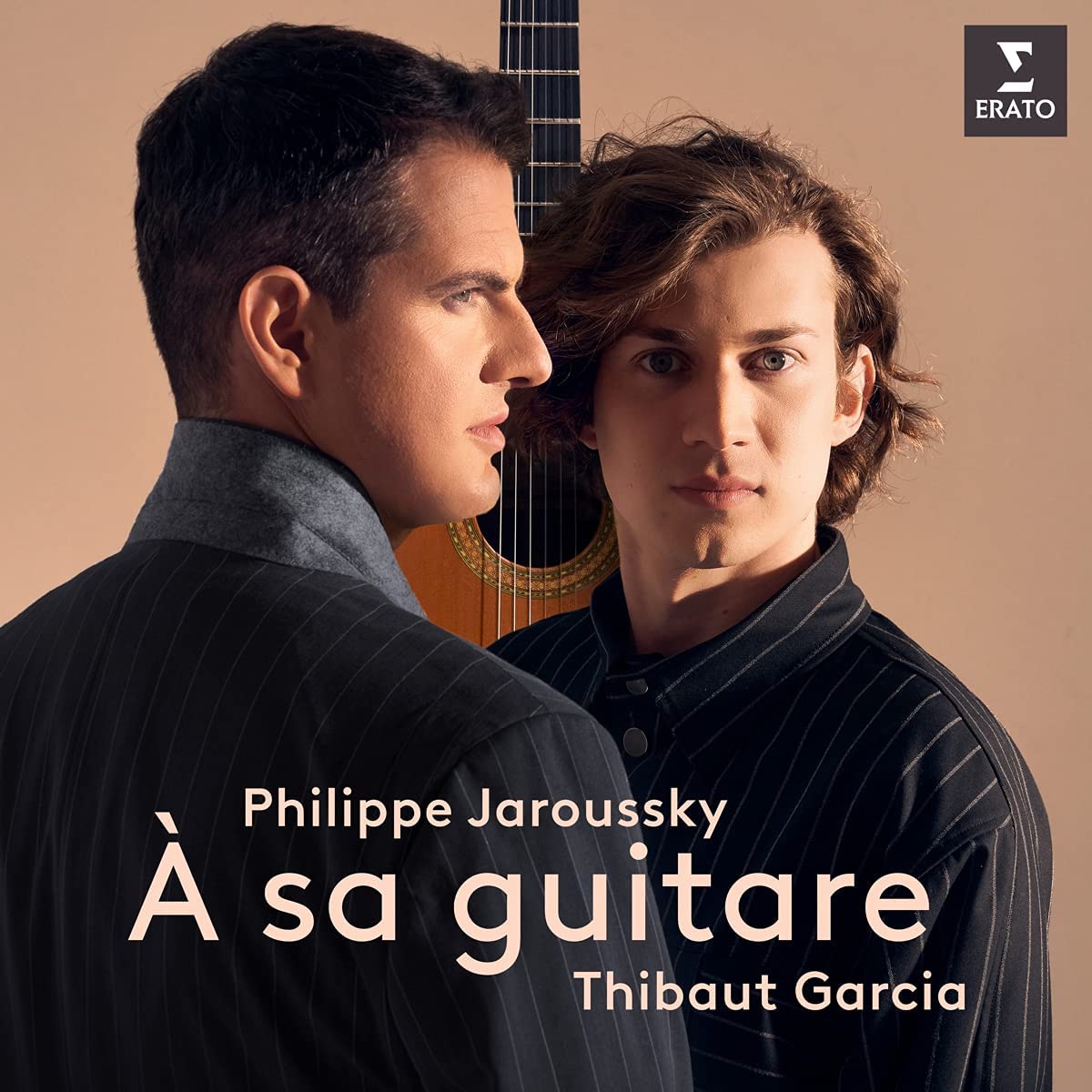
À sa guitare

Philippe Jaroussky, Thibaut Garcia
69:03
Erato 0 190295 005702

Click HERE to buy this album on amazon
[Doing so supports the artists, the record company and keeps this site available – if no-one buys, no money is made and the site will disappear…]

This eclectic CD seems to be the result of two musicians ‘clicking’ and enjoying making music together – and this enthusiasm infuses the wide range of repertoire represented here. While Jaroussky’s countertenor voice is largely associated with music of the Baroque, Thibaut Garcia plays a modern guitar and the pair range throughout the entire history of music from the 16th to the 20th centuries. Curiously, the earliest repertoire (Dowland and Purcell) and the latest repertoire (Poulenc, Granados, Rodriguez, and Britten) sound the most effective, while the classical and romantic music is more problematic. Perhaps this is less due to the arrangements for guitar, which are surprisingly effective, than to the appropriateness of the countertenor voice for this repertoire. Schubert’s Erlkönig is a case in point. The contrasting use of different registers in the original is turned on its head, while the guitar struggles to portray the pounding hooves of the horse with anything like the drama of Schubert’s original writing. I remember attending a performance by the countertenor Andreas Scholl of romantic Lieder, and I had exactly the same reservations about that. It seems inevitable that specialists in the music of a particular period find the grass greener in unrelated periods. This CD is evidence that, while the musicians may be superb exponents of their art, such explorations can only be partly successful. And then again, the lovely modern ballad Septembre by Barbara works superbly well – perhaps the mistake was feeling the need to spread themselves across the history of music, rather than finding truly sympathetic repertoire. To end on a positive note, the two musicians’ musical rapport and superb musicality emanate from every track, and the repertoire which does work is beautifully executed.

D. James Ross

Categories
Recording

Vivaldi: Entre Ombre et Lumière

Caroline Champy Tursun mezzo-soprano, Ensemble Baroque de Toulouse, Michel Brun
61:02

Click HERE to buy this on amazon.co.uk [digital only] – These sponsored links are the only way to support this FREE site.

This CD features Vivaldi’s Stabat Mater RV 621, sung by mezzo-soprano Caroline Champy Tursun, who also supplies a selection of arias from Bajazet, Giustino, Farnace and Orlando furioso, while the ensemble’s director appears as flute soloist in the flute Concerto Il Gardellino and the strings contribute the Sinfonia al Santo Sepolcro Rv 169. Recorded using a system called ECA in the Chapelle Notre-Dame-d’Alet, the performance is extraordinarily vivid – to my ear, unsettlingly so! As most of the orchestral playing is one-to-a-part and the default approach is distinctly ‘choppy’, I found the occasional legato sections, as in the slow movement of the flute concerto, a blessed relief, while much of Tursun’s singing was also pleasantly musical. The presentation of the package is distinctly odd – I still haven’t found a record label or a number, so have stated the group’s website in its place, although that doesn’t appear to be on the package either. The single CD is attached to the bottom of a box, which accommodates a huge folded sheet of programme notes, like a motoring map and for all its size only in French. Of course, this eccentric presentation need not put anyone off purchasing this CD, except that it is a reflection of the eccentricity of the performance, which seemed to go out of its way to distort Vivaldi’s music in a variety of ways. I have mentioned the persistent choppiness, and in the Sinfonia Al Santo Sepolcro a rather arch approach to the legato texture made this piece sound equally eccentric. Poor Vivaldi seems particularly open to ‘interpretation’, to the extent that it is quite unusual to hear his music given a good straightforward performance. It is probably true that Vivaldi is played too much, but rather than finding some new spurious approach to his music, why not turn to his less frequently played contemporaries? The present forces could easily have presented fine performances of these pieces, but seemed too intent upon being quirky.

D. James Ross

Categories
Recording

Gesualdo: 6th book of madrigals

La légende noire, La Guilde des Mercenaires, Adrien Mabire
65:56

Click HERE to buy this as a digital download from amazon.co.uk
[These sponsored links keep this website FREE to access]

These performances of madrigals from Gesualdo’s extraordinary final publication, Book VI, a work of stunningly daring harmonic progressions and musical non sequiturs, are themselves revelatory. La Guilde des Mercenaires under the direction of Adrien Mabire are attempting something revolutionary, performances of Gesualdo with wind instruments. The programme note asks why performances of Monteverdi are regularly presented with instruments, while Gesualdo is almost invariably presented a capella. The answer seems obvious – that while Gesualdo’s highly chromatic idiom is tricky for singers, it is perhaps even more tricky for early wind instruments. These performances seem to belie these difficulties, as the wind instruments, occasionally playing on their own, never sound less than comfortable. Whether this is due to the technical proficiency of the players, or whether after all Gesualdo’s writing is more about unexpected progressions and juxtapositions rather than sheer chromaticism, and therefore possibly easier for wind players than singers, the overall effect is very convincing. Part of the ongoing questioning of the myth of a capella performance, it is encouraging to see younger players challenging the old dogmas of HIP performance and exploring alternatives. The wind component of these performances is a real revelation – the vocal contribution is also pretty impressive, and when voices and instruments combine we get a genuine flavour of a whole new dimension of Gesualdo’s music. I still remember the effect of first hearing Byrd’s Great Service with wind and before that, performances of Dufay Masses with voices and wind, and I can’t help feeling that this recording is a similar moment of transformation.

D. James Ross

Categories
Recording

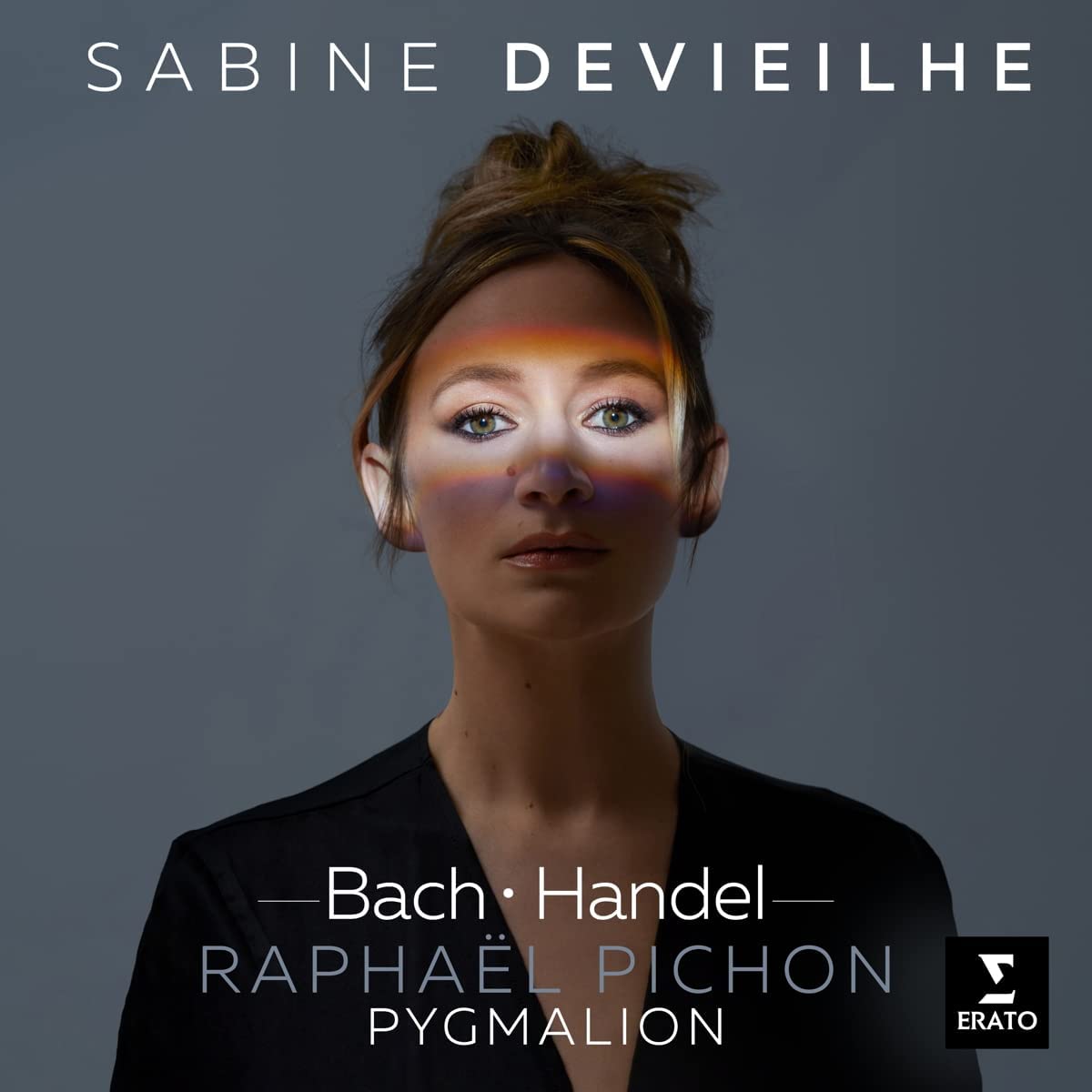
Sabine Devieihle: Bach · Handel

Sabine Devieihle: Bach · Handel
Pygmalion, Raphael Pichon
83:37
Earto 1 90296 67786 1

Click HERE to buy this album on amazon
[Doing so supports the artists, the record company and keeps this site available – if no-one buys, no money is made and the site will disappear…]

The stated aim of this CD is ‘to portray affliction and repentance as well as joy and desire through the works, sacred and profane,’ of Bach and Handel. This catch-all mission statement has the ring of something made up to try to cover an eclectic range of performances, and indeed that proves to be what we are presented with. However, the sweet-voiced Sabine Devielhe sings so expressively and exquisitely while the forces of Pygmalion make such a wonderfully effective contribution that it almost doesn’t matter that the thematic links may be a little tenuous. The programme provides beautiful performances of Bach’s cantatas BWV 51 and 199, as well as the Sinfonia from BWC 199 and the sacred song Mein Jesu was vor Seelenweh BWV 487. Perhaps the odd part of the programme is that where a further couple of Bach cantatas and sacred songs could have provided the balance, the performers turn instead to the oratorios and operas of Handel. We have two arias from the Brockes Passion, interspersed with two arias from Giulio Cesare, rounded off with the final aria from Il Trionfo del Tempo e del Disinganno. Interestingly, the Brockes Passion finds Handel at his most Bachian, and the direct comparison that this juxtaposition invites is instructive. The impressive Devieilhe proves equally effective as a singer of Baroque opera, while her account of the concluding recit and aria from Il Trionfo del Tempo e del Disinganno is simply spellbinding. The concluding showpiece, BWV 51 Jauchzet Gott in allen Landen, in which Devieilhe duets dramatically with Pygmalion’s trumpeter, Hannes Rux, is a suitably showy conclusion to this enjoyable and impressive CD. Raphael Pichon, who can on occasion be a bit of a showman, demonstrates here that he can direct with subtlety and refinement, allowing this powerful music to speak very much for itself.

D. James Ross

Categories
Recording

Salve Regina

Motets by Hasse and Porpora
Clint van der Linde, Les Muffatti
69:07
Ramée RAM 2012

[Click HERE to buy this on amazon.co.uk. These subsidised links do not bring in a lot of money, but they do keep the site online and FREE!]

Loosely based around a ‘grand tour’, undertaken and recorded in a diary between 1713 and 1715 by one Corneille-Jean-Marie van den Branden, an aristocratic Netherlander, this collection of Neapolitan and Venetian music is of particular value for including first recordings of motets by Hasse and Porpora. Porpora’s Nisi Dominus is indeed housed in a collection in the archiepiscopal archives in Mechelen that has been linked to van Branden, having been presented by him to cathedral there. Scored for solo alto and strings, it must therefore be an early work. There are five movements, the second of which, ‘Vanum est vobis’ has an elaborate violin solo, while ‘Gloria patri’ springs a surprise by unexpectedly changing metre to triple time to carry the motet to a brightly exuberant peroration.

Of greater interest is the other first recording, a setting by Hasse of highly dramatic verses, Hostes averni (‘Foes roaring with infernal rage’), again set for solo alto and strings. The extensive opening aria reflects the text, a surging, driving movement with bravura writing for the singer underpinned by fierce scalic passage work for the orchestra. An intense accompagnato follows, this quasi-operatic motet concluding with a totally contrasted aria (‘Blanda in prata’) typical of the mellifluous sweetness that earned Hasse the soubriquet ‘il divino Sassone‘ in Italy. In addition to the premieres, Porpora is at his most beguiling in a Salve Regina (the opening is pure ecstatic balm), while Hasse’s Alma Redemptoris Mater attempts successfully in its ability to seduce the senses. Finally, to return to the Branden connection, there are two of Vivaldi’s brief string concertos, RV 154 in G minor and RV 136 in F. The traveller records being taken by Vivaldi to a concert at the Pietà.

The programme, then, is an interesting one, the performances regrettably less so. Clint van der Linde is a South African countertenor whose tone is generally pleasing, though upper notes have a tendency to be a bit hooty and intonation is not always completely secure. Where however he is ill-equipped for these works is the lack of technique to do full justice to works composed for virtuoso castrati. While passaggi are capably sung and cantabile lines nicely sustained, ornaments in general are poorly articulated and there is no trill, an absolutely essential piece of technical equipment in this music if it is to make its full effect. Perhaps most damagingly of all, van der Linde’s diction is so poor as to at times give the impression that he is singing vocalises. This lack of projection and clarity is critical in music that oozes the fervour and theatricality of the counter-Reformation from every pore. The neatly turned orchestral playing both in accompanying the motets and in the concertos is of a high standard, but in serious need of a shot of Mediterranean brilliance and colour. It reminds me of what we thought of as stylish Baroque playing before the best Italian groups wrested back their repertoire from northern Europeans.

In sum, if you mainly enjoy your music as background or in car the disc will make for a pleasing experience; if you look for something that probes more deeply then it may not be for you. But van den Branden’s travel diaries sound fascinating, a kind of Dutch Burney avant la lettre.

Brian Robins

Categories
Recording

Rameau: Grands Motets

Choeur & Orchestre Marguerite Louise, Gaétan Jarry
77:43
Château de Versailles Spectacles CVS 5052

Click HERE to buy this recording on amazon.co.uk
[These sponsored links are the only way to keep this site free]

Such is Rameau’s renown as an opera composer that today we have a forgivable tendency to forget that the long period of his creative life before the sensational appearance in 1733 of Hippolyte et Aricie was devoted near exclusively to sacred music. As Gaétan Jarry notes in a long and helpful note, Rameau was organist of ‘at least a dozen churches’, though his observation that not a single organ work of Rameau’s has come down to us can almost certainly be explained in one word: extemporisation. Such was its importance as a fundamental of French organ technique that unless someone was on hand to transcribe it such improvisation belonged near exclusively to the moment.  

Unlike Lully and Delalande, Rameau’s output of the major sacred form of the Baroque in France, the grand motet, is small, just four examples considered to be authentic being extant (a fifth, Diligam te has been dismissed from the canon). All four are included on the present disc for the first time. Of these Laboravi clamans, a setting of verse 3 of Psalm 69, is a tiny work (just 73 bars) of uninterrupted counterpoint, its long melismatic lines reflecting its opening line, ‘I am weary of my crying’. The other three motets are on a considerably larger scale, alternating contrasted solo and solo ensemble verses with those for full chorus. Each has its own distinctive character. Quam dilecta tabernacula (‘O how amiable are thy dwellings’, a setting of Psalm 84 (83)), for example, opens with tranquil, luminescent flutes and a soprano solo, sung with vernal freshness by the excellent Maïlys de Villoutreys. It’s a mood broadly sustained throughout the work, a brief excursion for a joyous triple-time contrapuntal chorus at the words, ‘My heart and my flesh rejoice…’ being an exception. In convertendo (‘They that put their trust in the Lord’, Psalm 125 (126) on the other hand has a text that juxtaposes the pain of captivity in Babylon with joy at the prospect of release. In keeping with such ambiguity, it contrasts the exuberant joy of ‘Magnificavit Dominus’ a florid duet for soprano and bass (Villoutreys again superb with the fine bass David Witczak), with, for example, the final movements, a madrigalian solo trio, ‘Qui seminant’ (They that sow in tears) followed by a magnificent chorus that opens with astounding chromatic harmony, a passage as great as anything in the choral works of Handel or Bach. The final and longest motet, Deus noster refugium (God is our refuge, Psalm 46 (45)) has a text filled with vivid imagery that was a gift to a man shortly to become one of the great dramatic composers of the age. One notes among many examples the shuddering strings at ‘the earth is moved’ and the thrilling, surging impetus of the choral writing at ‘The waters roared out …’

As already intimated the performances are outstanding, with the chorus aided by the acoustic of the Chapelle Royale in Versailles achieving a wonderful breadth and depth. All six soloists are first-rate, with special plaudits once again going to haute-contre Mathias Vidal. Jarry’s outstanding ensemble can today be considered among the best of the Baroque ensembles in a country more richly endowed with them than any other.

Brian Robins

Categories
Recording

Resurrexi!

Easter in Vienna with Mozart and the Haydn brothers
Emily Dickens, Rebekah Jones, Philippe Durrant, Graham Kirk SmSTB, Choir of Keble College, Oxford, Instruments of Time and Truth, directed by Paul Brough
56:05
CRD 3539

Click HERE to buy this recording on amazon.co.uk
[These sponsored links are your only way to support the site and keep it FREE to access]

In an amusing and rather winning introductory note Paul Brough, the musical director of Keble College, disarmingly explains that the objective of this recording is not an attempt ‘to give a lesson in history, liturgy, theology or musicology’ but rather to bring to the listener ‘the powerful truth of Easter …’ That, then, is the spirit in which I will try to review it.

Despite the disclaimer, the recording will indeed recall to many the kind of liturgical reconstruction that was fashionable in the closing decades of the last century, especially the pioneering work of Andrew Parrott and Paul McCreesh. It is centred round the idea of how an Easter Mass might have been celebrated in Salzburg in the 1770s, though for some inexplicable reason the CD carries the subtitle ‘Easter in Vienna…’. It is planned around Mozart’s Mass in C, KV 258, which dates from the middle of that decade and takes its name from speculation that it is the Mass given at the consecration of Count Ignaz Friedrich von Spauer as Dean of Salzburg Cathedral in late 1776. Scored with trumpets and timpani, it is therefore a hybrid work, a so-called missa brevis et solemnis that although ceremonial in character conforms to the famous (or maybe infamous) dictum of Archbishop Colloredo that the entire Mass – including plainchant and additional liturgical movements – should not last longer than 45 minutes. Each of its movements is therefore extremely brief – the entire Gloria takes only 2½ minutes in the present performance – with little repetition of text and the brief passages for the four soloists mostly integrated into the choral texture, perhaps, as Stanley Sadie pointed out, most interestingly in the unusual antiphonal exchanges between soloist and choir in the Benedictus. It was a form that, as Mozart wrote to famous theorist Padre Martini of Bologna, required ‘a special study’ and not one that is likely to have appealed to him.

Otherwise choral settings include the opening Marian antiphon, Mozart’s C-major Regina coeli, KV 276/321b, composed in 1779 for an unknown occasion, joyously bright but for a brief appropriately prayerful digression at ‘ora pro nobis’. Of earlier provenance is the concluding Te Deum in C by Haydn, composed for an unknown occasion in the early 1760s during his first years of employment with Prince Nicholas Esterházy, possibly for the Prince’s official entry into Eisenstadt in 1762. It’s an unremarkable work in the somewhat stiff, old-fashioned Austrian style, and rather less striking than his brother Michael’s more modern gradual setting of the sequenza Victimae paschali laudes, composed for Palm Sunday in 1784. It was one of a series of such pieces commissioned by Colloredo to replace the string sonatas traditionally inserted between the reading of the Epistle – hence the commonly-used name Epistle Sonatas – and the Gospel. One of Mozart’s, KV 274 in G, is included here in a disappointingly prosaic performance in which the weedy chamber organ is no substitute for one of the four Baroque organs in Salzburg Cathedral.

It would be idle to pretend that the soft-grained sopranos of Keble College project anything like the visceral brilliance of continental boys, but the choir is a fine, well-trained and balanced body, while the four soloists capably meet the relatively modest demands made on them. Baritone Graham Kirk is an unexceptionable cantor, while the choir’s intoning of the plainchant is effectively if a little too deliberately done. Does it all perhaps sound a little too polite and Anglican? Well, maybe, but to go back to my opening paragraph on its own terms, this celebration of Easter in Mozart’s Salzburg amply succeeds in giving both spiritual and musical satisfaction.

Brian Robins