Categories
Recording

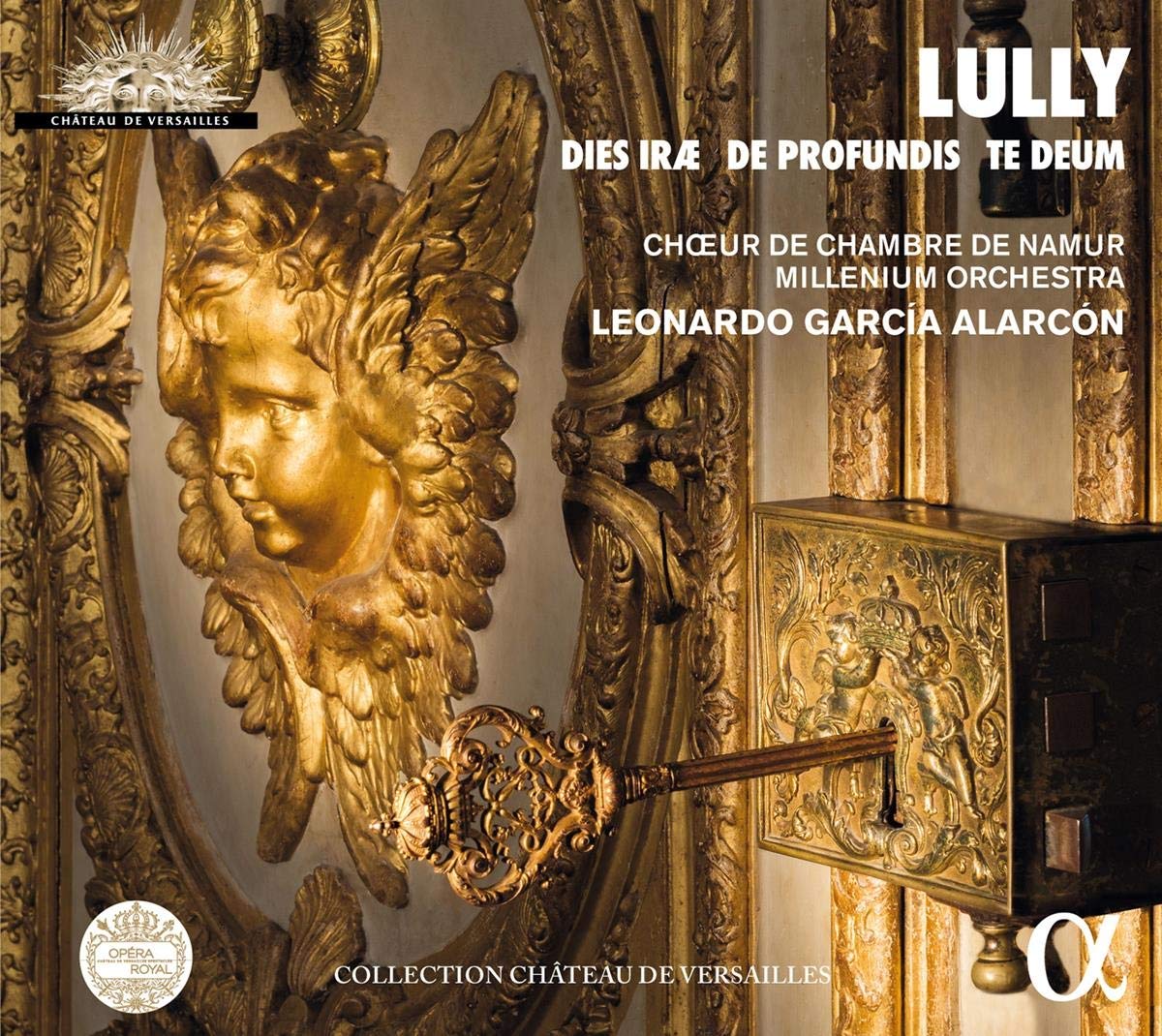
Lully: Dies iræ, De profundis, Te Deum

[Sophie Junker, Judith Van Wanroij, Matthias Vidal, Cyril Auvity, Thiabut Lenaerts, Alain Buet], Choeur de Chambre de Namur, Millenium Orchestra, Leonardo Gracía Alarcón
82:50
Alpha Classics Alpha 444

This is the kind of repertoire (and the kind of performances) that make it easy to understand why Lully was the favoured royal composer and how his was such an important voice in the development of the grand motet even though he had no involvement with the regular chapel music. There is an interesting and clear explanation in the notes of the musical politics involved. The Dies Irae opens as if it were to be a standard overture but the startling entry of the choir men singing the solemn plainchant rather sets the tone for the dramatic variety to come. The choir and orchestra are both very accomplished and comfortable in the style, though there are a few moments when the former’s crisp rhythms veer too close to clipped for my taste. Other small reservations are a few rather laboured ornaments and some less-than-beautiful tone from one of the male soloists but I still really enjoyed the programme. It was while ‘conducting’ the concluding ebullient Te Deum that Lully sustained (possibly) the most famous injury in the history of music.

David Hansell

Categories
Recording

Buxtehude: Membra Jesu nostri

La Maîtrise de Garçons de Colmar, La Chapelle Rhénane, Benoît Haller
60:35
Christophorus CHR 77436

This is a recent re-issue of a live recording made in October 2007. It is made with single strings, six single voices (one soprano – Tanya Aspelmeier – only sings in cantata 6), a very large basso continuo section including harp, theorbo, organ, harpsichord, bassoon and violones in both G and D. In addition it has a choir, La Maîtrise de Garçons de Colmar, employed largely to give weight to the biblical texts in some numbers.  This is a possibility suggested by Gilles Cantagrel, an excerpt from whose biography of Buxtehude published in 2006 in French forms the essay in the liner notes, and is translated into German and English. The text in Latin is translated into German and English as well.

I find the contrast between the sections with single voices and those that use the whole choir unconvincing. The single voices of Stéphanie Révidat, Salomé Haller, the haute-contre Rolf Ehlers, Julian Prégardien (T) and Benoît Arnould (B) are well blended, and are capable of fine expressive singing, occasionally marred in the sopranos by vibrato on the weak notes. The lower parts are cleaner on the whole – 12 years later, standards have changed vocally more than instrumentally. The playing is splendid, and the key progression from C minor to E flat major, G minor to D minor to A minor to E minor and then to C minor to finish give a fine series of distinct tunings (though details of instruments, pitch and temperament are not given).

The final Amen is light and bright, and has more of the vocal quality I would have liked in some of the sections with single voices. The recording balances the different vocal and instrumental lines well, though the Maîtrise is toned down till the final Amen. Who is this choir of youngsters and their director Arlette Steyer? There is nothing about them (or indeed anyone else!) in the notes.

David Stancliffe

Categories
Recording

Handel: Judas Maccabæus

Tarver, Breiwick, Harmsen, Fernandes, Willetts, NDR Chor, FestspielOrchester Göttingen, Laurence Cummings
137:00 (2 CDs in a card triptych)
Accent ACC 26410

Handel’s Judas Maccabæus, dating from 1747, was second only to Messiah in popularity in Handel’s lifetime. Here Laurence Cummings puts out a spirited version, recorded live last May at the Stadthalle Göttingen, where Cummings has been director of the Handel Festival since 2012. His orchestra, regularly assembled for this festival, is 6.6.4.4.2 strings with all the wind and brass you could need and sound not only proficient, but gracious. The string playing is particularly fine, and the occasional sounds of the wind – like the flutes in the final duet O lovely peace – offer lovely glimpses back to an earlier world before the ‘orchestra’ was essentially a string band.

The chorus, sharp and punchy when required but capable of a mellow and sustained gloom when called for, is the North German Radio Choir, their regular partners in this festival, and the text (and programme notes) are in both German and English.

Followers of the Festival’s productions will not be disappointed – the standards in every department are high. The main questions I have are about the size and scale of the performance.

Directors have to choose in presenting large-scale Handel – and even more so in Bach – between the stricter demands of period performance, which might call for voices especially of less developed power, and what will fill a venue and make the whole project financially viable. The solo singers here are admirable, but undoubtedly use more modern techniques of projection. They only rarely out-sing their accompanying band, and, of course, the oratorio is a heroic tale, but it was given first in the relatively small Theatre Royal in London.

The bass, Joäo Fernandes, is quite excellent in the very exposed The Lord worketh wonders, and Judas, Kenneth Tarver, is suitably heroic in Sound an alarm, where the silver trumpets eventually make their appearance to introduce the chorus, praising the abstract virtues of laws, religion and liberty, for much of the actual action takes place off stage making the work for all its political overtones in the wake of the Duke of Cumberland’s victory over the Stuart Pretender’s rebellion at Culloden so much more of an oratorio than an opera.

The opening of Act III marks Handel at his tuneful best in Father of Heav’n where the instrumental lines with their overlapping counterpoint suggest the all-encompassing divine favour. The March has cheerful bumpy jollity, and the unanimity of the chorus following, introduced by single voices, is a splendid advertisement for the about 21 strong NDR Chor, as is David Staff’s trumpet obligato in With honour let desert be crown’d, Judas’ surprisingly reflective final aria in A minor.

At the end of the brief final chorus, the burst of applause reminds us that this is a live take, and after such a seemingly effortless performance it is well deserved.  Nothing is amiss, tempi are beautifully judged and if the scale of the performance calls for more modern vocal techniques than I would ideally have liked, then many people will enjoy this cracking good version.

David Stancliffe

Categories
Sheet music

Jheronimus Vinders: Collected Works

Part 2 – Masses
Recent Researches in the Music of the Renaissance, 167
Edited by Eric Jas
xii, 438pp. $350.00
A-R Editions 2019 ISBN 978-0-89579-881-7

Don’t beat yourself up if you are unfamiliar with this composer – pretty much the only concrete evidence of his existence (besides the music, of course) are accounts of money paid to him for around six months’ service as singing master at a church in Ghent (1525-26).

Vas’s excellent edition consists of two five-voice masses, two more that add a sixth voice for the final Agnus Dei and one for four voices of slightly dubious attribution. After ten dense pages of critical notes, there is an appendix containing the models for Vinders’s “parodies,” including works by Appenzeller, Pipelare and Josquin (with translations and separate critical notes).

All five masses are printed at the pitch of the sources; the dubious Missa La plus gorgiase and the 5/6-part Missa Stabat mater use F3 clefs so might required downward transposition in performance.

Obscurity notwithstanding, Vinders reveals himself as a fluent composer whose works merit re-discovery. Vas has essentially done the groundwork for two revelatory CDs of some very fine music.

Brian Clark

Click here to visit the publisher’s website.

Categories
Recording

Les arts florissants

40[th anniversary]
235:57 (3 CDs in a card triptych)
harmonia mundi musique HAX 8908972.74
CD1 Music and theater CD2 Sacred music CD3 Secular music

Here’s the least surprising (re-)release of the year, three generously filled discs recalling and celebrating the work of LAF over the last four decades. It’s a shame that a little more effort hasn’t gone into the presentation, however. No details or dates of the source recordings; no texts or translations; and not all prominent instrumentalists are named (the flautist contributes at least as much as the singer to Bach’s Benedictus). In this context, it would be unreasonable to expect notes on the music but we do get a brief history of the ensemble and a flagging-up of its future projects.

The musical content is well-planned. Each disc has a theme (Music and the Theatre; Sacred Music; Secular Music); each programme includes one or two substantial works or extracts; and there is an amazing amount of music included. I was pleased to be reminded of and to enjoy again Lully’s Atys (on CD1 – a notable recording), his Salve Regina for high voices and Charpentier’s remarkable Le Reniement de saint Pierre (CD2) and the Monteverdi, including Il Combattimento, on CD3. There are, inevitably, one or two tracks I won’t return to, though they did make me think before I decided ‘no’! I also felt that the continuo instrumentation could often, and to all-round musical advantage, be less fussy but nothing diminishes my gratitude to LAF for their pioneering work, especially in French repertoire 1650-1770ish. They’d be no less admired and appreciated if that were all they’d ever done. Without them we may never have given Brossard’s haunting Miserere as much as a glance.

David Hansell

Categories
Recording

H. Praetorius: Motets in 8, 10, 12, 16 & 20 parts

ALAMIRE, His Majestys Sagbutts & Cornetts, Stephen Farr organ, David Skinner
100:25 (2 CDs in a single case)
Inventa Records (Resonus Limited) INV001

The music on this disc unfolded exactly as I had anticipated it would: mainly homophonic, predominantly Gabrielian, with some cute quirks of harmony. For this reviewer, one of the few miscalculations that Stile Antico have made in the course of their recordings is on A Wondrous Mystery: Renaissance Choral Music for Christmas (Harmonia Mundi HMU 807575) where they intersperse the movements of Jacob Clement’s Missa Pastores quidnam vidistis with later German music: the teutonic matter of the latter is entirely the wrong flavour to mingle courses with the refined and piquant Franco-Flemish helpings of Clement (note: please can we dispense with the cumbersome and no longer hilarious moniker Jacobus Clemens non Papa?). The current recording provides a banquet of such Teutonic matter with 16 pieces, including ten motets for from eight to 20 parts, by the Hamburg composer Hieronymus Praetorius (1560-1629), many of them seasoned with historic brass. For variety, there is his complete Missa summum for (mainly) organ with chanted plainsong, two sequentiae similarly for organ and voices, and a couple of motets played by brass alone. For all their differing vocal resources, the motets began to sound much of a muchness, and in fairness to David Skinner, he shuffles the pack to some extent, with usually no more than two similar works adjacent. Nevertheless, not everyone who relishes barnstorming motets full of voices and brass might be enthusiastic about the interspersed movements of the Missa summum with its long passages played on the historic organ at Roskilde. This is performed sensitively by Stephen Farr, but even he cannot make a case for Praetorius’s uninteresting writing for the organ here in the Mass and in the sequentiae. I take respectful issue with David Skinner’s description of this Praetorius (no relation of his contemporary Michael) as a master polyphonist. This reviewer was left desperate for some counterpoint amidst the onslaught of homophony, apart from some passages in the two motets a8 entrusted to the historic brass. One of Praetorius’s motets – perhaps the opening Dixit Dominus a12 – would stand up well on a disc of music varied by genre, period or locality. Together they become monotonous, and the music chosen to provide some variety within this disc is itself undistinguished. The performances are of course excellent, although perhaps inevitably, given the material, there is a residual impression of some shoutiness in the wake of the polychoral motets. Exultate iusti a16 brings the proceedings to a sonorous conclusion, but perhaps the finest work on this pair of discs is the dramatic Levavi oculos meas a10. It has a structural momentum not apparent in the other motets, which feel more sectional, and this momentum builds to an electrifying climax, with harmonic sparks flying.

Richard Turbet

Click here to visit the record company’s website.

Categories
Recording

Alonso Lobo: Sacred Vocal Music

Coro Victoria, Ana Fernández-Vega
58:27
Brilliant Classics 95789

Any recording devoted to the music of the Spanish master, Alonso Lobo is very welcome. A pupil of Guerrero and a colleague of Victoria, Alonso Lobo de Borja managed to plough a distinctly individual furrow through the occasionally slightly featureless world of Spanish Renaissance polyphony. I was reminded of this during a recent recital by the Dunedin Consort, where the music of Lobo stood out as amongst the most impressive polyphony of the evening. The Coro Victoria perform a number of Lobo’s motets as well as movements from three different settings of the Mass: O Rex Gloriae, Petre, ego pro te rogavi and Simile est regnum caelorum. Some of the material – the eight-part Ave Maria, the lovely Ego flos campi and the concluding O quam suavis are already familiar, but much of the material, including the Mass settings, were new to me all thoroughly endorsing the high opinion I already have of the composer. The performances by the Coro Victoria directed by Ana Fernández-Vega are almost very good – much could have been improved by simply exploiting more effectively the acoustic of the Basilica Pontificia of San Miguel in Madrid. The recording is a little too close and a little unforgiving – judging by the after-bloom, this is a building with a pleasant ambience which could have been used to make the recording sound a little more comfortable. Having said that, this budget CD has a very engaging cross-section of Lobo’s music and the singing is perfectly adequate and never less than passionate and expressive.

D. James Ross

Categories
Recording

Palestrina: Missa sine nomine a6

Choir of Girton College, Cambridge; Historic Brass of the Guildhall School of Music and Royal Welsh College of Music and Drama, Gareth Wilson, director
77:20
Toccata Classics TOCC 0516

Palestrina: Missa sine nomine a6, Deus qui dedisti, Judica me, Accepit Jesum calicem, Unus ex duobus, Tu es Petrus, Ricercars quarti and octavi toni. Ingegneri: Super flumina Babylonis, Duo seraphim, Lauda Sion.

Besides the mass, this disc contains motets and ricercars by Palestrina, plus three motets by his contemporary Marc’Antonio Ingegneri. Vocal works are performed a cappella, accompanied wholly or in part by brass, or by brass alone. There is evidence that in Rome at this period, for major festivals, extra singers and instrumentalists were hired for liturgical performances at some sacred venues, so this disc provides examples of the variety of possible performance practices for this music. Palestrina’s Mass is accompanied throughout except in certain passages of reduced scoring such as the Christe eleison. According to Gareth Wilson (email to reviewer), it was felt that the quality of the works by Ingegneri that are recorded here is such that he deserves a project of his own, so he will be the focus of Girton College Choir’s next tour; perhaps he will reappear on a future recording as well. Seemingly his Super flumina Babylonis made its point during their recent tour of Israel and Palestine.

Listening to the Kyrie and Gloria of Palestrina’s Mass, albeit with brass accompaniments arranged by Gareth Wilson, it comes as no surprise to learn that J.S. Bach arranged brass parts for accompanying these movements during Lutheran services. It might have been interesting on this disc to have heard the work with his brass accompaniments, with the remaining movements arranged in imitation of his style. This is not to say that Gareth’s arrangement is inadequate in any way.

In those vocal works which are performed by brass alone, or for one voice-part with brass playing the rest, the feeling occurs that one might have referred to hear words in all parts, the better to appreciate Palestrina’s word-setting. That said, the use of historic brass defines each part very clearly so that one can appreciate his polyphony and any occasional harmonic felicities or dissonances.

Girton College Choir sings well and responsively, Historic Brass play idiomatically and stylishly, and Gareth Wilson’s chosen tempi are judicious and serve the music well. Palestrina’s ricercars are undistinguished, but his Mass is entirely the opposite, with Kyrie and Agnus outstanding even by his standards. Similarly, the motets are so fine that it is astonishing that all but one are receiving their first commercial recordings.

Richard Turbet

Palestrina: Missa sine nomine a6


Categories
Recording

Messe du Roi Soleil

The Sun King’s Mass
Marguerite Louise, directed by Gaétan Jarry
53:13
Château de Versailles Spectacles CVS008
Music by Couperin, Delalande, Guilain, Lully & Philidor

One expects better of Versailles. Although the performances are quite decent, the programme is rather a rag-bag and very short and the booklet (Eng/Fre) poorly designed. Why not all the French essays together, then all the English, rather than interleaving them? And the notes, once found, aren’t that great either – whether in French or English. A case of trying too hard, rather than incompetence, but either way the reader loses out.

The Sun King heard various types of mass in his chapel, most famously the ‘solemn low mass’ which consisted of a grand motet, a petit motet and a Domine salvum fac regem, all sung while the priest quietly spoke the liturgy. On other occasions, he heard organ music and chant and here we get a bit of everything, sometimes a very short bit. So the overall effect is rather unsatisfying even though the major works – psalm settings by Delalande and Lully – are splendid pieces, worthily sung. Indeed, the soprano solos and duets are some of the best I’ve heard for a long time. Nonetheless, the overall verdict has to be ‘could do better’.

David Hansell

Categories
Recording

Ludford: Missa Benedicta

Choir of New College Oxford, Edward Higginbottom
63:13
Pan Classics PC 10403

Nicholas Ludford (1485-1557) is one of the greatest Tudor composers. This is crowded territory, which begins with some musical giants from the Eton Choirbook such as John Brown and Robert Fayrfax, and climaxes with Byrd. Along the way, to name but a few, there are the Three, or Great, T’s – Taverner, Tye and Tallis – and John Sheppard. I pick out Sheppard deliberately because his music was overlooked for a long time, not only after the original Tudor revival in Victorian times and subsequently after the publication of the ten volumes of Tudor Church Music during the 1920s. In fact his music would have been published in the planned second series, one of many casualties of the Wall Street Crash, but the music of Ludford eluded or was overlooked by all and sundry until quite recently. The breakthrough came with the recordings by The Cardinall’s Musick (TCM) of masses for five and six voices, plus motets, released on four CDs, the most recent in 1994, coinciding with a major article about the composer by David Skinner in Musical Times. Since then, we now have the luxury of all his masses for five and six voices on disc, thanks to the superb recordings by Blue Heron of music from the Peterhouse partbooks based upon the remarkable restorative editing of Nick Sandon, plus a couple of recordings of his smaller masses. There are now even alternative versions of two of the masses originally recorded by TCM – just as well because three of their original recordings are not currently available.

The recording under review is of one of these alternative versions. It was originally released in 2007 on another label named K617 (numbered K617206) and additionally includes two of Ludford’s substantial antiphons, Ave cuius conceptio and Domine Jesu Christe. Higginbottom takes the former at quite a lick – 8’03 against the 9’22 of the premiere recording in 1993 by The Cardinall’s Musick under Andrew Carwood, and even the 8’51 of Blue Heron – but although the performance sounds rather driven and a tad soulless, Ludford’s luxuriant and often demanding counterpoint is for the most part audible. In a letter to Early Music published in May 1995 (page 366) I note that Ludford’s setting of the words “fecunditas” in this antiphon seems to suffuse the opening of Sheppard’s huge ritual antiphon Media vita which I go on to suggest might have been composed in memory of Ludford; given that Sheppard’s masterpiece is among the finest musical works of the Renaissance, it would be a fitting and deserved tribute to his predecessor. Domine Jesu Christe is a much more relaxed and expansive affair but still expresses a sense of purpose and direction. The movements of the mass itself are interspersed with Gregorian chant. As Edward Higginbottom observes in his notes, each movement of the mass begins with the same musical setting, rather than an actual head motive. This opening passage contains sumptuous and striking harmonies, conspicuous among those which crop up throughout the course of all four movements, and there are also sinuous passages of reduced scoring in which fewer voices are used per part, providing textural variety. Stylistically the music is clearly in the English tradition of the Eton Choirbook with no nods towards the Continent; indeed, at the beginning of the Credo, just after the head motive that is not really a head motive, there is a passage that has resonances of the old faburden technique, from the words “Et in unum Dominum”.

New College’s singers do ample justice to Ludford’s thrilling music, the boys with a bright tone possessing a slight cutting edge, which is appropriate here given the rich, bottom-heavy scoring (TrATTBB), and the men blending well while keeping each line distinct, the whole choir making the most of Ludford’s interesting sonorities, such as the final chord of the first “excelsis” in the Sanctus. For composer and choir at their collaborative best listen to the passage in the second Agnus, led by the high voices drifting sublimely in thirds. This is great music, by a great composer, one whom the world of music should acknowledge, celebrate and acclaim as such.

Richard Turbet