Categories
Recording

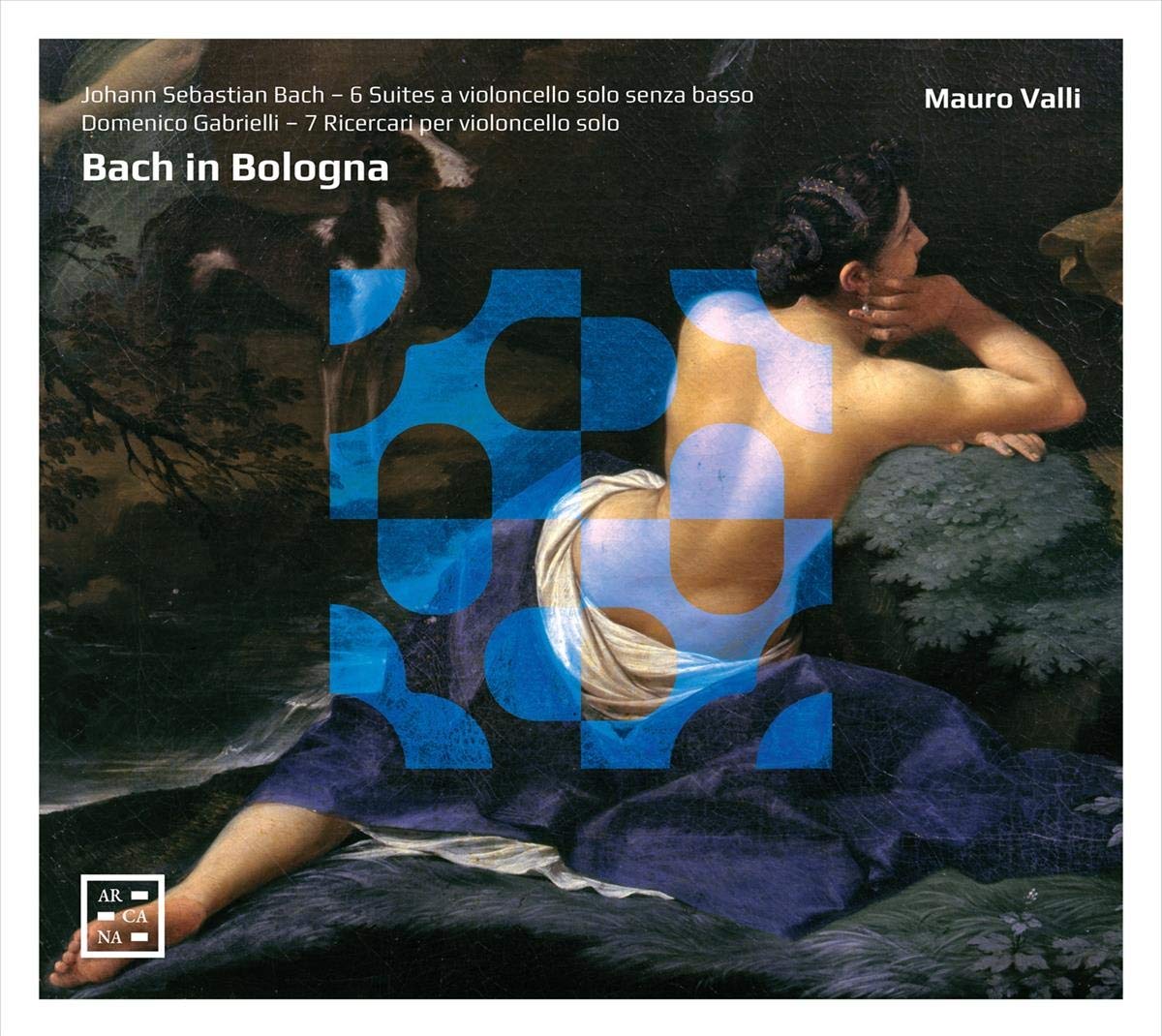
Bach in Bologna

Mauro Valli
195:18 (3 CDs in a card folder)
Arcana A459
Bach: Cello suites; D. Gabrielli: 7 Ricercari

This epic project presents the complete music for solo cello by perhaps the greatest of the Baroque composers, J. S. Bach, interspersed by the complete solo cello oeuvre of one of the lesser composers of the period, Domenico Gabrielli. Did the two ever meet? As Bach was only five when Gabrieli died prematurely at the age of just thirty, the answer is almost definitely no. Did Bach know Gabrielli’s music? Just possibly, although there is absolutely no circumstantial or musical evidence. So why juxtapose the two sets? I must admit I was sceptical at first, seeing this as just another excuse to add to the already groaning piles of recordings of the Bach. Valli gives thoughtful and musically consummate accounts of the Bach, although I still prefer the absolutely luminous accounts by David Watkin on resonus (RES10147). Valli’s sound is darker, his playing more unrelentingly intense and the recording generally closer. But what eventually got me about these performances was precisely the juxtaposition with the Gabrielli. As the programme note is quick to concede, this is not an attempt to place the Bach and Gabrielli on the same pedestal, but what I found really interesting is that the Gabrielli did have something to say about the Bach and vice versa. For all the differences in style, texture and melodic sense, as Baroque works for solo cello these pieces have more in common than they first seem. Gabrielli’s belong in a simpler, more innocent world than Bach’s, but the juxtaposition brings out the profundity of these Ricercars, suggesting that they deserve much wider attention from cellists than they have hitherto received. So these CDs with their powerful accounts of Bach and Gabrielli are after all more than just the sum of their parts.

D. James Ross

Click here to visit the record company’s website.
Categories
Recording

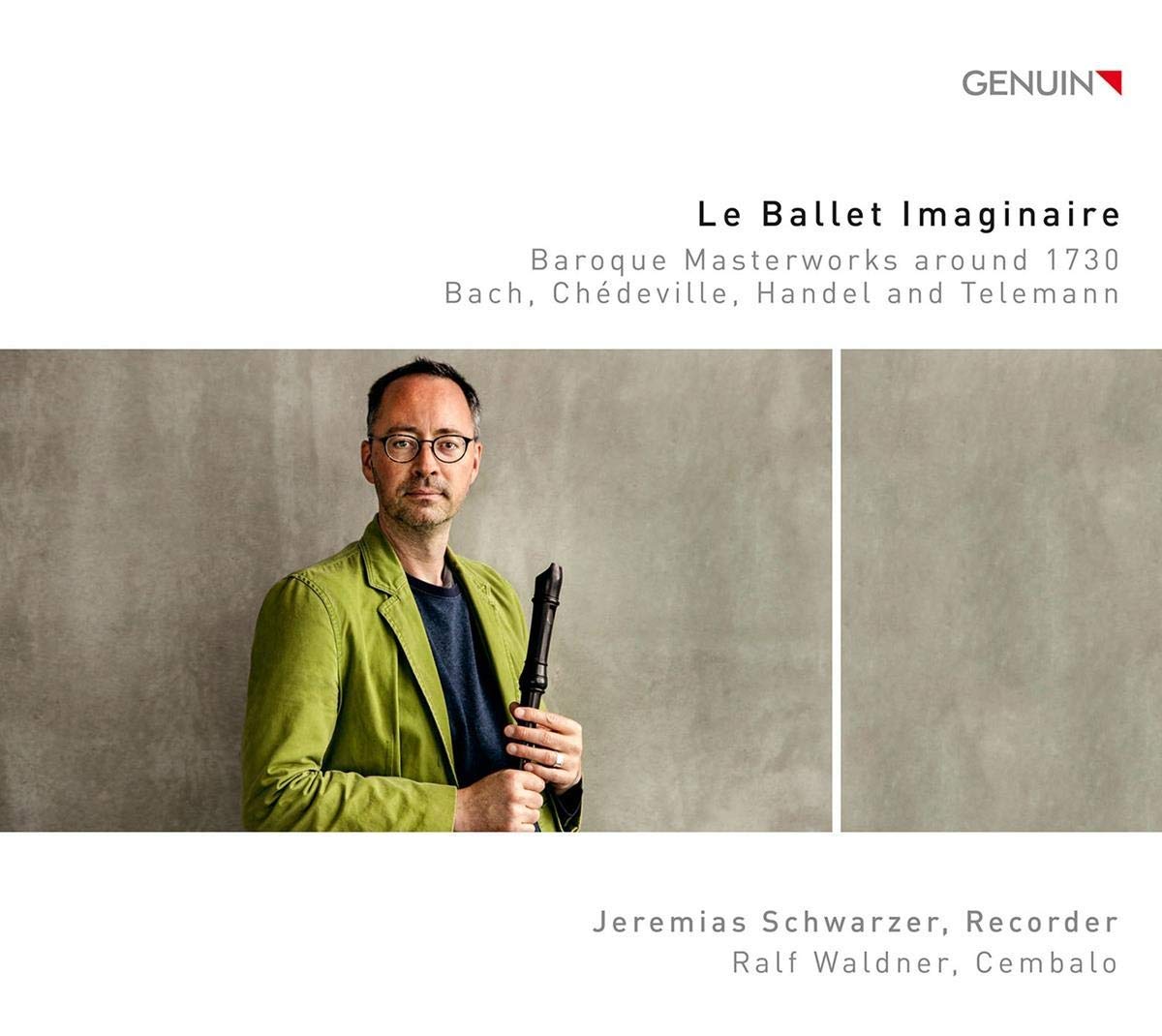
Le Ballet Imaginaire

Baroque Masterworks around 1730
Jeremias Schwarzer recorder, Ralf Waldner cembalo
79:26
Genuin GEN 19646
Music by Bach, Chédeville, Handel & Telemann

This is a meaty recital offering works of fame and substance for recorder and harpsichord, either original compositions or perfectly reasonable transpositions/arrangements of music for other solo instruments. Alto recorder and voice flute are both used: thus those allergic to high recorders need not fear. All of this is at eight-foot pitch! The inclusion of unaccompanied Telemann fantasias gives some sonic variety, as do the alternating obbligato and continuo roles of the harpsichord. The playing of both instruments is impressive, though I do find some of the recorder articulation a touch capricious and some of it – especially staccato notes – aggressive for a flauto dolce. The booklet (English & German) offers a general introduction as well as concise comments on each work: the English is reasonable and readable, though not fully idiomatic.

David Hansell

Categories
Recording

Marais meets Corelli

Jakob Rattinger viola da gamba, Lina Tur Bonet violin, musica narrans
64:56
Pan Classics PC 10395
Music by Biber, Corelli, Forqueray, Hume, Marais & Morel

A weak booklet essay (German & English) does this release no favours, but don’t be over-deterred either by this prospect or the rather strange picture on the front. The playing is lively and not afraid of the occasional un-beautiful sound, and the programme presents a (necessarily highly selective) survey of 17th-century chamber music. This ranges from Tobias Hume for lyra viol to a ‘re-mix’ of Marais’s and Corelli’s Folia variations for viol, violin and harpsichord via violin sonatas by Corelli and Biber and the near-inevitable La Sonnerie. I need to express my usual doubts as to whether a continuo section of theorbo, harpsichord and guitar ever took part in any 17th-century performance of chamber music and I also need to note that the playing, while always committed, is not free of occasional technical accidents that become increasingly intrusive on repeated listenings.

David Hansell

Categories
Recording

Bach: The Trio Sonata Project

Tripla Concordia, Walter van Hauwe
63:08
Arcana A114
BWV527, 997, 1027-29

The five pieces presented on this CD are all transcriptions and arrangements of works by Bach; three of them are derived from sonatas for viola da gamba and harpsichord – BWV 1029, 1027 and 1028 put into keys that are easier for recorders after analogy with the version for two flutes (BWV 1039) of No 1 in G, which may well be the earlier version. The others pieces are an arrangement for recorder and harpsichord of the C minor lute partita BWV 997 and the D minor trio sonata for organ BWV 527.

The idea of re-scoring works so that novel combinations of instruments can play them – perhaps domestically for fun or for instruction – was something that Bach clearly did with his own compositions, so the idea is not new. This group is primarily of recorder players, who had a good time re-imagining these versions which sound pretty plausible.

Bach is always worth playing in any version you can: whether these arrangements will last remains to be seen. They are easy to listen to, the players are more than competent and I am consigning my copy to the car for a bit, as they provide novel but unchallenging listening.

David Stancliffe

Categories
Recording

Telemann: Chamber music treasures from Dresden and Darmstadt (2)

Les Esprits Animaux
64:13
Musica Ficta MF8029

This is the second review of this recording we have received. You can find the other here.

Those with knowledge of Telemann’s biography will know that he worked in neither Dresden nor Darmstadt, all the works recorded here linked with those centres by their inclusion in libraries in one or, in the cases of the popular Concerto alla Polonaise and the D-minor Concerto, both cities. Their diffusion testifies to the widespread popularity of Telemann’s works beyond the cities in which he worked. It must be added that his authorship of the concertos in B flat and D remains conjectural; on the evidence of the ear alone, I would certainly be inclined to suspect the former as a work of Telemann’s. It is much the least inventive of this group of works, with a Rococo-style opening Allegro that even at five minutes outstays its welcome. The four-movement D-major Concerto for flute and strings is another matter. Opening with an easy flowing Intrada with interesting ‘riffs’ for violin and cello periodically breaking out, it continues with an appealing Aria in which the flute takes the ‘vocal’ part, a brief, lively Gavotte and a graceful Minuet featuring a solo cello in the central section. The presence of three first recordings (TWV 43:G8; the B flat; and the Intrada) would commend the CD to the attention of Telemanniacs if nothing else did.

In fact there is a much more to it than that. For some years Les Esprits Animaux has shown itself to be one of the foremost Baroque chamber ensembles, its performances above all notable for a sense of spontaneity rarely encountered in this repertoire. Mention above of the word ‘riffs’, more frequently associated with jazz, was not accidental, for there is a strong feeling of the improvisatory about all Les Esprits do. The music lives from bar to bar, every gesture counting and contributing to an exhilarating sense of fantasy, of bizzarie. It is necessary to go no further than the beguiling opening Dolce of the Concerto alla Polonaise to hear the stylishly delicate manner in which first violinist Javier Lupiáñez embellishes repeats to know there will be nothing routine about these beautifully played and balanced performances. Caveats? Well, just occasionally I feel the animal spirits run away with the performers a little too much, leading them to excessively fast tempi, as in the Allegro ma non troppo finale of TWV43:G8. Other than that this a disc that conveys the sheer joy of music making to a degree rarely experienced. If you’ve yet to catch up with the unbounded pleasure of listening to Les Esprits Animaux this is the time to rectify the omission.

Brian Robins

Categories
Recording

Mozart, Beethoven: Quintets for piano and winds

Ensemble Dialoghi
51:08
harmonia mundi musicque HMM 905296
K452, Op. 16

It is not often possible to place similar works by Mozart and Beethoven side by side and unequivocally assert that the Mozart is the greater, but for all the prevarication of the notes accompanying this new coupling it does apply to the E-flat quintets for piano and wind (oboe, clarinet, horn and bassoon). There is, of course, a reason. While the Beethoven is a relatively early work, composed in 1796 (the year before the C-major Piano Concerto), the Mozart dates from his high maturity, 1784, a period during which he was composing the six great string quartets dedicated to Haydn. Indeed, in an oft quoted passage from a letter to his father Leopold, Mozart wrote that at its first performance the quintet ‘called forth the very greatest applause: I myself consider it the best work I have ever composed’.

While we must probably allow for the understandable enthusiasm of the moment in this verdict, the quintet is a work of sublime qualities that surely unquestionably acted as the inspiration and model for Beethoven’s work a dozen years later. Not only is the key and layout of each work the same, with three movements, the first of which opens with a slow introduction, but there are also thematic similarities between the two works. Yet Beethoven at the age of 26 was already very much his own man and there are also significant differences between the two, which can immediately be heard in the contrasts between the two slow introductions, where Beethoven gives us an improvisatory, fantasia like preamble introduced by hunting calls that differs significantly from Mozart’s more structured opening. The latter, at once more contrapuntal and already reaching for the sublime by the time we reach the wind’s imitative descending figure (ff bar 9), transports us to quite a different world. As do the slow movements. Beethoven’s Andante cantabile is based on a song-like theme introduced by the piano, continuing as a quasi-rondo with concertante opportunities for the four wind instruments in the course of its dreamily romantic discourse. Mozart’s Larghetto is again more highly structured, its translucent theme given to the wind to instigate an exploration of dynamics and colour, much of it over the piano’s bed of arpeggiated figuration.

It is, I think, the greater directness of the Beethoven that for me makes its performance by the Barcelona-based Ensemble Dialoghi the more satisfying of the two. But there is no doubting that this fine group of players, all members of leading European period instrument orchestras, are technically outstanding and have obviously worked hard to achieve an excellent balance. That is no easy matter in such works, though it does help to have a fortepiano, here a copy of a Viennese instrument made Walter’s firm around 1800, which in the hands Cristina Esclapez produces some beguiling tone in quieter passages. This is especially notable in the beautiful playing of the lovely Beethoven central movement mentioned above. If I’m a little less happy about the Mozart it is because I don’t find the Dialoghis make enough of Mozart’s often extremely subtle dynamic contrasts. Again we can turn to the central Larghetto for an illustration: The first wind motif marked p is immediately answered by a more assertive f for full ensemble before continuing with a dialogue between piano and wind again marked p. Yet we hear little of those contrasts here or throughout the movement, where tension built and released through crescendos answered by piano is too often ironed out by uniformity.

This perhaps sounds hypercritical and many listeners will probably not share my concerns, but I feel there is more to the Mozart than is revealed here. Notwithstanding, there can be no gainsaying the expertise and general musicality of these engaging performances, which have been very well recorded. The notes – which include a somewhat pretentious and unnecessary ‘hypothetical narrative’ for both works – are unusually extensive.

Brian Robins

Categories
Recording

Giacomo Facco : Master of Kings

Turino, Boix, Matsuoka
51.03
Cobra 0063

One of the myriad Italian composers who travelled throughout Europe in the first half of the 18th century, Giacomo Facco seems to have specialised in music for and featuring the cello. The present recording alternates cantatas for soprano and continuo from throughout his life with three of his Sinfonias for solo cello. If Eugenia Boix’s singing in the cantatas occasionally sounds a little detached emotionally, it is always technically impeccable, while cellist Guillermo Turino and harpsichordist Tomoko Matsouka provide a wonderfully imaginative continuo support. The Sinfonias for cello and continuo are to my ear more musically interesting, and are beautifully played by Turino and Matsouka. Most intriguing is the Spanish cantata Cuando en el Orient, dating from Facco’s years in Madrid, which is in a markedly more advanced melodic style than the other cantatas and which features a prominent obligato cello part throughout. It is always fascinating to see a spotlight shone on an individual composer, who represents the lives and work of so many, whose reputations and compositions have sunk into obscurity. Facco’s mature work is as good as anything being composed in Europe at the time, and it is a shame to think that it has been squeezed out of the familiar canon.

D. James Ross

Categories
Recording

Tilting at Windmills

Mico Consort
74:58
Son an ero 12

The Mico Consort, based in France, consists of three violists and an organist. This would not seem an ideal combination for playing a programme such as this, a proportion of which consists of music for viols, much of it in four or five parts, by Byrd and his English contemporaries Tye and of course Mico. Of these only Tye’s Sit fast is performed by the forces, three viols, for which it was composed. They also play pieces by Locke, Coprario, Jenkins and Baltzar appropriate to their personnel, and the organist Anne-Marie Blondel plays four pieces.

Three of Byrd’s five-part In nomines and his Browning are played by 3 viols and organ. Why? The textures are all wrong, impeding and unbalancing Byrd’s narrative. The same is true regarding the two fantasias and, especially, the pavan by Mico. Byrd’s two In nomines in four parts fare better, because the organ plays the cantus firmus and the three viols the contrapuntal parts. Gibbons’ fantasia a6 (MB48/33) is played on the organ. Again, why? Is it because a short score survives and is interpreted by the musicians as indicating the possibility of contemporary performance on the organ alone? Mme Blondel follows this short score in places, and expands upon it in others. The number of surviving fantasias for keyboard by Gibbons runs well into double figures, and their textures differ from this example. Some of them have had all too few recordings. The other three performances on the organ are a vivacious rendition of Tomkins’ Ground (MB5/40); an impressively engaged version of Byrd’s The Bells,surprisingly one of the first commercial recordings of the work to be played on the organ; and to conclude the disc, a radiant performance of Bull’s Salve regina (MB14/40). Here is also a modern piece by Geraud Chirol which gives the disc its title, an incongruous work for the forces of the ensemble.

The presentation is unsatisfactory. Some works are identified merely as ”Ground”, “Fantasia/e” or “Ayre”. There is also a weird piece of translation in the booklet, where a Pavane en la mineur by Jenkins, played on the instruments for which it was intended (see below), is described in the English translation as “a rather tamely written piece” while the original French says “une piece de facture assez sage”. Sage = tame? And if it is tame, why record it? Jenkins’ pavan is not tame, nor is anything in his vast and distinguished oeuvre. This piece also provides a good illustration of the inadequate identifications mentioned above. A search of the Viola da Gamba Society’s thematic index under Jenkins for a pavan in A minor among his hundreds of works proved initially fruitless. By sheer good fortune, on the Presto website there is a “Pavan for 2 bass viols in A minor” listed on a disc of Jenkins’ music performed by Fretwork, with recorded incipits of each track. This turned out to be the same piece. Returning to the VgGS thematic index, I went again to the section on music for bass viols and, having previously scanned the index looking for pieces titled “pavan”, I found the work under the title “[Ayre]”. This took the best part of an hour. It was interesting before it became frustrating, after which I emerged triumphant, albeit rather fortunately, but it was also a huge waste of my time. The item is no 1 in the VdGS listing of Jenkins’ music for two bass viols, and is available from Fretwork Editions and Dovehouse Editions.

This is a curate’s egg of a disc.  Performances by the ensemble tend to be uninspiring and, in the case of the works by Byrd and Mico, are unnecessary. One of the pieces played as an organ solo is a waste of a track but, to conclude on a positive note, the other three organ solos are all estimable.

Richard Turbet

Categories
Recording

Schubert: String Quartets

Chiaroscuro Quartet
62:47
BIS-2268 SACD
D173, D810

I confess that on hearing ‘Death and the Maiden’ now I cannot help but think of Woody Allen’s Crimes and Misdemeanors, where it accompanies the scene in which we see the contract killer on his way to murder the tiresome ex-mistress played by Anjelica Houston. The juxtaposition is done without signalling and I’ve often wondered how many film goers have been aware of the relevance of the apparently incongruous emergence of a string quartet on the soundtrack.

But I digress. The Quartet in D minor, which takes its name from the use of Schubert’s song of 1817 as the theme of the variations that form its second movement, was composed in 1824 – not as the notes claim ‘between 1824 and 1826’ – and is the composer’s penultimate string quartet. A massively proportioned work, it explores a gamut of emotions from fear and stark grief to tender expressions of regret. From the fiercely trenchant opening chords that emotional world is explored by the Chiaroscuro Quartet (Alina Ibragimova and Pablo Hernán, violins; Emilie Hörnlund, viola; Claire Thirion, cello) with an all-embracing totality that is ultimately overwhelming. It is rare to hear period instrument playing of such technical accomplishment and perfect sense of balance. When those fortissimo opening chords are answered with real pianissimo playing, delicately articulated and perfectly chorded, we start to suspect that we might be in the presence of something special. And so it proves to be. Throughout all four movements the listener is treated to a compass of sonority ranging from near orchestral power – try the third variation of Andante con moto for just one of the most spectacular examples – to a Mendelssohnian lightness of touch. The second half of the initial statement in the same movement is an especially magical case of the latter. Neither is lyricism neglected, the profound sadness and sensitive phrasing of the distant, haunted dance in the Trio section of the Scherzo making for yet another unforgettable moment. Yet above all it is the epic drama of this beautifully structured performance that leaves so strong an impression.

The String Quartet in G minor dates from nearly a decade earlier, 1815, a year of extraordinary fecundity for Schubert that witnessed, among other things, the composition of some 150 songs and Symphonies 2 and 3. As might be expected, the quartet belongs far more to the world of Haydn and Mozart than as a relation to ‘Death and the Maiden’. Here the potent key of G minor is used not as a highly personal expression of tragedy as was the case with Mozart, but more as a vehicle for drama in the sense it was employed by Haydn. Indeed, the opening theme of the Allegro con brio first movement introduces a spirit of Haydnesque poise, while the second idea, with pizzicato cello, seems to consist of a passage that might have consisted of discarded fragments from the act 2 finale of Le nozze di Figaro. Not until the development, the most striking part of the movement, do we encounter hints of real discomfort. The performance, naturally scaled down from the heights stormed in the D-minor Quartet, is nonetheless as satisfying in its own right, again being skillfully structured; listen, for example, to the wonderfully graded and nuanced dynamics in the closing pages of the Andantino second movement.

BIS’s splendid SACD engineering enables these marvellously accomplished performances to realise to the full their powerful but also often extraordinarily subtle impact.

Brian Robins

Categories
Sheet music

New from G. Henle Verlag

The first title in the most recent batch we received from this publisher is a piano reduction of Neruda’s Horn (or trumpet) concerto (Henle 561, ISMN 979-0-2018-0561-0, €15) by Dominik Rahmer (editor) and Christoph Sobanski (piano reduction). Famed for his stratospheric playing, Neruda was one of the outstanding Bohemian hornists at the Dresden court. The set includes three parts for a variety of brass players – one notated in C for a natural horn player (presumably playing an F horn to be in tune with the piano?), one for trumpet in E flat (the music in C an octave below the horn part) and for the concert trumpet in B flat (the music in F). All three have the same idiomatic (though virtuosic for the natural instrument!) cadenzas by Reinhold Friedrich. An excellent and very reasonably priced addition to the horn player’s repertoire.

Mozart’s Erste Lodronische Nachtmusik is a sequence of dances, written for the name day celebrations of Countess Antonia of that ilk in 1776. Felix Loy’s Urtext edition sensibly pairs it with a March written for the same celebrations and, based on his belief that it was performed by the musicians (strings with two horns) as they assembled for the divertimento, it comes first in the volume (Henle HN7150, ISMN 979-0-2018-7150-9 study score, €14, Henle 1150, ISMN 979-0-2018-1150-5 parts €32), although that causes the two Köchel numbers to be reversed. As you would expect, the edition is meticulous with succinct critical notes, and the parts are beautifully laid out, with fold-out pages when movements are too long to be accommodated on a two-page spread. First class attention to detail.

The remaining two editions sent are from the on-going Beethoven piano sonata series from Norbert Gertsch and Murray Perahia (who is credited as joint editor and for supplying the fingerings). There is not much I can say that I did not already cover in my previous review – same beautiful engraving with carefully planned page-turns, and the same footnotes providing on-the-page important information or insights. The A major sonata op 2/2 (Henle 772, ISMN 979-0-2018-0772-0, €12) and that in C major, op 2/3 (Henle 1222, ISMN 979-0-2018-1222-9, €10) were dedicated to Haydn – even relatively early in Beethoven’s career, we must wonder what his former teacher made of them when he heard the composer play them in 1796.