Categories
Recording

Kuhnau: Complete Sacred Works Vol. 5

Opella Musica, camerata lipsiensis, Gregor Meyer
67:33
cpo 555 260-2
Erschrick mein Herz vor dir, Gott sei mir gnädig, Ich habe Lust abzuscheiden, Singet dem Herrn, Weicht ihr Sorgen

Click HERE to buy this on amazon.co.uk

This CD continues this outstanding series in which all of Kuhnau’s surviving choral music is presented. The booklet promises that Breitkopf & Härtel will publish the material, which is good news for performers. Their counter tenor, David Erler, is working on editing the material for Breitkopf.

In many ways, the first cantata Gott sei mir gnädig nach deiner Güte – a setting of Luther’s translation of Psalm 51, Miserere mei Domine – is the richest. The texture is enhanced by 5-part strings and the dense chromatic word painting marks it out as one of Kuhnau’s masterpieces. The singers sing equally well as a group and individually, and the emerging arioso/recitative gives an indication of where expressive text-setting in the period before discrete recitative. By contrast the jolly Singet dem Herrn ein neues Lied seems less exciting: it is an ingenious composition, but the trumpets and drums stray little beyond the tonic/dominant fanfare style, and certainly there is no hint here of the amazing melodic trumpet parts that were to transform Bach’s more celebratory cantatas.

But all the music here is well worth hearing, and there is much to learn from the way in which these cantatas are performed. There is a single choro of singers, one-to-a-part; and the same of strings. Behind this edifice of sound rises the rich voice of the organ – again the Silbermann organ in the Georgenkirche in Rötha (where the recording was made) which Kuhnau inspected in 1721, the year before he died. Other voices – an oboe, a traverso and the pair of trumpets – add colour, and the fagotto as a bass instrument with the string choir as well as the lute hark back to the favoured bass line of Schütz before the violoncello assumed such a dominant role in the developing Baroque orchestra and the 16’ violone became a sine qua non.

But the attention of the players and singers to each other – the way phrases are tossed between singers and players – gives the music both the intimacy and the clarity that is a hallmark of their style.

I reviewed Vol III of this project in March 2018, and I think that the soprano tone is better than it was – less 20th century in style. That’s a plus in my book.

David Stancliffe

Categories
Recording

Bach: Metamorphose

NeoBarock
55:55
ambitus amb 95 606

Click HERE to buy this on amazon.co.uk

This CD is one of those many available in recent years that give us the supposed original of works by J. S. Bach that are known from later parodies, versions or arrangements by the composer. They increase the availability to – in this case – string players of works that might only be known to us in fuller or more varied combinations of instruments. In this case all four reconstructions are for two violins and basso continuo, the classic trio sonata combination for which Bach seems to have written nothing in spite of the fact that his obituary declared that he left ‘a large amount of other instrumental pieces’.

Probably the best-known work to receive this treatment is BWV 1043, the double violin concerto in D minor. In a substantial essay, the moving spirit of NeoBarock, Maren Ries, makes the case for the concerto version being a later adaptation, where nothing substantial is added to the doubling violin parts in the tuttis, and the viola adds only such harmonies as are implied by the bass, and indeed nothing is lost in their trio sonata version.

The playing is neat and spirited, and I never found myself wishing for the large backing group. In terms of the clarity of the composition and the engagement of the players, this opening movement version sounds much like the ritornelli in the tenor aria in Part IV.6 of the Christmas Oratorio, Ich will nur dir zu Ehren leben. Nor does the second movement with its minimal string chords lose anything. I found some of the sudden ritardandi surprising, but elegantly managed, otherwise I think the most ardent HIP purist will find nothing except delight in this version.

The same goes for me in the adaptation of the violin sonata in A (BWV 1015). While playing this, I never found it possible to balance the violin part with the right hand of the harpsichord as I am sure it should be. In those trio sonatas that are so many of the arias for voice and a single obbligato instrument in the cantatas, I have been keen to explore similarity in dynamic range with distinctiveness in tone colour. So I welcome a version that puts the two melodic lines on instruments of similar dynamic range, but wonder about tonal contrast. Would an oboe d’amore or a traverso be worth a try here? Series VII Band 7 of the NBA gives us five reconstructions of presumed solo concerti: might the editors consider the reverse process and be ready to include the reconstructions of supposed original chamber works?

The other works here are versions of BWV 1029 and 1028. We already have Bach’s own version of 1027 for two traversi and continuo in BWV 1039, and there is good circumstantial evidence that the others have earlier versions along the lines of those offered here. The essay is wholly plausible, and I hope that some of the other material in the Bach-Archiv will find varied life in chamber music versions. I enjoyed La Tempesta di Mare’s versions of the trio sonatas for organ when they came out, and hope that other groups will take up the challenge.

David Stancliffe

Categories
Sheet music

Manuel de Sumaya: Villancicos from Mexico City

Edited by Drew Edward Davies
Recent Researches in the Music of the Baroque Era, 206
xliii, [6 plates] + 231pp.
A-R Editions, Inc. ISBN 978-1-9872-0202-1 $275 (Violin parts available $14)

Buy it HERE

Manuel de Sumaya (c. 1678-1755) was chapel master at the cathedral in Mexico City from 1715-39 and the 32 complete works in this impressive volume (plus transcriptions of two further fragments) date from this period.

The villancico form has a verse and refrain basis. Sumaya’s Mexico city pieces include 14 for one “choir” (of between two and four voices, two with added violins), 14 more for two “choirs” (four to eight voices, again two with strings), and four for three “choirs” (11-12 voices). It is difficult to look at music for choirs where the bottom line of each is called bass and the rhythm mostly matches the voices above (and thus diverges from the basso seguente at the bottom of the texture) and not assume that these lines must have been sung too; but that is superimposing European expectations – played by the instruments Davies suggests in his detailed introduction, the lack of a texted bass part might be irrelevant.

Some of his translations of the texts are a little less literal than they could be, but a great help for performers is the fact that all of the verses are underlaid so there is no need for the mental gymnastics required with other editions on how to elide the various words ending and beginning with vowels so that the text is properly stressed! One of the strangest pieces is no. 20, for the feast of the Assumption, Hoy sube arrebatada. As well as a tenor voice, it features two violins with bass, as well as untexted treble and bass parts that make up “choir one”. As elsewhere, the string writing is more elaborate than that for voices; Davies’s suggestion that the untexted treble be played on a wind instrument (and the bass, too, presumably) might make sense of something that just looks quite odd!

In all honesty, I cannot see choirs queueing up to pay so much for what is a very worthwhile volume of interesting music, so I sincerely hope that A-R Editions can be persuaded to authorise off-prints for inclusion in concerts.

Brian Clark

Categories
Sheet music

John Eccles: Europe’s Revels for the Peace of Ryswick

Edited by Michael Burden
Recent Researches in the Music of the Baroque Era, 209
xxvii, [6 plates] + 97pp.
A-R Editions, Inc. ISBN 978-1-9872-0306-6 $180

Buy it HERE

For those whose historical knowledge of the late 17th century is a little sketchy, the Treaty of Ryswick was signed at the conclusion of the Nine Years War, fought between France under Louis XIV and a Grand (and somewhat unusual) Alliance between Protestant England and Holland on the one hand and Catholic Spain and the Holy Roman Empire on the other.

Kathryn Lowerre (one of the General Editors of this “complete works of Eccles” sub series from A-R Editions) has written extensively about the piece and both its background and contents. Michael Burden’s fine edition supplements that with illustrations, a fully annotated (and, when necessary, translated) libretto (with those sections of Motteux that were omitted from performance in one of three appendices) and a thorough but remarkably short Critical Report.

As usual, my only reservation about the edition is the sometimes impractical layout; numbers 8 and 9, for example, cover two pages but they both have page turns – in the case of number 9, that means turning to play five bars and then turning back. Someone should think about the possibility that these volumes may not be destined to languish on scholars’ shelves and that musicians might be inspired by Anthony Rooley’s foreword to the edition and actually stage a performance; then all the hard work would finally be shown to have been worthwhile.

Brian Clark

Categories
Sheet music

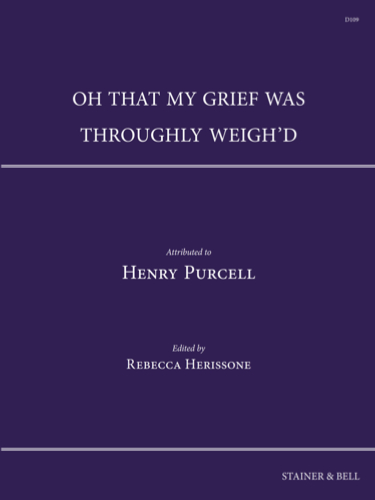
Purcell?: Oh that my grief

Edited by Rebecca Herissone
viii + 16pp.
Stainer & Bell D109, £8.50

Buy it HERE

In her extensive introduction to this 106-bar devotional song for three male voices, Rebecca Herissone makes a convincing case for re-assessing Philip Hayes’ role as a collector and copyist of Purcell’s music in general and for re-instating this to the catalogue of the composer’s canon in particular.

Given the amount of detail she gives, it is surprising that she decided to omit the figured bass symbols on the grounds that it was impossible to distinguish between Hayes’s 18th-century additions (as witnessed in his other transcriptions of Purcell sources that still exist) and what might have been in the original; I should have thought making that statement would have been enough explanation had she left them in rather than (rather shadily) using them “to inform choices in the editorial continuo part”.

She casts the piece as a “homosocial” duet for high and normal tenor voices with a bass joining in for a refrain (in which it really does very little that add text and rhythm to the continuo line). The angular melodies and piquant harmonies are typical of the composer’s style. It is a pity that the three-part section (which neatly fits on to two pages) could not have been laid out on a spread rather than have a page turn in the middle of it both times.

Brian Clark

Categories
Recording

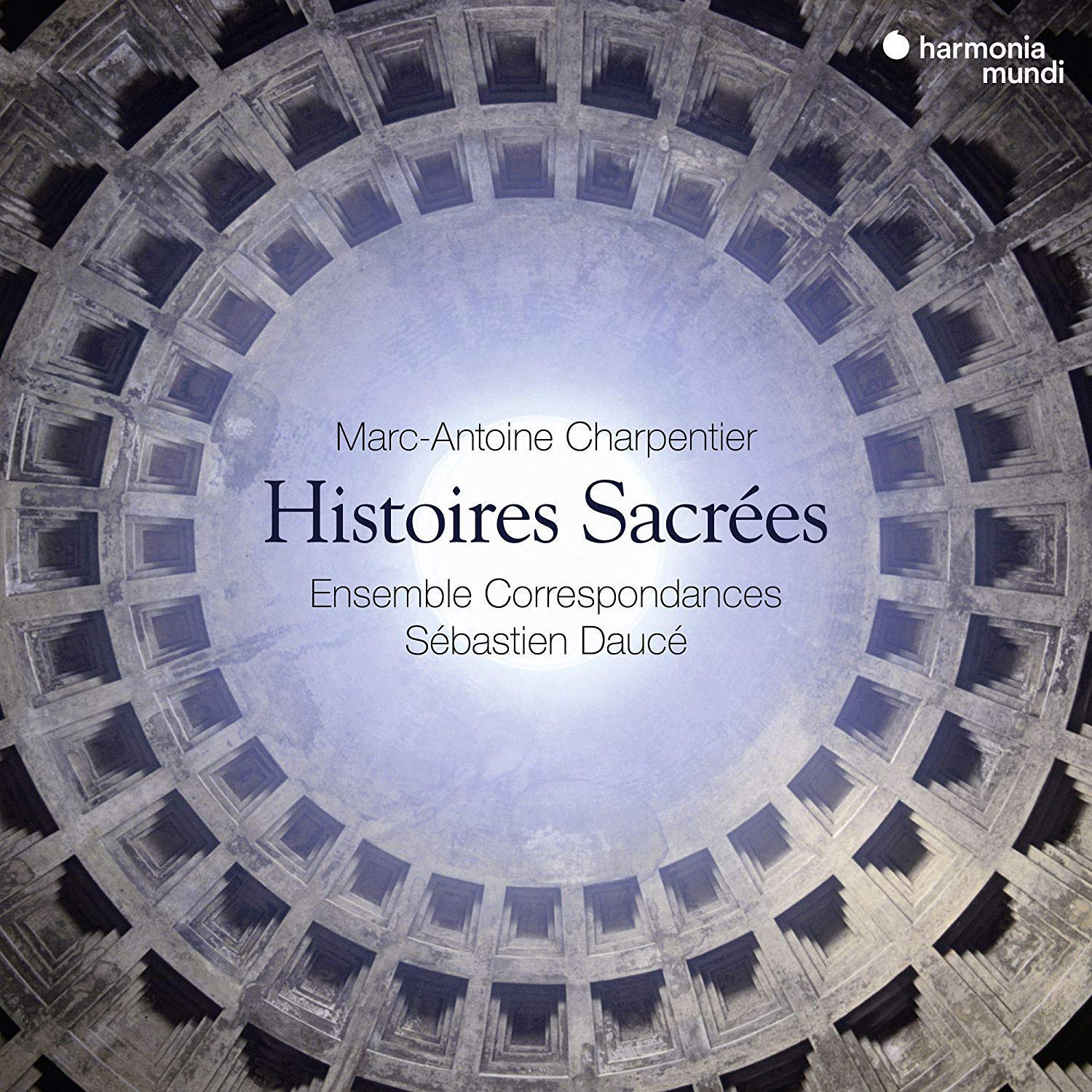
Charpentier: Histoires sacrées

Ensemble Correspondances, Sébastien Daucé
160:51 (2 CDs + Bonus DVD)
harmonia mundi HMM 902280.81

There is a cornucopia of riches packed into this slim-line presentation, so much so that its full worth will surely only became apparent after it has been lived with rather longer than the demands of reviewing time allow. At its heart lie three of the Latin oratorios, or histoires sacrées (neither incidentally terms used by Charpentier himself), biblical or historical religious dramas that follow the format of a narration – which might be sung solo, by a small vocal ensemble or even a chorus – into which characters are given their own voice. It’s a model Charpentier adopted from the three years he spent in Rome (1662 to 1665) and particularly from what he learned from his close contact there with Giacomo Carissimi. The three works are Judith, sive Bethulia liberata, H 391 (1674-76), Cæcilia, virgo et martyr, H 397 (1677-78) and Mors Saülis et Jonathae, H 403 (1681-82). The two former, along with works appertaining to Mary Magdalene, form the contents of the DVD. This presents staged versions recorded in a concert held in the sumptuous surroundings of the Chapelle Royale at Versailles, providing a theme of three greatly admired women whose moral strength was held up as exemplary by the Counter-Reformation, a strong influence via the Jesuits on the works of both Charpentier and Carissimi.

There is no evidence that the Latin oratorios were staged, but strongly dramatic writing and, at times, content makes them a tempting proposition for a producer. The Versailles performance employs a single set with large Roman arches left and right of the back of the stage and two (rather too easily) movable rocks on which some rather ungainly clambering takes place. The same costumes, a mix of vaguely middle-Eastern influence and modern dress are used for both works. There is no attempt at period production, perhaps fortunately given that much of what action takes place is not convincingly projected. Not infrequently what we see conflicts with the text, most obviously at the critical moment of Holofernes’ decapitation, where the Biblical text tells us the Assyrian King ‘lay on his bed fast asleep, being exceedingly drunk’, but we see Judith pawing a half-naked figure who is very much awake. Conversely there are moments, often helped by excellent lighting, that are highly effective, the union of the martyred Cecilia with the crucified Christ creating a Bernini-like image totally in accord with the Counter-Reformation spirit of the piece. The performances of both oratorios feature outstanding solo and ensemble singing, Charpentier’s at times piquant or tortuously dissonant harmonies emerging in the latter with unusually telling force. The eponymous protagonists of the two oratorios, Caroline Weynants (Judith) and Judith Fa (Cecilia) are especially good, the former finding real sensitivity in the prayer before the extraordinary night scene in which she visits the camp of Holofernes. The highest praise also goes to the richly-toned alto Lucile Richardot, a deeply affecting Mary Magdalene in the tender elevation motet O sarcramentum pietatis, H 274 and Magdalena lumens, one of three motets composed by Charpentier for Mary’s feast day. To complete the programme’s dramatisation all three women are brought together in the three-part a cappella motet ‘Sub tuum praesidium’, in actuality an antiphon to the Virgin

Although the audio recording also includes the two oratorios, the motets are only on the DVD. The major addition to the CDs is Mors Saulis, a masterpiece on the subject of the death of Saul and his son Jonathan, the latter deeply mourned by David. It’s a topic to which Charpentier would return in his 5-act tragédie lyrique David et Jonathas, H 490 (1688). Despite not having a dramatic context the oratorio carries extraordinary theatrical power, most spectacularly in the scene between Saul and the Witch of Endor, superbly carried off here by bass Étienne Bazola and, again, Lucile Richardot. The mourning of David, ‘Doleo super te’ is in the tradition of the great 17th-century laments and done with great sensitivity by tenor Davy Cornillot.

Among the smaller works on the CDs are the impressive 8-part funeral motet ‘Plaintes des âmes du purgatories’, and three works belonging to the dialogus type, smaller dramatic works generally cast for two or three characters and continuo, the most impressive here being between Christ and Mary Magdalene (H 423), an exquisite little masterpiece than makes great use of Jesus’ famous words ‘noli mi tangere’ (touch me not).

As I said at the outset, such are the riches here that they demand much greater acquaintance; Charpentier is one of those rare composers to maintain an astonishingly high quality over the course of a large output. These marvellous performances – and I realise I’ve said nothing about instrumental playing (employing 17th-string technique) of the highest quality and completely idiomatic direction – will unquestionably repay deeper investigation and could well take their place at the core of a Charpentier collection.

Brian Robins

Categories
Recording

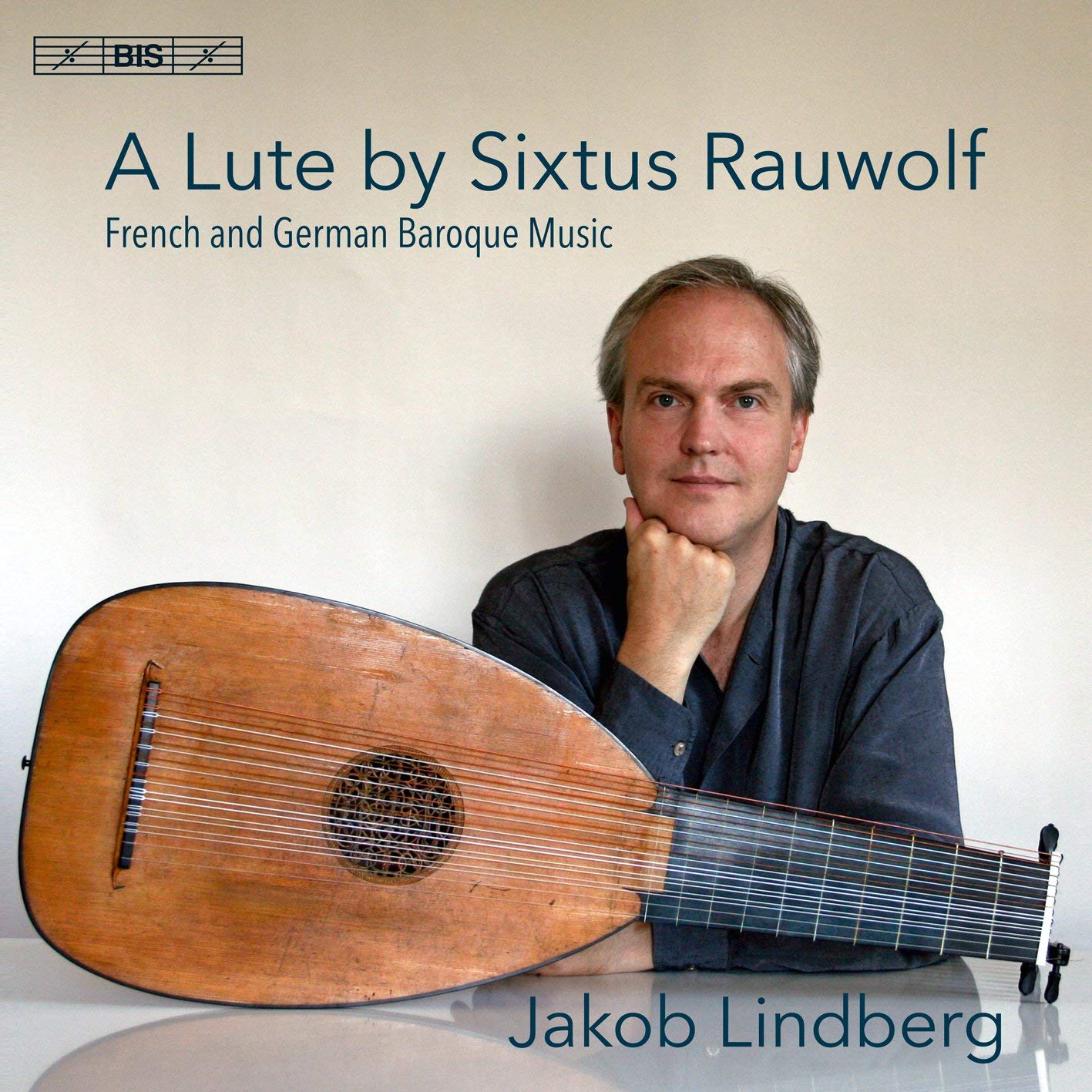
A Lute by Sixtus Rauwolf

Jakob Lindberg
81:50
BIS-2265 SACD
Music by Dufault, Kellner, Mouton, “Mr Pachelbel”, Reusner, Weiss

Jakob Lindberg’s first CD featuring the lute made c. 1590 by Sixtus Rauwolf, is an anthology of music by French and German composers. It begins with a sombre Padoana by Esias Reusner (1636-79), which lies low on the instrument and is reminiscent of English lute pavans such as those by Daniel Bacheler. There follow two suites by two of the most important French lutenist composers in the 17th century, François Dufault (before 1604-c.1672) and Charles Mouton (1626-after 1699). The clarity of the Rauwolf lute is heard to good effect in Mouton’s jolly Canaries ‘Le Mouton’, where a high treble exchanges musical ideas with a lower voice, supported by occasional notes in the bass, giving the impression that three instruments are being played.

Towards the end of the 17th century, lute music waned in France, but it continued to wax in Germany. Lindberg plays a suite by David Kellner (c.1670-1748), who for much of his life worked as an organist in Stockholm. The suite begins with Campanella (presto assai), presumably an imitation of bells, but nothing like the change-ringing of Fabian Stedman and others which would have been heard in England by that time. The alternation of thumb and a finger creates a precise sound verging on the mechanical. Gone are the subtle suggestions of melody by earlier French composers. The old style brisé where melodies and bass lines were broken imaginatively into a succession of single notes, with Kellner they become more a predictable succession of broken chords, and if there is a slow-moving melody, each note is followed by an off-beat on a higher string creating a rather irritating drone-like effect. His Sarabande, on the other hand, has a charming melody, which is divided effectively into single notes for the double repeat. Interestingly, apart from cadential hemiolas, there are no notes stressed on the second beat of the bar, a feature which characterised earlier sarabandes; Kellner’s is more like a slow waltz. Next comes a suite by ‘Mr Pachelbel’, possibly Johann Pachelbel (c.1653-1706), best known today for having written a Canon. According to Tim Crawford’s liner notes, Pachelbel’s Allemande ‘L’Amant mal content’ is based on ‘L’Amant malheureux’ by the French lutenist Jacques de Gallot (d. c.1690). The CD ends with a fine suite in A major by Silvius Leopold Weiss (1687-1750), eight movements in all, including a Gigue played with tasteful panache, and a long Ciacona, with contrasting variations.

Stewart McCoy

Click HERE to buy this on amazon.co.uk

Categories
Recording

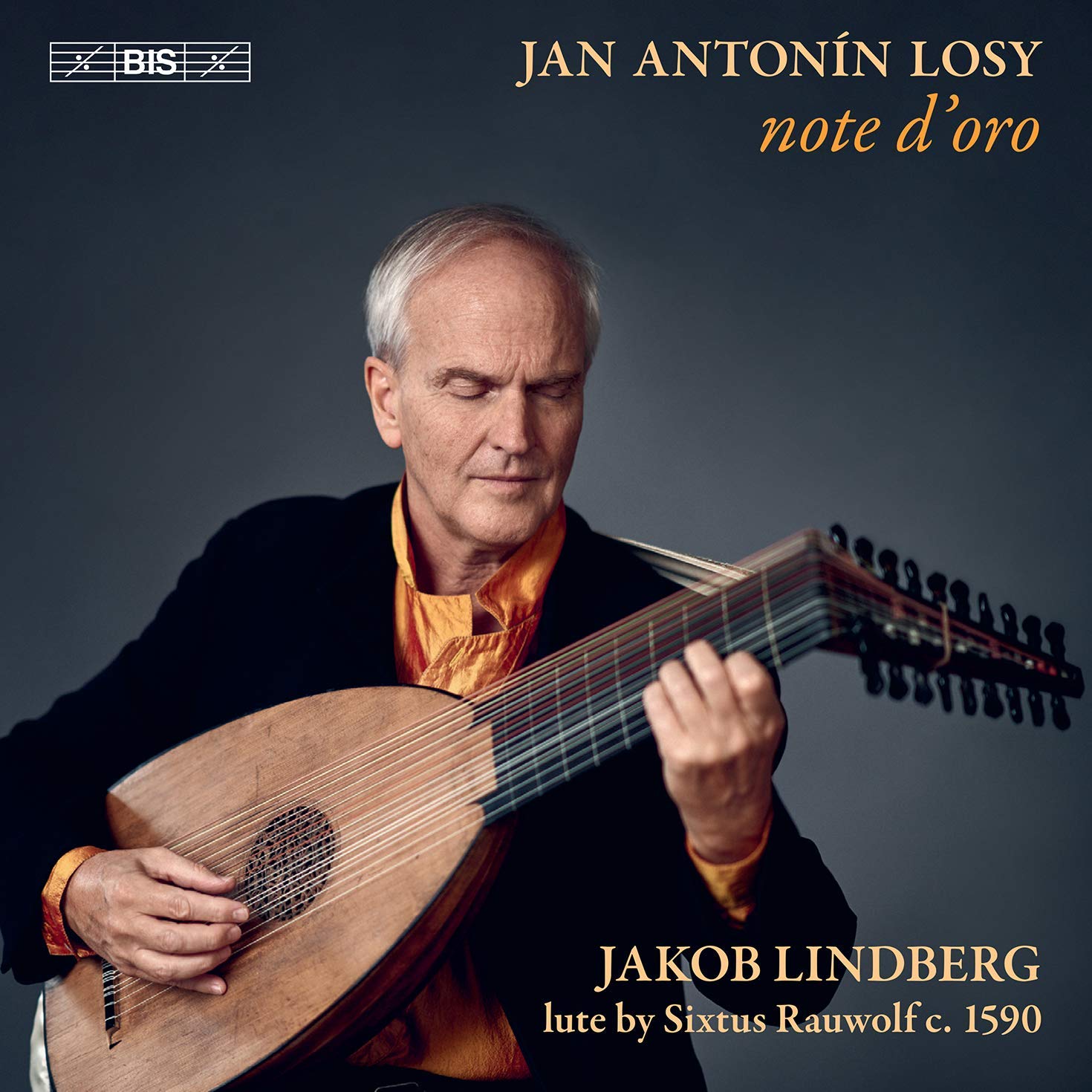
Jan Antonín Losy: note d’oro

Jakob Lindberg
82:15
BIS-2462 SACD (ecopak)

Jan Antonín Losy  (c.1650-1721) is arguably one of the most important composers for the 11-course lute, at least according to the frontispiece of LeSage de Richée’s Cabinet der Lauten (Breslau, 1695), where a pile of books has Losy’s music on top, above books by Gaultier, Mouton and Dufaut. I have always admired his music, and played some every day in 2019 without exception. His compositions are satisfying to play, pleasing to the ear, with well-sructured melodic lines, interesting harmonies, and considerable variety. There is a lightness of texture resulting from a fair amount of style brisé. In 1715, the Prague Kapellmeister, Gottfried Heinrich Stöltzel, described how Losy would savour a particular dissonance, calling it “una nota d’oro” (a golden note), hence the title of Jakob Lindberg’s CD.

The CD begins with a suite in A minor, compiled by Lindberg from various sources, including a Prelude adapted from one for baroque guitar, and a Courante and Double with an unobtrusive touch of notes inégales and a surprising secondary dominant towards the end. Lindberg’s playing is most gratifying – lively yet unhurried, with well-shaped phrases allowing the harmonies to follow their logical course to a final cadence, which is almost invariably decorated with dissonance on the tonic. An Aria is played at a very sedate speed, giving time for delicate ornaments to be heard clearly, followed by a thoughtful Gavotte enhanced by what I assume are Lindberg’s own additional notes for repeats. The suite ends with a lively two-voice Caprice, where fast running notes are shared between treble and bass. Next comes a suite in F major, the seven selected movements long known to modern lute players from Emil Vogel’s Z Loutnových Tabulatur Českého Baroka (Prague: Editio Supraphon, 1977). After a slow, stately start, the overture breaks into three fast beats in a bar, developing a theme of three crotchets and four quavers, before returning briefly to the slower speed of the beginning. Then comes a restful Allemande with much imitation, nice little variants (presumably Lindberg’s own) for repeats, and a passage of parallel tenths played brisé for the repeat. The overall pitch then drops for a Courante, which canters along in continuous quavers in style brisé, so that in the second section there are only three places where more than one note is played at a time. The piece ends with a descending sequence, which Lindberg decorates for a petite reprise. In contrast the following Sarabande has a thicker texture, with many rolled chords. Its second section begins with a surprising chord of C minor, played on the lower reaches of the lute – its highest note (g) is on the fourth course. As with so many of these pieces, Lindberg tastefully adds myriad extra notes to enliven repeats.

There is just one place in the whole of this delightful CD where I think something is not quite right. In the Sarabande of the Suite in D minor, the F major chord at the start of bar 13 should really be in root position, but Lindberg plays it as a second inversion with the note c in the bass, and does the same for the repeat. I wonder if his edition has that note accidentally notated one line too low in the tablature.

With suites in A minor, F major, G major, D minor, G minor and B flat major, ending with a Chaconne in F major, there is much to enjoy. Apart from Lindberg’s masterful playing, there is one thing which makes it all rather special: his lute was built c. 1590 by Sixtus Rauwolf of Augsburg, probably as a seven- or eight-course instrument, and surprisingly it still has its original soundboard. It was later adapted to be an 11-course lute, and was restored a few years ago by Michael Lowe, Stephen Gottlieb and David Munro. Its sound is well balanced, with clear bright notes in the treble, and bass notes which are not too loud and do not sustain too long. With its variety of tone colours, it helps make the music sing, and must undoubtedly be an inspiration to play. Note d’oro indeed.

Stewart McCoy

Click HERE to buy this on amazon.co.uk

Categories
Recording

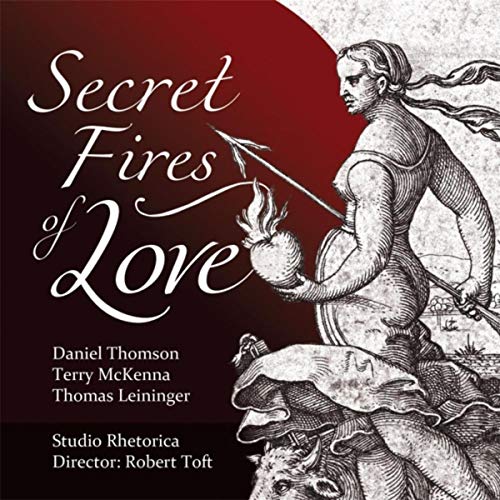
Secret Fires of Love

Daniel Thomson, Terry McKenna, Thomas Leininger, Studio Rhetorica, directed by Robert Toft
65:11
Talbot Productions TP1701

This recital offers a rather lovely programme of English and Italian music from the early 17th century (Dowland, Monteverdi, etc.) and the later decades when ‘the Baroque period’ was in full swing (Purcell, Albinoni, etc.). I rather liked (especially through headphones) the deliberately intimate recorded sound and the restrained performing forces. I doubt the stylistic credentials of some of the continuo playing, on both lute and harpsichord, but it is the vocal style that will excite or appal (or even both) most listeners. I offer a quotation from the blurb:

 ‘[The singer] uses techniques of rhetorical delivery to re-create the natural style of performance listeners from the era would have heard… This requires him to alter the written scores substantially and his dramatic singing combines rhetoric and music in ways that have not been heard since the Renaissance and Baroque eras.

Passing swiftly over these rather extravagant claims which I think many might question, I suppose the singing might be summed up as focussing very much on the word and micro-phrase rather than any sense of a ‘line’ and not all listeners will warm to this and other details – the portamenti, for instance. (I was reminded several times of the Sting/Dowland experiment, which wasn’t actually all bad, and some aspects of Alfred Deller’s performances.) It’s a very intense listen and I’m not absolutely sure that I enjoyed it, but it certainly commanded my attention and I do expect to return to at least small groups of items for pleasure rather than duty.

David Hansell

Click HERE to buy this on amazon.co.uk as an mp3

Categories
Recording

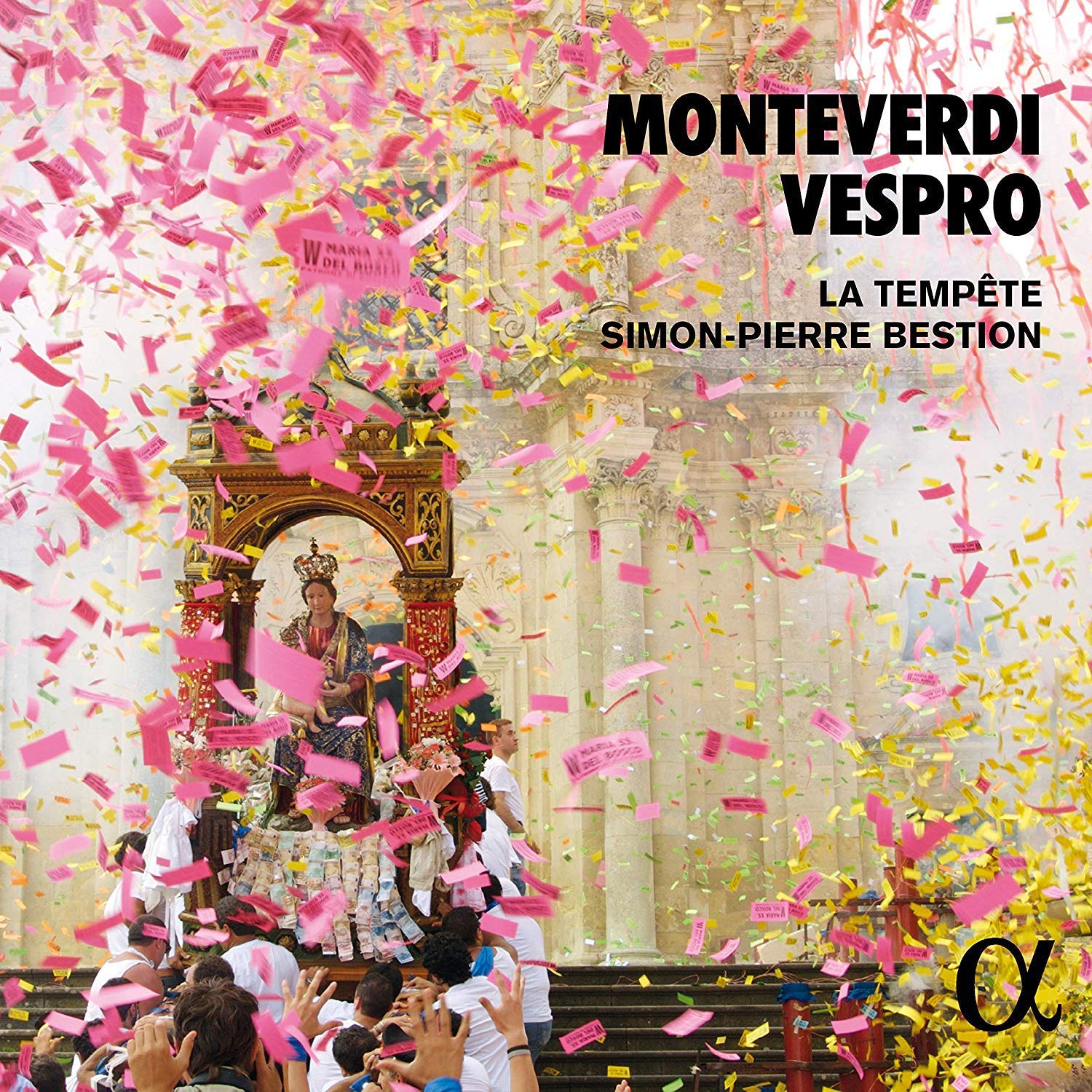
Monteverdi: Vespro della Beata Vergine

La Tempête, Simon-Pierre Bestion
142:07 (2 CDs in a card folder)
Alpha Classics ALPHA 552

This original take on the Monteverdi 1610 Vespers will not be everybody’s cup of tea, if only because the standard parts of the Vespers that people expect to hear are not performed to a standard that we expect in HIP recordings today – the vocal singing in the psalms for example has sopranos singing with a particularly ‘French-style’ vibrato, and his somewhat wayward scorings – adding and subtracting instrumental colour to illuminate a word here and there is more reminiscent of orchestration as practised by Berlioz or Elgar. Indeed, I have not heard such re-imagined scoring – albeit with period instruments – since I heard Walter Göhr conduct his edition in Westminster Abbey in 1959. 

The main interest in this recording – and I have over a dozen recordings from the last two decades alone – must be in the juxtaposition of the supplementary material alongside Monteverdi’s. The opening Versicle and Response, set by Monteverdi to a re-worked version of the toccata that acts as a curtain-raiser to the Orfeo, is treated – as in that kind of modern cookery that presents a deconstructed rhubarb crumble for a pudding – as a series of elements. We have a rough falso-bordone version sung in a style that is a cross between how you might sing the naïve chant setings of Père Gouzes and the Dorset West Gallery tradition. Then follows the Toccata directly from the Orfeo, and finally the 1610 version with voices, strings and exotic wind, but no cornetti.  The faux-bourdon settings he takes from an anonymous xvii century manuscript preserved in the Bibliothèque Inguimbertine at Carpentras in Provence. When asked whether the Vespers could have been sung in this way in the period when they were composed, Bestion replies in the dialogue interview that is his apologia, ‘No, not at all! This is a complete re-imagining, adding in instrumental parts, and also singing the same sections of text twice’. This recording is a newly imagined event, turning the Monteverdi Vespers into the framework for a liturgical happening underscored by childhood memories of summer holidays with the family, staying in a monastery and being overwhelmed by eves-dropping on the great monastic chain of prayer.

So after a plainsong antiphon, sung by a single voice in a way that has echoes of Near-Eastern monody, and a faux-bourdon setting from the Carpentras library, Dixit Dominus by Monteverdi begins with strings, the voices coming in as if they were vocal entries in a Gibbons or Hooper verse anthem. ‘I set about rewriting the instrumental parts’, he says, ‘. . . to reflect all the diverse colours of the orchestra.’ These arrangements are fine in a way: a string ensemble decorates the bare bars of the bass’s Gloria at the end of Dixit like an Purcell viol fantasia on a single note; and sometimes he repeats a section that he likes, as in the triple section in the Gloria of Laudate pueri, which he runs instrumentally first before adding the voices – but the vocal style chosen for the Monteverdi elements in this production seems to owe little either to the rougher faux-bourdon style – sometimes pitched unbelievably low as in the setting of Laudate pueri – or to the ‘supple, slightly androgynous voice’ of Eugènie de Mey. Instead they seem firmly anchored in a slightly dated style of singing that uses quite a lot of modern techniques, like a good deal of vibrato in the upper voices.

Modern in conception too is the treatment of the foundation instruments. Harpsichord, lutes, harps and organ are added and subtracted for effect, providing a degree of distracting restlessness that steals attention from the setting of the text. Tempi are varied for no apparent reason – in Laetatus sum the running bass motif, repeated a number of time before the Gregorian intonation is heard (instrumentally at first), is taken at a faster pace than the much slower even-numbered verses: where has the concept of tactus gone?

I found the ritornello, trilli and all, for a pair of trombones that opens Duo Seraphim before the tenors take over equally odd, even if it no longer surprised me. Nisi goes at a cracking pace, helped by the rhythm section of ‘a thousand twangling instruments’ – though I think Christine Pluhar’s L’Arpeggiata does that kind of excitement better.

The second CD opens with a ricercar by Fresobaldi on Sancta Maria ora pro nobis to introduce Audi cælum, which has some of the best singing so far till cornetti roulades introduce ‘omnes’, and we are galloping off in a breakneck tripla. Benedicta es begins with single voices, till the other singers, and then the complete chorus angelorum catch the theme and pick up their cornets and sackbuts.

Lauda has just brass for the two SAB choirs with the tenors’ intonation at the start, and I found the proportions in the Sonata convincing musically, if unjustifiable theoretically. Ave maris stella has a free version of the plainsong for verses 2 and 3, and a home-embroidered counterpoint for the ‘solo’ verses. Never was there such a self-indulgent flattened 7th in the Amen.

By contrast, the Magnificat was almost straight, except for a mesmerising triple echo in the Gloria. At last I began to see what Bestion was aiming for, though as readers who have persevered thus far will have gathered, it’s not the Monteverdi Vespro of 1610.

If you are anything like me, you will be intrigued and repelled in equal measure. So try and listen to a few tracks before you buy: it’s not exactly what it says on the tin!

David Stancliffe

Click HERE to buy this CD on amazon.co.uk