Categories
Recording

John Bull: In nomine | Walsingham

Léon Berben organ
76:45
Lanvellec Editions LE00005
https://www.festival-lanvellec.fr/accueil/boutique

Or click HERE to buy an mp3 on amazon.co.uk
[These sponsored links are the only way you can actively support this site and keep it alive… and FREE!]

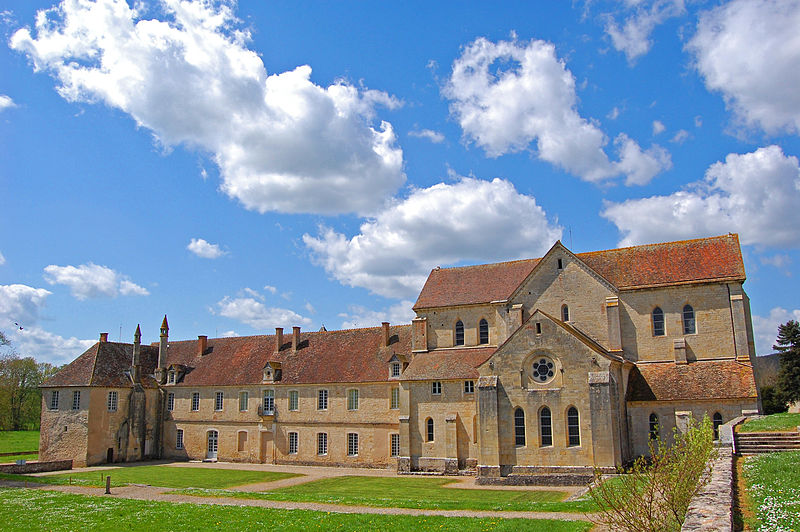
The Robert Dallam organ in the Church of Saint-Brandan in Lanvellec, Brittany, is a unique survival, built while the maker was in exile in Brittany during the English Civil War. Most of the original pipework survives and the instrument was restored to something close to its original condition in the mid-1980s. It is a real treat to hear it in this recital of John Bull’s music by the Dutch organist Léon Berben. It has great clarity, well captured in this recording, with a rich sound and a good variety of registrational possibilities. Some stops come close to the sound of the musette or bagpipe and are put to good use in pointing up the more earthy elements in Bull’s music. Most of the disc is taken up with the composer’s eleven authenticated In nomine settings. These show great variety of compositional techniques, combining a strict harmonic framework (based on part of a melody from the Benedictus of a John Taverner Mass) with repeated figurative writing. The improvisatory basis of this writing is brought out particularly well by Berben, who also enjoys the frequent changes of metre. He rises to the virtuosic challenges caused by the shortening of note values as these pieces reach their conclusion, and always manages to stop repetitions from becoming boring – something not always easy in Bull’s music. At the core of this programme is Bull’s set of thirty variations on the ‘Walsingham’ tune, a great tour de force of late Elizabethan keyboard writing which takes almost twenty minutes here. It shows off the full range of the organ’s registers as well as Berben’s control of the instrument. A couple of fantasias on Palestrina’s madrigal Vestiva i colli and a few other short pieces completes the disc. There are excellent sleeve notes by Berben and Jon Baxendale. This is a stimulating and enjoyable presentation of some of the best of Bull’s music and can be thoroughly recommended.

Noel O’Regan

Categories
Recording

Graupner: Complete Harpsichord Music

Fernando De Luca harpsichord
14 CDs in a card box
Brilliant Classics 96131

Click HERE to buy this on amazon.co.uk
[These sponsored links help the site remain alive and FREE!]

At the famous audition process to choose a new Cantor for Leipzig’s Thomaskirche in 1722-3 Christoph Graupner was second choice (after Telemann) but could not obtain leave from his employer at the court of Hesse-Darmstadt and so made way for J. S. Bach. In that context it is thought-provoking to listen through the nearly fifty partitas which make up almost all of Graupner’s surviving keyboard music, recorded here by Fernando De Luca. The only other pieces here are a single short Prelude and Fugue, and an Aria with one variation. Less than half of the Partitas were published during Graupner’s lifetime, the rest surviving in manuscript in Darmstadt. All are attractive works, rich with musical ideas, but ultimately going over the same ground again and again and tending to rely on repeating trusted formulae. They seem to illustrate Andrew McCredie’s comment in the New Grove article on the composer: ‘working on a modest scale, [Graupner] was regarded more for the originality of his ideas than for their working out’. It is as if Bach continued to churn out French Suites and almost nothing else. Might a move to Leipzig have meant a different outcome for Graupner? We will never know. He was certainly amazingly prolific in Darmstadt, with over fourteen hundred cantatas and lots of other works surviving. Like Telemann, musical ideas flowed freely from his fingers and pen. The most extended of his partitas are a set of twelve named after the months of the year, each with from six to ten movements, headed by Preludes which can take a variety of forms, and continuing with the usual standard dances and various galanterien. In other suites the Allemande fulfils something of the function of an opening prelude.

This 14-CD collection is a monumental enterprise for De Luca who seems to relish such challenges.  Together with Marco da Gregorio he runs a website ‘Sala del Cembalo del caro Sassone’ which contains a whole host of recordings of keyboard music by many different composers, all recorded by De Luca.  He is clearly used to big projects and able to learn music quickly. His playing is consistent and faithful to the score, though perhaps motivated more by a desire to leave a firmly mainstream account of the works than to let in any sense of playfulness or experimentation. Fast movements can be exciting, particularly some of the Gigues; slower movements can be a bit heavy-handed and would have benefitted from some more subtlety in execution at times, though there are some fine moments and a judicious use of ornamentation on repeats. He plays on two instruments: a copy of a Blanchet (1754) by C. Caponi and copy of a Christian Vater (1738) by F. Ciocca, both of which provide opportunities for variety of registration and are pleasingly recorded. There is only very slight information in the accompanying booklet – movement lists are only found on individual CD covers; a short essay deals only in generalities with nothing much on individual partitas. The numbering follows that of the Graupner Werkverzeichnis (GWV). (Incidentally, GWV online is a mine of information about the composer and his output, editions and performances of this works.) There is much to admire about this recording project, and it is certainly very useful to have all of Graupner’s authenticated keyboard music available in one place. Listeners will want to dip in and out, perhaps taking one partita at a time, admiring both Graupner’s and De Luca’s facility and being rewarded with some attractive music confidently delivered.

Noel O’Regan

Categories
Recording

Psalmen & Lobgesänge

aus dem mitteldeutschen Barock
David Erler alto, L’arpa festante
75:56
Christophorus CHR 77453

Click HERE to buy this on amazon.co.uk
[Using these sponsored links supports the record company and helps keep this website FREE!]

None of our readers will be particularly surprised to learn that I loved this CD. The repertoire (psalm settings and songs of praise for alto and strings) is right up my street, the instrumental support given to the singer is sympathetic and empathetic (meaning that they understand that lots of their music projects the text every bit as much as the solo voice part) and, well, David Erler. Effortless in the coloratura (and there is plenty of that among the six pieces here, five recorded for the first time!), and glorious in longer, sustained lines, his is the perfect voice for this repertoire. None of the composers is particularly well known (most of our readers ought to have heard of Briegel and Theile) and, indeed, three of the pieces remain anonymous, but my attention was held for the entire length of the disc, from the jubilant opening (J. C. Schmidt’s “Bonum est confiteri Domino”) to the “Gloria” of the final work, an anonymous Magnificat setting – talk about saving the best until last! What a fabulous piece, with its crowning triple-time “Amen”, with the voice and instruments in joyous dialogue. I cannot recomment this recording enough – it’s a cracker!

Brian Clark


Categories
Recording

G. B. Bassani: Affetti Canori

Cantate e ariette per soprano e basso continuo Op. VI
Anna Piroli soprano, Luigi Accardo harpsichord/organ, Nicola Brovelli cello, Elisa La Marca theorbo/guitar
56:16
Dynamic CDS7918

Click here to buy this on amazon.co.uk
[Doing so supports the artists, the record company and keeps this site available – if no-one buys, this ad-free site will disappear…]

Paduan-born Giovanni Battista Bassani (c.1650-1716) was an almost exact contemporary of Corelli, but an infinitely more versatile composer. Believed to have studied in Venice with Legrenzi, he was not only a virtuoso violinist, but also a fine organist worthy of holding several important posts in the cities of northern Italy in which he worked, Padua, Venice, Modena, Bologna, Bergamo, but above all Ferrara, where he was maestro di cappella of the cathedral from 1686. His extensive catalogue includes at least nine operas (sadly now all lost apart from fragments), oratorios, of which there is an excellent recording (Opus 111, 2001) of his La morte delusa (Ferrara, 1696), many other sacred and secular vocal works and a substantial body of instrumental chamber works.

Bassani’s collection Affetti Canori was published as his opus 6 in Bologna in 1684. It consists of six single-movement ‘arias’ and with six cantatas in several movements that alternate arias with recitar cantando or arioso, often in a highly flexible way reminiscent of the quasi-scena episodes in the operas of composers like Cesti. It is the independent arias that often strike the listener as the more adventurous as to matters of harmony. The opening ‘Occhi amorevoli’, for example, one of the most exceptional pieces of the collection, starts with a plea of heartfelt beauty for the lady’s eyes to give succour to the poor mendicant, its supplicatory tone reinforced by chromaticism. Then comes a vivace giving the pleas greater urgency, before a return to the opening cantabile largo. And this is perhaps a good moment to introduce the singer, soprano Anna Piroli, who like the music itself excels in this work. She is the possessor of a fresh, sweet-toned voice that not only has a technique fully able to encompass agile passage work, though there is nothing over-demanding in that respect here, but also capable of sustaining an unwavering cantabile line. As can be heard in the final bars of this aria, Piroli’s mezza voce is quite ravishing, and with the very occasional exception of a pushed top note she’s one of those rare singers that seem incapable of making an unpleasant sound. Ornamentation is well-executed and mostly stylish, though it would have been good to hear an occasional trill. While her diction is fair there are times where a firmer projection of the text would not come amiss. Her response to text is however often telling; listen for example to her wistful emphasis on the words ‘goduti contenti’ (former pleasures) in one of the recitatives from the cantata Consolata gemea.

That is at once the most extended and arguably the most impressive of the cantatas, though several others come close. While most of them take the vicissitudes of love fairly light-heartedly – and the number of lively triple-time arias tells us we should not take the content too seriously – here the cantata is founded on a beautifully expressive minor-key largo that acts as a ritornello refrain – its repeats intelligently decorated – that seems to speak of something more profound. It is most affectingly sung by Piroli, who sustains the pathetic cantabile lines with especially touching effect. Also particularly noteworthy is another lengthy cantata, Ardea di due begl’occhi, with its captivating aria in chaconne form.

Piroli is given outstanding support by the continuo players, whose contribution is always positive without ever intruding onto the singer’s territory, a lesson some others would do well to take on board. It is, in fact, a compliment to say that most of the time the listener is not aware of them.

Full texts and translations plus extended notes by musicologist Marco Bizzarini are included, rounding off a thoroughly satisfying and rewarding issue that brings this splendid set of works to the catalogue for the first time.

Brian Robins

Categories
Recording

The Proust Album

Shana Diluka piano, with Nathalie Dessay soprano, Pierre Fouchenneret violin, Guillaume Galliene speaker, Orchestre de chambre de Paris, Hervé Niquet
81:52
Warner Classics 0190296676253

Click HERE to buy this album on amazon
[Doing so supports the artists, the record company and keeps this site available – if no-one buys, no money is made and the site will disappear…]

There is nothing either ‘Early Music’ or HIP here, but an important aspect of the EM movement has been the research and revival of repertoire that is forgotten/unknown yet worthwhile and it is in that spirit that we give this Proust-themed (ie music he liked) miscellany a brief notice. Reynaldo Hahn’s piano concerto was a welcome surprise, Wagner’s tiny Elegy (solo piano, as is most of the programme) intriguing, and the world premiere recording of Richard Strauss’s elaborately textured Nocturno should draw deserved attention to this relatively recent discovery.

The main essay (in French, English and German) stays on the right side of the informative/philosophical border though there is nothing about the artists. But if you feel like a wander away from your normal HIP path, there is much to enjoy here.

David Hansell

Categories
Recording

F. Couperin: Harpsichord Works

Tilman Skowroneck
80:02
Tyxart TAX20153

Click HERE to buy this album on amazon
[Doing so supports the artists, the record company and keeps this site available – if no-one buys, no money is made and the site will disappear…]

Oh joy! Outstanding music, thoughtfully programmed, a sumptuous and appropriate instrument (also used by Gustav Leonhardt), and disciplined playing that seeks the essence of each piece rather than tries to impose ideas upon it.

For all our delight in his other music, it is the keyboard ordres that are the basis of Couperin’s high reputation and even though we have only a fraction of that repertoire here, it’s enough to prove the point. I particularly welcome the decision, in the context of a stand-alone recital, to play only selections from two of the suites to make space for a third.

The harpsichord is a French-style, two-manual instrument by Martin Skowroneck. Its lush sonorities are an utter delight and its resources expertly deployed (try track 7, La Favorite and track 27, the famous B minor Passacaille). And, although there are those that quite reasonably question the order of the last two pieces in that ordre, this playing makes an eloquent case for the publication as it stands.

The booklet (in German, English and French, the last much abbreviated!) won’t win any prizes for graphic design but we are offered a solid, old-fashioned essay that really does tell us what we need to know, as well as artist and instrument information, even if the English is not always perfect. TS’s biography suggests that he ‘defended’ his dissertation on Beethoven. The German original has the anti-climactic though rather more likely ‘submitted’!

But all in all, a solid, old-fashioned and enthusiastic recommendation is amply justified.

David Hansell

Categories
Recording

Amazone

Lea Desandre mezzo-soprano, Jupiter, Thomas Dunford
75:37
Erato 0 190295 065843

Click HERE to buy this album on amazon
[Doing so supports the artists, the record company and keeps this site available – if no-one buys, no money is made and the site will disappear…]

This is a recital of extracts from 17th- and 18th-century operas (French and Italian) that feature powerful female characters – Amazons of one kind and another. It is also, of course, a showcase for the powerful virtuosity of mezzo Lea Desandre. She is joined by no less than Cecilia Bartoli and Véronique Gens for duets (one each) and there are also a few short instrumental items. These include a performance of Couperin’s L’Amazône by William Christie, to complete the roster of guest stars.

This is an interesting concept, which introduces us to a lot of (to all intents and purposes) unknown music with several world premiere recordings claimed, all of which I am pleased to have heard. But I have multiple reservations about the performance practice on this disc. We hear a chamber ensemble throughout but would not most, if not necessarily all, of these composers have expected an orchestra? Yes, ‘domestic’ versions of operatic excerpts were published but would such an ensemble have included 16’ instruments? Why is there a lute as well as harpsichord in Louis Couperin’s Passacaille? Percussion?! And, as EMR writers so often observe, the singing is unreconstructed modern. Much is impressive in its way, though Ms Desandre is not always fully in control of her highest register. However, I’d like to hear her live in a fully-staged opera.

The booklet notes (in French, English and German) offer interesting comments about the concept but say little specific about the music, nothing about performance practice and nothing about the artists. Full texts and translations are included, however, but overall this is a release which the EMR/HIP community might find hard work.

David Hansell

Categories
Recording

Field: Nocturnes

Florent Albrecht de Meglio piano (1826)
65:14
Editions Hortus 197

Click HERE to buy this album on amazon [digital only]
[Doing so supports the artists, the record company and keeps this site available – if no-one buys, no money is made and the site will disappear…]

Long-time BBC listeners may remember Anthony Hopkins Talking about Music. One of those programmes explored a Field piano concerto (he wrote seven) as well as including the usual ‘inventor of the nocturne’ credit. Well, here are those nocturnes, played on a piano that Field certainly had the opportunity to play, even if we are not absolutely confident that he did so. The instrument has had only deliberately ‘light touch’ restorative work but retains great tonal charm, including the ability to deliver more HIP sustaining pedal use than we often hear (broadly, leave it down for longer).

As well as being the performer, Florent Albrecht has also undertaken the complex task of establishing a credible version of the musical texts and his deep involvement with the overall project results not only in playing of great technical accomplishment and musical judgement, but also and above all, of love. The piano also sounds very happy: its fragile treble positively glitters through all the filigree writing and we hear this most emphatically as ornamentation rather than ornate melody.

The booklet (in French and English) gives a comprehensive account of the project, including comments on the piano and the composer. I wouldn’t class myself as a ‘romantic piano music’ fan, but I absolutely loved this!

David Hansell

Categories
Recording

F. Couperin: Les Apothéoses

Monica Huggett, Chiara Banchini, Ton Koopman, Hopkinson Smith, Jordi Savall
Alia Vox AVSA9944
47:02

Click HERE to buy this album on amazon
[Doing so supports the artists, the record company and keeps this site available – if no-one buys, no money is made and the site will disappear…]

This re-issue of a 1985 recording in Alia Vox’s ‘Heritage’ series comes with a relatively lavish booklet (in French, English, Spanish, Catalan, German and Italian), including artist photos and facsimiles. Of necessity the essay is brief, but we are told what we need to know, and these programmatic masterpieces each have movement-by-movement guides, enhanced and emphasised by the spoken titles at the start of each track. The starry line-up produces tremendous performances: others have done it differently, but I doubt that any have done it better. If you don’t already have this on your shelf (possibly in more than one format), now’s your chance!

David Hansell

Categories
Recording

Two Voices: Fair Oriana

Morley Canzonets to Two Voices (1595)
68:14
voces8 records
VCM134

Click HERE to buy this on amazon.co.uk
[These sponsored links help the site remain alive and FREE! Although we were sent a physical disc, only the four MP3 segments seem to be available at amazon – the link is to volume 3 which has five pieces, including the Owain Park piece mentioned below]

If, like me, you first met Morley’s two-voiced Canzonets as exercises in pastiche counterpoint composition, do not let this blind you to their musical delights. Here they are performed, with both conviction and delight, in four themed groups, each of which also contains other music including new (often rather good) commissions. These pieces contribute not only musical but also textural contrast, which makes the listener’s experience less austere than might otherwise have seemed the case.

The singers have voices which manage to both blend and contrast with each other and they are clearly separated in the recorded mix. This also offers different acoustics for the various elements of the programme beyond what might have been expected from the two venues used. At 10 minutes, Owain Park’s new Midnight poem is by far the most substantial work on the disc. For me, its varied styles did not wholly convince, though others may not feel the same. Similarly, the recorder on one of the parts in Ah Robyn was a definite intruder, as were the rather ‘arty’ breaths. The concluding arrangements of Purcell and Handel are effective in broad musical terms, though given that both composers contributed generously to the vocal duet genre might we not have heard more of ‘the real thing’?

So, not all early music, and not all HIP, but enjoyable anyway. The booklet (in English only) does not include the sung texts, which is regrettable, particularly in the case of the Park commission.

David Hansell