Categories
Recording

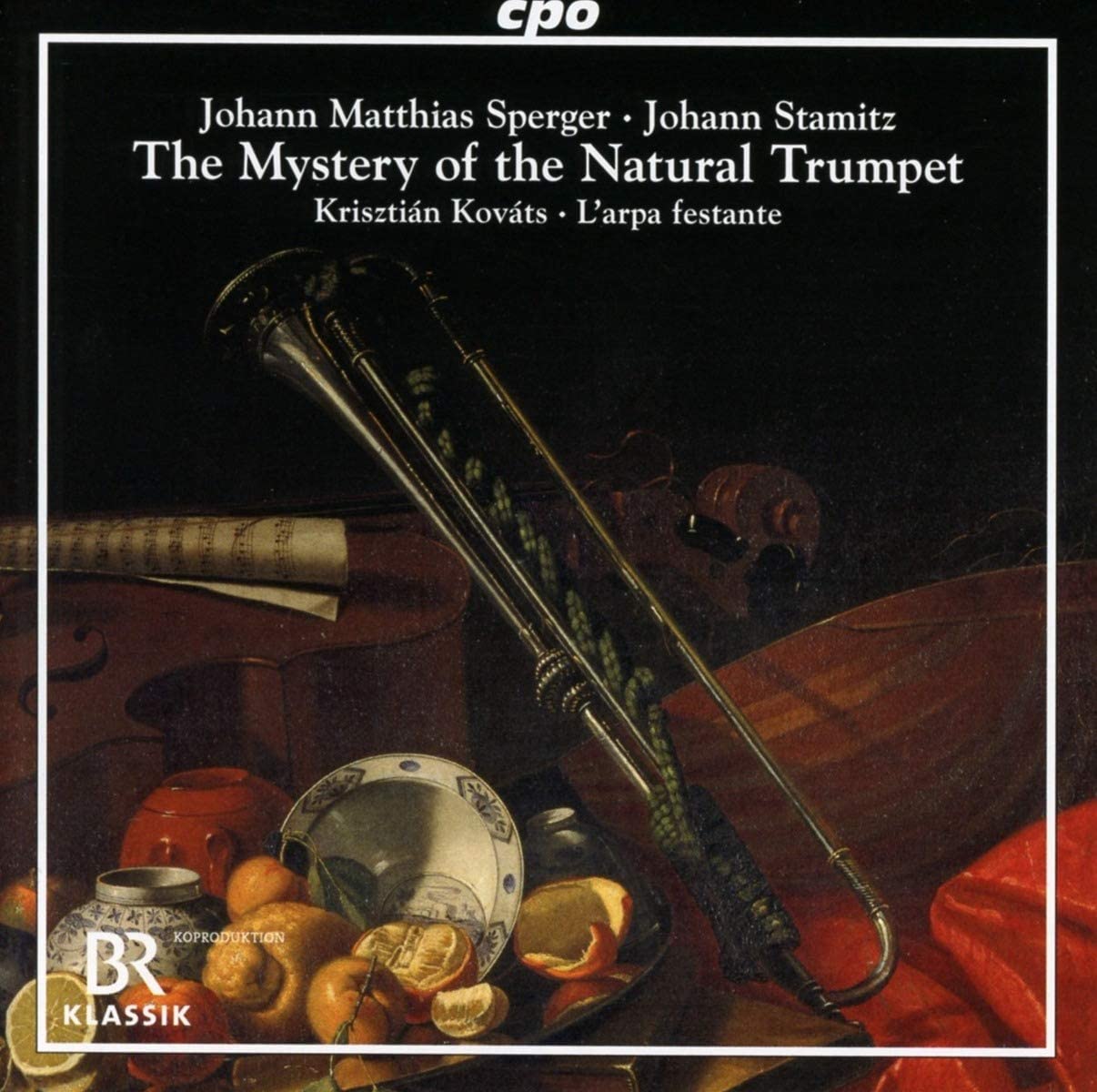
The Mystery of the Natural Trumpet

Krisztián Kováts, L’arpa festante
66:57
cpo 555 144-2
Concertos by Lang, Otto, Riepel, Sperger & Stamitz

Click HERE to buy this on amazon.co.uk

The mystery alluded to by the title of this CD is perhaps why nobody now performs any of the many trumpet concertos to survive from the late 18th and early 19th centuries, with the exception of the ubiquitous concerti by Haydn and Hummel. In many ways, these two concerti are aberrations, composed as they were for the keyed trumpet, and it is fascinating to hear the other concertos here by Johann Stamitz, Johann Sperger, Johann Lang and Johann Otto as well as the Sinfonia by Joseph Riepel written for and performed on the valveless (and keyless) trumpet – it should be said that the instrument used is in the Baroque style but with four finger-holes, which puts it some way along the route to the now ubiquitous keyed trumpet. The solo trumpet playing of Kristián Kováts is simply superb, ranging with flawless tuning and tone over a vertiginous range and he is ably supported throughout by L’arpa festante. It has to be said that the quality of composition here is not of the top level of inspiration – even as a fan of the music of the Stamitz family I would have to admit that they are prone to cliché, and this is also the case with much of the rest of the music here. Coupled with the fact that this period saw the beginning of a process which would lead to the trumpet being emasculated from Baroque magnificence to Classical conformity, I found myself increasingly reliant on the soloist’s virtuosity and musicality to hold my interest. Having said that, it is important to be able to put the Haydn and Hummel concerti in some sort of context, and this repertoire and these performances are never less than enjoyable.   

D. James Ross

Categories
Recording

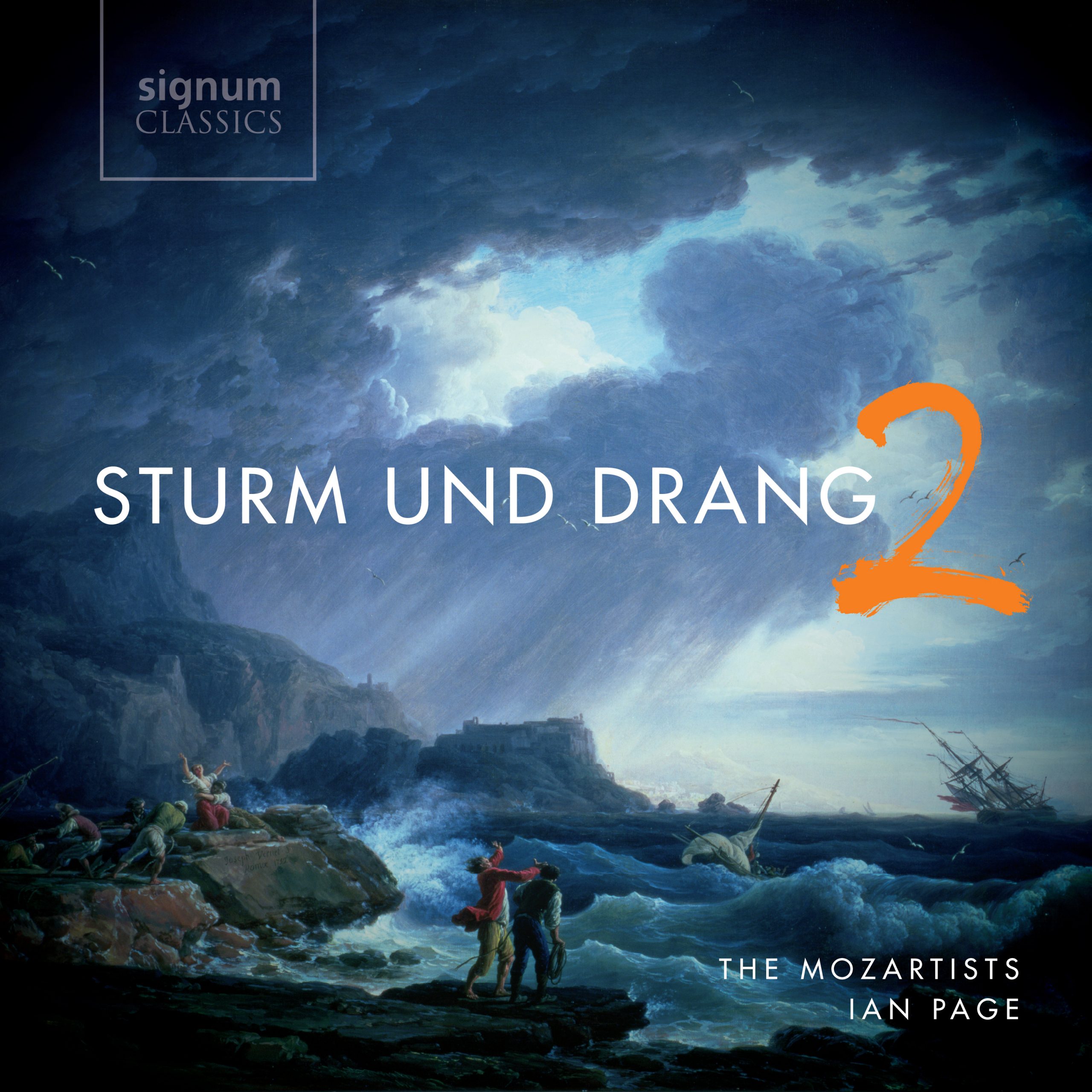
Sturm und Drang 2

Ida Ränslöv mezzo, The Mozartists, Ian Page
71:39
Signum SIGCG 636
Works by Haydn, Gluck, Vanhal, Mysliveček, J. C. Bach

This is the second in a projected series of seven CDs devoted to the so-called ‘Sturm und Drang’ (storm and stress) movement, in fact not a movement at all but an outpouring of passionate, often turbulent emotional outbursts across literature, music and painting primarily between the 1760s and early 1780s. Although the name stems from literature, being particularly associated with Goethe’s Sorrows of Young Werther of 1774, the music associated with it was mostly composed a decade or more earlier. There appear to be no philological links between the literature and the music, Ian Page’s characteristically informative notes suggesting that Sturm und Drang may simply be a reaction against the charm and gentility of the mid-18th century rococo style.

G minor was a key that particularly lent itself to the turbulence of such fierce emotions. The present disc includes particularly fine examples in symphonies by Haydn and J. C. Bach and vocal works by Haydn and Mysliveček.

Haydn’s Symphony No 39 is not only archetypal of the genre, but also the earliest of a group of minor-key Sturm und Drang works (including string quartets and solo keyboard works in addition to symphonies) that form a highly important component of the middle years of his output. It is unusual in its scoring including four horns, a distinction that leads to suggestions that it exerted an influence not only on the minor key symphonies of Vanhal, at least four of which, including d1, are scored for four horns, but also the earlier of Mozart’s G minor symphonies, No 25, K 183, composed in 1773. Incidentally, in my view it is wrong to include Mozart’s great Symphony No 40 in G minor among Sturm und Drang works; its overall sentiment is one of profound universal sadness, tragedy even that goes beyond the stormy, hurtling drama of works of this kind. Equally, Johann Christian Bach’s Symphony in G minor, op 6/6 seems to belong to a less intense side of the genre, placing as its centre of gravity a deeply-felt C minor central movement that opens in the style of an operatic accompagnato before proceeding to a beautifully shaped melody built on ornamental arabesques. The whole symphony is an object lesson for those who think of Bach’s second son as a purveyor of little more than galant pleasantries.

Ian Page’s performances of all three symphonies are exemplary. Outer movements have a tremendous driving force, with fierce chords, highlighted dynamic contrasts – listen to the splendidly judged opening paragraphs of the opening Allegro assai of the Haydn – and fierce tremolandos. Also notable as a feature of the performances is the clarity with which the conductor reveals the contrapuntal detail of passages such as the development of the same movement, the importance given to such writing being one of the characteristic features of Sturm und Drang works. In the slow movements of the Haydn and Vanhal Page finds a lighter touch to reveal necessary respite from the fiery thrust of the outer movements, the pastoral serenity of the splendid Vanhal Andante arioso (with flutes replacing oboes) calling to mind Gluck’s Blessed Spirits. As is his custom, Page includes all marked repeats, especially valuable in the Vanhal, which becomes a far more substantial work than in the performance by Concerto Köln, where the total work clocks in at 14:22 against Page’s 21:49.

As with vol. 1 appropriate vocal works are interspersed with the symphonies. They include two extracts from Gluck’s Paride ed Elena (Vienna, 1770), the affecting aria ‘Fac me vere tecum flere’ from Haydn’s Stabat Mater (1768) and an aria di furia from Mysliveček’s setting of a standard Metastasio warhorse, Semiramide (Bergamo, 1776). They are sung by the young Swedish mezzo Ida Ränslöv, who the biography tells us has already sung a wide range of roles in her capacity as a member of Staatsoper Stuttgart and elsewhere. The voice itself has a lovely quality, displaying a tonal richness and variety of colour that bodes well for her future, though I suspect that might be concentrated on later music. Her interpretations here are satisfactory without showing any truly distinctive features. Ornamentation is extremely sparse and her Italian diction and enunciation suggest little detailed exploration of what lies below the surface of the music. Page gives her excellent support, while it would be wrong to conclude without giving generous recognition of the outstanding orchestral playing throughout.

Sturm und Drang is shaping up to be not only an eminently enjoyable series in its own right but an insightful collection of considerable value. Volume 3 can’t come soon enough!

Brian Robins
Categories
Recording

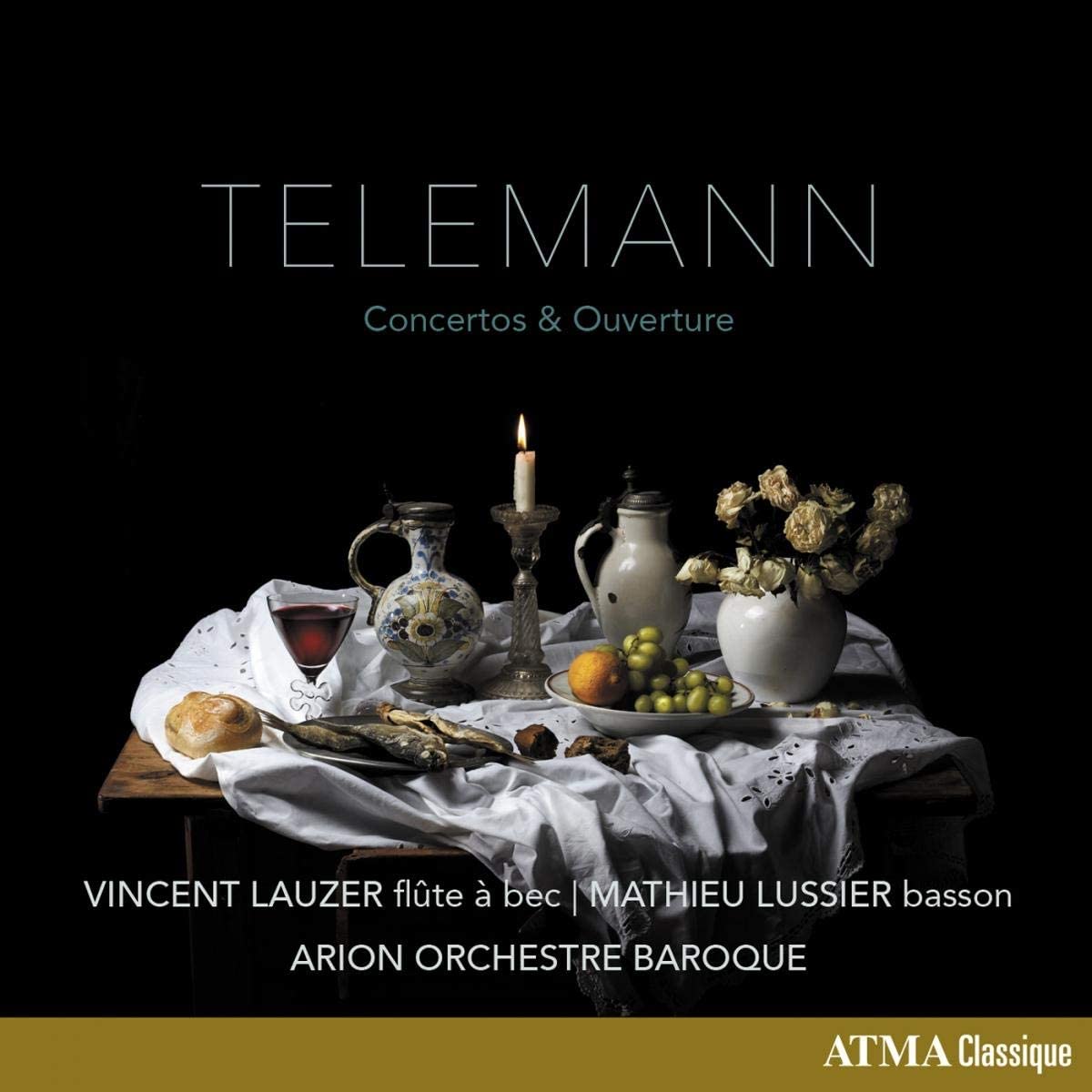
Telemann: Concertos and Ouverture

Vincent Lauzer recorder, Mathieu Lussier bassoon, Arion Orchestre Baroque
60:03
Atma ACD2 2789.

Click HERE to buy this on amazon.co.uk

With “just” over an hour’s worth of music to savour here, we are treated to a vibrant and salient reminder of the fluent and mellifluent composing skills of this versatile master of mixed music tastes and guises. The extensive Ouverture-suite closing this disc provides ample proof of both qualities cited above with its refined subtleties and idiomatic twists… it really is akin to Lully with a twist or tweak or three!

It was J. A. Scheibe in his Critischer Musicus (1745) that pointed out Telemann’s prowess and impetus to popularise the ouverture-suite form in Germany and this area was cultivated from quite early on in his career. This fine G-major Suite belongs to a select group that takes us through ten well-crafted, beautifully contoured movements. The amazing flow of musical ideas, clever with subtle touches, displays an ability that Lully and others would have been very proud of. The suite most likely hails from the composer’s Frankfurt period.

After a perfectly observed Ouverture, we set off through the various movements, beginning with “Les Augures” (Omens/Signs) which poses the question, “good or bad?” And there is a brief hint of wincing to be heard! Possibly an allusion to scenes in the stock market on the first floor of his Frankfurt mansion? Splendid examples of the French dance forms feature too, not only a neat, formal Rondeau, but later a Gavotte en rondeau, all attesting to Telemann’s familiarity and playfulness with these dances. The transition is a real delight; going from 4. Entree into 5. La Joye, one feels the processional, joyful flow. Equally, when the emotional “brakes” are applied this overflowing buoyancy, the Sarabande and Plainte find a melancholic mood like tragic operatic nadirs. In many Suites the Gigue is a final fling, but not her;, the closing triple Menuets I-III  add curtain-falling elegance to the musical trajectory. The playing by Arion Orchestre Baroque under Alexander Weimann is first-class, crisp, vibrant, and alert to the subtle dance mannerisms with “twists”. The two concerti expose the brilliant combined talents of Vincent Lauzer on recorder (who, with that blistering ease “à la Steger”, is yet another dazzling virtuoso on his chosen instrument!) and the equally gifted Mathieu Lussier on bassoon in the F-major work, which opens in quasi-pastoral mode, their superbly interwoven dialogue is captured with great relish and responsiveness;, especially in the final Allegro. The overall playing standard is as expected, exceptionally high, and the recorded sound many could merely envy! Viva Arion! 

David Bellinger

Bravo to Dr Ian Payne (Severinus Press) for conflating the various copied versions for the first edition of the Suite used by Arion for the present recording

Categories
Recording

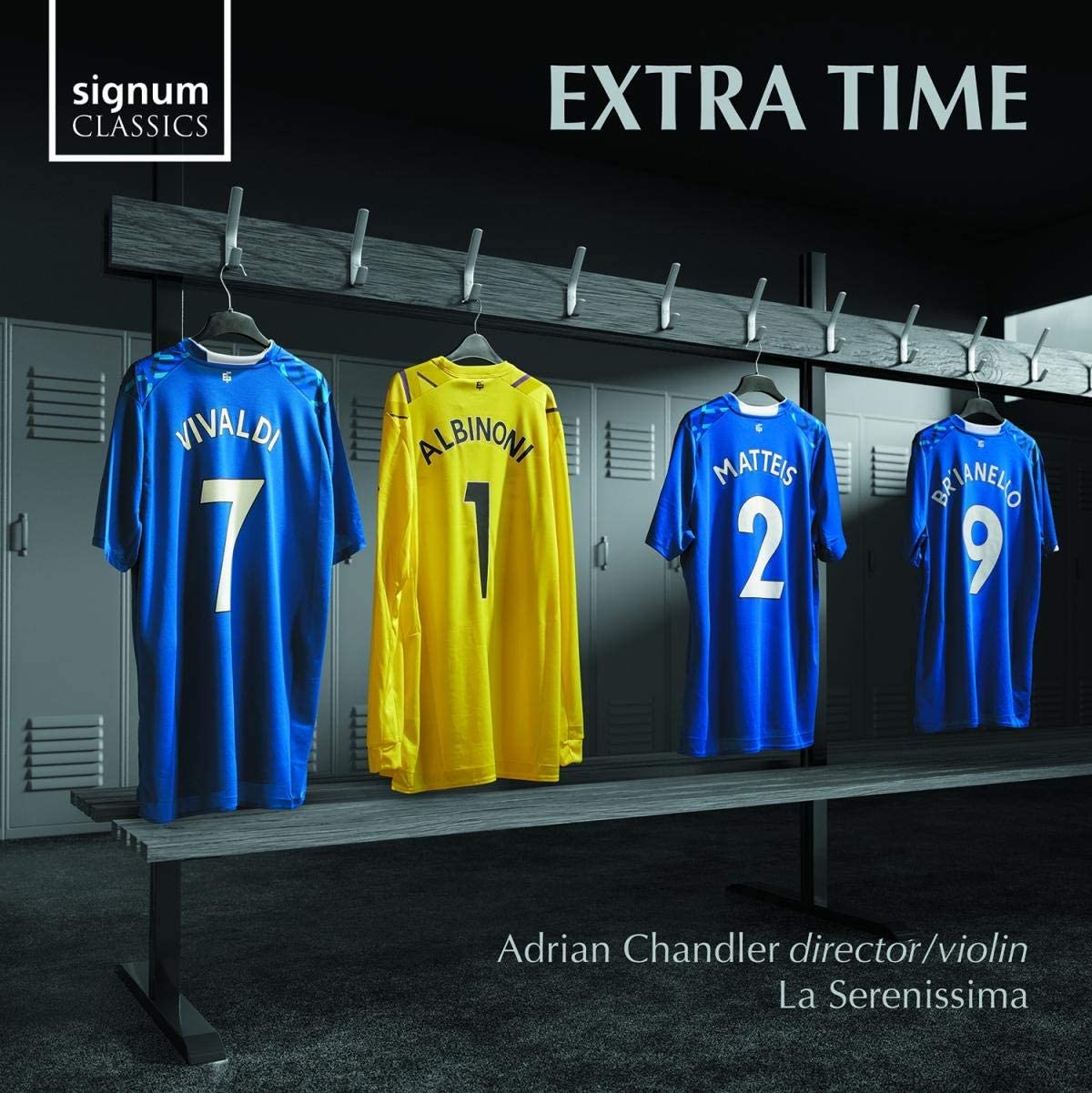
Extra Time

La Serenissima, Adrian Chandler
72:14
Signum Classics SIGCD641

Click HERE to buy this on amazon.co.uk

This splendidly refined recording does feel like an “extended” Part 2 programme, or follow-on from the marvellous “Godfather” which duly reaped wide-spread accolades and glowing punditry; now continuing in a similarly rich vein of fascinating and varied baroquery, including Nicola Matteis the Younger’s impressive and richly scored (four trumpets and drums, etc.) “balletic” insertions into Antonio Caldara’s operas for Vienna; music as diverting and distracting, as it is charged with a processional flair; no doubt some clever scene changes were made during these episodes. This along with healthy doses of core Vivaldi to provide the fillings between the smart, brassy outside wingers! These include Albinoni’s slick Sinfonia with two trumpets for his opera La Statira. This is all grist to the musical mill for La Serenissima, who follow in the wake of their star players. The ostensibly Italianate violinistic passages are unforced and polished with perky tutti replies. On Pages 10-13 in the CD booklet, we read the amazing composite details of the various recording dates of these works. How the cleverly this “jig-saw puzzle” comes together with over-arching practicality and miraculous synchronicity for over an hour’s worth of noteworthy pieces. G. A. Brescianello continues to supply delights in that high-flown italian style, possibly finding – beyond the obvious Vivaldian expression – the absorption and impetus of certain elements from E. F. Dall’Abaco vicariously rubbing off when he played alongside him in Munich; the fine Largo in the rather tuneful G major violin concerto displays a special operatic calibre that stops you right in your tracks! With the Vivaldi Concerto in F for the “Solemnity of St. Lawrence” (composed around 1727), the contrasting movements are tackled well, with the flashy solo peaks of the first movement, a rather apt solemnity in the second, and overtly joyful third: Allegro non molto, where the second violins seem to chime together with festive bell-like tones between the brisk ritornello theme. This line-up of works, the incredible providence of it all coming together strand by strand, and the splendid, collated effect of these highly entertaining works, with new sonorous treats, again around three bold, brassy pillars, combining some familiar pieces with a generous host of new ones to savour; the playing on “extra time” leads to yet another “Golden goal” for La Serenissima and their continued striving to provide Top League baroquery! Bravi tutti!

David Bellinger

Categories
Recording

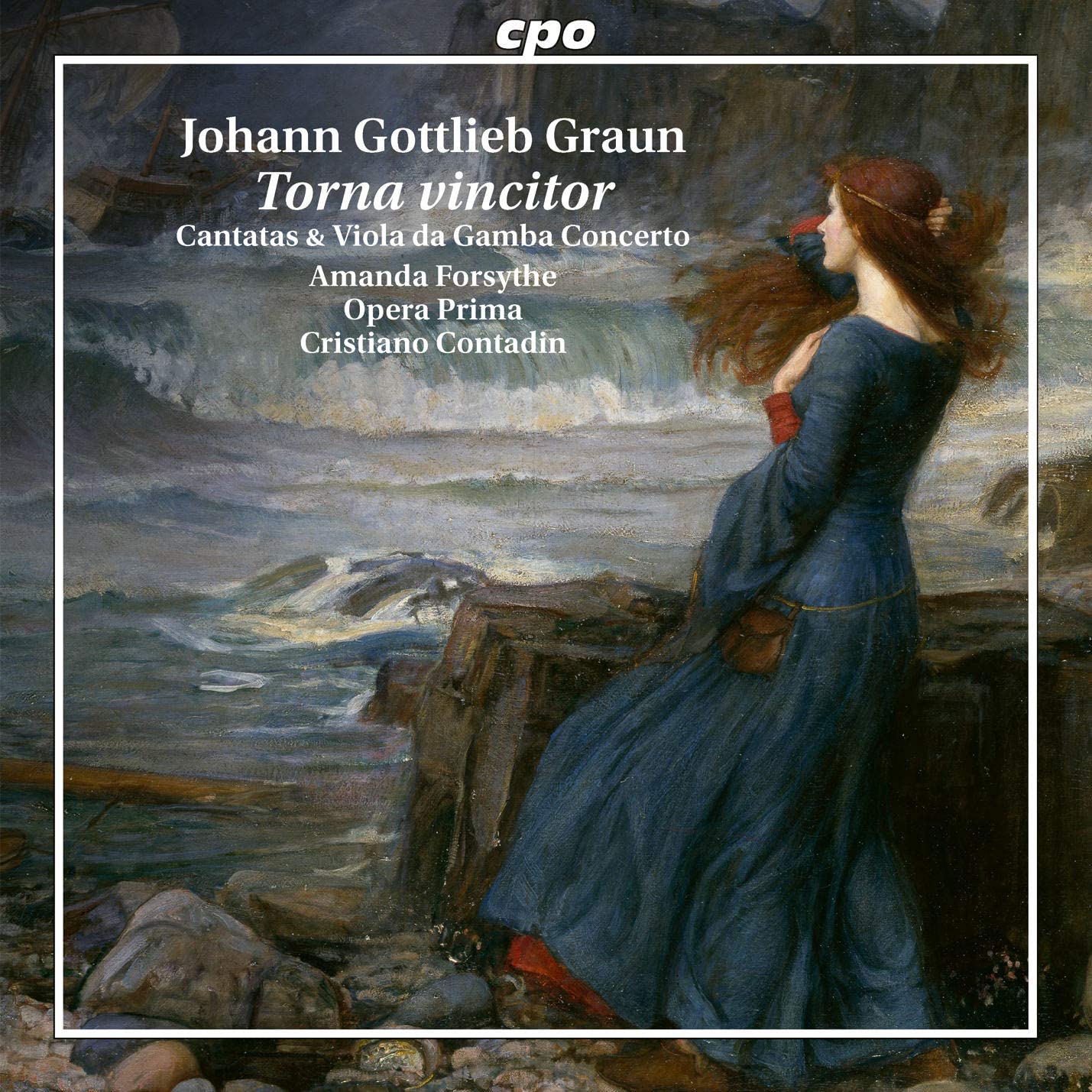
J. G. Graun: Torna vincitor

Cantatas & Viola da Gamba Concerto
Amanda Forsythe soprano, Opera Prima, Cristiano Contadin
78:26
cpo 555 284-2

Click HERE to buy this on amazon.co.uk

There were three brothers Graun that became musicians, although only  Johann Gottlieb (1702/3-1771) and Carl Heinrich (1703/4-1759) became significant composers. Both served Frederick the Great at Potsdam, J G as leader of Berlin orchestra from 1740, while C H became Kapellmeister in the same year. Today C H Graun is much the better known largely due to his great success in Berlin as an opera composer, a genre in which his brother showed no interest in competing. Otherwise, the closely paralleled careers of the Grauns have caused musicologists not inconsiderable difficulties as to attribution of their instrumental works.

One group, however, that is not in dispute are the works Johann Gottlieb wrote involving the viola da gamba. He probably first discovered an interest in the instrument during his time as orchestral leader at Merseburg in the 1720s, where he came into contact with the gambist and violinist Hertel. However, it seems likely that the greatest influence on Graun’s attachment to the gamba was the virtuoso Ludwig Christian Hesse, whose father had studied with Marais and Forqueray in Paris. Hesse became a leading figure in the musical entourage of the Berlin court, where he worked alongside Graun from 1740 until 1761, presumably the period from which the majority of the former’s 27 known gamba works date.   

The present CD includes three of these works, two large-scale cantatas for soprano, viola da gamba and strings and a three-movement Concerto in A minor, a work that has also been recorded by the great Italian gambist Vittorio Ghielmi (Astrée). The cantatas sung by the American soprano Amanda Forsythe are premiere recordings. Their texts are by Metastasio and like the operas of his brother (who set several of the great poet’s librettos) totally Italian in style. Both owe much to the pastoral movement, the first, ‘O Dio, Fileno’, concerning the laments of the shepherdess left by her lover to go to war, the oft-employed metaphor comparing love and war fully exploited in the long accompanied recitative that lies at the heart of the cantata. The enchanting ‘Già la sera’ takes a lighter look at love, as the lover tries to entice his Nice to leave the fields and live with him on the seashore, his enticements articulated in two arias which describe the alluring charms of eventide on the shoreline. Again they surround a long central accompagnato in which Nice is told she can become both ‘shepherdess and a fisher girl’. The needs to involve the concertante role for gamba and the fact that arias are in fully developed da capo form gives them an expansive scope, the first of the former work alone lasting for over 14 minutes. The writing for gamba, especially in ‘O Dio, Fileno’,

is extremely demanding, featuring rapid passagework and virtuoso polyphonic chordal writing. Perhaps its most appealing contribution comes in the opening aria of ‘Già la sera’, where voice and gamba work in sympathetic imitation to delightful effect.

The A-minor Concerto displays some of the nervous energy associated with Empfindsamkeit and also features much bravura writing for the gamba. In the outer movements, an opening orchestral statement is taken up by the gambist, its themes developed by the soloist in passaggi, chordal counterpoint and so forth. The central Adagio plays with ambiguity by alternating major and minor. It’s a moderately appealing work, less enticing here than in Ghielmi’s more characterful performance. Amanda Forsythe has a bright, pure soprano capable of agility and also sustaining cantabile lines with assurance, but it is difficult to avoid the feeling that she might have been heard to greater advantage in a less resonant acoustic than that provided by what sounds to be a large hall in the wonderful 16th century Villa Bolasco at Castelfranco in the Veneto. The long reverberation period allows the voice to spread uncomfortably in the upper range, but even making allowances for that her performances fall some way short of ideal. Passaggi and ornamentation are too frequently articulated without depth and far too little attention has been paid to diction and interpreting the text, though ‘Già la sera’ is not without the merit of generalized appeal and includes some impressive mezza voce singing. An interesting disc, then, but not an essential one.

Brian Robins      

Categories
Recording

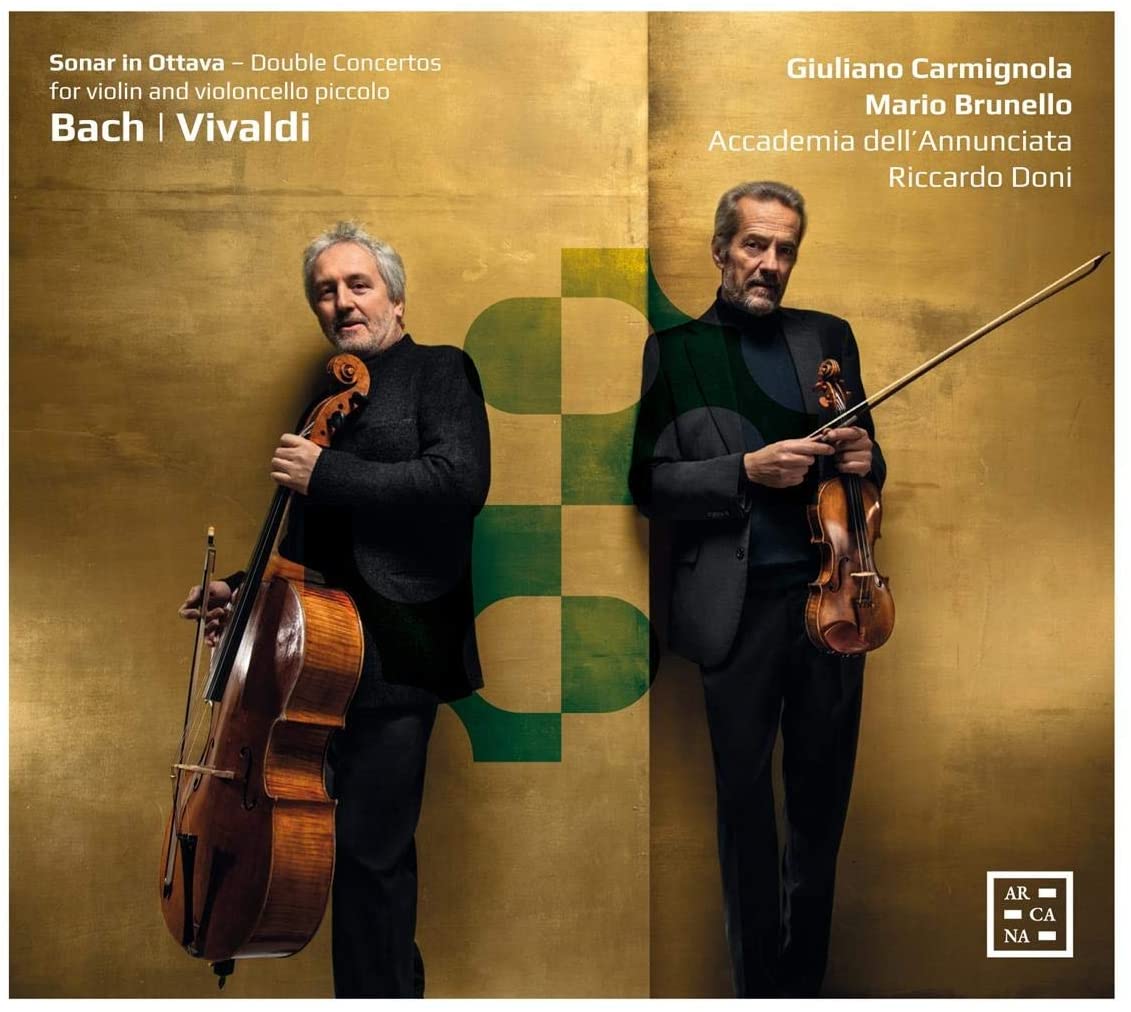
Sonar in Ottava

Double Concertos for violin and violoncello piccolo
Giuliano Carmignola, Mario Brunello, Academia dell’Annunciata, directed by Riccardo Doni
69:58
Arcana A472

I admire Mario Brunello and Giuliano Carmignola, and their playing, together with that of the Academia dell’Annunciata is elegant and stylish, but I cannot pretend that I like these fine concerti played with the solo instruments playing in different octaves.

Unlike the sonatas for viola da gamba and harpsichord, or some other of Bach’s works which he clearly arranged and rearranged for different combinations of instruments, I find that the intertwining and tossing to and fro of melodic lines at different octaves distracting and unappealing. This is particularly the case in the D minor double violin Concerto BWV 1043. In the opening vivace, the violin line doubled at an octave below just sounds un-Bachian to me, and quite unlike the only other instance I can think of where there is something similar – the central section in D major of the alto aria in the Johannes-passion, Es ist vollbracht. It is like a baritone singer doubling ‘the tune’ an octave lower in a four-part SATB chorale. In the middle movement, too, the canonic writing with its intersecting and overlapping lines surely needs instruments at a similar pitch? In other concerti, even when there are earlier versions of what Bach later presented as concerti for two or more harpsichords, a distinction in timbre as in BWV 1060 has often been reconstructed as a concerto for violin and oboe for example – but always by instruments in the same octave.

The reimagining of the music for these two instruments is served better by the less melodically variegated music of Antonio Vivaldi, with its highly arpeggiated figuration. Here, difference of texture sometimes provides a welcome variation to the texture.

The two colleagues, whose musical friendship goes back a long way, have – I suspect – been seduced by the intriguing possibilities of Brunello’s new violoncello piccolo, strung exactly an octave below the violin, on which he played the Sei Soli for violin so plausibly last year.

But, while you might be curious to hear what their concerti at an octave sound like, I doubt if you will want to keep this CD in your library.

David Stancliffe

Categories
Recording

The Grand Mogul

Virtuosic Baroque Flute Concertos
Barthold Kuijken, Indianapolis Baroque Orchestra
65:27
Naxos 8.573899

Click HERE to buy this on amazon.co.uk

‘Il Gran Mogul’, the title which Vivaldi gave to his flute concerto RV431a and similarly to his RV208 Violin Concerto ‘Il Grosso Mogul’, and which in turn is borrowed for this CD of virtuoso flute concertos, is something of a mystery. There are no perceptible hints of eastern musical flavours, and the Mogul may simply refer to the ostentatious nature of the solo parts in both concerti. As such, it is a suitable epithet for this collection of showy flute concerti by Michel Blavet, Giovanni Battista Pergolesi, Jean-Marie Leclair and Georg Philipp Telemann, all of whom contributed significantly to the new Baroque sensation, the solo concerto. It is fascinating to hear the distinctly ‘national’ flavours of these Italian, French and German concertos. As Barthold Kuijken makes clear in his excellent programme note, many of the composers didn’t seem to care particularly for the difficulties they created for their flautists – in some cases, the flute is just one of the options suggested for the solo instrument – and some passages are particularly challenging and even unidiomatic. Of all the composers represented here, only Blavet actually played the flute, and the finale of his A-minor concerto reaches considerable heights of virtuosity. Fortunately, Kuijken on his one-keyed Rottenburgh copy Baroque flute makes light work of even the most demanding writing, whether idiomatic or not. One of the musically gifted Kuijken family who dominated the early music scene in the 1980s, Barthold is both a stunning technician and a fine musician and is ably supported here by the Indianapolis Baroque Orchestra, who produce a wonderfully light, nimble sound, playing one to a part.

D. James Ross

D. James Ross

Categories
Recording

Locatelli: L’Arte del Violino Op. III

Diego Conti, Gli Archi di Firenze
212:04 (3 CDs in a card triptych)
Tactus TC 691280

Click HERE to buy this at amazon.co.uk

This comprehensive 3-CD set presents the twelve violin concertos of Locatelli’s op111 Art of the Violin recorded in a variety of venues over a period of ten years from 1988 to 1998 by Diego Conti and Gli Archi di Firenzi. Locatelli was one of a handful of violin virtuosi who completely revolutionised the musical world of the 18th century, and his 24 eye-wateringly virtuosic capriccii ad libitum published along with the concerti serve as cadenzas. From the outset, Diego Conti’s sparkling and showy playing seems to summon the ghost of Locatelli, and, if the liberties he takes with tempo must have driven his Archi di Firenze to near distraction over the years, I am quite sure that the flamboyant Locatelli would have done exactly the same! It is of course in the wild capriccii that Conti’s full virtuosity is put to the test, and he comes out of these with flying colours. If the playing of the ensemble sounds a little lacklustre by comparison, this is maybe inevitable and perhaps even part of Locatelli’s original design. Of all the achievements of HIP performers over the years, I find the recreation of the music of these violin virtuosi perhaps the most revelatory and remarkable – to master a period instrument, bow and technique so thoroughly as to be able to rival these extraordinary virtuosi of the past is truly amazing! If Locatelli’s capriccii never quite go in the direction you would expect, neither did his life – having spent his career doing the unexpected, he then retired to Amsterdam in his mid-twenties in mid-career and seemed satisfied with a life of luxurious solitude, enjoying the financial fruits of his previous concert life and his publications. 

D. James Ross

Categories
Recording

The Early Horn

Ursula Paludan Monberg, Arcangelo, Jonathan Cohen
78;32
hyperion CDA68289
Music by Graun, Haydn, L & W A Mozart, Telemann & anon

Click HERE to buy this on amazon.co.uk

After dropping apparently fully-formed into its role as an orchestral instrument in Handel’s Water Music, the horn very soon became an indispensable part of the Baroque and Classical orchestra. This CD explores its parallel pivotal role in 18th-century chamber music and illustrates how quickly composers cottoned on to the horn’s musical potential, while at the same time the technical developments instigated by players extended the instrument’s range. The opening track is a beautiful sinfonia da camera for horn and strings by Leopold Mozart, while a concerto and a trio by Graun, two anonymous Concerti from a Swedish source, a concerto by Telemann, a divertimento by Haydn and the E-flat-major horn quintet by Wolfgang Amadeus Mozart all chart the horn’s development from Baroque to Classical instrument. The music selected for this CD shares the feature of being delightfully entertaining, while the anonymous concerti for horn, oboe d’amore and continuo and for horn, two oboes and continuo are particularly charming. The concerto for recorder, horn and continuo by Telemann is also predictably accomplished and engaging. Playing a wonderfully coiled Baroque horn, Ursula Paludin Monberg produces a beautifully rounded tone and displays a consummate playing technique. She is ably supported by the players of Arcangelo directed from the harpsichord by Jonathan Cohen. There is a wonderful inevitability about the thoroughly classical strains of the familiar Mozart quintet (K407) with which the CD concludes – we feel we have been informatively conducted from the horn’s early years in serious music to one of the pinnacles of the repertoire.

D. James Ross

Categories
Recording

Welcome home, Mr Dubourg!

Irish Baroque Orchestra, Peter Whelan
60:58
Linn Records CKD 532

The music of Matthew Dubourg is a genuine discovery, and one still in the making. This timely CD provides a useful taster of what scholarship may be able to salvage in the future. A contemporary and associate of Handel, nowadays chiefly known for his association with the latter’s visits to Dublin, Dubourg was in his day an admired violin virtuoso and composer in his own right. Opening with the spectacular ‘Hibernia’s Sons your voices raise’ from the Ode for Dublin Castle 1753, the CD goes on to supply Dubourg’s only surviving violin concerto and movements from other Dublin Castle Odes as well as a concerto for two violins by Vivaldi and Corelli’s violin sonata op 5 no 9, provided with quirky ornamentation by Dubourg. Interspersed among these larger works are charming small traditional Irish pieces which Dubourg either wrote down or arranged. Along with an excellent line-up of soloists, The Irish Baroque Orchestra provide energetic and evocative performances of this unfamiliar repertoire – Dubourg was clearly influenced by the music of Handel, but inflections also find their way from the traditional music he clearly loved and appreciated into his more formal compositions. It seems extraordinary that this substantial body of music by a talented local composer has escaped the attention of Irish musicologists until now, and they have their work cut out for them now reconstructing the Odes and other music from fragmentary sources. Only then will we be able truly to evaluate Dubourg’s oeuvre. The title of the CD comes from an incident when Dubourg was playing for Handel and after a particularly wayward cadenza, Handel is supposed to have shouted, ‘Welcome home, Mr Dubourg!’ I have heard the same anecdote applied to Handel’s favourite soprano Mrs Cibber – it is a mark of Dubourg’s undeserved obscurity, that it has perhaps been felt expedient to transfer this anecdote from the forgotten violin virtuoso to the more familiar soprano whose reputation has fared better in our own times! The event is touchingly evoked at the end of the CD when violinist Sophie Ghent ‘goes off on one’ and is welcomed back home by Mr Handel!

D. James Ross