Categories
Recording

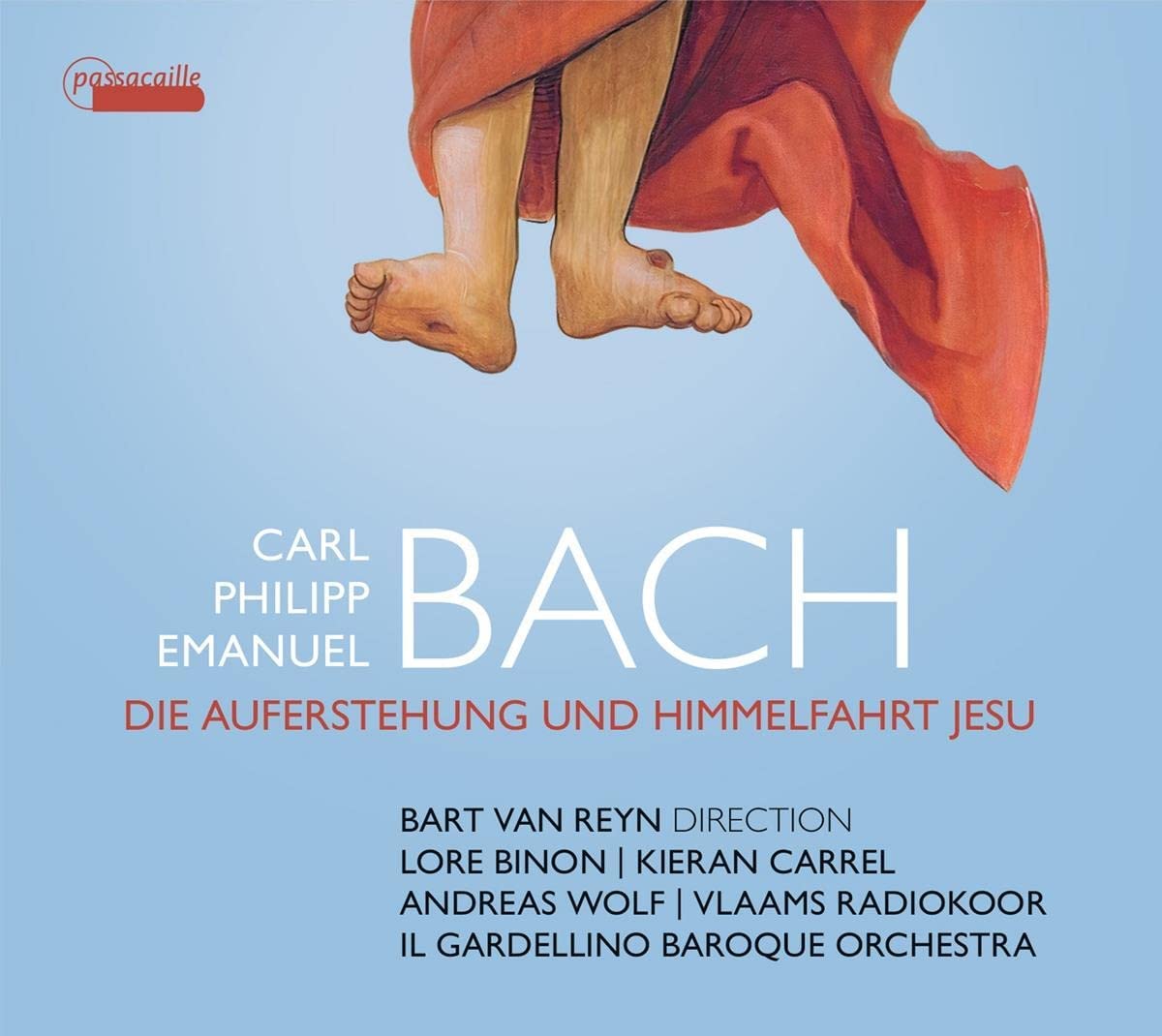
C. P. E. Bach: Die Auferstehung unf Himmelfahrt Jesu

Lore Binon soprano, Kieran Carrel tenor, Andreas Wolf bass, Vlaams Radiokoor, Il Gardellino Baroque Orchestra, conducted by Bart van Reyn
69:15
Passacaille 1115

Click HERE to buy this on amazon.co.uk
[These links help keep this site FREE TO VIEW]

In the press release the flautist and co-founder of Il Gardellino Jan de Winne speaks of CPE Bach’s oratorio Die Aufferstehung und Himmelfahrt Jesu as a ‘forgotten masterpiece’. Masterpiece? Yes, indeed this iconic work can deservedly be accorded such an epithet. But forgotten? That’s hardly an apt description for a work that has received distinguished recordings from such notable directors as Philippe Herreweghe (Virgin Classics) and different performances by Sigiswald Kuijken on CD (Hyperion) and DVD (Euroarts).

Composed in Hamburg in 1774, it has in keeping with the spirit of the times in north Germany a poetic rather than liturgical text, in this case, one by Karl Wilhelm Ramler that had been previously set by other composers including Telemann and Graun. It takes an overtly emotional response to the events of the resurrection and ascension of Christ, in addition to a long recitative for bass at the start of the second of the oratorio’s two parts recapitulating the events of and leading up to the Crucifixion. The recitative, which is part narrative and part direct speech is divided into alternating passages of plain recitative and accompagnato, thus contradicting the impression given in the libretto that it consists near wholly of the latter. It is a text well suited to both the ‘Sturm und Drang’ of the 1770s and Bach’s employment of the related Empfindsamkeit, the highly expressive sentimental style particularly fashionable in Berlin and north Germany. Thus the work encapsulates both these elements in the bass’s first aria ‘Mein Geist, voll Furcht und Freude’ (My soul, full of fear and joy), the conflicting yet at the same time parallel emotions expressed in music of quasi-Romantic turbulence and intensity. Exhilarating, mystical and tender by turn, Die Aufferstehung looks both back to the world of Bach’s godfather Telemann in its use of such a device as its ritornello chorus and forward to that of Haydn’s Creation and Beethoven. The latter indeed looms large over the concluding numbers, the bass aria ‘Ihr Tore Gottes’, all brass fanfares and dynamic thrusting against restraint, and the final chorus with its unison passages for male chorus and vigorous fugue.

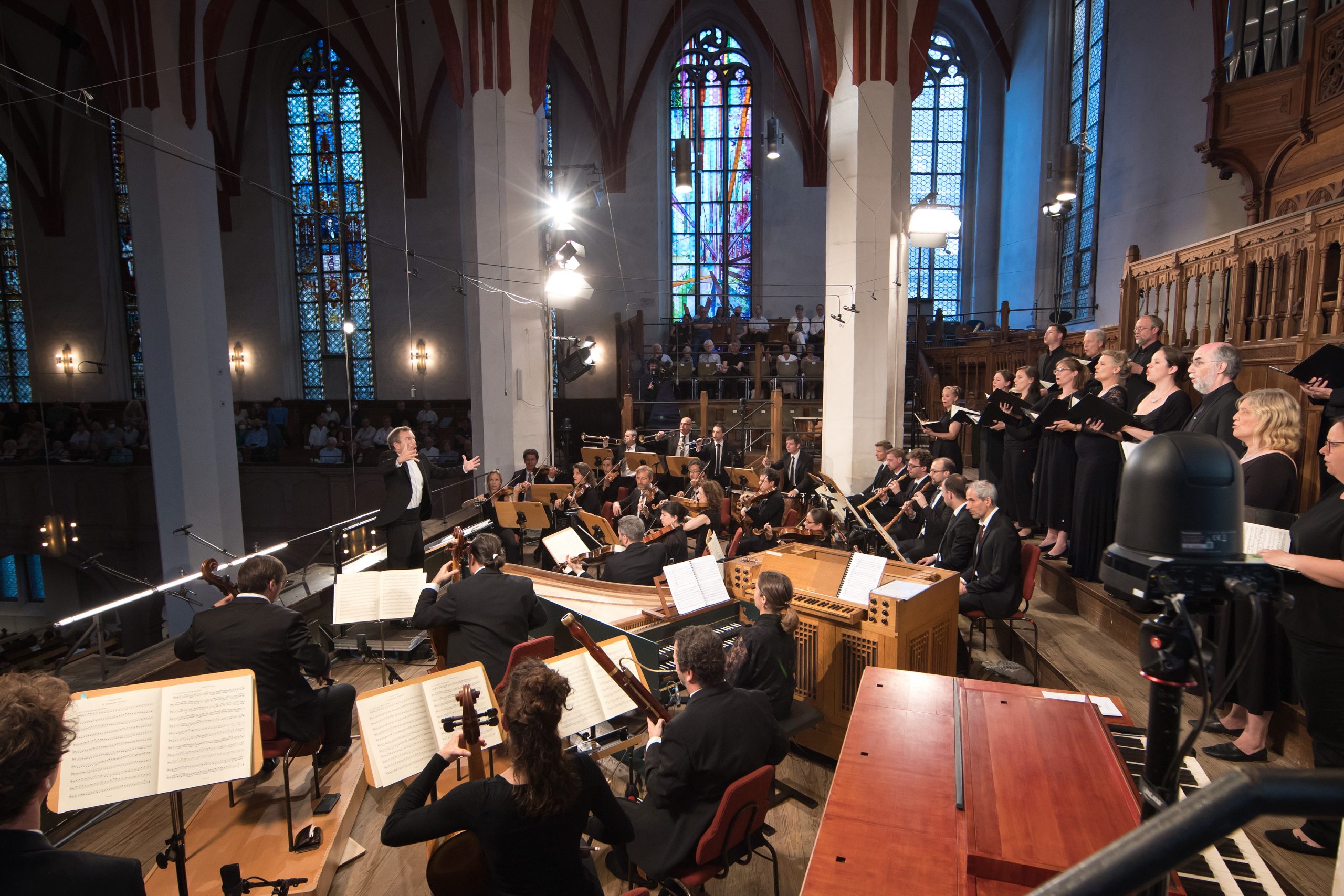
The performance holds up well against its distinguished predecessors. Bart Van Reyn’s direction and the fine playing of Il Gardellino capture well the varied moods of the work and while his chorus may not quite match the very best groups it is well balanced and responds with both fervour and, where needed, a sensitivity clearly apparent as early as the lovely opening chorus, ‘Gott, Du wirst seine Seele’. Tempos are on the whole well judged, though the fugue that concludes Part 1 sounds rushed and consequently untidy. Unusually most of the important solo work is given to the male soloists, the soprano not appearing at all in Part 2. The singing of bass Andreas Wolf is outstanding – rounded and richly toned, while articulating both text and music with clarity. Kieran Carrel is a light lyric tenor who sings extremely capably without quite effacing memories of Christoph Prégardien, Herreweghe’s soloist. Lore Binnon sings the little allotted to the soprano with an appealing purity and freshness, although her ornaments are not always confidently turned. As is so often the case, there was sadly no evidence of a vocal trill throughout the entire performance.

This finely executed and dramatically convincing Die Auferstehung can certainly stand alongside the earlier versions of one of Bach’s most influential and significant choral works.

Brian Robins

Categories
Concert-Live performance

ST JOHN’S SMITH SQUARE EASTER FESTIVAL – VOX LUMINUS

For obvious reasons, St John’s Smith  Square is an ideal venue for a festival of sacred music for Holy Week. This Easter Festival, which took place between 10 and 17 April, featured a broad mix of repertoire from across the centuries, the concert on 14 April with the vocal ensemble Sansara and Fretwork illustrating the eclectic nature of the festival by including works by the Tudor composer Robert White and Arvo Pärt. Unsurprisingly early music was well represented, with concerts including Pergolesi’s Stabat Mater (Anna Devin and Hugh Cutting), Handel and Vivaldi (his Stabat mater, RV621 with Hilary Cronin and Cutting again, the former a Handel Festival prize winner, the latter a Ferrier award winner). Perhaps the most ambitious event was the candlelit late-night concerts by Sansara of Gesualdo’s tormented Tenebrae Responsories, given in a candlelit liturgical context over three nights. More traditional Easter fare featured in a Bach St John Passion (Polyphony and OAE under Stephen Layton), before the festival was brought to a conclusion by the Belgian-based ensemble Vox Luminus, under the unobtrusive direction of bass Lionel Meunier.

It was this concert that we were able to attend along with an audience that was disappointingly sparse given Vox Luminus’s present eminence among vocal ensembles. I suppose Westminster is perhaps not a place of choice for many potential concert-goers to be on an Easter Sunday afternoon. Sadly, too, the level of Schütz’s box-office appeal in this country is far from commensurate with his greatness as a composer, so that his profoundly affecting Musicalische Exequien was the centrepiece of the concert may also have proved a deterrent. A German requiem, the work was commissioned from Schütz for his own funeral obsequies by a German nobleman. In this performance, it was given within the context of a funeral, including the opening chorale ‘Mit Fried und Freud’ that accompanied the funeral procession into the church, and to conclude the exquisite German setting of the ‘Nunc dimittis’, which employs evocative in lontano effects, here most atmospherically brought off. It was an award-winning recording of the work in 2012 that first brought Vox Luminus to wide notice. With its alternation of tutti ensemble movements and Favoriten passages for one or more soloists, the Musicalische Exequien is ideally suited to the strengths of Vox Luminus, which over the years have cultivated the individuality of the singers, all of whom are required to undertake solo parts, within integrated ensemble singing in which the personality of each singer remains paramount. At St John’s, ensemble was further tested by a visitation to Vox Luminus of the Covid curse, necessitating several late replacements. It barely showed, the rare odd slip being of the kind that can occur at any time. Far more importantly, with the slight caveat that the ensemble’s principal soprano slightly tended to dominate the texture in ripieno passages, this was overall a deeply sensitive and moving performance that so obviously came from the heart.

Much the same can be said of the two Bach cantatas that made up the programme. Both ‘Christ lag in Todes Banden’, BWV4 and the so-called ‘Actus Tragicus’ (‘Gottes Zeit ist die allerbeste Zeit’), BWV106 are among the earliest cantatas Bach wrote and works that owe more to 17th-century predecessors such as Schütz and Buxtehude than the more modern type of Italianate cantata adopted by Bach in his later Leipzig cantatas. BWV106 is a funeral cantata probably composed during Bach’s brief Mühlhausen period (1707-08) for obsequies the details of which are unknown. Scored for minimal forces – SATB ‘choir’ – here of course rightly single voices per part – with solo interjections and just pairs of recorders (instruments associated with death during this period) and viola da gambas, and continuo. More consolatory than dramatic, the performance achieved a wonderfully intimate and inward-looking perspective on death, particularly touching in the exchange between the bass and the alto soloist’s chorale that immediately precedes the final chorale.

BWV4 could not have been a more appropriate choice to round off the programme, it being a cantata for Easter Sunday, the exact year of composition also not established, though it probably dates from his Weimar period (1708-13). It is cast in the form of a set of chorale variations, the melody retained throughout the seven verses which are varied both melodically and in their scoring and vocal disposition. Meunier here went with a larger-scale reading, employing three voices per part, doubtless so as to include all his performers, which caught the vibrant celebratory nature of the cantata effectively. This richly rewarding concert was rounded off by an encore in the shape of Buxtehude’s cantata, termed ‘aria’ in manuscript sources, ‘Jesu meines Lebens Leben’, BuxWV62, which is set over an ostinato bass. The timeline between Schütz and Bach was thus neatly bridged.

Brian Robins

Categories
Festival-conference

Les Traversées 2022

If you happen to be anywhere near the Abbaye Noirlac in central France on any Saturday between 18 June and 16 July 2022, be sure to check out this festival schedule: Les Traversées 2022 – with three events on each date and the option to include a picnic in your ticket price, this sounds like a marvellous way to spend a summer’s evening. Highlights for early music fans will be Aliotti’s “Il Trionfo Della Morte” on 25 June, and a St John Passion by Les Surprises on 16 July.

Categories
Recording

Ou beau chastel

Leuven Chansonnier vol. 2
Sollazzo Ensemble
53:50
passacaille AMY059 | PAS 1109

Click HERE to buy this on amazon.co.uk
[Using these sponsored links will keep this FREE site alive!]

The Sollazzo Ensemble return to the Leuven Chansonnier for a second selection from the 62 works it records. Alongside the established composers (Ockeghem, Caron, Frye, Morton, and Busnoys), there is anonymous music which has not been found in any other source, and which supplies the title for their CD. The Ensemble provides convincing and musically engaging accounts of this important music, although just occasionally I felt that some of the songs were a little over-interpreted, with some unidiomatic vocal swooping and portamenti. This is living music, and performers who are undeniably very familiar with the repertoire must be permitted to interpret it meaningfully, but I felt that some of the mannerisms in the vocal contribution sounded disconcertingly out of period. That aside, these are bold and effective interpretations, and it is good to report that the ‘new’ anonymous material is every bit as fine as the established, ‘named’ music – but for the whim of the copyist, we might be adding to the output of one of the familiar masters here, or perhaps more intriguingly even adding to the panoply of the masters of the period. I found it particularly exciting to hear a very persuasive account of Walter Frye’s ubiquitous three-part setting of Ave Regina performed by voices and wind instruments – the performances in the 1980s (by, amongst others, René Clemencic) of the music of this period combining wind instruments and voices were often dismissed as eccentric at the time, but with the welcome challenging of the ‘a cappella orthodoxy’ may prove to have been a perfectly viable and plausible performance option. 

D. James Ross

Categories
Recording

Giosquino

Josquin Desprez in Italia
Odhecaton, Paolo Da Col, The Gesualdo Six, [La Reverdie, La Pifarescha]
77:17
Arcana A489

Click HERE to buy this recording on amazon.co.uk
[Doing so supports the artists, the record company and keeps this site available – if no-one buys from these sponsored links, this ad-free site will disappear…]

Coinciding as it does with the reopening of the Burrell Collection in Glasgow, with its magnificent Renaissance tapestry featuring Hercules, dux Ferrara, one would like to think this similarly magnificent recording featuring Josquin’s Mass Hercules dux Ferrariae might have found its way into the gift shop. If you like your Josquin big and muscular, this is the recording for you. Looking at things through musicological glasses, we know that the ducal court of Ferrara possessed the musical resources to stage events of this stature, so the only consideration is whether Josquin’s music is effective, performed by these large forces. I think that the approach here, using as many as twenty voices for full sections, with solo voices emerging to perform the more intricate passages works extremely well. The otherwise detailed programme notes are inexplicably uninformative about the role played by the wind instruments – I am sure that the voices are supported by cornets and sackbuts in several tracks, and one photo of the recording sessions would seem to confirm this. If this is indeed the case, the blend of voices and brass is exemplary, and again highly effective. I have to say, I felt the two short instrumental tracks sound a little out of place in this programme of largescale sacred music. The programme ends with Josquin’s extraordinary 12-part setting of Inviolata, integra et casta in which all the vocal and instrumental forces combine in a dramatic performance tour de force. I have recently suggested that this work dates from later in Josquin’s life, and through his pupils kicked off the early 16th-century vogue for works in many voice parts (Brumel, Gombert, Carver – www.earlymusicreview.com/robert-carver-exploring-his-aberdeen-connections) – Camilla Cavicci’s programme note points to the interest in the cult of Franciscan immaculatism at the court of Ferrara as a possible alternative context for the work. Either way, it makes for a dramatic conclusion to this fine CD, and provides more persuasive evidence for the more flamboyant and lavishly scored performance of works from the 15th and 16th centuries.

D. James Ross

Categories
Recording

Handel: Messiah

Eboracum Baroque, Chris Parsons
132:08 (2 CDs in a card triptych)
1 98000 82190 6

If you would like to by this, you can use the Twitter handel @eboracumbaroque

Whenever I am presented with a new version of a frequently-recorded work such as Messiah, my first question has to be what does this performance add to the body of existing recordings? After I have expressed my admiration for this project, conducted under the most difficult pandemic conditions and representative of the sort of ‘can-do’ attitude which has seen us through the worst of Covid restrictions, I have to report that this recording doesn’t really add much at all. Although its virtues are several, the problems with it are – I fear – predominant. It is a reduced-forces performance (the oboes are dropped and everything else is one-to-a-part), by its own admission unlike any performance from Handel’s time, providing us with what the performers hope will be ‘an exciting take on Handel’s masterpiece’. While the singing of a line-up of young soloists, who double as chorus, is generally perfectly presentable and the instrumental playing is effectively detailed, the latter is underpowered and the former is undistinguished – and neither of these features is adequate in a field of superb performances. While audiences would have been forgiving of the occasional blurring due to social distancing in a live performance, this is harder to condone or live with in a recording. Problems are compounded with the ‘popping’ of a mic in several of the choral tracks. I wanted to be more positive about this crowd-funded recording by what is clearly an enterprising and excitingly talented young ensemble out of York University, but perhaps pressing ahead with a recording of an established classic in these far from conducive conditions was a mistake.

D. James Ross


Categories
Recording

Gesualdo: 6th book of madrigals

La légende noire, La Guilde des Mercenaires, Adrien Mabire
65:56

Click HERE to buy this as a digital download from amazon.co.uk
[These sponsored links keep this website FREE to access]

These performances of madrigals from Gesualdo’s extraordinary final publication, Book VI, a work of stunningly daring harmonic progressions and musical non sequiturs, are themselves revelatory. La Guilde des Mercenaires under the direction of Adrien Mabire are attempting something revolutionary, performances of Gesualdo with wind instruments. The programme note asks why performances of Monteverdi are regularly presented with instruments, while Gesualdo is almost invariably presented a capella. The answer seems obvious – that while Gesualdo’s highly chromatic idiom is tricky for singers, it is perhaps even more tricky for early wind instruments. These performances seem to belie these difficulties, as the wind instruments, occasionally playing on their own, never sound less than comfortable. Whether this is due to the technical proficiency of the players, or whether after all Gesualdo’s writing is more about unexpected progressions and juxtapositions rather than sheer chromaticism, and therefore possibly easier for wind players than singers, the overall effect is very convincing. Part of the ongoing questioning of the myth of a capella performance, it is encouraging to see younger players challenging the old dogmas of HIP performance and exploring alternatives. The wind component of these performances is a real revelation – the vocal contribution is also pretty impressive, and when voices and instruments combine we get a genuine flavour of a whole new dimension of Gesualdo’s music. I still remember the effect of first hearing Byrd’s Great Service with wind and before that, performances of Dufay Masses with voices and wind, and I can’t help feeling that this recording is a similar moment of transformation.

D. James Ross

Categories
Recording

Rameau: Grands Motets

Choeur & Orchestre Marguerite Louise, Gaétan Jarry
77:43
Château de Versailles Spectacles CVS 5052

Click HERE to buy this recording on amazon.co.uk
[These sponsored links are the only way to keep this site free]

Such is Rameau’s renown as an opera composer that today we have a forgivable tendency to forget that the long period of his creative life before the sensational appearance in 1733 of Hippolyte et Aricie was devoted near exclusively to sacred music. As Gaétan Jarry notes in a long and helpful note, Rameau was organist of ‘at least a dozen churches’, though his observation that not a single organ work of Rameau’s has come down to us can almost certainly be explained in one word: extemporisation. Such was its importance as a fundamental of French organ technique that unless someone was on hand to transcribe it such improvisation belonged near exclusively to the moment.  

Unlike Lully and Delalande, Rameau’s output of the major sacred form of the Baroque in France, the grand motet, is small, just four examples considered to be authentic being extant (a fifth, Diligam te has been dismissed from the canon). All four are included on the present disc for the first time. Of these Laboravi clamans, a setting of verse 3 of Psalm 69, is a tiny work (just 73 bars) of uninterrupted counterpoint, its long melismatic lines reflecting its opening line, ‘I am weary of my crying’. The other three motets are on a considerably larger scale, alternating contrasted solo and solo ensemble verses with those for full chorus. Each has its own distinctive character. Quam dilecta tabernacula (‘O how amiable are thy dwellings’, a setting of Psalm 84 (83)), for example, opens with tranquil, luminescent flutes and a soprano solo, sung with vernal freshness by the excellent Maïlys de Villoutreys. It’s a mood broadly sustained throughout the work, a brief excursion for a joyous triple-time contrapuntal chorus at the words, ‘My heart and my flesh rejoice…’ being an exception. In convertendo (‘They that put their trust in the Lord’, Psalm 125 (126) on the other hand has a text that juxtaposes the pain of captivity in Babylon with joy at the prospect of release. In keeping with such ambiguity, it contrasts the exuberant joy of ‘Magnificavit Dominus’ a florid duet for soprano and bass (Villoutreys again superb with the fine bass David Witczak), with, for example, the final movements, a madrigalian solo trio, ‘Qui seminant’ (They that sow in tears) followed by a magnificent chorus that opens with astounding chromatic harmony, a passage as great as anything in the choral works of Handel or Bach. The final and longest motet, Deus noster refugium (God is our refuge, Psalm 46 (45)) has a text filled with vivid imagery that was a gift to a man shortly to become one of the great dramatic composers of the age. One notes among many examples the shuddering strings at ‘the earth is moved’ and the thrilling, surging impetus of the choral writing at ‘The waters roared out …’

As already intimated the performances are outstanding, with the chorus aided by the acoustic of the Chapelle Royale in Versailles achieving a wonderful breadth and depth. All six soloists are first-rate, with special plaudits once again going to haute-contre Mathias Vidal. Jarry’s outstanding ensemble can today be considered among the best of the Baroque ensembles in a country more richly endowed with them than any other.

Brian Robins

Categories
Recording

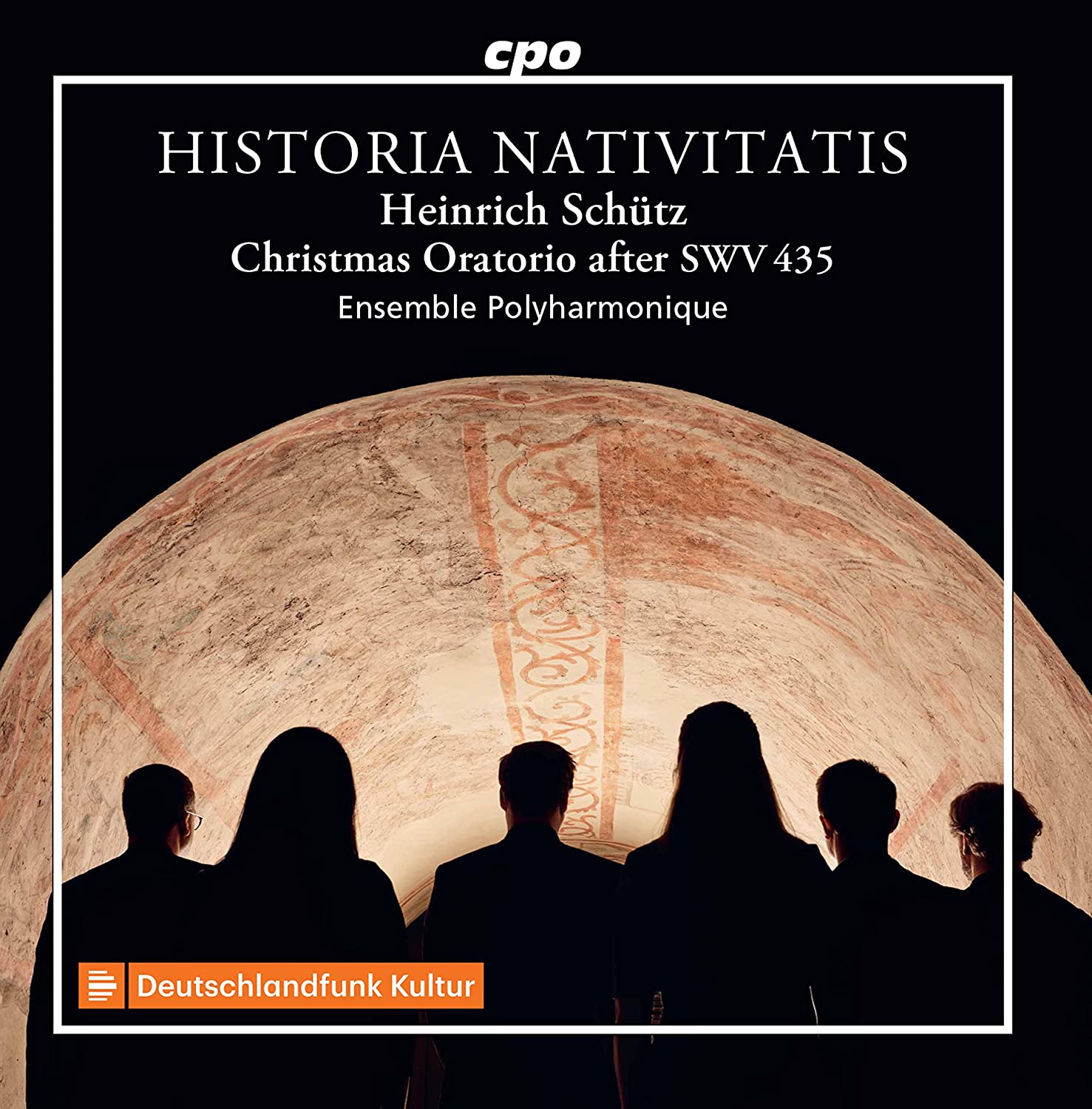
Heinichen: Dresden Vespers

Ensemble Polyharmonique, Wrocław Baroque Orchestra, Jarosław Thiel
67:31
Accent ACC 24381

Click HERE to buy this recording on amazon.co.uk
[These sponsored links are the only means of support we have]

The announcement of this recording was a bittersweet thing for me. After many excellent renditions of his orchestral music, fine performances of his masses, and – relatively recently – a fantastic account (albeit with many, many cuts) of his opera “Flavio Crispo”, the chance to hear some of his Vesper music with minimal forces promised to be something of a revelation. On the other hand, with my Fasch scholar’s cap on, would Heinichen manage to overcome his reputation as the man who butchered Fasch’s music for Vespers (and, it must be said, for mass!) to such an extent that it is virtually impossible to establish the original version with absolute certainty? The answer is, of course, a resounding “Yes!” These performances of music for the celebration of the Jesuit St Francis Xavier from the early 1720s is a celebration of his many talents as a composer and also of the performers’ commitment to it. Eight singers and 44321 strings with oboes, bassoon and continuo bring the five contrasting psalms to life, as well as a magnificat and the appropriate hymn and Marian antiphon, as micht have been heard on the feast itself, and finish the programme off with the longest piece in the programme, Heinichen’s first setting of a Litany for the Saint, which was probably heard throughout the week-long celebration. Three of the psalms are through-composed with each phrase of text given a its own musical theme, while Dixit Dominus, Laudate pueri and the Magnificat are subdivided with a variety of arias for the soloists. The hymn setting is in older-sounding Fux-like counterpoint. The singing is radiant (the tutti sound ravishing!), and the playing is by turns incisive and beautifully supportive of the voices. If – as Gerhard Poppe’s essay states – Heinichen found himself unexpectedly appointed as director of the Dresden court’s Catholic Chapel, it is clear that he embraced the position with both hands; there is some truly impressive music here – don’t miss it!

Brian Clark

Categories
Recording

Resurrexi!

Easter in Vienna with Mozart and the Haydn brothers
Emily Dickens, Rebekah Jones, Philippe Durrant, Graham Kirk SmSTB, Choir of Keble College, Oxford, Instruments of Time and Truth, directed by Paul Brough
56:05
CRD 3539

Click HERE to buy this recording on amazon.co.uk
[These sponsored links are your only way to support the site and keep it FREE to access]

In an amusing and rather winning introductory note Paul Brough, the musical director of Keble College, disarmingly explains that the objective of this recording is not an attempt ‘to give a lesson in history, liturgy, theology or musicology’ but rather to bring to the listener ‘the powerful truth of Easter …’ That, then, is the spirit in which I will try to review it.

Despite the disclaimer, the recording will indeed recall to many the kind of liturgical reconstruction that was fashionable in the closing decades of the last century, especially the pioneering work of Andrew Parrott and Paul McCreesh. It is centred round the idea of how an Easter Mass might have been celebrated in Salzburg in the 1770s, though for some inexplicable reason the CD carries the subtitle ‘Easter in Vienna…’. It is planned around Mozart’s Mass in C, KV 258, which dates from the middle of that decade and takes its name from speculation that it is the Mass given at the consecration of Count Ignaz Friedrich von Spauer as Dean of Salzburg Cathedral in late 1776. Scored with trumpets and timpani, it is therefore a hybrid work, a so-called missa brevis et solemnis that although ceremonial in character conforms to the famous (or maybe infamous) dictum of Archbishop Colloredo that the entire Mass – including plainchant and additional liturgical movements – should not last longer than 45 minutes. Each of its movements is therefore extremely brief – the entire Gloria takes only 2½ minutes in the present performance – with little repetition of text and the brief passages for the four soloists mostly integrated into the choral texture, perhaps, as Stanley Sadie pointed out, most interestingly in the unusual antiphonal exchanges between soloist and choir in the Benedictus. It was a form that, as Mozart wrote to famous theorist Padre Martini of Bologna, required ‘a special study’ and not one that is likely to have appealed to him.

Otherwise choral settings include the opening Marian antiphon, Mozart’s C-major Regina coeli, KV 276/321b, composed in 1779 for an unknown occasion, joyously bright but for a brief appropriately prayerful digression at ‘ora pro nobis’. Of earlier provenance is the concluding Te Deum in C by Haydn, composed for an unknown occasion in the early 1760s during his first years of employment with Prince Nicholas Esterházy, possibly for the Prince’s official entry into Eisenstadt in 1762. It’s an unremarkable work in the somewhat stiff, old-fashioned Austrian style, and rather less striking than his brother Michael’s more modern gradual setting of the sequenza Victimae paschali laudes, composed for Palm Sunday in 1784. It was one of a series of such pieces commissioned by Colloredo to replace the string sonatas traditionally inserted between the reading of the Epistle – hence the commonly-used name Epistle Sonatas – and the Gospel. One of Mozart’s, KV 274 in G, is included here in a disappointingly prosaic performance in which the weedy chamber organ is no substitute for one of the four Baroque organs in Salzburg Cathedral.

It would be idle to pretend that the soft-grained sopranos of Keble College project anything like the visceral brilliance of continental boys, but the choir is a fine, well-trained and balanced body, while the four soloists capably meet the relatively modest demands made on them. Baritone Graham Kirk is an unexceptionable cantor, while the choir’s intoning of the plainchant is effectively if a little too deliberately done. Does it all perhaps sound a little too polite and Anglican? Well, maybe, but to go back to my opening paragraph on its own terms, this celebration of Easter in Mozart’s Salzburg amply succeeds in giving both spiritual and musical satisfaction.

Brian Robins