Categories
Recording

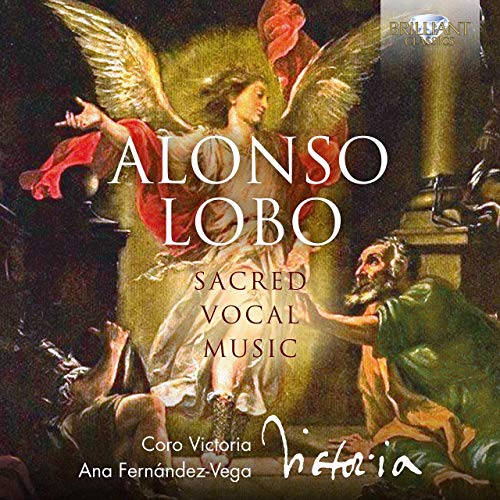
Alonso Lobo: Sacred Vocal Music

Coro Victoria, Ana Fernández-Vega
58:27
Brilliant Classics 95789

Any recording devoted to the music of the Spanish master, Alonso Lobo is very welcome. A pupil of Guerrero and a colleague of Victoria, Alonso Lobo de Borja managed to plough a distinctly individual furrow through the occasionally slightly featureless world of Spanish Renaissance polyphony. I was reminded of this during a recent recital by the Dunedin Consort, where the music of Lobo stood out as amongst the most impressive polyphony of the evening. The Coro Victoria perform a number of Lobo’s motets as well as movements from three different settings of the Mass: O Rex Gloriae, Petre, ego pro te rogavi and Simile est regnum caelorum. Some of the material – the eight-part Ave Maria, the lovely Ego flos campi and the concluding O quam suavis are already familiar, but much of the material, including the Mass settings, were new to me all thoroughly endorsing the high opinion I already have of the composer. The performances by the Coro Victoria directed by Ana Fernández-Vega are almost very good – much could have been improved by simply exploiting more effectively the acoustic of the Basilica Pontificia of San Miguel in Madrid. The recording is a little too close and a little unforgiving – judging by the after-bloom, this is a building with a pleasant ambience which could have been used to make the recording sound a little more comfortable. Having said that, this budget CD has a very engaging cross-section of Lobo’s music and the singing is perfectly adequate and never less than passionate and expressive.

D. James Ross

Categories
Recording

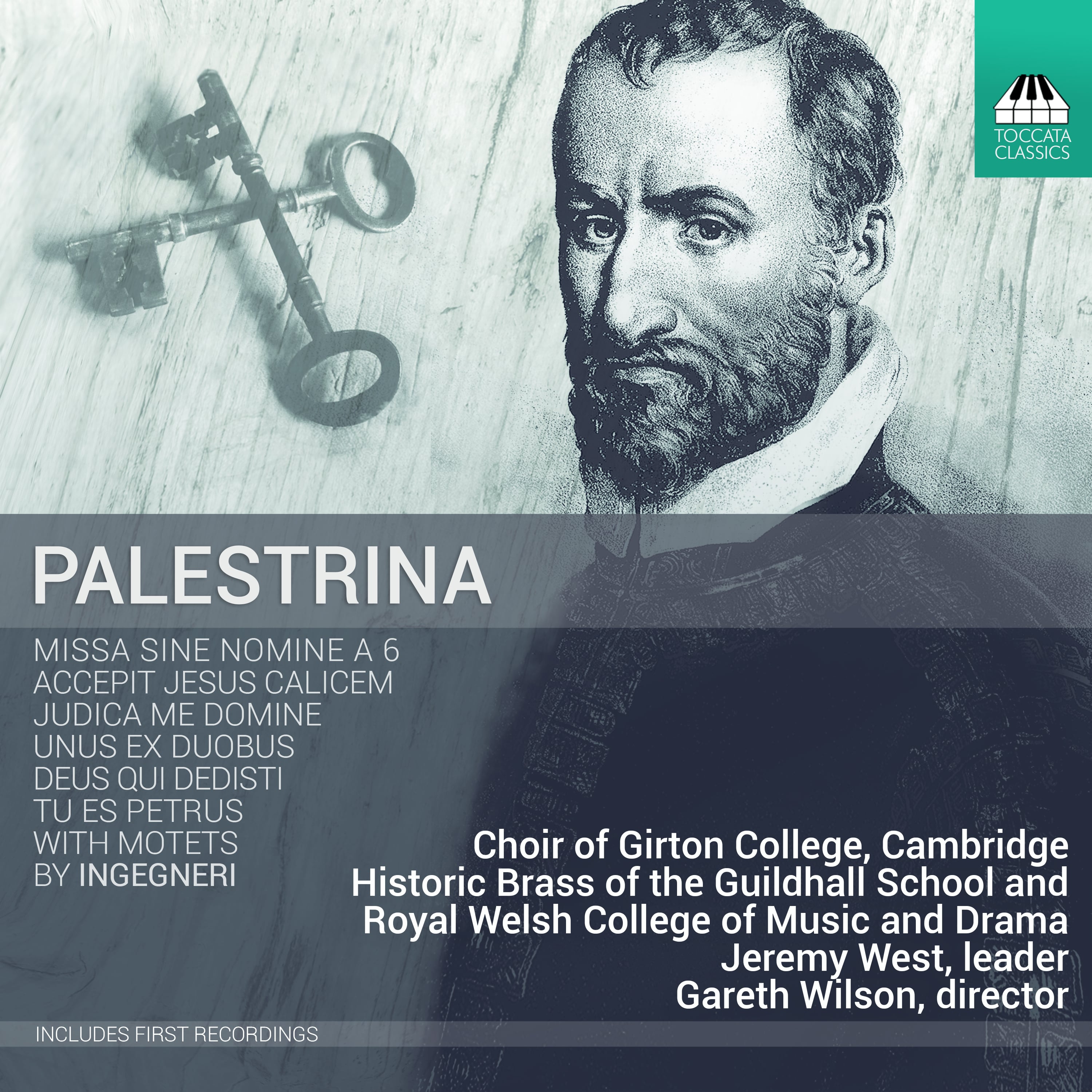
Palestrina: Missa sine nomine a6

Choir of Girton College, Cambridge; Historic Brass of the Guildhall School of Music and Royal Welsh College of Music and Drama, Gareth Wilson, director
77:20
Toccata Classics TOCC 0516

Palestrina: Missa sine nomine a6, Deus qui dedisti, Judica me, Accepit Jesum calicem, Unus ex duobus, Tu es Petrus, Ricercars quarti and octavi toni. Ingegneri: Super flumina Babylonis, Duo seraphim, Lauda Sion.

Besides the mass, this disc contains motets and ricercars by Palestrina, plus three motets by his contemporary Marc’Antonio Ingegneri. Vocal works are performed a cappella, accompanied wholly or in part by brass, or by brass alone. There is evidence that in Rome at this period, for major festivals, extra singers and instrumentalists were hired for liturgical performances at some sacred venues, so this disc provides examples of the variety of possible performance practices for this music. Palestrina’s Mass is accompanied throughout except in certain passages of reduced scoring such as the Christe eleison. According to Gareth Wilson (email to reviewer), it was felt that the quality of the works by Ingegneri that are recorded here is such that he deserves a project of his own, so he will be the focus of Girton College Choir’s next tour; perhaps he will reappear on a future recording as well. Seemingly his Super flumina Babylonis made its point during their recent tour of Israel and Palestine.

Listening to the Kyrie and Gloria of Palestrina’s Mass, albeit with brass accompaniments arranged by Gareth Wilson, it comes as no surprise to learn that J.S. Bach arranged brass parts for accompanying these movements during Lutheran services. It might have been interesting on this disc to have heard the work with his brass accompaniments, with the remaining movements arranged in imitation of his style. This is not to say that Gareth’s arrangement is inadequate in any way.

In those vocal works which are performed by brass alone, or for one voice-part with brass playing the rest, the feeling occurs that one might have referred to hear words in all parts, the better to appreciate Palestrina’s word-setting. That said, the use of historic brass defines each part very clearly so that one can appreciate his polyphony and any occasional harmonic felicities or dissonances.

Girton College Choir sings well and responsively, Historic Brass play idiomatically and stylishly, and Gareth Wilson’s chosen tempi are judicious and serve the music well. Palestrina’s ricercars are undistinguished, but his Mass is entirely the opposite, with Kyrie and Agnus outstanding even by his standards. Similarly, the motets are so fine that it is astonishing that all but one are receiving their first commercial recordings.

Richard Turbet

Palestrina: Missa sine nomine a6


Categories
Recording

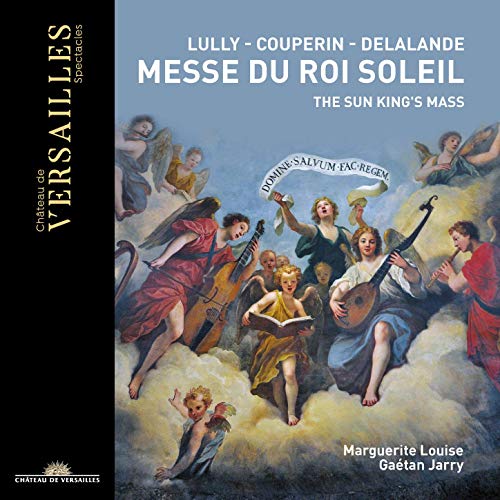
Messe du Roi Soleil

The Sun King’s Mass
Marguerite Louise, directed by Gaétan Jarry
53:13
Château de Versailles Spectacles CVS008
Music by Couperin, Delalande, Guilain, Lully & Philidor

One expects better of Versailles. Although the performances are quite decent, the programme is rather a rag-bag and very short and the booklet (Eng/Fre) poorly designed. Why not all the French essays together, then all the English, rather than interleaving them? And the notes, once found, aren’t that great either – whether in French or English. A case of trying too hard, rather than incompetence, but either way the reader loses out.

The Sun King heard various types of mass in his chapel, most famously the ‘solemn low mass’ which consisted of a grand motet, a petit motet and a Domine salvum fac regem, all sung while the priest quietly spoke the liturgy. On other occasions, he heard organ music and chant and here we get a bit of everything, sometimes a very short bit. So the overall effect is rather unsatisfying even though the major works – psalm settings by Delalande and Lully – are splendid pieces, worthily sung. Indeed, the soprano solos and duets are some of the best I’ve heard for a long time. Nonetheless, the overall verdict has to be ‘could do better’.

David Hansell

Categories
Recording

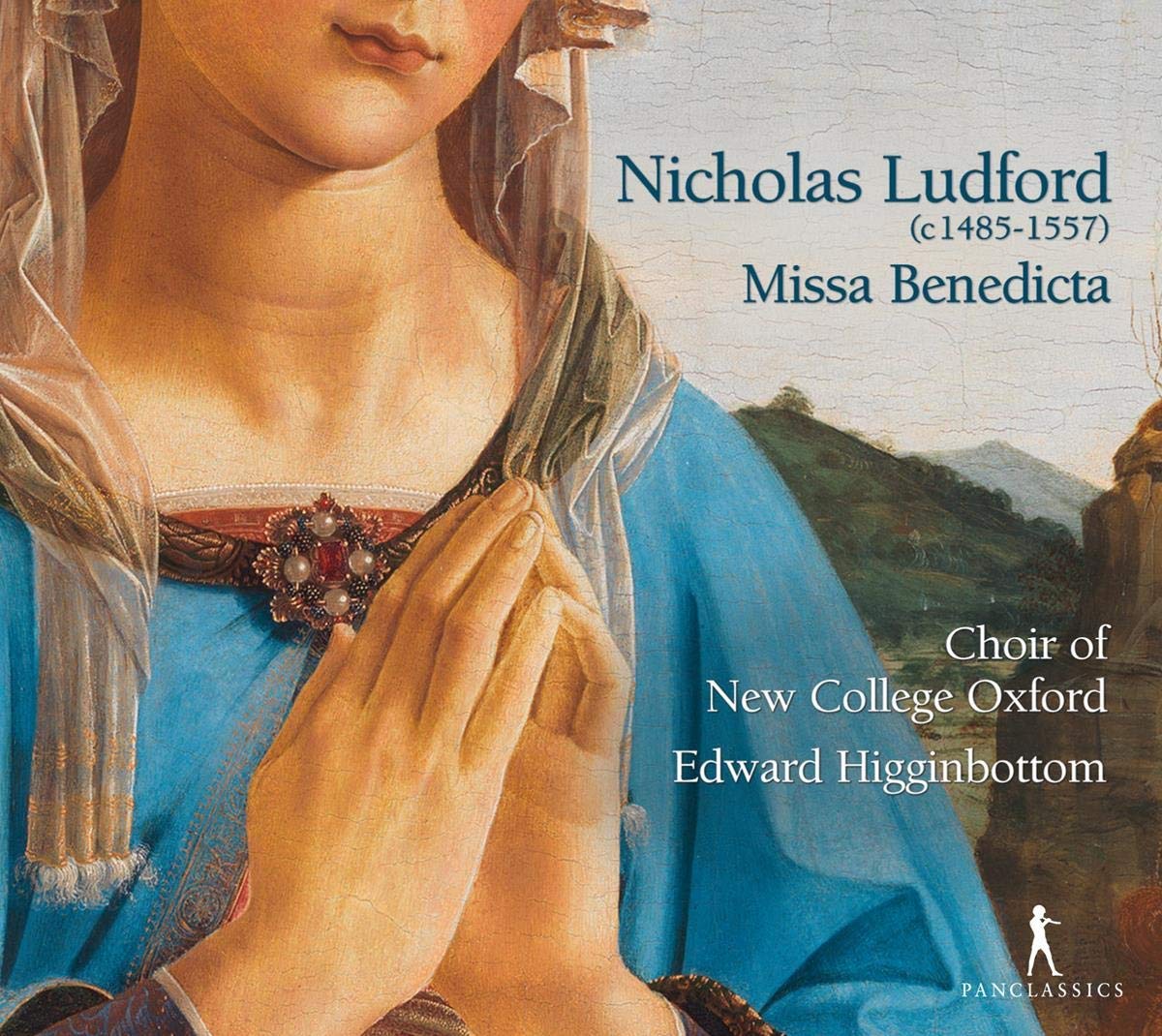
Ludford: Missa Benedicta

Choir of New College Oxford, Edward Higginbottom
63:13
Pan Classics PC 10403

Nicholas Ludford (1485-1557) is one of the greatest Tudor composers. This is crowded territory, which begins with some musical giants from the Eton Choirbook such as John Brown and Robert Fayrfax, and climaxes with Byrd. Along the way, to name but a few, there are the Three, or Great, T’s – Taverner, Tye and Tallis – and John Sheppard. I pick out Sheppard deliberately because his music was overlooked for a long time, not only after the original Tudor revival in Victorian times and subsequently after the publication of the ten volumes of Tudor Church Music during the 1920s. In fact his music would have been published in the planned second series, one of many casualties of the Wall Street Crash, but the music of Ludford eluded or was overlooked by all and sundry until quite recently. The breakthrough came with the recordings by The Cardinall’s Musick (TCM) of masses for five and six voices, plus motets, released on four CDs, the most recent in 1994, coinciding with a major article about the composer by David Skinner in Musical Times. Since then, we now have the luxury of all his masses for five and six voices on disc, thanks to the superb recordings by Blue Heron of music from the Peterhouse partbooks based upon the remarkable restorative editing of Nick Sandon, plus a couple of recordings of his smaller masses. There are now even alternative versions of two of the masses originally recorded by TCM – just as well because three of their original recordings are not currently available.

The recording under review is of one of these alternative versions. It was originally released in 2007 on another label named K617 (numbered K617206) and additionally includes two of Ludford’s substantial antiphons, Ave cuius conceptio and Domine Jesu Christe. Higginbottom takes the former at quite a lick – 8’03 against the 9’22 of the premiere recording in 1993 by The Cardinall’s Musick under Andrew Carwood, and even the 8’51 of Blue Heron – but although the performance sounds rather driven and a tad soulless, Ludford’s luxuriant and often demanding counterpoint is for the most part audible. In a letter to Early Music published in May 1995 (page 366) I note that Ludford’s setting of the words “fecunditas” in this antiphon seems to suffuse the opening of Sheppard’s huge ritual antiphon Media vita which I go on to suggest might have been composed in memory of Ludford; given that Sheppard’s masterpiece is among the finest musical works of the Renaissance, it would be a fitting and deserved tribute to his predecessor. Domine Jesu Christe is a much more relaxed and expansive affair but still expresses a sense of purpose and direction. The movements of the mass itself are interspersed with Gregorian chant. As Edward Higginbottom observes in his notes, each movement of the mass begins with the same musical setting, rather than an actual head motive. This opening passage contains sumptuous and striking harmonies, conspicuous among those which crop up throughout the course of all four movements, and there are also sinuous passages of reduced scoring in which fewer voices are used per part, providing textural variety. Stylistically the music is clearly in the English tradition of the Eton Choirbook with no nods towards the Continent; indeed, at the beginning of the Credo, just after the head motive that is not really a head motive, there is a passage that has resonances of the old faburden technique, from the words “Et in unum Dominum”.

New College’s singers do ample justice to Ludford’s thrilling music, the boys with a bright tone possessing a slight cutting edge, which is appropriate here given the rich, bottom-heavy scoring (TrATTBB), and the men blending well while keeping each line distinct, the whole choir making the most of Ludford’s interesting sonorities, such as the final chord of the first “excelsis” in the Sanctus. For composer and choir at their collaborative best listen to the passage in the second Agnus, led by the high voices drifting sublimely in thirds. This is great music, by a great composer, one whom the world of music should acknowledge, celebrate and acclaim as such.

Richard Turbet

Categories
Recording

La guerre des Te Deum

Blanchard – Colin de Blamont
[Michiko Takahashi, Carline Arnaud, Sebastien Monti, Romain Champion, Cyril Costanzo], Chœur Marguerite Louise, Ensemble Stradivaria, Daniel Cuiller
66:38
Château de Versailles Spectacles CVS007

To the much-documented ‘opera wars’ of early 18th-century Paris we can now add not-so-much a war, more a squabble between composers over whose Te Deum should be played to mark which royal event! I must say I would have loved to have seen Blamont attempting to replace Blanchard’s music, already on the music stands, with his own, even as the Queen was taking her seat! The booklet (French & English) tells this story well (if in rather lumpy English) though says nothing about the music itself. These composers were both slightly younger contemporaries of Rameau, but very much in the Versailles tradition of ceremonial sacred music. So we have trumpet-led grandeur, some deft choral counterpoint and graceful writing for smaller forces. I couldn’t find any information about the recording circumstances, though a few minor untidinesses suggest ‘live’. But the lack of intrusive vibrato is welcome.

David Hansell

Categories
Recording

Biber & Biber

Concerto Stella Matutina, Johannes Hämmerle, organ and director
71:00
Fra Bernardo FB 1710593
C H Biber: Missa Resurrectionis Domini, Requiem
H I F Biber: Quasi cedrus exaltata, etc

Oddly enough this is the second CD to sport the title ‘Biber & Biber’, which might sound like a firm of German solicitors, but refers rather to the father and son team of Heinrich Ignaz Franz Biber and Carl Heinrich Biber. It is of course the former who is much the better known; indeed even readers of a specialist site such as EMR could be forgiven for being unaware that the elder Biber had a composer son. A quick check reveals that to date only a few instrumental works of C H Biber have reached the catalogue, so this excellent new recording concentrating on two major choral works provides a welcome opportunity to be introduced to him.

The younger Biber, Heinrich’s eighth (!) child, was born in Salzburg in 1681. Not surprisingly he studied the violin and composition with his father and also appeared in Latin school dramas with music by him. In 1704, the year of the elder Biber’s death, Carl was appointed to the court of Salzburg and also travelled to Italy, visiting Rome and Venice, where he would likely have come into contact with the young Vivaldi, recently appointed violin master at the Pietà. Subsequently he visited Vienna, but in 1714 he was appointed deputy Kapellmeister and then in 1743 promoted to Kapellmeister, making him senior to Leopold Mozart, who was appointed as a violinist in the court orchestra in the same year. C H Biber died in Salzburg in 1749.

Biber’s extant catalogue consists largely of music for the church. It survives in the archives of Salzburg Cathedral, where in excess of 120 of his works are housed. They include the Missa Resurrectionis Domini and the Requiem setting recorded here. The most surprising thing about both works is that despite Biber’s youthful contact with modern developments in Italy, they remain resolutely conservative in their adherence to solid contrapuntal techniques. Indeed, the difference in style to the three motets by his father also included on the CD is minimal. Both works conform to similar opulent orchestration as the more familiar large-scale works of Heinrich, which is to say they include parts for trumpets, trombones and timpani in addition to strings. The vocal writing, here wisely restricted to eight singers, alternates between brief episodes for the solo quartet and chorus, with very few extended solos. In both works the text is set with extreme economy, with relatively few opportunities for virtuoso solos. Occasionally, as at the telescoped ‘In incarnatus’ and ‘Crucifixus’ in the Credo of the Mass, Biber introduces a florid violin solo to remind us that he, like his father, was a violinist.

It is the Mass that is the more interesting of the two works. The Kyrie, for example, is introduced by infectiously dancing strings, while throughout exhilarating and exuberant writing for (splendidly played) punchy trumpets is never far away. But there are effective quieter moments too, as in the exquisite Benedictus duet for soprano and tenor. But the whole Mass has an engaging, upbeat ambiance. On first acquaintance the Requiem strikes me as a more perfunctory work, although it has impressive moments such as the urgent thrust of ‘Dies irae’, the soprano solo at ‘Lachrimosa’ and a certain noble dignity at the end of the Sequenz. But too much of the textural setting seems lightweight, with the supplication of the Offertorium (‘O lord deliver …) seemingly already decided by the less than humble music.

The performances are of high quality, with a good solo quartet, the soprano soloist Marie Sophie Pollak in particular being outstanding, and excellent orchestral playing from Concerto Stella Matutina. The splendid recording, made in the Seminary Church in Brixen, South Tirol, captures the often complex sounds with clarity, while at the same time creating an impressively spacious overall sound picture. The CD is well worth investigating by anyone attracted to the resplendent sound world of 17th- and 18th-century Salzburg Cathedral.

Brian Robins

Categories
Recording

Zelenka: Missa Omnium Sanctorum

[Carlotta Colombo, Filippo Mineccia, Cyril Auvity, Lukas Deman SATB], laBarocca, Ruben Jais
50:16
Glossa GCD 924103

Most of the recordings of Zelenka’s choral music that I know have either been Czech or German. Here we have a predominantly Italian performance of the composer’s final mass setting, for the Feast of All Saints. It is absolutely packed full of everything that typifies Zelenka – cleverly constructed fugal choruses, arias that both tax the soloists by give them hugely expansive lines to relish the beauty of their own voices, dramatic harmonies that accentuate key moments in the texts and an unfailing feel for overall architecture; at the end of it all, one is exhausted and yet uplifted.

laBarroca is a new group to me. Under Jais, the 44321 strings with oboes, bassoon and one “continuo” player, they are electrifying. The energy (which anyone playing Zelenka has to bring with them!) is astonishing and the precision of the violini unisoni playing is breathtaking.

Chorus and soloists alike revel in their music, and once again it is a question of energy – this is not music for the faint-hearted! In such a bright acoustic, the radiance of the voices is especially delightful – and what voices! The soloists are all outstanding.

For decades, northern Europeans have been performing Italian music their way; it seems that Italy is ready to strike back!

Brian Clark

Categories
Recording

Bach: Cantatas Nos 106 & 182

Amici Voices
61:37
hyperion CDA68275

This is a fine showcase for Amici Voices, a group of like-minded young singers, based I suspect around the admirable Helen Charleston, who have enlisted some of their able friends as instrumentalists, including their professors and talent around their home-base in Harpenden to make this recording. They work without a director, like Vox Luminis, and I only felt the lack of direction once – in the change of tempo at the start of the durch Jesum Christum fugue at the end of BWV 106. The overall result is the right kind of music-making: bright and enthusiastic.

Sometimes a shade over-enthusiastic, as in the bass’s Bestelle dein Haus in 106, where in a recording as opposed to a live performance over-dramatising phrases can lead to a coarsening. But Helen Charleston’s In deine Hände is utterly ravishing. And how does Michael Craddock manage to give such a convincing top G when reaching for Paradise and still give a grainy F# on alte Bund at the very bottom? The vocal range is testing in BWV 106 even when done at 415, though I think the arguments (not rehearsed in the liner notes) for doing it at 392 (as with other Mulhausen cantatas where string and wind parts are notated in different keys) are strong on practical as well as musicological grounds.

Two other comments on 106: first, when you are using only an organ bass much of the time, the organ really needs to have more of an an 8’ principal tone. Without it, an 8’ violone is welcome especially when you sing the ‘choruses’ two to a part. With such light scoring as in 106, and the boundaries between chorus and arioso so fluid, I personally prefer single voices: it is easier to match single voices to the very straight sounds of recorders and viols. That is demonstrated clearly by Bethany Partridge’s beautiful soprano line in Ja komm, Herr Jesu.

The eight singers come into their own in the motet Komm, Jesu komm (BWV 229). Here we can hear each individual line clearly, with the sopranos exemplary. Singers of inner parts have to learn to trust that they will be audible without resorting to singing though notes or pushing over bar lines, still less to turning on the vibrato. Just occasionally – often at the ends of phrases when breath is short – that is what happens in all the voice parts and we get a note pushed through the texture, or a weak note accented inappropriately. But when they are all listening to and singing to each other, you can hear the potential for the understated ensemble singing that those who have been trained as ‘soloists’ in the conservatoires find it hard to adjust to, but helps us understand that we need to approach Bach’s vocal lines from behind – singing Bach with a style developed from the motets of Schütz and Schein, and from the Altbachisches Archiv.

BWV 182, Himmelskönig, sei willkommen is another early cantata dating from Palm Sunday in 1714, Bach’s first composition as Konzertmeister in Weimar. Although scored for recorder, a single violin and two violas with a ‘cello sometimes independent of the basso continuo with SATB, the work has a later feel to it. Again there are problems with the pitch at which it works, and the decision to play the recorder part on a transverse flute may have something to do with the difficulty of getting a recorder to play convincingly in E minor in the alto aria. A traverso certainly makes that aria more luscious in feel, though here I found a more ‘modern’ singing style from Helen Charleston less convincing. When Cantata 182 was re-scored for Leipzig, and new parts written for a different context, the scoring was thickened (there are indications of more strings) and an oboe was added to the second violin line, while the top violin doubled the recorder in tutti sections. As it stands, Amici Voices balance the slightly more robust instrumental of the Weimar scoring better, and the sprightly singing and well-controlled lines of a slightly more conventional score with its division into arias, recitatives and choruses (including a motet-style chorale in No 7) give it a more established performance practice style, where singers sound as if they are more at ease.

All in all, this is a good calling card for the group and they should feel encouraged by the way the quality of their performance has been captured, even if there are musicological issues that might have been resolved in the planning with the consequent effect on the performance practice. I was glad to have some details of pitch, instruments and an indication of temperament. The brief liner notes explain the choices behind the programme, but do not attempt to enter the minefield of issues around pitch and instrumentation. We need groups like this to get going – do encourage them and get this CD.

David Stancliffe

Categories
Recording

Monteverdi: Missa in illo tempore, Magnificat a 6 voci

Ensemble Corund, Stephen Smith
50:36
Spektral SRL4-17159

The Ensemble Corund was founded by Stephen Smith who has lived and worked in Switzerland since 1982. They are based in Lucerne, and this CD of Monteverdi’s six-voice – Cantus, Sextus, Altus, Tenor, Quintus and Bassus -sacred works published in the volume dedicated to Pope Paul V and published in 1610, where the other works comprise what we know as the Vespers of the Blessed Virgin Mary, is sung two to a part by four mean-range sopranos, and two each of hautescontres, tenors, low tenors and basses. The singers are clean and well blended and arrive at a comfortable pitch by singing the mass based on B flat at 415 (which is I suspect what the organ is tuned to, rather than on G at 465 or even higher as the surviving organs in North Italy of the period would suggest as the basic pitch there in the early 17th century): there is no detail about the pitch, organ, theorbo (inaudible till the magnificat – or was it only used there?), edition or anything else of HIP interest). The Magnificat à 6 is sung down a fourth at 440, as the clefs imply.

The singing is attractive both for the blend and balance of the clear voices, and for the fact that the ensemble creates a warmth of tone without any hint of vibrato.  The singers – Sara Jäggi of Vox Luminis among them – retain a welcome clarity in the sections where close imitation can lead to fogginess in a larger acoustic or with less disciplined voices. As far as I can tell, it was recorded in a studio, but the acoustic has quite a grateful give.

In the Magnificat, I am occasionally taken by surprise by the style of the realisation of the organ part which does not always seem to me in character with the vocal writing. Singers sing the duet and solo lines unfussily, and thanks to the downward transposition the voices are comfortable in their range. The liner notes – where a whole double page is left blank – are spectacularly uninformative: a page on the ensemble and a page on the director in both English and German, followed by the text in Latin, German and English is all that there is. Nonetheless, I like this performance: it is clear, undemonstrative and musical in its shaping of the sections of the mass where the conductor is not afraid to vary the tempo in the longer numbers, for example, and this sensitivity to the word-setting as well as the occasional homophonic sections – like the Incarnatus and the Benedictus – makes this recording a welcome addition to those available.

David Stancliffe

Categories
Recording

Buxtehude: Membra Jesu nostri

The Chapel Choir of Trinity Hall, Cambridge, Orpheus Brittanicus, Newe Vialles, directed by Andrew Arthur
70:17
Resonus RES 10238

It is often the context of the music-making that distinguishes its character, and the near ideal conditions of a choir of young singers (helped by performing in the excellent acoustic of Jesus College) together with a quintet of singers who share that background and the strings, lute and keyboard of Orpheus Britannicus, joined by the Newe Vialles viol consort in the subdued Part 6 (Ad Cor) provide a very coherent group of musicians for this tense, yet restrained masterpiece of early German Baroque oratorio.

I admire the overall sound – there are no prima donnas here, nor the sense that this is just another routine performance. The intensity of it all is maintained by the experienced and capable direction of Andrew Arthur, as is the sense of the different chori – well laid out in the structure of the work as it is in the performance. His scholarly and helpful essay is a key element in the liner notes, revealing where and how Anders von Düben transcribed this work from its tablature original of 1680 into staff notation. This is complemented by a revealing note on the Latin text by Francis Basso, which is then given with an English translation. Details of pitch, instruments and tuning complete a model booklet.

The major decision for anyone directing Membra Jesu nostri is whether to use single voices throughout or to use a choir as well as a group of solo singers. Using a choir of bright, young voices and placing the instruments and single voices in the foreground gives a good balance and a clean distinction between the two vocal groups. The choir sings with conviction and clarity, no individual voices stand out to spoil the cohesion and they reflect their director’s precision and their regular experience of singing in the small Chapel at Trinity Hall. This is ideal.

The singers charged with solo lines sing well with each other in the duet and trio sections while retaining their own individuality. Nicholas Mulroy’s distinctive voice never has to over-sing, and Daniel Collins is a good match for him in tone and intensity. His leading of the almost Purcellian moments with their tightly wrought suspensions like the trio sections towards the end of Ad Manus (which were given to the solo singers, unlike the SSA passage at the opening of the final tutti section: I love it, but why?) gave these moments a richness that made me wonder about using the choir at all: the ATB sound is so rich! It was perfect in sit tamen gustatis in Ad pedes, the first number where the choir is tacet. To hear Reuben Thomas on his own you have to wait for Ave verum templum Dei where he sings with the strings – the effortlessness of his bottom notes is miraculous.

Eloise Irving, the first soprano, sings beautifully, with a clarity and grace to which Charlotte Ives responds with a warmer tone; in the duet and trio sections, the contrasting tone colour (unlike the identical tone of S1 and S2 in the choir) offers a genuine contrast, and helps colour the words, which all five solo singers enunciate with exemplary clarity. The choir might have copied this – especially in the homophonic quasi-parlando sections – to advantage. The obvious benefit of a many-voices choir is demonstrated in the long, seamless, fluid lines of the final Amen.

The strings are perfect: I have never heard the Sonata in tremulo in Ad Genua so beautifully detailed by the violins, and the reedy quality of the bass violin is a perfect complement in this music. Their wonderful relaxed cross rhythms in the opening to Ad Latus are a model for how to play this brief sonata.

The viols in Ad Cor made a dark contrast, introducing the SSB vocal complement for this number with its rich chromatic suspensions and a piano end like BWV 106. Their reedy tone is not dissimilar to the sudden change to a regal and trombones in the underworld in L’Orfeo. There is such wonderful variety of mood and expression in this pioneering work, and we should be glad that it has received such skilled and musical a treatment. If you want a recording to complement a six-voice performance, I recommend this CD wholeheartedly; and in its own right it is a fine advertisement for this director and his college choir.

David Stancliffe