Categories
Recording

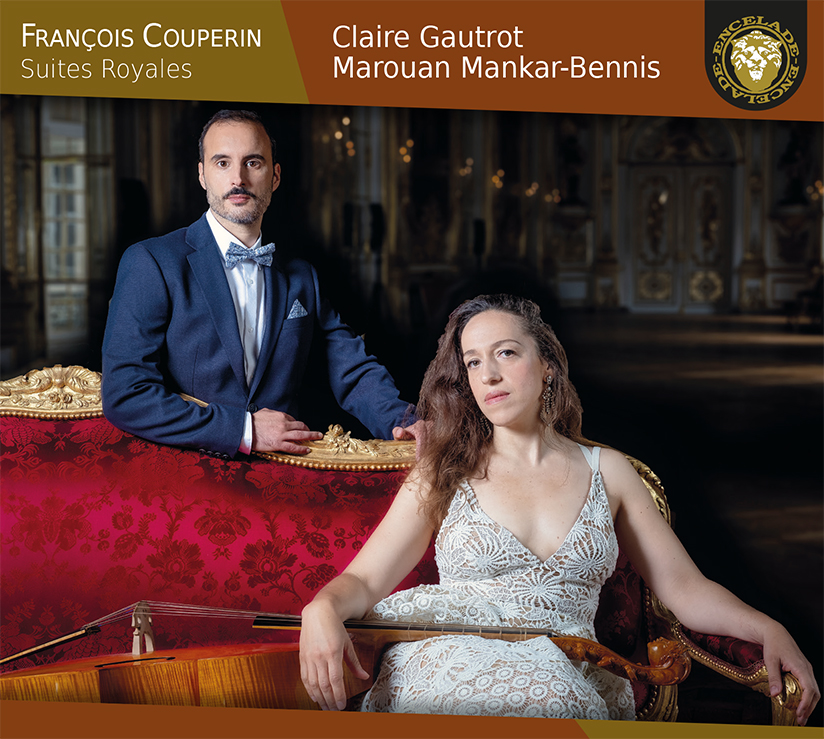
Couperin: Suites Royales

Claire Gautrot viola da gamba, Marouan Mankar-Bennis harpsichord
76:00
encelade ECL 1902

It is understandable that Couperin’s keyboard oeuvre should over-shadow the rest of his output but the chamber music is scarcely disappointing! Here we have two suites originally designated for viol avec la basse chiffrée (pub. 1728) and one of the 1722 Concerts Royaux, for which any suitable melodic instruments can be used. Each suite is followed by a complementary movement from the harpsichord livres.

I regularly question the need for the multiplicity of continuo instruments we often hear in this repertoire so it is something of a relief to note that in this recital a harpsichord shows that it can do the job on its own – and rather well. Variety of texture, in particular, is used to great effect and the recorded balance is unfailingly excellent.

And so is the playing. The plangent tone of the viol, its infinite capacity for tonal shading and ability to convey delicate filigree makes it an ideal voice for this exquisite music. I defy anyone not to be tempted to repeat Pompe Funèbre, possibly more than once. So, if you share my love of the French Baroque, and even if you don’t, this is very rewarding listening, helped on its way by a sensible and quite substantial essay (in French and English).

David Hansell

Categories
Recording

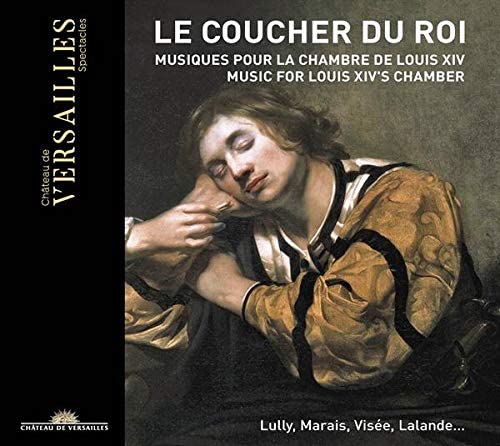
Le coucher du roi


thibault Roussel theorbo and director
Château de Versailles Spectacles CVS029
74:00 (CD) 59:00 (DVD)

Click HERE to buy this on amazon.co.uk

The conceit here is that, in the evening of both the day and his life, the aged Louis XIV has summoned his favourite musicians to play him his favourite music as part of the formalities surrounding his retiring for the night. So we have a lovely programme of (mainly) short pieces by the usual suspects: Lully and Lalande, of course, but also Lambert, de Visée, Marais and even that relatively youthful upstart, François Couperin. The instrumentation includes voices, flutes, strings and assorted pluckers in a wide variety of ensembles and solos, offering a rich panoply of sumptuous sounds – three bass viols, two viols with singer and theorbo etc., etc..Quite frankly, this ensemble can come and play to me at any old time of any day! The performances are unfailingly lovely and show great commitment to a repertoire that is still a mystery to many. Yes, I’ll probably have a growl about some questionably over-staffed continuo departments, but the growls will be quiet ones.

The DVD contains some of the repertoire from the CD but also additional pieces (fine chamber music by Hotteterre and Dornel, for instance), all filmed in various atmospheric locations within the Château de Versailles. And, in contrast to some concert DVDs I have seen, someone has actually thought about what it looks like! The singers have memorised their music and, even if they don’t fully act their scenes, they do at least inter-act with each other in a convincing quasi-dramatic way. However, when the final credits roll brace yourself! The accompanying music is not allowed to finish but is chopped off mid-phrase as soon as the text ends.

The 72-page booklet (in French, English and German) offers the usual performer biographies and essays on the music that place it informatively in its context though say little about its content. There is no list of the music on the DVD though there are captions as it plays.

Overall this is a very good package, though that DVD end should never have achieved publication. A shame.

David Hansell

Categories
Recording

Tormenti d’amore

Philipp Mathmann, Capella Jenensis, Gerd Amelung
82:13 (2 CDs in a card triptych)
Querstand VKJK 2002
Music by Hasse, Porsile, Reutter the Younger & Scalabrini

Click HERE to buy this on amazon.co.uk

This set is centred around a collection of vocal music made by Prince Anton Ulrich of Saxe-Meinigen during the period he spent in Vienna, where he apparently arrived in 1724. Apparently, since the notes rather ambiguously tell us that the collection, consisting of nearly 300 vocal works, including over 170 chamber cantatas, were works from ‘Vienna’s musical scene composed between 1710 and 1740’. So the assumption would be that Anton Ulrich spent around 20 years of his life in Vienna. More importantly, many of the works in the Meinigen Archive are the sole surviving copy, including the best music in the programme, the two characteristically melodious and elegantly turned cantatas by Hasse. The cantata by Georg Reutter, the Court Composer of Vienna and Kapellmeister of St Stephen’s Cathedral who brought Haydn to Vienna, and the Neapolitan opera composer Giuseppe Porsile are less interesting, the former in particular also suffering from an excruciating anonymous text on the prevailing topic of the cantatas – tormenti d’amore, the torments of love.

In addition to the cantatas, the set includes two trio sonatas by Hasse and two sinfonias once surprisingly attributed to Hasse, but more recently established as the work of the Italian-born Paolo Scalabrini (1713-1803 or 6), the director of the travelling Mingotti opera company, who ended up as maestro di cappella in Copenhagen, where he composed at least eight operas, including several Danish-language works that helped establish native opera. They are pleasant enough routine Galant works in three brief movements but little more and assuredly not worthy of Hasse’s name being attached to them.

The programme itself is therefore not without interest, but sadly the performances rarely rise beyond the level of the efficient and in the case of the cantatas fail to reach that level.  Philipp Mathmann, confusingly described as a countertenor/soprano, is in fact a sopranist pure and simple. While the voice has an admirable purity and wide range, it is unfailingly hooty in its upper range, while also displaying deficient technique in several respects. Little ability to articulate a simple turn is shown, while more complex embellishment or ornamentation is rarely attempted. What truly compromises Mathmann’s performances, however, is his seeming lack of interest in the texts he is singing. None is a literary revelation but the whole object of the chamber cantata was to move the listener, evoking sentiment and emotion through expressive vocal gesture and realization of the words. Ignore that and you may as well be singing a vocalise, which is precisely the impression given here for much of the time.  

The instrumental contribution of Capella Jenensis is rather more enjoyable, though rhythms tend to plod in slower movements. The Hasse trio sonatas, in particular, are well played, with pleasing shaping of melodic lines from the two violinists and – in that in D, op. 2/2 – flautist. The programme, almost exactly the length possible today on a single CD, is extravagantly spread over two discs so it is to be hoped that some price concession is built in.

Brian Robins

Categories
Recording

Telemann: 3 Overture Suites

L’Orfeo Barockorchester, Carin van Heerden
66:11
cpo 555 389-2
TWV 55: G1, G5 & B13

Click HERE to buy this on amazon.co.uk

Every once and a while, along comes a recording that fires on all cylinders with a special synergy and bubbling musical alchemy, matching the finest ideals of music-making, and presents the dazzling facets of a composer’s subtle, creative nuances and whims.

Here the players of L’Orfeo Barockorchester under Carin van Heerden deploy their boundless energy and polished musicality to great effect, creating some truly wonderful moments of euphonic transport. The well-honed Orchester navigate through Telemann’s many subtleties and scenic changes with seemingly effortless fluency.

The three fairly lengthy suites date from just before or during his time in Frankfurt, offering tremendous scope for the composer’s imaginative musical, operatic esprit. The Frankfurt connection may well be present in TWV55:G5’s “Les Augures” (oracles, portents? – note those shuddering winces! – possibly (bad?) financial omens at the Stockmarket, which stood next to Telemann’s home).  The delightful Rondeau(x) is an addictive Ohrwurm! Normally, a Gigue might close a suite, not here, carrying on until a delightful sweep of no fewer than *three* Menuets. The ravishing kaleidoscopic tour moves on with some arresting slower movements too: Plaintes (B13, G5).

The recorded sound here is just about perfect, every timbral shade is found and heard. Despite the claims, the TWV55:B13 (c1725?) is the only real premiere – G5 came on a slightly earlier Atma CD, and there is a recording of G1 possibly from late 80s?

A highlight of the premiered work, the tender and sprightly interplay of solo violin (Julia Huber-Warzecha), two oboes and tutti, is rather special and gives a very different opening. Placing the gigue in second place is unusuale! Special mention must go to the penultimate movement, given as “affectuoso e molto adagio” or as the oboe part has it: “Cantabile et Affectuoso” a truly captivating duet!

The opening suite (G1 of 1716-25?) opens with an attention-grabbing, curtains-up Overture, after which comes the exquisite quasi-Handelian Air: Document, which made me think, did he hear this and use it elsewhere? (Where’ere ye walk seems a likely candidate…) The other airs all feel like hidden arias or scenic mood music for the Leipzig stage.

All in all, this is a real tour de force, with added Italianate passages for a perfect musical assemblage. L’Orfeo Barockorchester is in excellent form. This is a must for all baroquophiles! Moments of wonder, wistfulness and elegiac tenderness wrapped in entrancing music. Probably my CD of 2020, heart on the sleeve, hand on the heart.

David Bellinger

Categories
Recording

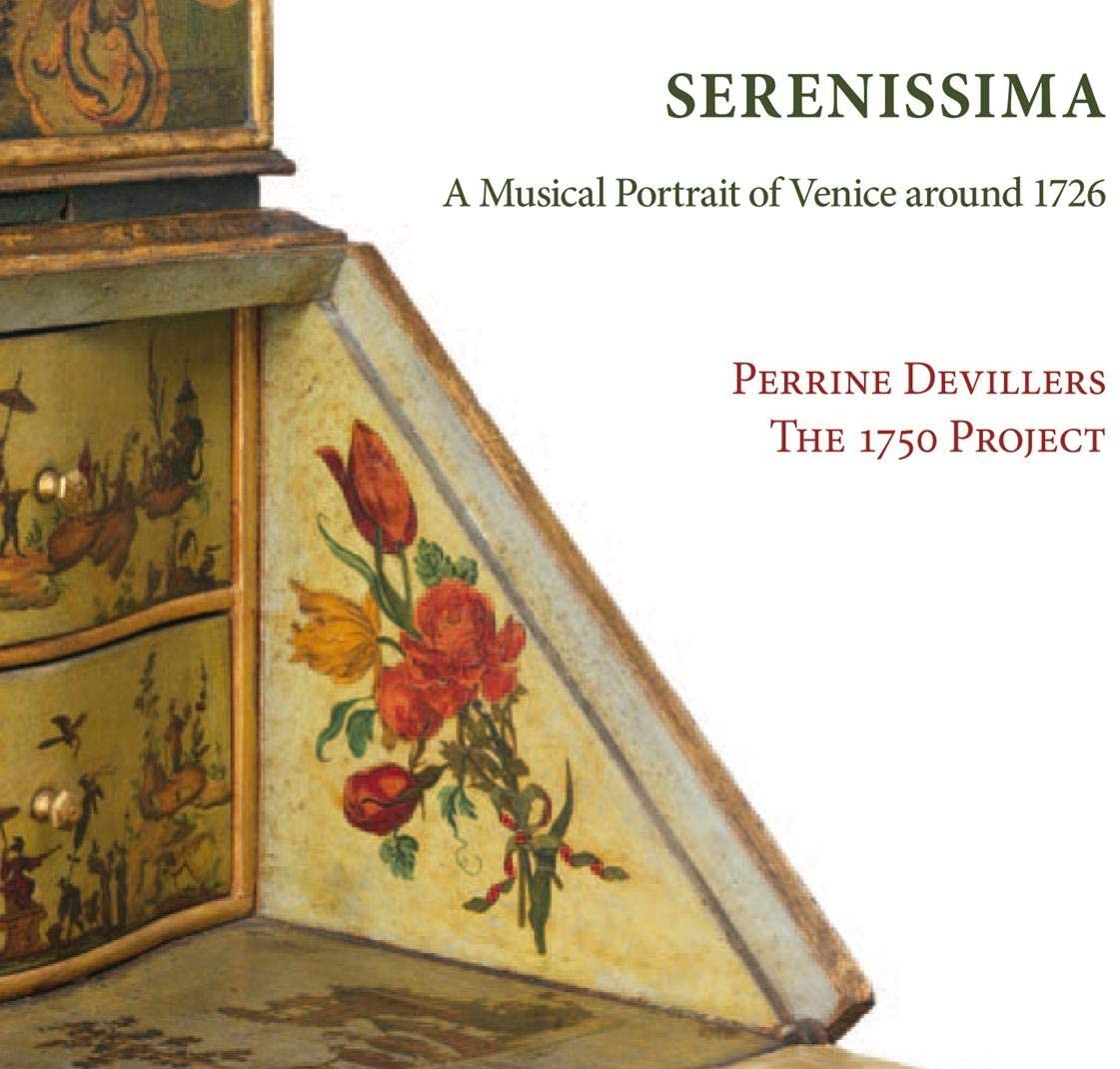
Serenissima

A Musical Portrait of Venice around 1726
Perrine Devillers (soprano), The 1750 Project
76:13
Ramée RAM 1902
Music by Porpora, Giuseppe Sammartini, D. Scarlatti & Vivaldi

Click HERE to buy this recording on amazon.co.uk

Explanation for the unusual name of the ensemble comes in the opening lines of the notes, where its leader, oboist Benoît Laurent, tells us that the declared objective of The 1750 Project is an exploration of a chosen city’s musical life in the period 1720 to 1750. So here they have commenced by landing in Venice around 1726. This is a time chosen to mark a change of style moving toward the Rococo, a development that in Venice doubtless gained particular impetus from the arrival in the Adriatic city in 1726 of the Neapolitan Nicola Porpora. His Ariana e Teseo, given at the San Giovanni Grisostomo theatre in 1727, was the third of a sequence of operas composed for Venice. ‘Pietosa Ciel difendimi’ is typical of the composer’s gracious, mellifluous style, an expansive cantabile aria with an elaborate oboe obbligato part in which the character (Carilda) asks for relief from the doubts about love that afflict her. It is sung with affecting freshness and elegance of line by the young French soprano Perrine Devillers, who needs only to articulate both musical embellishments and the Italian language with more depth and acuteness to become a truly outstanding singer. Devillers also sings a Porpora chamber cantata with continuo accompaniment cast in the form of a pair of arias with a central recitative, in the latter of which some of the key phrases (‘Ahi! Lasso!’) do indeed hint that Devillers has more to bring out as to the dramatic side of her singing.

The principal representative of the home team is unsurprisingly Vivaldi, who gets the lion’s share of a programme that includes two of his chamber cantatas, an oboe concerto and one of the so-called ‘Manchester’  violin sonatas. Both cantatas, ‘All’omba di sospetta’, RV 687, which has an obbligato part for flute, and ‘Che giova il sospirar’, RV 679 are also extremely well sung, the latter in particular being a fine work with, unusually, accompaniment for strings. It opens with an extended recitative bemoaning the pain inflicted by ‘cruel Irene’ that again provides Devillers with the opportunity to suggest a dramatic side to her singing yet to be fully developed. The splendid aria that follows is inflected with chromatic pain, while the fiery final aria takes a more rhetorical approach.

Arguably the most complete performance on the CD is that of the Violin Sonata in A, RV 758, which is played with outstanding technique and beautifully nuanced tone by Jacek Kurzydlo. Cast in four movements, it opens with a siciliana Prelude, taken perhaps marginally too slowly for a largo, but shaped so beautifully and with such exquisite nuance as to silence criticism. The following Corrente, nimble and spry, benefits from outstanding intonation, while the Andante’s double stopping introduces that elusive, folky element we sometimes find in Vivaldi, perhaps a dance heard in a distant calle.

The remaining works are also excellently done, the Vivaldi ‘Oboe’ Concerto in D minor, being a transcription of the ninth of the op. 8 violin concertos (Il Cimento dell’armonia e dell’invenzione), while Domenico Scarlatti’s Sonata in E, K. 162 plays with the contrasts between a thoughtful Andante that leads into a bright Allegro, in so doing creating a near mirror image between the two halves of its binary structure. Finally, Giuseppe Sammartini’s Oboe Sonata in C not only gives Laurent a further opportunity to demonstrate his prowess but also offers another example of more forward-looking trends, the tentative hesitancy of its central Andante lento providing the sonata’s most characterful moments.

The disc as whole makes for an extremely agreeable and well-contrasted program. With its highly accomplished playing and singing, it is the kind of concert that would send you away more than well satisfied were you fortunate enough to encounter it live.

Brian Robins

Categories
Recording

Cavalieri Imperiali

Zenobi & Sansoni, the great cornetto masters
InALTO, Lambert Colson
64:36
Ricercar RIC419

Click HERE to buy this on amazon.co.uk

This programme embraces imaginatively the actual musical commerce across the mountains between Northern Italy and the Hapsburg empire, personified by the two ennobled cornett players Zenobi and Sansoni. These late 16th-century “cavalieri di cornetto” were in high demand in both geographies and admired as much by their peers as by their employers. The all-instrumental programme starts bravely – and arrestingly – with a performance of the Lassus madrigalian motet Concupiscendo concupiscit anima mea. The marvellous expressiveness of the playing of such obviously text-coloured, highly-wrought phrases ironically leaves the listener slightly hungry for what’s missing. This bravery is nevertheless to be applauded, and the translation to instruments works without reservation in other pieces – particularly in the Luzzaschi which is the next example of this sort on the disc. Here the boot is on the other foot as it were, since, in the spectacular genre of musica secreta, voices were surely taking much inspiration from the instrumentalists of the time. After that arresting start using a full ensemble, the second piece is performed on solo cornett and harpsichord, thus bookending the scales of ensemble represented, and evoking the famous contemporary description of Zenobi:  accompanied by a closed-lidded harpsichord, and playing in perfect balance. The third piece finds us in the familiar territory of Castello, played with verve and in a more open acoustic than the previous “chamber” sound. The playing styles, the genres included, the mix of familiar and less familiar works, the changes in scale and acoustic are all extremely well thought through and beautifully rendered. The last genre to be encountered in the programme, and completing the set on offer, is the exuberant Weckmann-style Valentini, Schmelzer and Neri pieces with their heterogeneous mixes of instruments, bringing a new conversational element and extrovert performances to the mix. A tour de force.

Stephen Cassidy

Categories
Recording

D’Astorga & Lalli: Cantatas · Sonatas

Les Abbagliati
58:56
Ramée RAM1907
+G. Bononcini, Handel, Vivaldi

Click HERE to buy this on amazon.co.uk

The notes for this issue (by Ronan Kernoa, the cellist of the Belgian ensemble Les Abbagliata) open with a bizarre hypothetical account of an evening meeting in June 1731 of Bologna’s famous Accademia degli Invaghiti. Involved are Handel, the librettist Domenico Lalli and latter’s friend the Sicilian-born Baron d’Astorga (Gioacchino Cesare Rincòn), diplomat and composer. Given that Handel was in London in the summer of 1731 – he was involved with the revival of Acis and Galatea – that Lalli was at the time in the service of the Elector of Bavaria and that d’Astorga’s whereabouts at the time are unknown, the conceit seems rather pointlessly far-fetched, serving no purpose other than that of linking D’Astorga and Lalli to Handel.

Lalli and d’Astorga, exiled from Sicily in 1711, had met in Rome, thereafter pursuing flamboyant (and flamboyantly exaggerated) adventures across Italy and Spain. Whether or not Lalli was the author of the texts of the two cantatas by D’Astorga included here is unclear, though given their friendship it must be a reasonable supposition.  Both follow the format of alternation of aria and recitative while conforming to the expected pastoral take on topics relating to the vicissitudes of love. Neither strike me as especially memorable, rather confirming Burney’s view that the cantatas of D’Astorga that he’d encountered, ‘did not fulfil the expectations excited by his high character and the composition of his elegant and refined Stabat Mater’ (D’Astorga’s best-known work). Certainly they fail to match the melodic invention or charm of Bononcini’s ‘Sento dentro del petto’, the third cantata on the CD, which is occupied with happier aspects of love. All three cantatas come from a volume found in the Austrian National Library in Vienna. They are sung by Les Abbagliati’s soprano Soetkin Elbers with warmth and a winning freshness. However although it is evident she has taken care with the texts, Elbers’s Italian enunciation is not sufficiently clearly articulated to point them in the way a native Italian might have been expected to do. Her ornamentation is discreet to the point of reticence and embellishments are too often tentatively approached.

The instrumental works further the tenuous connections the CD is so keen to cultivate in that they are by composers that all set librettos of Lalli, though in the case of Handel’s four-movement Concerto a quattro in D minor there is a rival bid for authorship in the shape of Telemann (TWV 43/d3). Scored for flute, violin, cello and harpsichord, it’s an agreeable work with a spirited final Allegro that would steer me toward putting my money on Telemann. After an over-deliberate opening Adagio with heavily accentuated rhythms, the performance is fine. Indisputable Handel comes in the shape of his Trio Sonata in D minor (HWV 386b), a splendid work made memorable by its exquisitely lovely Largo (iii) based on an aria of Keiser’s. Again the opening Andante comes across as a little studied, but otherwise the performance is well-balanced and capably played, as are the briefer offerings by Vivaldi, Handel and Alessandro Scarlatti.

Brian Robins

Categories
Recording

J. S. Bach: Trios pour clavier et violon

Odile Edouard violin & Freddy Eichelberger organ
162:15 3 CDs
Encelade ECL 1704

You can buy this at the record company’s website – if you’re quick you can enjoy a promotional offer of these three discs plus any other from their catalogue for €33.

An unexpected photo of the Railway Station in Erfurt, the capital of Thuringia, forms the cover of this well-presented 3CD recording of Bach entitled Trios pour clavier et violon. The three CDs are recorded using a different organ for each to which a different violin could be matched. Great care has been taken to find suitable organs built in the Thuringian style, though since most of the historic instruments are at Chörton (A=466hz) or higher, all three organs chosen for this project are all recent instruments at 440 or 415.

CD 1 opens with the Fantazia in C minor, BWV 562, played at A=440 on the 1997 organ by Denis Londe in Saint-Louis de Saint Étienne, after Silbermann, and chorale preludes in appropriate keys intersperse the violin works. The second organ (in the Temple de Boudry in the canton of Neuchâtel in Switzerland) is a copy of the actual Silbermann organ in Großhartmansdorf, and the third is by Quentin Blumenroeder in the Temple du Foyer de l’Âme, Paris and is at A=415. Details of their specifications are given in the booklet, which is in French and English. Colour photographs of the three organs and of Edouard’s three violins – Klotz (1757), Bodart, after Stainer (2012) and Hofmans (c.1700) – are on the inner folds of the case.

The nine ‘violin’ sonatas recorded here are the set of six with an independent part in the keyboard’s right hand (BWV 1014-1019), plus two others that are not trios, but simply have a basso continuo (BWV 1021 and 1023 – more like an incipient suite) and BWV 1028, the D major sonata for viola da gamba, of which there is a Bach autograph for violin and keyboard. They make a good group, with their interspersed organ pieces, and are performed splendidly, given that you are happy with the keyboard instrument being an organ, not a harpsichord.

These CDs are celebrating thirty years of Edouard’s and Eichelberger’s longstanding friendship and musical partnership, much of it playing 17th century music. Edouard makes the point that the balance of voices is easier to achieve between the violin and a decent-sized gallery organ with characterful registrations than a harpsichord. The sonorities of the different instruments in the different acoustics are instructive, and have their effect on the tempi as well as the articulation.

From the outset, it is clear that this is a quintessentially French style of playing: the inégales of the opening quavers of the Fantasia are splendidly extreme. And as the C minor sonata begins, it becomes clear that the difference between the string sound and the organ is more pronounced in the slower movements where the warmer string sound with its (fairly restrained vibrato) seems a very different voice, even when the right hand of the organ uses a tremulant. This difference in the way the sound is produced is less obvious in the faster movements, when a more colourful registration is possible on the organ, and the distinction between the way the notes on the organ are produced does not contrast so sharply with the bow strokes and that sense of beginning and growing into a note that is so characteristic of the violin. But by track 12, I was becoming wooed by the sounds and the overall balance. Try tracks 12 and 13 (from the F minor sonata) to judge for yourself.

CD2 takes us to Switzerland and a cleaner acoustic and here I feel the balance between the organ and the 2012 copy of a Stainer instrument is more successful. Again the organ is at 440, but here we seem to be in a more equal partnership: the quality of the individual 8’ ranks certainly helps to achieve the desired equality, and the left-hand registrations speak with amazing promptness and clarity. I especially appreciated the unhurried tempo in the Presto in the A major sonata (track 15).

In CD3 we are with the only organ of the three at 415, and immediately the powerful open principal pedal notes make their presence felt in the concerto-like opening movement of BWV1019, where the organ’s sesquialtera is a more than equal match for the violin. This trio has many similarities in its concerto-like feel with the G major organ trio sonata. This organ is certainly pretty punchy throughout this CD.

So here is a partnership of instruments that grew on me musically over the entire programme. As one who is primarily an organist, I found the choice of instruments fascinating and the playing impeccable, as you would expect. It opens a whole alternative sound-world which I hope our violinists will be keen to explore, even if the right organs will be hard to find. For my money, the Swiss copy of the Silbermann organ in Großhartmansdorf by Jean-Marie Tricoteaux provides the organ that best partners Edouard’s violin (here the Hofmans) and brings out her best playing.

David Stancliffe

Categories
Recording

Johann Sebastian Bach: Complete sonatas for obbligato harpsichord and violin

Stéphanie-Marie Degand violin and Violaine Cochard harpsichord
91:00 (2 CDs in a card folder)
NoMadMusic NNM 071

Click HERE to buy this recording digitally on amazon.co.uk

This recording of the six ‘sonatas for obbligato harpsichord and violin’, as the duo reminds us in the brief liner notes that all the copies of these six sonatas that date from Bach day are titled, is the fruit of many years friendship and musical collaboration since the pair were students in the 1990s. The violinist is a protégé of Emanuelle Haïm, and co-founder of Le Concert d’Astrée, but also plays a wide range of more modern music. The harpsichordist is also a singer, and both their biographies in the liner notes are gushingly superlative. In spite of this, I was not altogether taken with their playing of these Bach sonatas.

They tell us how important it is to hear the right hand of the harpsichord part equally balanced with the violin, yet in the recording, the violin is overwhelmingly projected above the harpsichord, and played for my taste with an almost Brahmsian lushness. Either the engineers hadn’t taken the equality of the harpsichord seriously, choosing to regard it as simply the accompaniment of a solo, or the microphones were placed much too close to the violin. Either way, the performers should have corrected this and re-balanced the recording, as especially in the quicker movements with a lot of canonic writing like the first Allegro in the C minor sonata (CD 2.2) or of the F minor sonata (CD 2.6), the harpsichord is not just an unequal partner, it is barely audible at times.

As I grew increasingly dissatisfied, I turned again to my favourite recording of these sonatas made in 2000 by Trevor Pinnock and a youthful Rachel Podger, which is streets ahead of this one, both in balance and clarity of the part-writing and also in the musical understanding of Bach’s interweaving lines. Just compare the first two movements in the F minor sonata in the two recordings and feel the flow and direction in the long phrases from Podger and Pinnock (CD 2.9/10) through the wonderful key-changes in the first movement, where Degand and Cochard (CD 2.5/6) seem to lose their rather self-indulgent way. You really have to know where you are going when playing Bach if you are to take your listeners along with you.

The violin is by Joseph Catenari, 1710 and played with a Tourte bow; the harpsichord is by Ryo Yoshida, after a German one by Gottfried Silbermann. There is no information about temperament or tuning, nor anything about Bach’s music. For that, you need to go to Podger and Pinnock (CCS 14798) and the essay by Jonathan Freeman-Attwood.

All in all, I am sorry to say that I cannot find much to like in this version.

David Stancliffe

Categories
Recording

Colista: Sinfonie a tre

Ensemble Giardino di Delizie
74:53
Brilliant Classics 96033

Click HERE to buy this on amazon.co.uk

Lelio Colista seems the classic example of a prolific and admired composer, who (having failed to publish his music) has slipped into obscurity, with many of his compositions having been lost. He moved in the culturally rich ambience of late 17th-century Rome, rubbing shoulders with the likes of Cesti, Stradella and even Corelli, and as the ‘go-to’ continuo lutanist played in all the ground-breaking performances of the day. These nine Sinfonie a tre and single Ballo a tre are all taken from the Giordano 15 manuscript at the Biblioteca Nazionale in Turin, and reveal an inventive and accomplished composer at the height of his powers. The Ensemble Giardino di Delizie playing in the pleasingly resonant acoustic of the Church of St Francis in Trevi, take an energetic and imaginative approach to this fine music, alternating organ and harpsichord, and archlute and guitar in their continuo group and playing with sensitivity and considerable musicality. Undoubtedly reminiscent of the music of Corelli, there is a busy freshness about Colista’s writing which makes the loss of much of his larger-scale music disappointing, but certainly makes these world premiere recordings a very welcome addition to the catalogue. These days, a strikingly high percentage of my review CDs feature performances by Italian ensembles of Italian music of the late 17th and 18th centuries, and both the quality of the music and the standard of the performances is generally very high indeed. Notwithstanding the ubiquity of Corelli and Vivaldi, it is good to see these musicians delving further into their very rich and still largely unexplored Baroque heritage.

D. James Ross