Categories
Recording

Vivaldi: Serenata a tre (RV 690)

Vivaldi Edition Vol. 70
Marie Lys Eurilla, Sophie Ennert Nice, Anicio Zorzi Giustiniani Acindo, Abchordis Ensemble, Andrea Buccarella
72:03
naïve OP 7257

The Serenata RV690 is a two-part dramatic cantata for three soloists and orchestra set in an arcadian world of shepherds and shepherdesses and revolving around the romantic intrigues of the three central characters. Written as light entertainment for a special occasion, in this case an aristocratic wedding, Serenatas generally entertained through melodic felicity and colourful orchestration rather than intellectual demands, and the present work is particularly engaging in its musical originality. Three excellent and expressive soloists are sympathetically supported by a period string ensemble, enhanced by horns, oboes, and bassoon as required for local colour. There is evidence in the manuscript that Vivaldi originally intended to include recorders too, and it is interesting that he reworked the score several times, suggesting that he valued this composition and took time to perfect its details. This detailed and musically sensitive account is volume 70 in a superb projected complete recording of Vivaldi’s music, which has already unearthed several unsuspected masterpieces, and through the engagement of excellent Italian vocalists brought much overlooked material vividly to life. Thus too this apparently inconsequential occasional piece is revealed as much more important and substantial than it first appears, and a worthy companion piece to Vivaldi’s operatic writing.

D. James Ross

Categories
Recording

Torelli | Perti | Pollarolo | Colonna – Concertos and Cantatas

Nuria Rial soprano, Kammerorchester Basel directed by Julia Schröder violin
57:29
DHM 19658813432

‘For the most part, nothing can be heard in their [the Italians’] music apart from a consistently elaborated basso continuo, often consisting of a kind of barrage of chords, with arpeggios added to throw dust in the eyes of those who are no judges of such things’. What was true for the Mercure galant in 1713 is equally as true of the 2020s, with the exception that the contagion is now widely spread throughout early music and not just applicable solely to the Italians. I’ve opened in this rather unusual way to highlight that the present recording provides one of the most severe examples of theorbo-itis I’ve encountered, with inappropriate twanging, passaggi, bangs, and arpeggiated janglings throughout the performances. Especially damaging examples appear in ‘Aurae sacrae amati ardores’, a charming solo motet by Pollarolo (c. 1653-1723). Both its arias (it ends in typical motet-fashion with a virtuosic Alleluia) feature lovely cantabile writing for the soloist, here the lovely warm, but pure voice of the enchanting Spanish soprano, Nuria Rial. Both however are virtually ruined by the distraction of the theorbist, who seems unaware that the arias are intended to evoke tranquility and contemplation by twanging away as if playing a concerto, masking the lyrical line of Rial’s voice. The result sounds ridiculous and is totally unmusical.

The foregoing would alone be enough to stop me wanting to hear the CD again, but given that the orchestral playing is excessively mannered there is little to attract any but the most tolerant of listeners. Allegros are invariably taken too fast, the performances skating over the surface with clipped chords and meaninglessly superficial runs. Slower movements are played in a mannered style in which I suppose some may find elements of sprezzatura and certainly there’s some virtuosic solo violin playing by director, Julia Schröder, though I don’t care much for her rather thin tone.

For those interested, that might be more forgiving than the present writer, a word or two about the programme. The instrumental part is devoted to four of the concertos from Torelli’s Concerti grossi, op 8. Composed in 1709, but only published posthumously, they are, like Corelli’s famous op 6 of five years later, intended to make a grand sonorous effect, with the body of concertante strings creating breadth and depth. That doesn’t happen here because of the clipped phrasing and the solo contribution being dominated by the solo violin. The other vocal solo items sung by Rial are a brief scena comprising a fluid alternation of air and recitar cantando from Giovanni Colonna’s oratorio Salomone amante (Bologna, 1679) and a spirited cantata, ‘San Tomaso d’Aquino’ by Giovanni Perti (1661-1756). In these, there is some enchanting singing. Rial demonstrates not only lovely cantabile lines but impressive agility in passaggi and ornamentation, though regrettably she has no trill and her words might have been projected with greater clarity.

Sadly for all the quality of the singing the disc is a non-starter for the reasons given above. A pity given that the repertoire is unusual and of considerable interest.

Brian Robins

Categories
Recording

Binder & Clavecin Roïal : Chamber Music at the Dresden Court

Ricardo Magnus, Ensemble Klangschmelze
68:33
Etcetera KTC 1753

The programme note for this intriguing CD is quick to answer the first of two obvious questions raised by the title. The Clavecin Roïal is a type of square piano, specially reconstructed for this recording, which has the facility to change from one timbre to another at short notice. In fact, under the fingers of Ricardo Magnus it is not so much rapidly changing tones but its constantly tinkling presence, soothing and absolutely charming, that is its distinguishing feature. To my ears, it combines the virtues of the clavichord and the early piano. In his introduction to the instrument, the builder Johann Gottlob Wagner announced it has a number of stops which reproduce the sounds of clavecin, harp, lute, pantaleon, and fortepiano – some explanations raise as many questions as they answer! The second question – who or what is a Binder? – is answered almost as quickly. Christlieb Siegmund Binder is the composer of the chamber music featured on the CD: two keyboard quartets and a trio for obbligato keyboard and flute, all receiving their premiere performances, as well as a further trio for obbligato keyboard and viola. This innocuously entertaining repertoire, sensitively and expressively played by Magnus and his ensemble, helps further to confirm the role of the Dresden Court as an important focus of music-making in 18th-century Germany. Binder was born and died in Dresden, and in his youth played the pantaleon, a type of large hammered dulcimer invented by Pantaleon Hebenstreit, so would certainly have appreciated the Clavecin Roïal’s ability to reproduce its sound.

D. James Ross

Categories
Recording

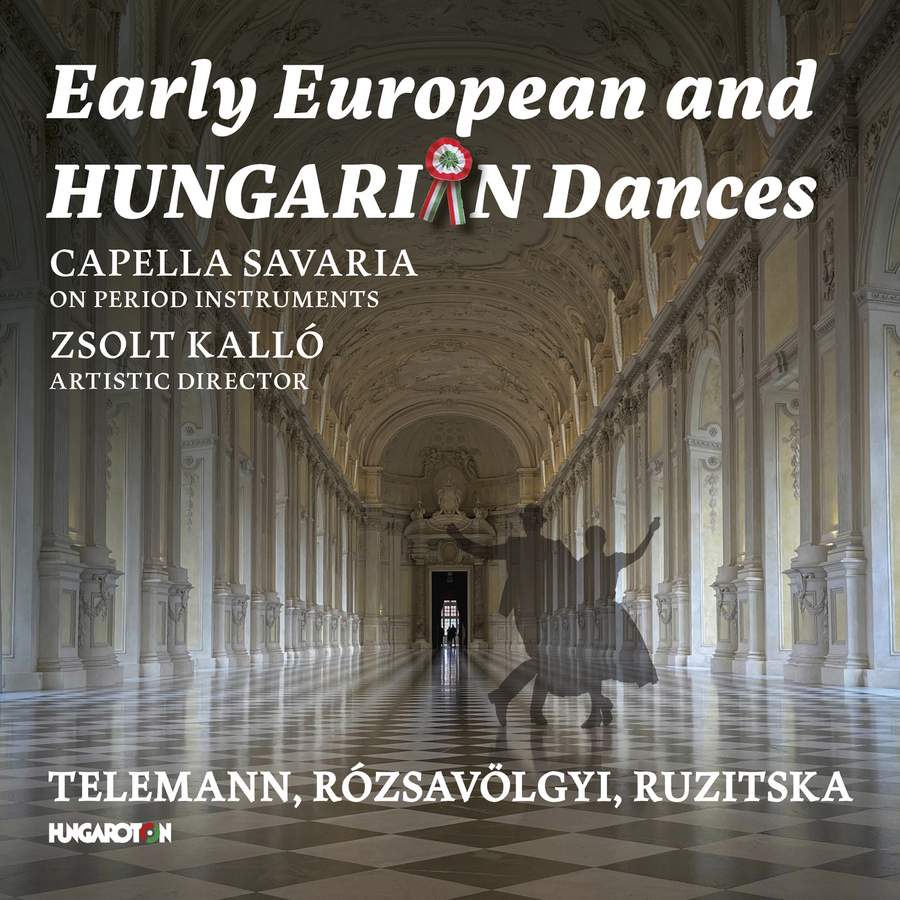
Early European and Hungarian Dances

Capella Savaria, Zsolt Kalló
54:06
Hungaroton HCD 32881

Founded in 1981, the Hungarian period instrument ensemble Capella Savaria are veterans in the field and have assembled an impressive discography over the forty years of their existence. Their playing combines precision and energy, and these are the predominant features of this recording of Telemann’s Ouverture-Suite in B flat major ‘Les Nations’, in which the composer characterises the nations of Europe in appropriate movements. The ever-imaginative Telemann warms to the task, and produces some strikingly original music which suggests that he had some passing acquaintance with folk music from Turkey, Switzerland and Russia. The transition into the second half of the programme, which opens with a couple of dance movements by Hungarian composers of the early 19th century – essentially concert music with a slight Hungarian flavour – is a bit of a jolt. Soon we are into more distinctive traditional Hungarian melodies and dances from a selection of 19th-century manuscripts. With their instinct for their native music, we could expect no better guide to this material than Capella Savaria, and they find the ideal blend of classical ensemble and gypsy folk band. I recalled the recordings of earlier Hungarian material made by the late great Rene Clemencic, and this CD has some of the flamboyance and smouldering energy with which he invested his accounts of his native music. In the final analysis, this had the feeling of two very different programmes sharing a CD. I have heard more imaginative accounts of the Telemann, and in a way I would have preferred a whole CD of the later fascinating Hungarian material. I hope this isn’t as annoying for the performers as the suggestion from a member of one of our audiences, after we had finished an intense programme of Renaissance music lightened with an encore of Ronald Binge’s Elizabethan Serenade, that we should perform a whole programme of ‘that kind of music’! Anyway, the music from Pest, Nagyszombat and the Poszony Manuscripts has considerable charm and character, and Capella Savaria clearly enjoy playing it.

D. James Ross

Categories
Recording

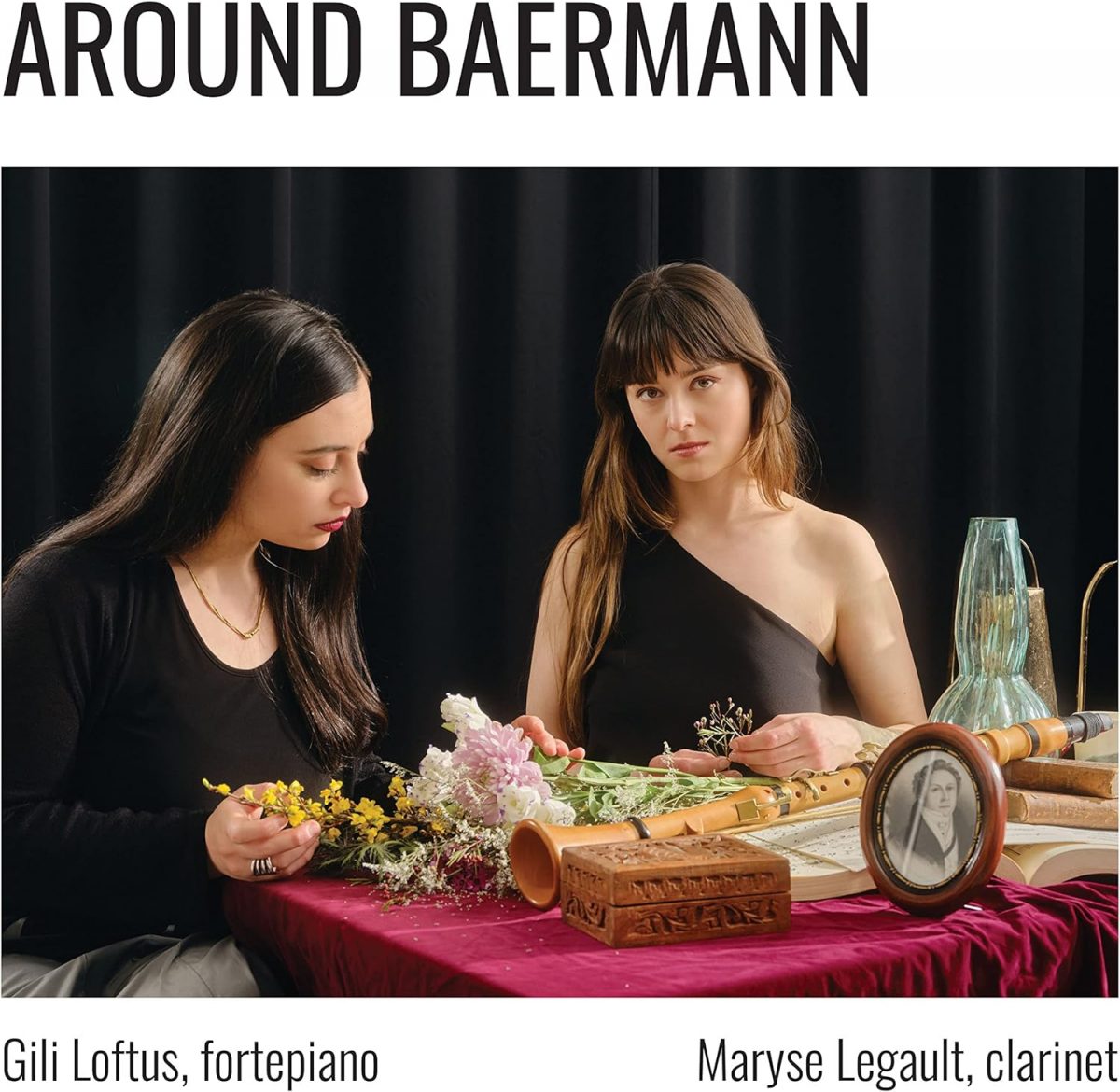
Around Baermann

Maryse Legault clarinet, Gili Loftus, fortepiano
71:11
Leaf Music LM265 (www.leaf-music.ca)

Born in Potsdam, Heinrich Baerman (1784-1847) was the great clarinet virtuoso of the early 19th century, a pupil of Joseph Beer, who in his turn had revolutionised clarinet playing late in the previous century. As such, Baerman, who for most of his career was first clarinet of the court orchestra in Munich, had contact with many of the leading composers of the day. These links owed much not only to his reputation as a virtuoso but also to his apparently congenial personality. The present CD includes two works by Baerman himself, an improvisatory Introduction and bright Polonaise (op 25), and a Nocturne in several sections, the most appealing of which is the lovely cantabile melody that follows the unexpectedly (given the title of the work) lively opening. Neither reveal Baerman to have been more than a modestly talented composer.

As might be expected, the works by Weber and Mendelssohn are a different matter. Weber’s connections with Baerman are more significant than those with any other major composer since, after their meeting in 1811, they not only toured together but Weber also composed several works for Baerman. They include his two clarinet concertos and a quintet.  The Variations on a theme from the Opera ‘Silvana’, op 33, are a particularly interesting example of collaboration between composer and performer, having according to an anecdote cited in Maryse Legault’s helpful notes been composed together over the course of one night. One wonders how much liquid refreshment might have been added to the mix! It’s an attractive set of a theme and seven variations based on an aria from Weber’s Silvana, first given in Frankfurt in 1810. The theme sounds like the seeds of something that might have re-emerged in the music for Agathe in Der Freischütz. Also premiered by Baerman and Weber was the virtuosic Grand Duo Concertant, op 48, first performed in 1815, while the CD programme is completed by Mendelssohn’s  three-movement Sonata in E flat of 1824, a work astonishingly not published until 1941 in New York. In addition there is a digital bonus in the shape of a three-movement Sonatina by Caroline Schleicher-Krähmer (1794-1873), the daughter of musicians who in addition to having been the first woman clarinettist to play in public also played the piano and violin professionally. The Sonatina – which includes a Waltz (ii) and Polacca (iii) is pleasing enough, if never aspiring to be more than salon music.

‘Mr Baerman does wonders on the clarinet, but he charms as much as he amazes’. These words quoted by Legault from a review published in the Gazette de France in 1818 might well with slight adjustment be applied to Maryse Legault herself. A native of Montreal, she studied with Erich Hoeprich, the father-figure of the revival of the historical clarinet. Not only does she own to an exceptional technique but equally a beautiful evenly produced tone across the range. She plays with real musicality and considerable nuance, as the slight change of dynamic in the repeated phrases in the statement of the theme the Weber variations immediately announces. The third variation of the same work demonstrates her ability to encompass a wide tessitura and virtuoso leaps, while her mezzo voce playing can be heard to ravishing effect at the end of the central movement of the composer’s Grand Duo. She seems, too, to have an exceptional rapport with her accompanist, Gili Loftus, herself evidently an outstanding fortepianist (she also plays the harpsichord and modern piano). She is especially impressive in the Mendelssohn, which needs some demanding bravura work from the keyboard player. Her instrument here is a copy of a Viennese fortepiano from 1820 and 1840 inspired by Conrad Graf and Ignaz Bösendorfer and built by Rodney J Regier of Freeport, Maine in 2000. The sound as recorded is full and rounded across the range.

An exceptional disc. well worthy of investigation by any one attracted to the historical clarinet – or indeed the exceptionally talented young performers. 

Brian Robins

Categories
Recording

Haydn – String Quartets op 33 / 1 – 3

Chiaroscuro Quartet
60:44
BIS 2588

Almost certainly the most quoted words on the six string quartets Haydn published in 1781 as opus 33 are those of the composer himself. Addressed to potential subscribers, he informed them that the quartets were written in ‘a new and special way, for I have not published any for ten years’, a reference to the set published as opus 20 (and incidentally recorded by the Chiaroscuro Quartet – see HERE for a review of the first three). Although there are indeed many things about op 33 that are innovative and special, Haydn’s publishing blurb should not, as it has often been, be taken too seriously since it was a standard advertising ploy by composers and publishers to attract attention to their latest offering.

For me, I think the most striking thing about opus 33 is the sense of quest and adventure, of a mature composer who has mastered a new and difficult medium and is prepared not only to exploit that mastery but have a bit of fun along the way. Take the order of movements, for example. In op 20 Haydn’s ‘slow’ movement is placed second  – its ‘proper’ place in established practice – in three of the quartets, while in op 33, it comes second in just two quartets. So Haydn is still experimenting, just as is also the case with deciding on either minuet or the rather faster scherzo. Then there is the humour, which with Haydn is never far away. The E-flat Quartet (No 2) was actually given the nickname ‘The Joke’ to mark the breath-taking piece of truly inspired wit that comes at the end of the work, when Haydn suddenly brings the hurtling thrust of the Presto finale to a halt to introduce four bars marked adagio. Pause. What will happen now? Well, a resumption of the Presto but now with pauses of a rest interpolated every few bars. Until the best part of the joke that is, the final six bars of the work, where the silence becomes a whole three bars long. Whether or not the oft-repeated quote attributed to Haydn is true – that he ended the work this way to catch out the ladies who always started talking before the end of a piece – is neither here nor there. It might perhaps be better to hope it isn’t true; in today’s humourless world, it would probably be enough to get Haydn cancelled. This final passage, which is in fact of course technically a coda, is incidentally beautifully handled by the Chiaroscuros.

Another moment to savour in these performances comes the third of the set, the C-major, which also carries a nickname, ‘The Bird’, for reasons that are obvious from the outset, where the frequent acciaccaturas or grace notes convey obvious suggestions of bird calls, as do other ornamental figures. In the development section of the opening Allegro moderato there is a marvellous passage in which Haydn introduces a crescendo with a clear bird call (that of a large bird?) followed by a decrescendo that leads to a few bars marked pp but without the suggestion of slowing the tempo. But here the Chiaroscuros do just that, creating for just a few bars an air of avian mystery and Hitchcockian menace. It’s a supremely effective moment and typical of the imaginative approach of the quartet, who are never afraid to apply judicious rubato or touches of portamento. This appropriate playfulness is one of the distinctive features of performances that constantly delight and impress by dint of superb playing that also shows off Haydn’s wonderful command of counterpoint.  This applies especially in the B-minor quartet (No 1), the most ‘learned’ of this group. Here one fully grasps the inspiration that op 33 gave to Mozart to put his own contrapuntal mastery to the test in the six quartets he dedicated to his friend. It’s worth noting that all essential repeats are taken by the Chiaroscuro, that’s to say all but those of the scherzo or minuet da capos.

I concluded my review of the Chiaroscuro Quartet’s opus 20 by expressing the hope they would record opus 33. It’s taken a while but here at least is the first instalment and well worth the wait it is.

Brian Robins

Categories
Recording

J. S. Bach: Harpsichord concertos

Steven Devine, Orchestra of the Age of Enlightenment
63:30
resonus RES10318

This collection of Bach’s harpsichord concertos is notable for including Steven Devine’s reconstruction of BWV 1059, of which the first eight bars alone survive in Bach’s hand indicating that the opening Sinfonia of Cantata 35, Geist und Seele wird verwirret, forms the earliest version of this cantata. What Steven Devine has done is to take other movements from BWV 35 to complete the concerto, using material from the first aria and the sinfonia that opens part ii. This parallels other harpsichord concertos like BWV 1053 which draws material from cantata movements in BWV 169 & 49. He also notes the intriguing autograph instruction written over the top line ‘Haut e Viol.1’, indicating a part for a single oboe – not the three-part oboe band as in the Cantata 35 original.

Devine’s solution to creating an oboe part is to look at those passages where the oboe band and the string band diverge (as in bars 24 ff) and use this to create melodic interplay between the violin and oboe. In the second movement (the Siciliano-like opening of the ABA first aria), he uses the oboe to play much of the low-lying voice part (did Katharina Sprecklesen try it on a d’amore?), though he adds the oboe to the tutti in the opening sinfonia as well, which slightly clouds the distinction he is trying to make between the melodic line of the given voice-part and the filigree diminutions of the harpsichord.

But I like both the feel and the sound of Devine’s versions – all very much in the spirit of Bach’s arrangements of his own pre-loved versions, and hope that this will become an accepted way of re-creating BWV 1059.

And the performance? Devine’s chosen harpsichord for these concertos is a two-manual by Colin Booth (2000) after a single manual by Johann Christof Fleischer (Hamburg, 1710). They recorded in the rather dry acoustic of St John’s, Smith Square and in consequence the sound, though crystal clear, lacks a little bloom. The players are the OAE’s top players, led by Margaret Faultless. Add Devine’s magical fingerwork and you have a recipe for success – except I don’t find it quite as captivating as the recent releases by Andrew Arthur and the Hanover Band.

David Stancliffe

Categories
Recording

Bach: Partitas & Sonatas

Bojan Čičić
146:01 (2 CDs in a jewel case)
Delphian DCD 34300

Bojan Čičić’s credentials are second to none: current leader of the Academy of Ancient Music, co-soloist with Rachel Podger in Brecon Baroque’s recording of the D minor double violin concerto, founder and director of the Illyrian Consort and contributor to the Netherlands All-of-Bach of the sonata in B minor for violin and harpsichord with Steven Devine. His playing has all the brio required for Bach’s dance music, and that combined with marvellous articulation and a sensitivity to different key temperaments make his playing feel poised, elegant and true.

In addition, Čičić is a natural teacher. His Youtube presentation on the evolution of the Baroque violin bow, ‘Bowing with Bojan’ (to be found among the AAM’s videos), is gripping and illuminating, as well as his playing Vivaldi on equally tensioned gut strings with like-minded string players like Kinga Ujszászi.

All this is a promising background to this new release. But what of the CD itself? First, it was recorded in 2021 in Crichton Collegiate Church in Midlothian, within reach of Delphian’s base in Edinburgh, and the acoustics are perfect for this music – Sei solo à violin senza basso accompagnato, as Bach called them to show that that they were not so much ‘unaccompanied’ as containing the bass line within the violin part itself, as Mahan Esfahani points out in his liner notes. Too resonant an acoustic and we lose the detail of the divisions; too dry and the ear does not readily catch the harmonic substructure.

Second, this player in this acoustic with this instrument (a violin by G. Tononi, Bologna 1701) and the right bow presents this music to perfection. It is clean and clear, but never arid or detached; it is detailed, but the detail never detracts from the structure; and, as Bach surely intended, the whole polyphonic structure of these sequences of dance movements is laid open. We lack nothing to absorb it fully.

The Partitas are on the first CD and the Sonatas on the second. Within these suites of dances, reviewers will make for the most testing movements, the Ciaccona in BWV 1004 and the fugues in 1001, 1003 and 1005 to assess whether as well as making the music dance and sing, the player can also deliver Bach’s great polyphonic structures, for which the player needs not just a superlative technique but also a secure grasp of Bach’s architecture and how it is structured.

Čičić is equal to all these nuances and presents the Sei solo with conviction and elegance. Listen to CD 1.7 & 8, Tempo di Borea & Double IV, or CD 2.12, Allegro assai to hear how he uses the acoustic to give the full harmonic substructure its real acoustic presence. In the Ciaccona (CD 1.13), he treats us to his clear differentiation between the fugal structure and the throwaway diminutions and this prepares us well for the hushed moment when we embark on the more lyrical section in the major.

As I listened to this coherent account, I wondered whether Čičić has got to grips with the implicit theology as expounded by Benjamin Shute in Sei Solo, his study of the theology of Bach’s solo violin works. He may not have: it’s heavy going; but the way he treats the relationship between the movements in terms of tempo and Affekt suggests that he is well aware of the depth and complexity of these works.

I enjoyed them greatly. I cannot imagine the Andante from the Sonata in A minor (CD 2.7) being presented more lovingly or the echo effects in the following Allegro being given a better light and shade. This is music-making to treasure.

David Stancliffe

Categories
Recording

Bach: Harpsichord Concertos

The Hanover Band, Andrew Arthur
68:34
Signum Records SIGCD764

When the first volume of Andrew Arthur’s harpsichord concertos with The Hanover Band (which I reviewed for the EMR in July 2022) was recorded, they also recorded the concertos that make up volume II. So the admirable acoustic of St Nicholas, Arundel and Trinity Hall’s excellent harpsichord by Andrew Garlick, built in 2009 (after a Jean-Claude Goujon of 1748), are common to both. A major key to the success of these recordings is the singing quality of this harpsichord in this acoustic under the fluid coaxing of Andrew Arthur’s touch.

This second volume begins with BWV 1050, which we know as the fifth Brandenburg Concerto, with its ground-breaking harpsichord ‘cadenza’, and brings the wonderful Rachel Brown into the ensemble to join Andrew Arthur and the string players of the Hanover Band, led by the spirited, agile and mellifluous playing of Theresa Caudle – this time properly acknowledged in her crucial role as the first violin. What makes these recordings so special is the natural balance between the instruments – harpsichord, woodwind and strings alike. This is particularly evident in the final concerto on the disc – BWV 1057, the version in F of the fourth Brandenburg, with two recorders (Rachel Brown and Rachel Becket) – where in this 1738 version the florid violin part of Brandenburg 4 is recast for the harpsichord and the amazing final fugal movement offers us every conceivable instrumental combination. There is so much to be learned, as always, by comparing closely Bach’s later versions with his earlier ones.

That kind of comparison is also offered by the other concertos. The Concerto in E (BWV 1053) draws each of its movements from one of Bach’s cantatas. The opening allegro is a version of the Sinfonia from Cantata 169 (1726) Gott soll allein, while 169.v, the aria Stirb in mir, Welt for alto, strings and obbligato organ is the model for the middle movement, a lyrical Siciliano. The last movement is adapted from the opening Sinfonia of BWV 49, another cantata from 1726. Were these instrumental sinfonias that Bach used instead of an opening chorus in a number of cantatas in the autumn of 1726 already in existence as concerto movements for a solo violin, like others that became harpsichord concertos in due course?

The intimate Concerto in F sharp minor is perhaps the biggest treat of all. The tempo in the first movement is moderate, and the alternation of pizzicato and arco in the string parts underlines the quest to discover where we are headed with the angular opening theme. The answer is to the second movement, where the magical Sinfonia for oboe and strings that opens Cantata 156, Ich steh mit einem Fuß im Grabe appears in the unlikely key of A flat. Here again, the acoustics give the pizzicato accompaniment a surprisingly resonant bloom, capped by their final arco bar. Like the first movement, there are repeated echo effects within which the dialogue between the first violin and the harpsichord establishes their natural duetting relationship.

In this second volume, I have become more aware of the crucial part that the acoustics of St Nicholas, Arundel play in shaping the sound in these recordings. This is perhaps most evident in the slow movement of BWV 1050, where as well as the perfectly articulated overlapping threads of all three players, the expressive lift after the first quaver beats in bars 27 and 37 in the harpsichord gives this movement such finesse; and having a two-manual instrument that can revert to basso continuo mode helps articulate the structure as well. The acoustics help establish the tonality so splendidly in the opening of the last movement too. It begins with the violin playing a clear, rounded rhythmic entry that is mirrored by the bloom of the traverso, so that when the harpsichord (in two parts) joins them we are well prepared for the tutti, and ready to appreciate the subtlety of the bass line in those sections where the violone is silenced and the cello plays alone.

Enchanting too is the way every player contributes. Listen to the wonderful viola at bar 147 in this last movement – and in bars 181 ff, and the cello in 192 ff: this is real playing with each other. How lucky Andrew Arthur is to have such fine companions in making these wonderful recordings, where the harpsichord is never stridently soloistic but always the first among equals.

I shall enjoy returning to this recording for a long time. It is such responsive, unshowy but fluid, utterly musical playing. This is how to hear Bach, and you should get it at once.

David Stancliffe

Categories
Recording

Giovanni Bononcini: Cantate e Sonate

Aurata Fonte (Miho Kamiya soprano, Perikli Pite cello, Valeria Montanari harpsichord)
78:24
Tactus TC 670202

This CD presents six cantatas for soprano and basso continuo which have survived in manuscript in Modena, the city of birth of the composer Giovanni Bononcini. Bononcini’s accomplishments as a composer, particularly of operas, took him to Vienna and then London before returning to Vienna to retire on a pension. The sense of drama, which made his operatic efforts so widely appreciated, is also in evidence in his cantatas, and in these world premiere recordings soprano Miho Kamiya invests Bononcini’s cantatas with an engaging level of animation. Striking is Bononcini’s sense of melodic direction, a dynamic feature shared with the instrumental music which Aurata Fonte contribute to the programme – two harpsichord Divertimenti and a cello Sonata persuasively played by harpsichordist Valeria Montanari and cellist Perikli Pite. Both also make a sympathetically responsive contribution to the cantatas. Bononcini is a composer whose influence on the musical scenes in London and Vienna is probably underestimated, and the admiration of his contemporaries in Italy, as well as England and Austria, probably suggests that the bulk of his music which remains neglected, particularly perhaps the operas, deserves performance and reassessment. At any rate, these accomplished premiere recordings suggest that much fine Bononcini still awaits rediscovery.  

D. James Ross