Samuel Boden, Thomas Walker, Arcangelo, Jonathan Cohen
76:36
hyperion CDA68149
+Begin the Song!, Dread Sir the Prince of Light, The Nymphs of the wells, Chaconne a4 in G, Ground in g, Sonata in A
[dropcap]A[/dropcap]fter listening to these exquisitely turned performances I feel that we need more CDs and concerts dedicated to the music of John Blow (though Venus and Adonis does quite well). By and large, it is cathedral/collegiate choirs who have kept his flame burning with the motet Salvator mundi and some of the Anglican canticle settings. Now, Arcangelo, with assistance from musicologist Bruce Wood, round out that rather restricted view by means of a programme of secular music centred on the setting of Dryden’s Ode on the death of Mr Henry Purcell. Inhabitants of EMR-land will surely know that this is a quite superb work for two singers, two recorders and continuo. The low pitch adopted here facilitates performance by high tenors and Thomas Walker and Samuel Boden do not disappoint, relishing the many choice verbal and musical moments poet and composer offer them. Their fellow singers, in the other vocal vocal works, also bring admirable qualities to their performances, not least the ability to deliver lines such as ‘But here comes a Druid and we must retire’ without corpsing! The string ensemble delivers crisp performances of three chamber works: Purcell wasn’t the only one who could knock off a cracking good ground. The only slight disappointment – of scale, rather than substance – is the final New Year ode. The booklet (comprehensive, though in English only) tells us that such works were performed by the full Chapel Royal choir and the Twenty-Four Violins. However, here the chamber forces used elsewhere prevail. If you know anyone who thinks that English music between the Restoration and the arrival of Handel means Purcell and little else, treat them to this disc. And don’t forget everyone else you know. And yourself.
This site can only survive if users click through the links and buy the products reviewed.
We receive no advertising income or any other sort of financial support.
As an Amazon Associate I earn from qualifying purchases.
Amazon and the Amazon logo are trademarks of Amazon.com, Inc. or its affiliates.
Sarah Wegener, David Allsopp, Thomas Hobbs, Peter Harvey SATB, Kammerchor Stuttgart, Barockorchester Stuttgart, Frieder Bernius
Carus 83.282
49:03
+ Missa in G minor, BWV235
[dropcap]I[/dropcap] would like to hear Bach’s short masses recorded/performed alongside the cantata movements on which they are based (I’ve done this myself with the F major). There would certainly have been room for such an approach on this rather brief CD. In their own terms, these performances are splendid – the opening ritornello is just gorgeous (JSB is a factor in this, of course) and the star ratings reflect this.
The soloists (three of them English) are equally accomplished in some demanding music – Bach’s re-texting of the cantata arias is not always seamless. I must say that I miss the inauthentic trumpet parts from BWV 80! However, without them, the ear re-focuses from sheer sonic splendour to Bach’s astonishing contrapuntal skill which in these hands is still very much a rewarding musical experience. The booklet contains all that it should, though the English version of the main essay omits some of the interesting contextual information included in the German original.
But there will be those who would have been much happier to hear fewer performers than are on display here – a choir of 21 (7-5-5-4) and orchestra with strings 55321 – expert and impressively unanimous though these are. Conductor Frieder Bernius has been admired for several decades as ‘a pioneer of historical performance practice’. But is ‘historical performance practice’ really what he is offering? It sounds to me more like a modern performance practice using historical instruments.
This site can only survive if users click through the links and buy the products reviewed.
We receive no advertising income or any other sort of financial support.
As an Amazon Associate I earn from qualifying purchases.
Amazon and the Amazon logo are trademarks of Amazon.com, Inc. or its affiliates.
Ensemble Les Surprises, dir. Louis-Noël Bestion de Camboulais, Yves Rechsteiner organ
54:54
Ambronay AMY050
Rameau (arr.), Rebel, Francoeur
[dropcap]N[/dropcap]ow then, concentrate! From 1755 to 1772 the resident organist of the Concert Spirituel was Claude-Bénigne Balbastre. In 1768 he would appear to have played a ‘Suite de Symphonies’ for organ and orchestra by Rameau. However, performing material for such a work no longer exists and this programme is an attempt to re-create what it might have sounded like. So we have three modern organ concertos in mid-18th-century style ‘on themes by Rameau’ (famous themes, too), which are separated by orchestral dance suites drawn from the dramatic works of Rebel and Francoeur. The whole premise is not unreasonable. Rameau’s music was core repertoire at the Concert Spirituel and the programmes at this time often featured arrangements of various kinds. And it is splendid to hear these enthusiastic and clean performances on a ‘real’ organ – a three manual Clicquot of 1782. The registrations used are those recommended by Corrette for concertos and these – reed and tierce heavy in the allegros – do not always blend well with the strings. I wonder if, against an organ with serious ‘oomph’, the ensemble (33221) simply needed to be bigger? The booklet (Fr/Eng) includes three concise but lively essays. This is quite a short CD by most current standards, but it made me smile.
This site can only survive if users click through the links and buy the products reviewed.
We receive no advertising income or any other sort of financial support.
As an Amazon Associate I earn from qualifying purchases.
Amazon and the Amazon logo are trademarks of Amazon.com, Inc. or its affiliates.
Organ Music & Vocal Works By Buxtehude, Hassler, Praetorius & Scheidemann
Kei Koito, Il canto di Orfeo, Gianluca Capuano
73:14
deutsche harmonia mundi 8 89854 37672 7
[dropcap]T[/dropcap]he star here is the 1624 (restored 1994) Scherer organ in the Stephanskirche, Tangermünde. The repertoire is that of ‘precursors of Bach’ who are, of course, all very competent in their own right. The principal pillars of the programme are ‘free’ organ works by Tunder, Scheidemann and Buxtehude and between them are placed chorale-based music – sometimes extracts from longish sets of variations. We also hear vocal settings of these same melodies contemporary with the organ music, a valuable programming device which others would do well to copy. The playing is sometimes a little laboured but never impossibly so and we certainly get to hear this marvellous instrument in all its glory. The essay (Ger/Fre/Eng) focusses informatively on the music. Further information – including the organ registrations, sung texts and their translations, and artist biographies are available online.
This site can only survive if users click through the links and buy the products reviewed.
We receive no advertising income or any other sort of financial support.
As an Amazon Associate I earn from qualifying purchases.
Amazon and the Amazon logo are trademarks of Amazon.com, Inc. or its affiliates.
Etienne Baillot, Anne-Marie Blondel, Jean-Luc Ho
68:23
Son an ero 10
Music by Aguilera de Heredia, Baptista, Bruna, Cabanilles, de Cabezón, Carrera, Chirol, Correa de Arauxo, Mudarra, de Seixas & anon
[dropcap]T[/dropcap]his is the stuff of organists’ and organ builders’ dreams. A historic organ (1768, Castillian in style) is discovered more or less complete, if dismantled and imperfectly stored. Its owners cannot afford restoration and subsequent maintenance but the instrument finds both salvation and a new life in a neighbouring country. This disc displays its colours to good effect in a very well chosen selection of 16th-18th-century Iberian music (and four very short contemporary pieces which are beyond EMR’s remit). All three players are sympathetic to the instrument’s qualities, use appropriate articulation and ornamentation and enjoy their opportunities, not least those slightly eye-watering moments afforded by the mean-tone temperament. I found this rather ‘niche’ issue very enjoyable and will seek out several of the pieces for my own repertoire. The booklet (Fr/Eng – essay only also in Spanish and Basque) tells us what we need to know and details of the registrations used can be found online.
This site can only survive if users click through the links and buy the products reviewed.
We receive no advertising income or any other sort of financial support.
As an Amazon Associate I earn from qualifying purchases.
Amazon and the Amazon logo are trademarks of Amazon.com, Inc. or its affiliates.
[dropcap]O[/dropcap]f many surprising features of the summer of 2018, few have excelled the strange experience of travelling from a parched, sun-scorched Britain basking in (or suffering from) an extreme heat-wave to the lush green of the equally sun-blessed woods and rolling hills of the Périgord vert, the most northern region of the Dordogne. It is there that the Itinéraire Baroque festival founded 17 summers ago by Ton Koopman takes place in the villages and hamlets of the area, invariably utilising the many Romanesque churches that adorn the Périgord vert.
The programme for my third visit to Itinéraire Baroque (my account of the 2016 festival can also be found on this site) had Spanish culture as an overarching theme, although no Spanish music featured in the opening concert on 26 July at the Romanesque (although much altered) abbey church of St Cybard in Cercles. Given by members of the Amsterdam Baroque Orchestra under Koopman, it did, however, adhere to what was virtually a subtext of the festival – music for exotic instruments or unusual instrumental combinations. Thus this concert included concertos by Telemann for oboe d’amore and two chalumeaux, by Gregor Werner (Haydn’s predecessor at Esterhazy) for two organs and two chalumeaux and a concerto for trombone by Albrechtsberger, the Classical style of which stood in stark contrast to the surrounding Baroque repertoire. In addition, the pleasingly light-voiced tenor Tilman Lichdi sang a folk-like strophic song of Werner and an undistinguished extract from one of his oratorios. Neither tested him to anything like the same extent as Bach’s Cantata No.55 ‘Ich armer Mensch’, where technical fallibilities were at times cruelly exposed. Nonetheless, the concert made for an enjoyable start to the festival, especially in the well-played Telemann concertos and Alessandro Marcello’s well-known Oboe Concerto in D minor.
St Cybard is very much ‘home base’ of the Festival, its delightful linden- shaded square filled during its course by ‘Café baroque’, where food, drink and stalls selling local bio produce are located. Such facilities proved much in demand at the lunchtime concert the following day, played by the chamber ensemble L’Astrée, who with soprano Julia Wischiewski gave a programme of Vivaldi trio sonatas and chamber cantatas. The instrumental part of the concert provided for me the most satisfying music making of the festival, with vital, well-articulated playing by violinist Paola Nervi and cellist Rebecca Ferri in quicker movements and truly eloquent playing in slower movements such as the exquisite Sarabanda of the Sonata in D minor, RV27, where the interplay between the two was totally engaging. I much liked, too, the tasteful ornamentation added to repeats. Despite some expressive singing and confident execution of passaggi, the cantatas were less satisfying. Wischiewski’s soprano was too often unevenly produced, her diction less than clear, while her ornamentation was often waywardly unstylish.
Following an afternoon devoted to a lecture on Spanish Baroque music and a concert devoted to music and dances in period costume from Spain and southern France – neither of which I attended – the evening concert found Koopman and his wife (and former pupil) Tini Mathot giving a recital for two organs and two harpsichords entitled ‘The Master and his Pupil’. Thus we heard music by, among others, J. S. Bach (the Prelude and Fugue in C, BWV 547, curiously played on harpsichords rather than organ) and W. F. Bach (a solo Concerto in F), Armand-Lous Couperin, who was taught by his father Nicholas, one of the great Couperin dynasty, and Antonio Soler, the most famous pupil of Alessandro Scarlatti. It was Soler who provided the meat of the programme, in quantity, if not substance, too much of his music being inconsequential, at times to a degree of banality. Both here and in organ works by Cabanilles and Perez de Albeniz the portative organs used by Mathot and Koopman were a monochrome substitute for the colourfully exotic sound of Spanish organs of the period.
The Saturday of the festival gives it its name and (to the best of my knowledge) unique feature, the day consisting of staggered visits to six venues, in most cases a small rural church of Romanesque origin. At each of these a short concert – preceded by a brief introduction to the building – is given by performers who remain in the same location for the day. It however started in the town church of Mareuil, where before being divided for the tour a large audience assembled to hear a selection of solo recorder music from Jacob van Eyck’s ‘Der fluyten lustof’ (well played by Reine-Marie Verhagen), music with which I confidently expect to be punished for all eternity should I end up in one of the circles of Dante’s Hell. Our first stop was the little church at Graulges, Romanesque at heart, but much restored. Judging from reaction I heard, the concert of 17th-century Italian and Dutch sonatas played by the gifted Ensemble Clematis was probably the most popular of the day. To me, however, it was a further depressing example of how young players still ignore the difference between all-purpose period instrument string playing and the special demands of 17th-century music. This applies especially to an ensemble like Clematis that specializes in this repertoire, when it can only be viewed as the lazy option that is to be deplored.
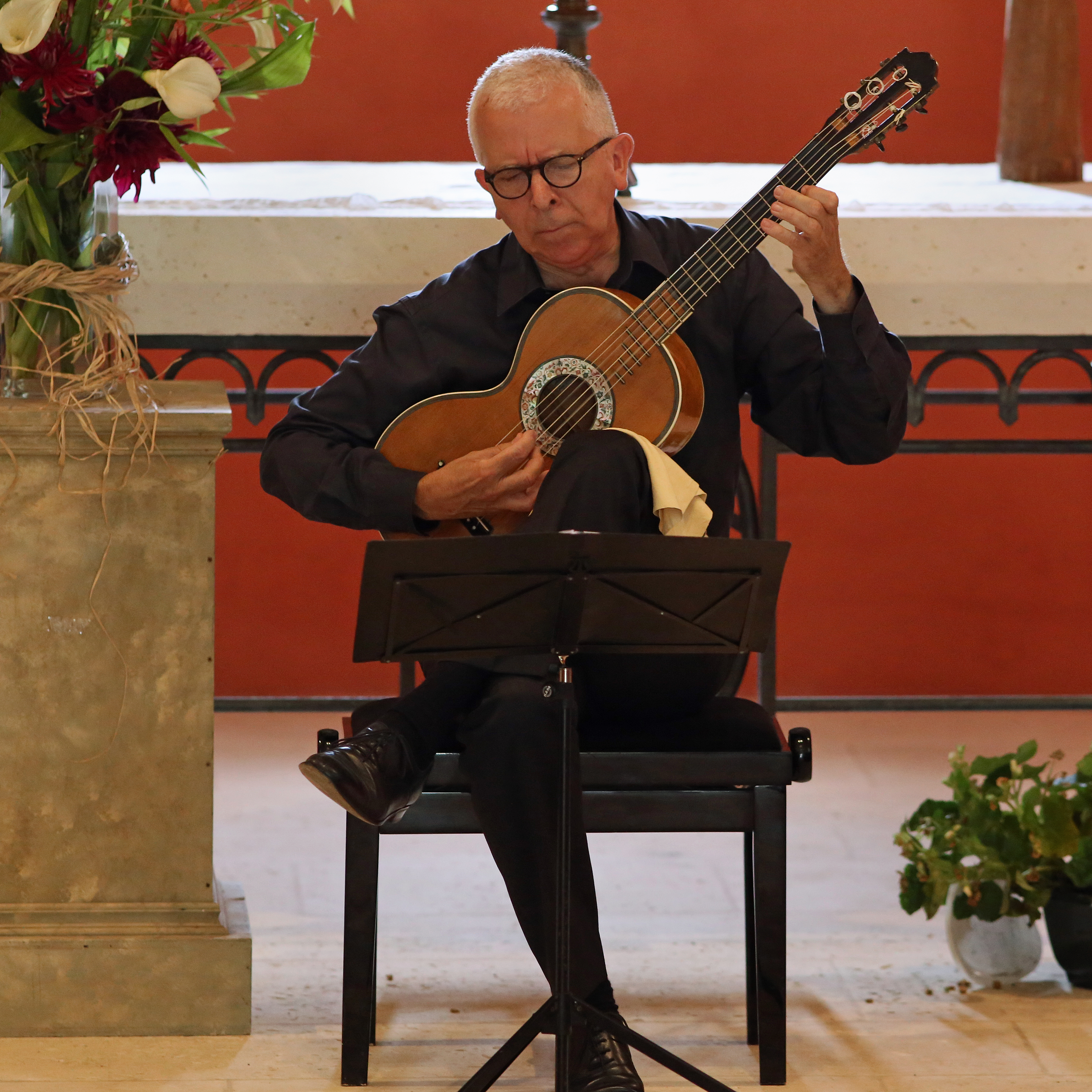
If this was a disappointment, the following event in the beautiful little chapel of St John the Baptist in the village of Puyrénier came as a pleasant surprise. Here Fred Jacobs, one of the doyens of the lute world, played a beguiling recital of works by Sor (mostly) and Giuliani on a Romantic guitar built in 1820. This is not repertoire I have explored in any depth, but here was struck by the sheer inventiveness of Sor in particular and the beauty of tone Jacobs produced throughout, especially in more contemplative pieces like the Cantabile, op 42/1.
Following a lunch break, the first of the afternoon concerts took as back to the outskirts of Mareuil and the church Saint Sulpice, where the Swiss ensemble Albori Musical played works by Vivaldi and Telemann and a sonata by Pierre Prowo formerly attributed to Telemann. Moderately accomplished playing failed to disguise the fact that the rhythmically four-square and often somewhat inexpressive performances rarely caught fire.
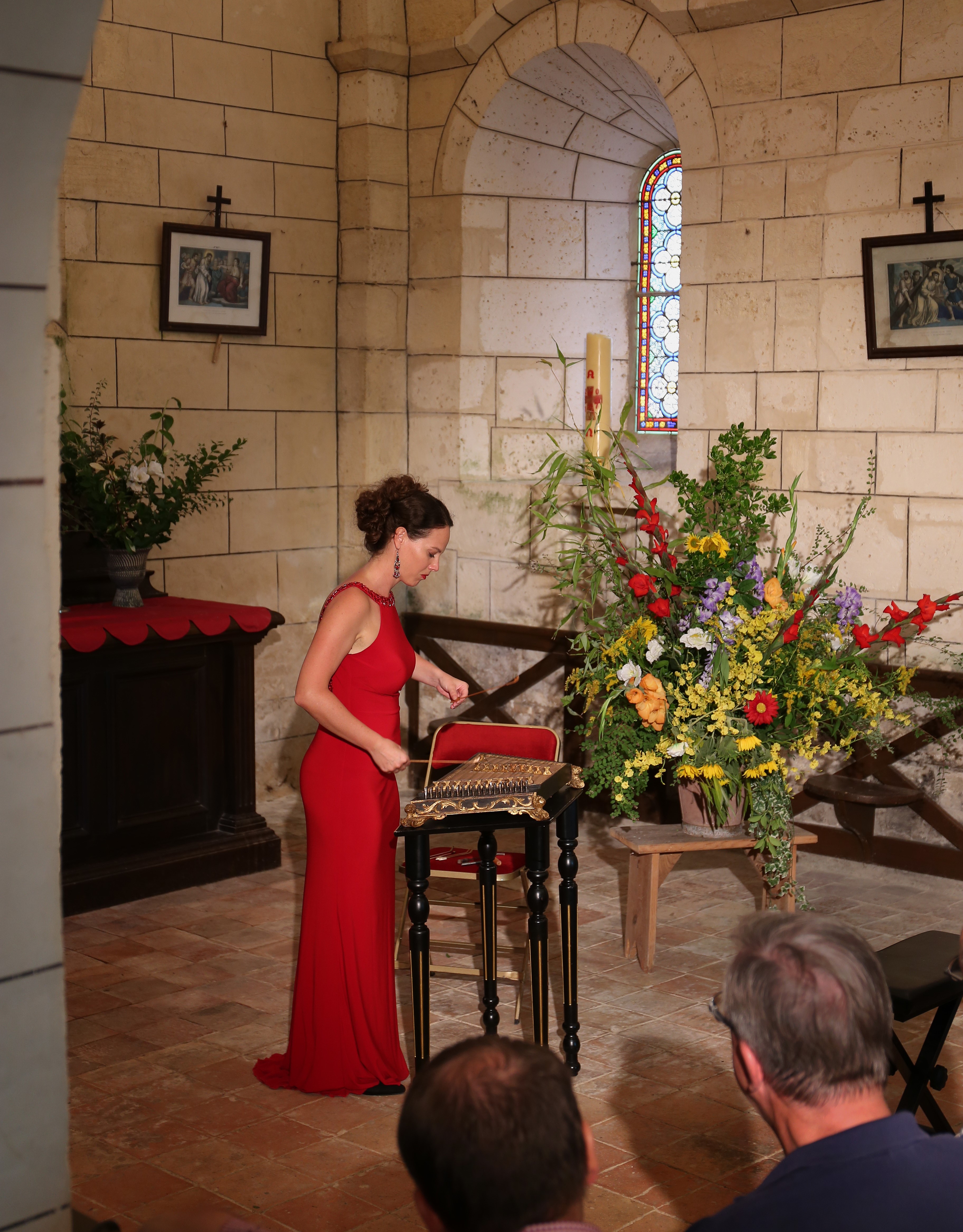
There was nothing inexpressive about the penultimate visit to the charming simplicity of the little church of Connezac, once the chapel of the eponymous chateau. Within its intimate surroundings the Austrian dulcimer player Franziska Fleischanderl illustrated with captivating charm its capabilities both in her playing and introductions. Particularly interesting was the great difference in sonority dependent on whether the instrument is plucked or struck with hammers, while the range of subtly modulated sound that can be cajoled from it in the hands of an obvious expert was strongly projected.
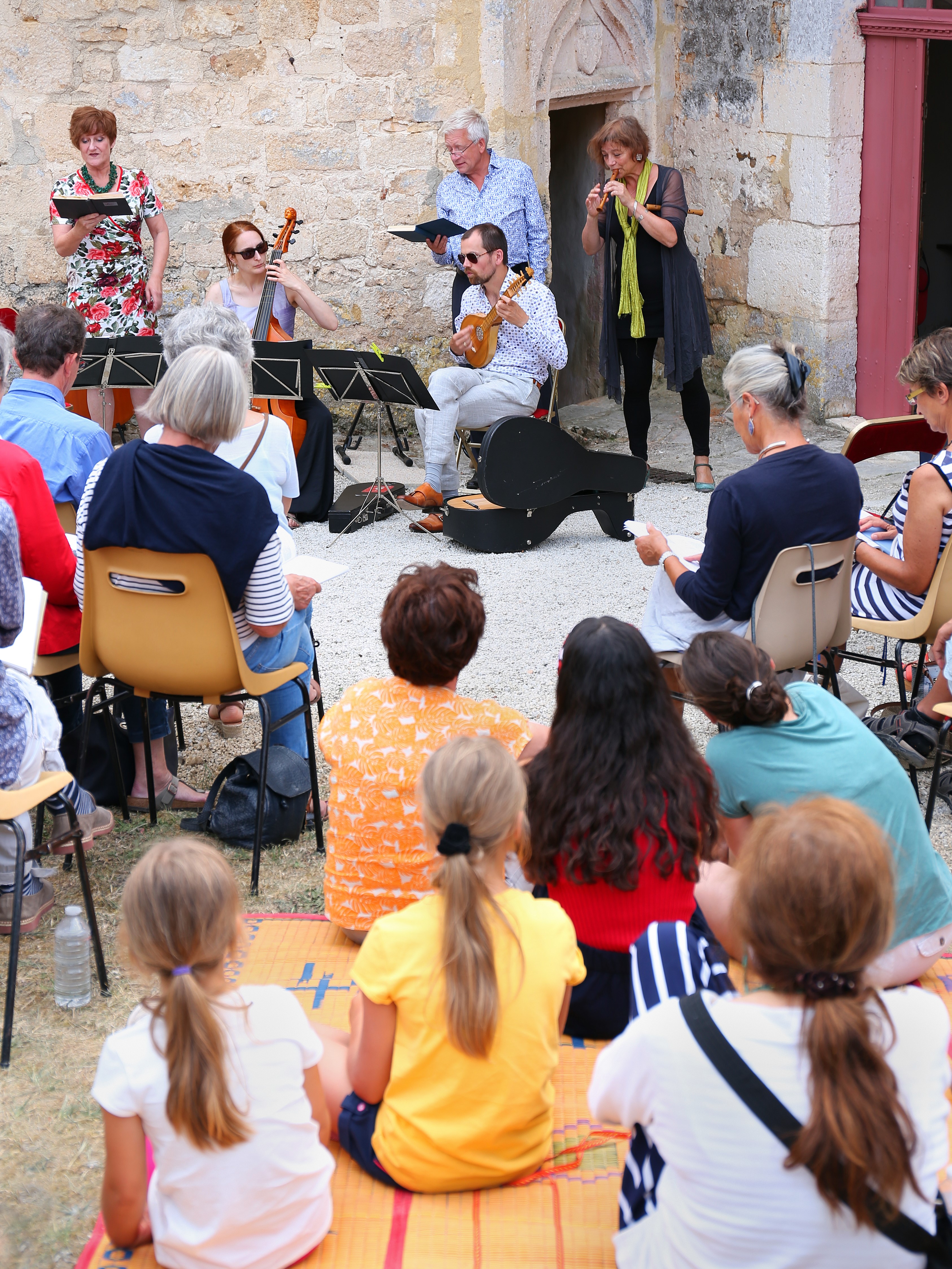
The final concert took place en plein air alongside the walls of the largely 15th-century Chateau D’Aucors. Given by Dutch group Camerata Trajectina, it introduced a programme based around the 16th-century struggle of the Netherlands to free itself from Spanish domination. Much more interesting historically than musically – it included a number of what we would today term protest songs – it was entertainingly projected by the experienced Heike Meppelink (soprano) and Nico van der Meel (tenor).
An early flight the following morning determined that I missed the final concert, a typical Koopman mix of Bach Orchestral Suites and Brandenburgs. But once again Itinéraire Baroque, with its loyal and enthusiastic audience playing a full part, had proved a captivating experience that can be enthusiastically recommended to anyone seeking an unusual musical holiday in one of the most beguiling parts of the Dordogne. https://www.itinerairebaroque.com/
Recent Researches in the Music of the Baroque Era, 197
Edited by Michael Talbot
xxv, 2 + 71pp. $145
ISBN 978-0-89579-867-1
[dropcap]P[/dropcap]erhaps best known for his recorder sonatas and the recently recorded concerti grossi he published in Edinburgh, Francesco Barsanti’s secular vocal music fills a fairly modest volume. Consisting of five Italian cantatas and six French airs for solo voice and continuo, a four-voice Italian madrigal and two catches in English for four equal voices, it provides another viewpoint from which to consider one of Handel’s contemporaries. With typical thoroughness, Talbot gives as lively a portrait of the composer as is possible, and – as well as comprehensive critical notes – idiomatic translations of the non-English texts are provided. All in all, this is an excellent volume which will be partnered in due course by Jasmin M. Cameron’s versions of the composer’s surviving sacred music. The recitatives are dramatic and the arias tuneful; the three longer French airs might overstay their welcome unless the singer has some impressive ornaments up his or her sleeve; the madrigal might make a welcome and novel addition to an amateur vocal group’s repertoire? Either way, Barsanti’s music deserves to be more widely known, and one hopes that its availability (even if the cost might mean only libraries can afford to buy it!) will encourage performers to explore it.
A garden of pleasure
Plamena Nikitassova violin, Julian Behr theorbo, Matthias Müller violone, Jörg-Andreas Bötticher harpsichord & organ
67:39
Claves Records 50-1727
[dropcap]B[/dropcap]ulgarian violinist Plamena Nikitassova’s name has appeared on concert programmes and CD listings that I’ve seen but this is the first time I have heard her play solo. Hopefully it will not be the last! In a recital ranging from music by Biber, Muffat and Walther to unknowns like Lizkau and Döbel, she dispenses virtuosity with ease (all the more astonishing, given the fact that she plays off the shoulder), making the original Stainer she plays sing sweetly over its entire range – even when it’s pretending to be two violins! She is well supported by her colleagues (Bötticher also gives a fine performance of a toccata by Kerll, keeping in with the slightly crazy character of the stylus phantasticus). The use of a chromatic harpsichord with extra keys means that the enharmonic shifts in the Muffat violin sonata are not quite that… over each of the joins there is a “realignment” of the underlying tonality; it is an interesting insight into how 17th-century tuning systems might have worked, but what did musicians without a chromatic harpsichord do? Just play “out of tune”?
Nikitissova’s interpretation of the Passacaglia that brings Biber’s “Mystery Sonatas” to a close is similarly personal; some bars felt so expansive that an extra beat have been added to the music, while some seemed a little short; at one point, she even adds a cadenza. None of this, of course, is beyond what Biber and his contemporaries might have done with the music, and my reaction is perhaps more reflective of the fact that we (dare I single out Anglo-Saxons here?) like our baroque music to be “just so”, and these performances are forcing me out of my comfort zone. And, if they are, is that such a bad thing?
This site can only survive if users click through the links and buy the products reviewed.
We receive no advertising income or any other sort of financial support.
As an Amazon Associate I earn from qualifying purchases.
Amazon and the Amazon logo are trademarks of Amazon.com, Inc. or its affiliates.
Christopher Purves, Arcangelo, Jonathan Cohen
77:11
hyperion CDA68152
[dropcap]S[/dropcap]uch was the success of the first volume of Handel arias made by this line-up that they have released a second, exploring both opera and oratorio and portraying virtually every human emotion. Purves’s wide-ranging baritone voice has a real presence to it, and – as Handel requires – he pulls off some seemingly effortless wide leaps, and navigates the coloratura without a hint of the bluster that typically accompanies this repertoire. Arcangelo go from strength to strength – their performance of op. 3 no. 4 bustles with energy and the solos (including the bassoon in an aria by Porpora that featured in Handel’s London pasticcio, Catone) are all neatly done. The star of the show, though, is that voice; be it angry or sad, happy or regretful, there is a range of colours and an evenness of quality that must be the envy of many singers.
This site can only survive if users click through the links and buy the products reviewed.
We receive no advertising income or any other sort of financial support.
As an Amazon Associate I earn from qualifying purchases.
Amazon and the Amazon logo are trademarks of Amazon.com, Inc. or its affiliates.
[dropcap]F[/dropcap]ans of The Swingle Singers will not be the only people to enjoy this take on Bach’s music; where they incorporated jazzy rhythmic percussion and restricted to their range of syllables to the minimum required to delineate the polyphonic lines, SLIXS (a group of six German singers) provide all of the sounds (including some very deep notes and some “beatboxing”) and explore different vocalisations to suit the mood and the tempo of the piece being performed. Highly dubious, as you can imagine, I was very pleasantly surprised to discover that the first track (their interpretation of the opening movement of the A minor violin concerto) revealed new possibilities for a work I’d actually played at school and thought I knew! The bulk of the recital is made up of the theme and seven of the Goldbergs, alongside a movement from the Magnificat, the slow movement of the aforementioned violin concerto, the Gavotte from the E major solo violin partita, the slow movement of the D minor concerto for two violins, and two fugues. The group make no claim to be classically trained and some of the sounds are not beautiful, but there is a real integrity to these renditions and also a real joy in exploring new facets to some truly timeless music – I have no doubt the disc will not be to everyone’s taste, but equally I doubt any musician genuinely interested in how to perform music will walk away without learning something new. As far from HIP as it is possible to be, but with a lot to teach us.
This site can only survive if users click through the links and buy the products reviewed.
We receive no advertising income or any other sort of financial support.
As an Amazon Associate I earn from qualifying purchases.
Amazon and the Amazon logo are trademarks of Amazon.com, Inc. or its affiliates.