Categories
Recording

Couperin: Concerts

Emanuel Abbühl oboe/oboe d’amore/cor anglais, David Tomàs bassoon, Carla Sanfelix baroque cello, Miklós Spányi harpsichord Benoït Fallai theorbo
77:22
Genuin GEN 24873

Although Pascal Duc’s booklet note tells us almost everything we could ever need to know about the five suites on this CD, he never once refers to the performances on it – for some people, there may be no need to justify an ensemble that juxtaposes two modern instruments and three baroque ones. Indeed, why not? Surely it is just a different sound world… Yet, for me, there is something missing – technical improvements over time have ironed out all the quirks of early woodwind instruments in order to ensure equality of sound quality over the entire range of the instrument. While I would never criticise the quality of music making here – these are outstanding musicians at the very top of their game – even two harmonic continuo instruments are insufficient to balance the oboe and bassoon. Others will undoubtedly disagree, but I am afraid this is not a recording I shall often return to when I feel the need for Couperin (which does sometimes happen!)

Brian Clark

Categories
Recording

David Pohle: Complete Sonatas & Ballet Music

Clematis
152:16 (2CDs in a card triptych)
Ricercar RIC460

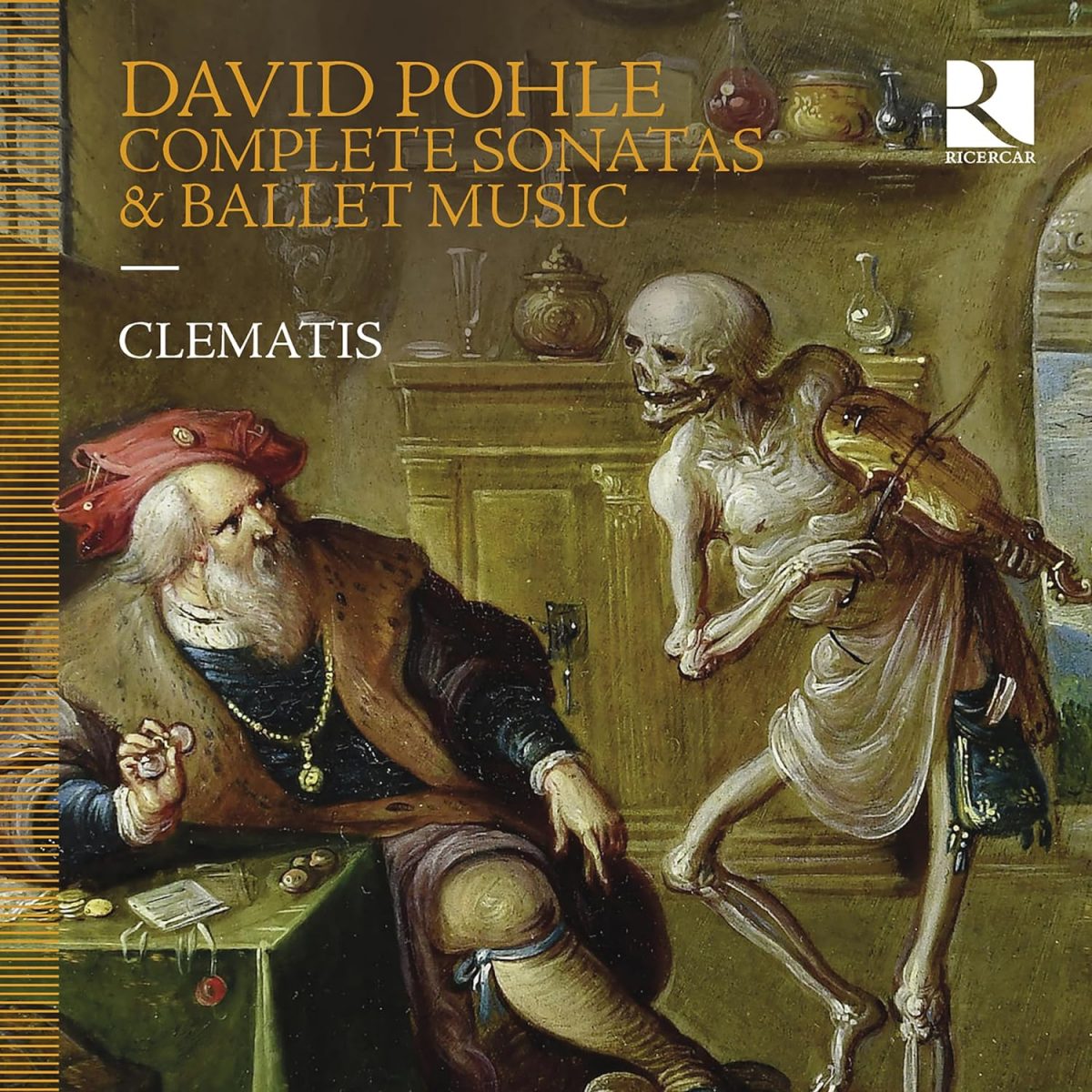
I don’t imagine for a minute that many readers will be familiar with Pohle’s music. He was acquainted with several better-known figures: a student of Schütz in Dresden, later in life he was a friend of Handel’s father in Halle. In between, he worked for the chamber music-loving Margrave Moritz in Kassel, and then the court of Gottorf. In Halle, he wrote a cycle of cantatas for the entire church year, among the first to do so.

Founded in 2001, Clematis most recently impressed me with their recording of Legrenzi’s music and these new discs have merely enhanced my impression. The majority of Pohle’s surviving sonatas are for five or more instruments; he exploits every possible combination of voices in intricate patchwork pieces where counterpoint and homophonic passages – often of striking harmonic richness – are juxtaposed. It’s just the kind of mental stimulation I love! That is why I set out to publish all his surviving manuscript music, in collaboration with the author of the booklet note, Gottfried Gille, and a German postgrad, Juliane Peetz. While it is nice to see my editions credited in the booklet, it is rather frustrating to read that reconstructing the missing first violin part for four of the sonatas was more difficult than 13 of the others, but not that Clematis played my solutions! The second time I’ve been written out of musical history in the past few years…

Be that as it may, the performances are fabulous – the violins are bright, the violas crisp, the winds suitably raspy, and the continuo largely content to supply a backdrop for all the activity in the obbligato parts.

I am surprised that I had not noticed the passage around two and a half minutes into Sonata 6 in A minor that is more than a little reminscent of Monteverdi’s Ballo delle ingrate. The Dances in F (G. 28) survive in the library in Kassel, prefaced by a work called “Le Testament” by a Sr. Belleville; I have to say that they are quite like anything else in the set – I hear Georg Muffat…

Brian Clark


Categories
Recording

Vivaldi: Concerti per violino XI

‘Per Anna Maria’
Vivaldi Edition vol. 71
Fabio Biondi, Europa Galante
62:54
naïve OP 7368

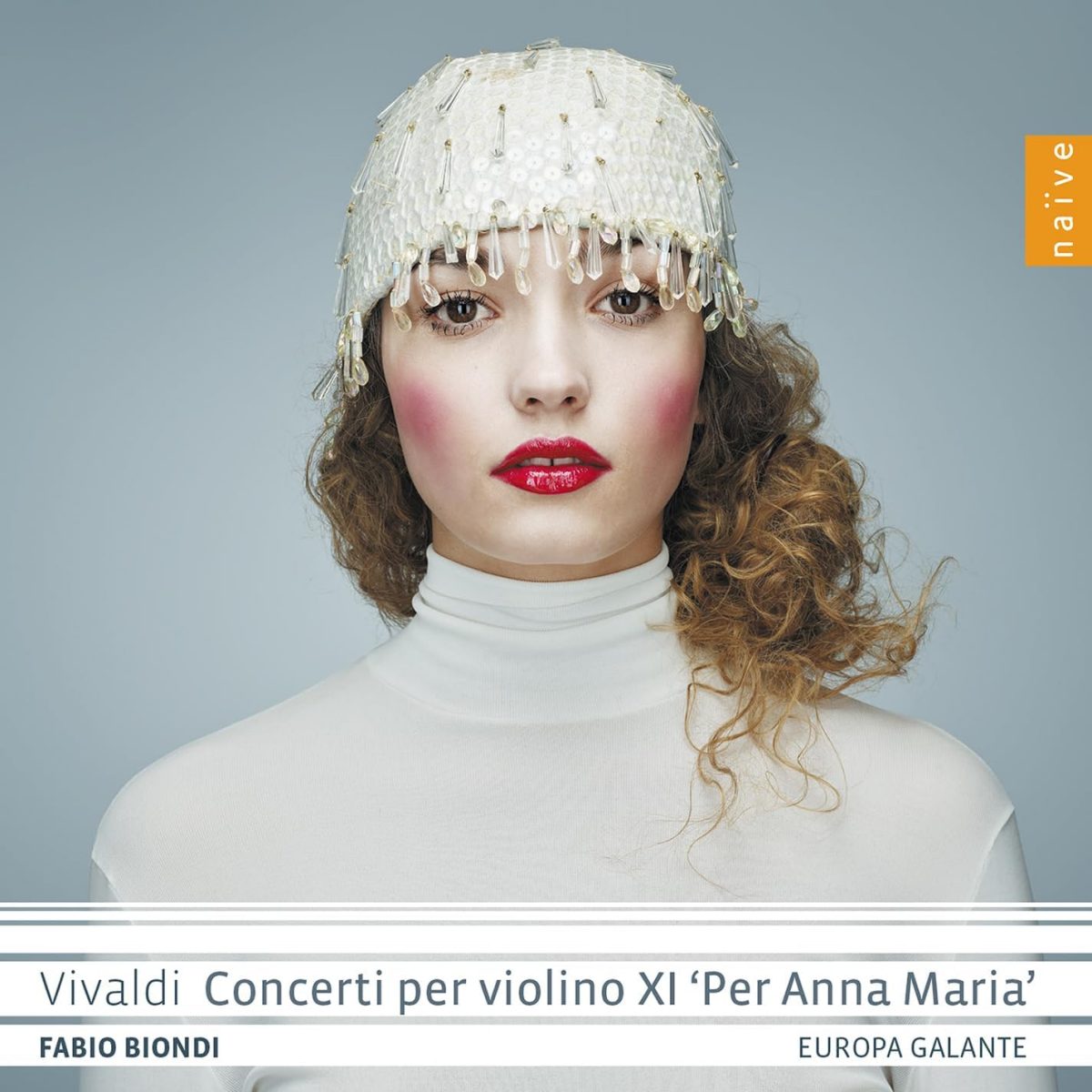
Whoever it was who infamously quipped that Vivaldi had written the same concerto several hundred times clearly had never heard the Red Priest’s Concerto in D RV 229 – I just about jumped out of my seat when it started! The double-stopping soloist did more than rouse the band with the dramatic opening bars. Even if there is (inevitably, given that music of the period was largely dominated by ritornello form) a degree of repetitiveness across a large number of his works, the six concertos on this wonderful recording (together with an ornamented version of a slow movement re-used in another) demonstrate the composer’s richness of imagination and command both of his instrument and musical form. All in major keys, the solo parts are all that remains of one source – a volume of 31 pieces (including 24 by Vivaldi) that belonged to one of the Pietà’s stars, Anna Maria. The wonderful Fabio Biondi and his band, Europa Galante (3322 strings and continuo), bring energy and sparkle, and reflection and pathos in equal measure for some exemplary performances of this repertoire. The typically informative booklet note sets the scene for a new appreciation (on my part, at least) for the women behind the grilles of the ospedali…

Brian Clark

Categories
Recording

Monteverdi: Vespro della Beata Vergine

Pygmalion, Raphaël Pichon
102:00 (2 CDs in a cardboard box)
harmonia mundi HMM 902710.11

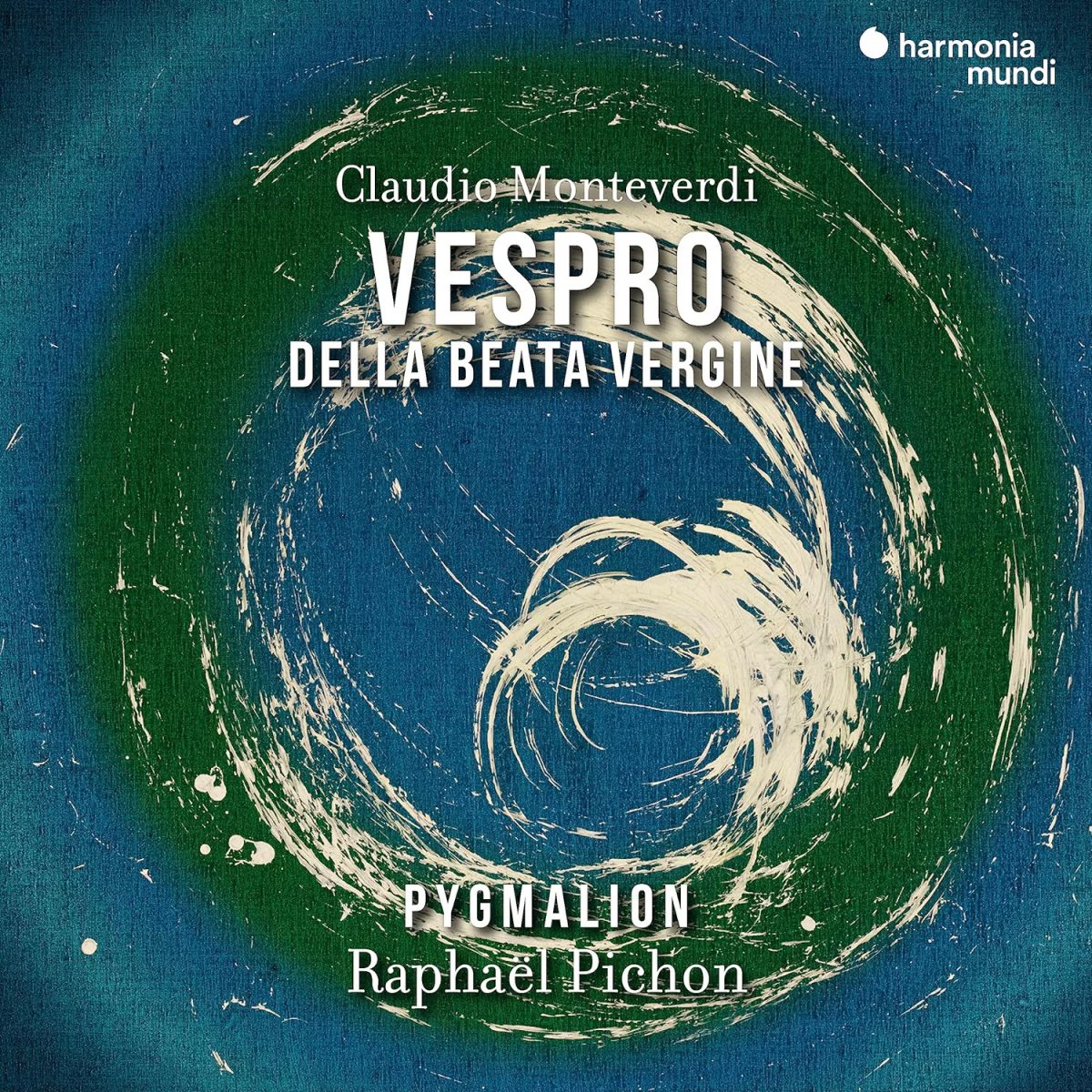
Raphael Pichon’s account of Monteverdi’s Vespers of 1610 has been through a process of metamorphosis since a rather unsatisfactory Proms performance in 2017 followed by a much more convincing account, filmed live in the Versailles chapel which I reviewed enthusiastically in 2019. This version still attempted to set Monteverdi’s music in something of a liturgical context, while unfortunately the DVD subtitles and support materials did a poor job in identifying the interleaved plainchant. This latest CD version for harmonia mundi accepts the current thinking that, far from being a discrete ‘piece’, the publication is a collection of Monteverdi’s best service music written for lavish celebrations of St Barbara at the Gonzaga court of Mantua and gathered together in a portfolio dedicated to the Pope in the hope of employment in one of the important papal institutions in Rome. The failure of this enterprise and Monteverdi’s subsequent career in Venice has frequently influenced performances of this extraordinary music, but actually the important point of reference ought to be the musically flamboyant court of Mantua. The practice of combining the sacred and secular musical resources for the most magnificent Mantuan services for St Barbara justifies the truly epic scale of Pichon’s presentation. It also obviates the need for a liturgical context, and even allows for the aesthetically satisfactory return to the opening fanfare set to relevant text to bookend the whole performance. Epic is the word that keeps coming to mind in describing this latest version of the Vespers, with over seventy musicians performing in the resonant acoustic of the Temple du Saint-Esprit in Paris. Pichon’s control over these large forces is breath-taking, and as previously his line-up of superlative soloists provides us with exquisitely decorated accounts of the solo and small ensemble material. Also prominent in these more intimate moments, although also adding magically to the tutti textures, is a superb team of continuo players, including two harpists, three theorbists, and three harpsichordists, one doubling organ. Their contribution is wonderfully imaginative and perfectly responsive to the voices. The brass and string sections, particularly the two double basses, provide an impressively rich texture to the tutti passages, while the four cornettists contribute virtuosic cadential embellishments which are simply stunning – just listen to them in the concluding doxology of Laetatus sum! Singing at ‘high’ pitch, Pygmalion’s chorus exudes energy and musical purpose and is a model of perfect phrasing and unanimity, while the harmonia mundi engineers have captured this whole remarkable sound in all its vividness. You can tell that this is a performance of a now familiar work which I found thrilling and engaging – it caused me to look back at my favourite accounts by Suzuki, Christophers, and Gardiner’s three versions, and further back to pioneering accounts in the early 1950s by Eugen Jochum and even Leopold Stokowski. What struck me is that for all their scholarly and stylistic shortcomings, the earliest versions had an epic sweep, which has sometimes been missing in later versions. It strikes me that Pichon has managed to embrace the scholarly and the epic dimensions of this music, while modern standards of recorded sound capture this in all its richness and subtlety. This version is not without its quirks – not everybody will like the rather ‘romantic’ dynamic variations (including the curiously ‘cowed’ opening of Dixit Dominus), while the decision to perform the opening and concluding verses of Ave maris stella a capella, when previous conductors’ instincts have been to combine the vocal and instrumental forces accrued in all the other verses, is a curious one. The fact is we have very little idea of the details of performance styles at the time, but knowing that opera singers joined forces with sacred musical forces for the larger-scale religious celebrations suggests that the inherent drama of the music might have been further enhanced for these courtly spectacles.

D. James Ross

Categories
Recording

Monteverdi: L’Orfeo

Le Concert des Nations, La Capella Reial de Catalunya, Jordi Savall
109:06 (2 CDs in a card triptych)
Château de Versailles Spectacles CVS080

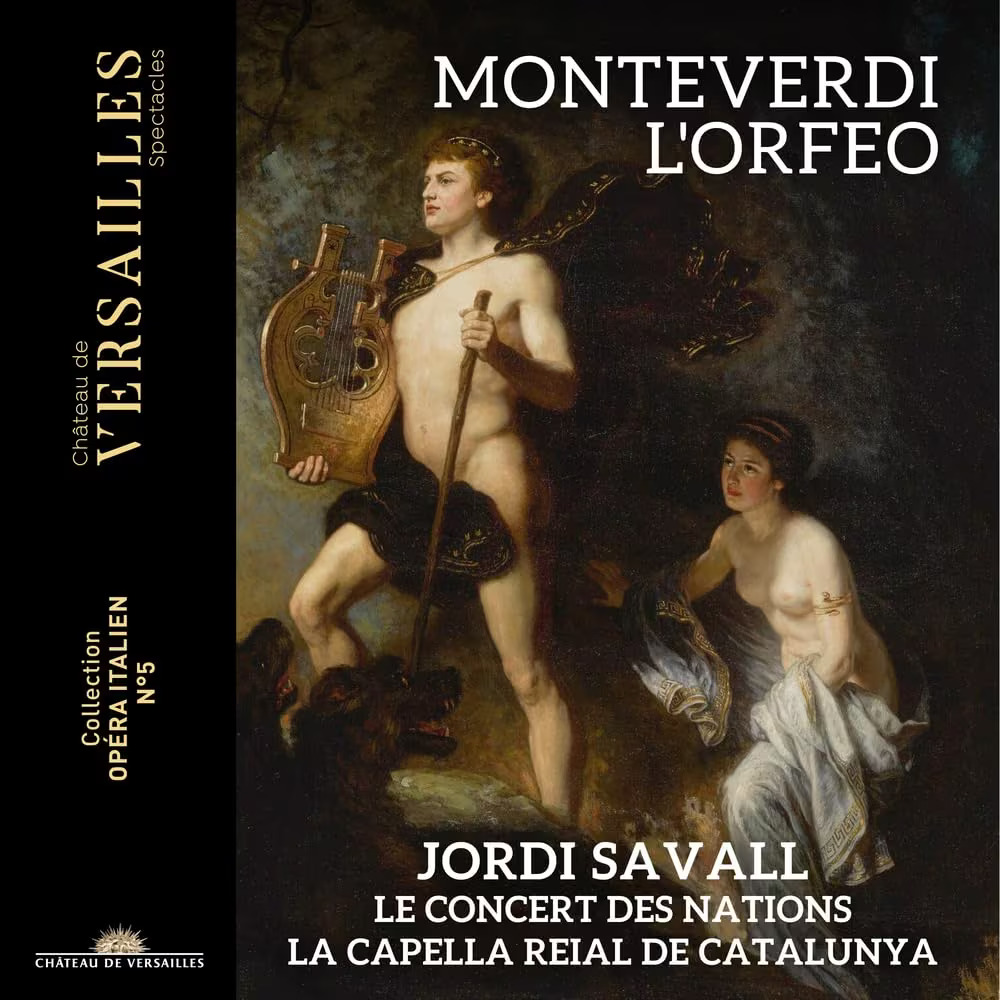
This series of recordings, made in conjunction with live concerts at the Palace of Versailles, presents exciting new artists an revisits memorable milestones of authentic performance – the present recording belongs to the latter category. Jordi Savall’s presentations of Orfeo in the early 2000s with the principal role played by Furio Zanasi and the role of Musica unforgettably taken by Savall’s late wife, Montserrat Figueras, are remembered fondly by all of us lucky enough to see a live performance, and it was transferred very successfully to CD. This time the role of Orfeo is taken by Marc Mauillon, and like Zanasi before, he combines a stunning technique with a believable dramatic presence. It is good to hear the famous virtuoso aria “Possente spirto” sung with such complete technical assurance, but also with bravura – perhaps not since the legendary account by Nigel Rogers have we heard so many of the incidental notes in exactly the right places, and indeed Mauillon’s voice is reminiscent of Rogers’ distinctive timbre. Here and elsewhere in the opera, Mauillon succeeds in articulating the eye-watering degree of ornamentation without allowing it to interfere with the dramatic sweep of the music. This is a remarkable account of this extremely demanding role! The clearly generous budget of the Versailles concerts allows musical directors to indulge themselves, and Savall fields a lavish instrumental team, probably many times larger than anything Monteverdi could have mustered but providing a superb range of textures, and en masse a rich and impressive sound. This is matched by a capable and splendid vocal chorus, while an equally impressive line-up of other soloists animates the multiple distinctive solo roles. Savall’s earlier productions featured him sweeping down through the audience to his instrumental ensemble for the overture clad in a Magus’s cloak, and he has lost none of the old magic in what is much more than a revival of his earlier account of Monteverdi’s masterpiece. He has brought a lifetime of experience to bear on this remarkable piece, and has mustered an ensemble of all the talents to allow him to realise his vision. A final virtue of the Versailles Concerts CDs is their lavish presentation, and this release is no exception with a richly illustrated booklet including an intriguing essay by Jean-François Lattarico and background details about all the participants.

D. James Ross

Categories
Recording

Il n’y a pas d’amour heureux

La Palatine
59:41
Ambronay AMY316

This young ensemble, brought to us by the excellent Eeemerging programme promoting new early music performers, does exactly what it says on the tin, presenting a lovely selection of works for voice and instruments on the subject of unhappy love from the pens of Monteverdi, Rossi and Merula. These are beautifully sung by the group’s soprano Marie Théolyre, who imparts passion and intelligence in performances that are also wonderfully precise and musical. While they provide lovely responsive accompaniments to the songs and cantatas, the instrumentalists of La Palatine also take their turn in the spotlight with beautifully executed instrumental works by Alessandro Piccini, Giovanni Salvatore, Bellerofonte Castaldi and Angelo Michele Bartolotti and a lovely set of diminutions by Riccardo Rognoni on Amor che col partire by Cipriano de Rore. These instrumental interludes are both an imaginative and inventive device for breaking up a sequence of mainly plangent vocal music, but are so much more than this, showcasing the importance of instrumental composition in early 17th-century Italy while also depth of talent in this young ensemble. They have thrown their net wide when selecting repertoire, and side by side with a powerful rendition of the classic Lamento d’Arianna by Monteverdi, we have the premiere recording of Fermate, occhi, fermate by Mario Savioni, an exciting discovery indeed.

D. James Ross

Categories
Recording

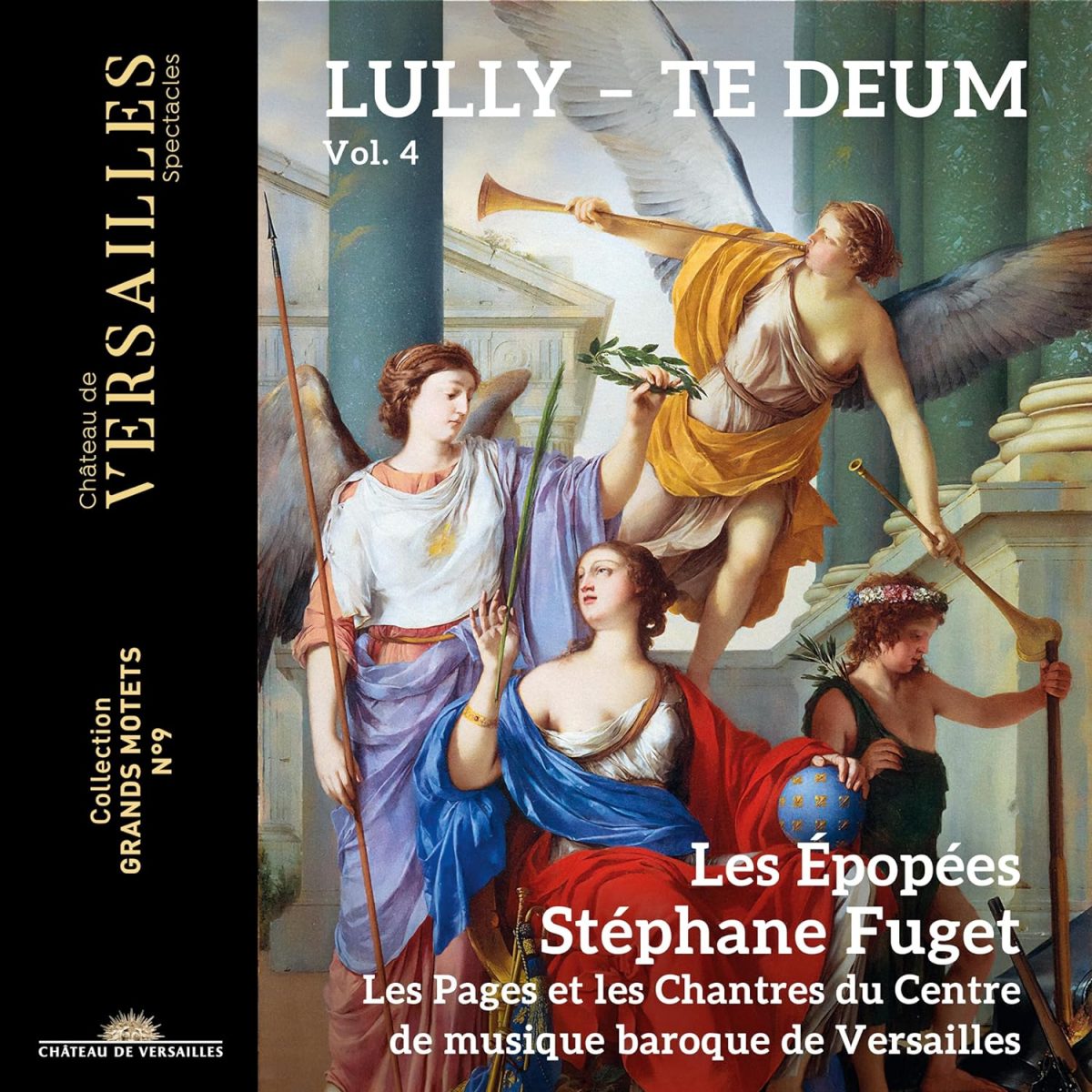
Lully – Te Deum

Les Épopées, Les Pages et les Chantres du Centre de musique baroque de Versailles, directed by Stéphane Fuget
68:24
Versailles Spectacles CVS117

This is the fourth in the indispensable series of Lully’s grands motets being undertaken by Stéphane Fuget and his vocal and orchestral ensemble Les Épopées, recorded in the glorious acoustic of the Chapelle Royale in the Palace of Versailles. Here, tackling the Te Deum of 1677 – perhaps the most brilliant and theatrical of all the motets – they are augmented by the forces of the Centre de musique baroque de Versailles to form an ensemble close to 100 strong.

The Te Deum was first given at Fontainebleau not to celebrate some great military victory, the usual reason for running up a Te Deum, as might be supposed but rather the more intimate occasion of the christening of Louis, the eldest son of Louis XIV (whom he predeceased) and Queen Marie-Thérèse. The king, who one suspects was more the target of its praise than the infant, was so delighted with it that he asked for it to be given again the following day. Thereafter it was repeated on several occasions, the last of which was in January 1687 when it was given to celebrate the king’s recovery following an operation. This was the famous occasion on which Lully injured his foot with the staff with which he beat time, an accident that resulted in his death from gangrene some weeks later.

The Te Deum is preceded, as it surely would have been on ceremonial occasions, by a pair of marches by the Philidor brothers, the first for timpani including a fascinating piece of syncopation. Perhaps the most striking aspect of the Te Deum is that, unlike so many occasional ceremonial works of its kind, it is far removed from being just a spectacular tub-thumper. Even in the most brilliant sections employing all the performers, the level of musical invention remains on an impressively high level, while many of the more intimate passages for the petit choeur or soloists have a calm, inner radiance. As so often with this genre, just as you think the ear is going to be overwhelmed by sheer splendour and brilliance along comes an ineffable, lyrical passage of heart-stopping beauty, here memorably realised. In common with most works in this genre, the key is thus contrast, contrast that spans the splendour of the opening and closing pages to the supplicatory verses from ‘Dignare, Domine’ (Vouchsafe, O Lord), beautifully sung here by an unidentified  bass, through to the wonderful trio (two haute-contres and bass) into which the petit choeur steals almost imperceptibly.

The other motet included makes for an ideal companion piece given that it was apparently customary for Exaudiat te Dominus, Psalm 19 (20) to be performed after the Te Deum at major ceremonies, as it was indeed after the performance to give thanks for the king’s recovery mentioned above. Interestingly it is markedly different in style, a more succinct setting with more clearly defined sections and more solo passages. Less brilliant than the Te Deum, the trumpets and timpani are silent until the doxology, they are of course required to round off the coupling of the two works with a suitably flamboyant flourish .

The performances are electrifying in the more overtly ceremonial passages, at the same time achieving an interiority and prayerful grace in more intimate music. The involvement of all is underlined by remarkable diction, not easy in this building with its blessedly long reverberation, while the solo singing and that of the petit choeur is of exceptional quality as indeed is that of the full choir and orchestra. This is yet another quite exceptional and uplifting achievement from Stéphane Fuget and his exceptionally gifted forces. 

Brian Robins
Categories
Recording

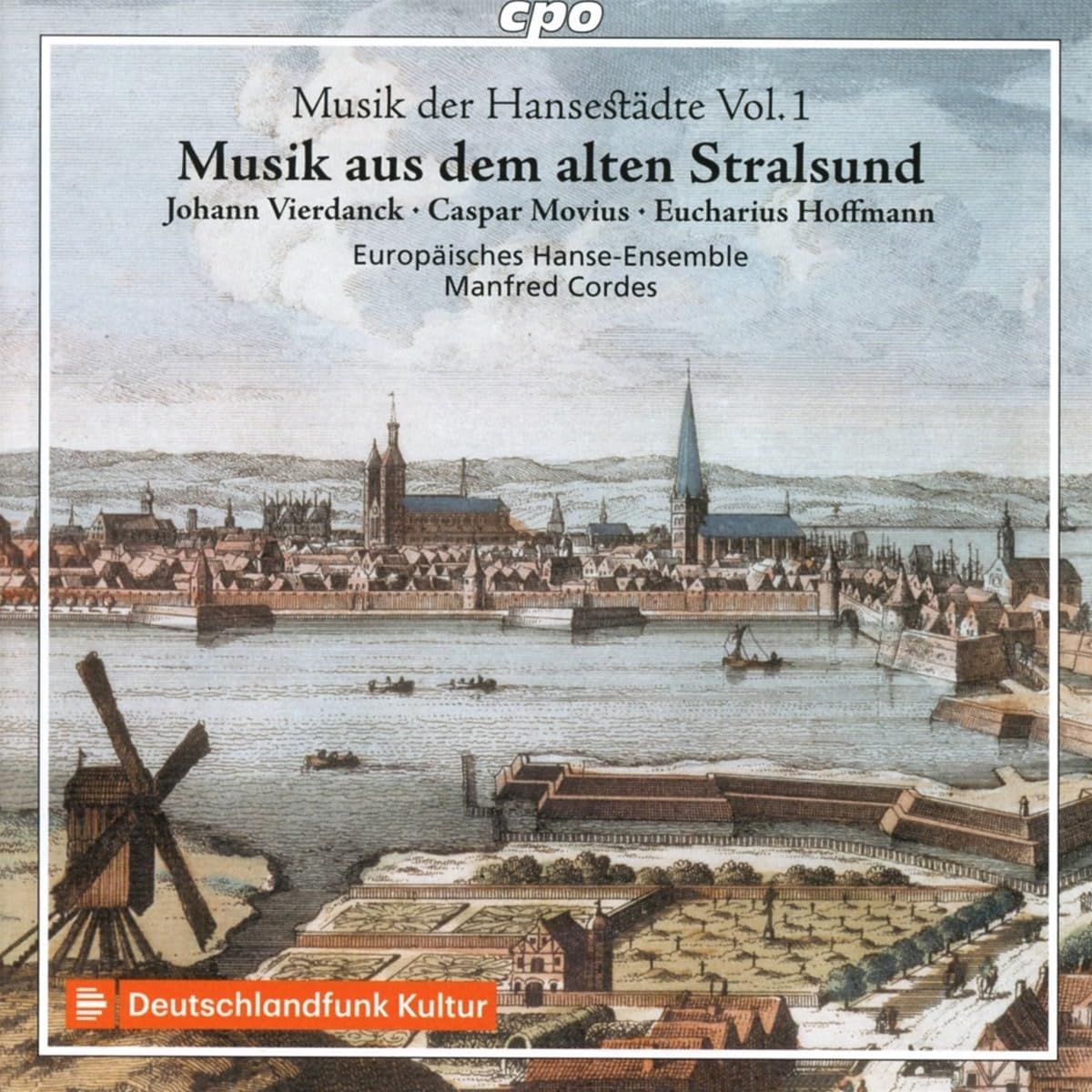
Musik aus dem alten Stralsund

Musik der Hansestädte Vol. 1
Europäisches Hanse-Ensemble, Manfred Cordes
73:54
cpo 555 578-2

Like most of the cities that formed the Hanseatic League, Stralsund grew rich on the back of its trading activities. Much of the music on this disc (and the others that will join it in the series) will be at best little known; I had only heard of one of the three composers on the programme, Johann Vierdanck. Hitherto I had only known his instrumental music, though – through my studies of the musical life of the court of Anhalt-Zerbst – I was aware of his many publications of vocal music. Typical of Manfred Cordes, he has selected some truly wonderful music by him and by the even-less-well-known Caspar Movius (born five years after Vierdanck, he outlived him by 25!) and Eucharius Hoffmann, who was cantor at the city’s Latin School in the second half of the 16th century.

The disc is well balanced: four pieces by Vierdanck surround two by Movius, then four by Hoffmann (in a different style, as one would expect) then four more Vierdanck pieces frame another two by Movius. There are four instrumental pieces, all by Vierdanck; two sonatas a4 (one for pairs of violins and cornetti, one for cornetto and three trombones), a capriccio (two violins and gamba), and an extraordinary sonata a6 in D minor – I literally sat up straight when he had the instruments suddenly play in octaves! It was quite the unexpected effect. All of the vocal music is delightful, and beautifully sung. I am not surprised that the princes of Anhalt-Zerbst bought Vierdanck’s music for the local schoolboys to sing at weekly services. The first two Movius works are for double choir (sung one to a part here), while the second pair are for two sopranos and bass. Cordes deploys some instruments in three of the Hoffmann pieces, but the fourth is sung a cappella.

For anyone looking for an unexpected treat and a clear demonstration – if it were needed – that the 17th century in German music history does not just mean Schütz, Schein and Scheidt, this disc (and, indeed, many others curated by this innovative conductor), look no further! Buy this now.

Brian Clark

Categories
Recording

Telemann: Fantaisies pour violon

Patrock Oliva
79:58
Triton Trihort 581

This 2023 recording enters the lists (all senses of that phrase!) and will find itself immediately in a considerable pile of top runners and also-rans. There must be nearly 80+ adventures in the interpretation of these 1735 works coming from Telemann’s “Selbstverlag” along with the flute and gamba fantasies. Patrick Oliva’s versions are respectful to the very letter of the movement markings, and as shown by the length of this recording the slower movements are a little ponderous, perhaps mildly introspective, contrasting thus with the faster passages. The playing feels rather compartmentalised, and one senses the player has chosen to mark out each section with his annotated intentions and phrases. Compared to Tomás Cotik (Centaur) and Alina Ibragimova (Hyperion) the timing element tells its own story, Patrick Oliva’s trajectory through these works lasts some 18 minutes more than the others. Again, this is a respectful interpretation with some pleasant contrasts, but does tend to languish in the slower passages. The galant effects found in the final six are respected without pushing the bar. I recently heard Rachel Podger live, playing the E minor piece (the sixth of the set); it was most captivating with elegant immediacy.

All in all, this is a fair recording, but may come around middle of my ever-expanding pile; when I last looked, at least three recordings were spawned per month! The sound quality is good and the booklet notes are very good, even a quote from J. J. Rousseau on the back of the CD.

David Bellinger

Categories
Recording

Handel: Theodora

Louise Alder Theodora, Anna Stéphany Irene, Tim Mead Didymus, Stuart Jackson Septimus, Adam Plachetka Valens, Arcangelo, conducted by Jonathan Cohen
178:32 (3 CDs)
Alpha Classics ALPHA 1025 

I concluded the review of the last recording of Handel’s Theodora I wrote for EMR with the words that it was a recording ‘to which I hope to return on many occasions’. It would be pleasing if it were possible to write something similar about this most recent issue but I fear it is not. Given that I provided an extensive background to Handel’s penultimate oratorio in that review, I’ll here just remind readers that it was first given at Covent Garden in 1750. It has a libretto of variable quality by Thomas Morell and was not generally liked by Handel’s audiences, although it became one of the composer’s favourite works. Today opinion tends to side with Handel. It has also become fashionable to stage Theodora, often controversially.

The Erato recording was a rare take on a Handel oratorio by an international cast (the Irene was Joyce DiDonato, who played the part in the recent Covent Garden staging) that shone new light on the oratorio by approaching it from a more dramatic, operatic viewpoint than we customarily hear in concert performances. Cohen’s recording takes us firmly back into mainstream oratorio territory as it is viewed currently. Overall it is a fair reflection of the state of early music performances in the UK since they fused with the mainstream. There are some good voices – that of Louse Alder’s Theodora in particular has a freshness and tonal quality that is especially appealing – but, with the exception of countertenor Tim Mead’s Didymus, all display continuous, often wide vibrato. There is little suggestion that any of the singers involved has a background or training much associated with Baroque repertoire, the articulation of passaggi frequently lacking clarity, while waiting for anything as exotic as a trill is akin to waiting for Godot, Mead again excepted. To be fair there are one or two embryonic attempts scattered through the performance, in at least one case coming from a singer whose vibrato is so wide it is difficult to tell what we are hearing. Diction is universally poor, ironically the best coming from the only non-native singer, the Czech bass-baritone Adam Plachetka, who sings the part of the Roman governor Valens with ripe relish.

Jonathan Cohen’s direction adopts tempos that veer to opposite extremes, those for excessively slower speeds often incorporating sentimental mannerisms. But for my ears the worst sin of all is that he fails to inspire those singing Christian sentiments, either soloists or choir, into expressing the kind of luminescent joy Handel so memorably conveyed in his music, where he captures the near-incandescent rapture and commensurate danger that the early Christians found in their faith. ‘New scenes of Joy come crowding on, while sorrow fleets away’, sings Irene as Theodora is led away to her death. Not here. Obviously given contemporary mores, the music of the heathen Romans with which Handel so brilliantly contrasts the Christian passages comes off more convincingly, particularly the orgiastic choruses. Finally, to return to practical considerations, Cohen has committed the cardinal sin of not just including a superfluous lute in the continuo, but allowing it to be unforgivably obtrusive.

I’ve probably been unduly harsh on this performance. Listeners and critics inclined to mainstream performance will almost certainly value it more; indeed I’ve seen notices that overrate it to a grotesque degree. But I’m here writing for a readership presumably interested in HIP performance and from a personal viewpoint that the recording sadly mirrors the current poor state of early music in the UK. Fortunately there is always McCreesh’s superlative Archiv recording to which we can return, while the Erato makes for an interesting variant.   

Brian Robins