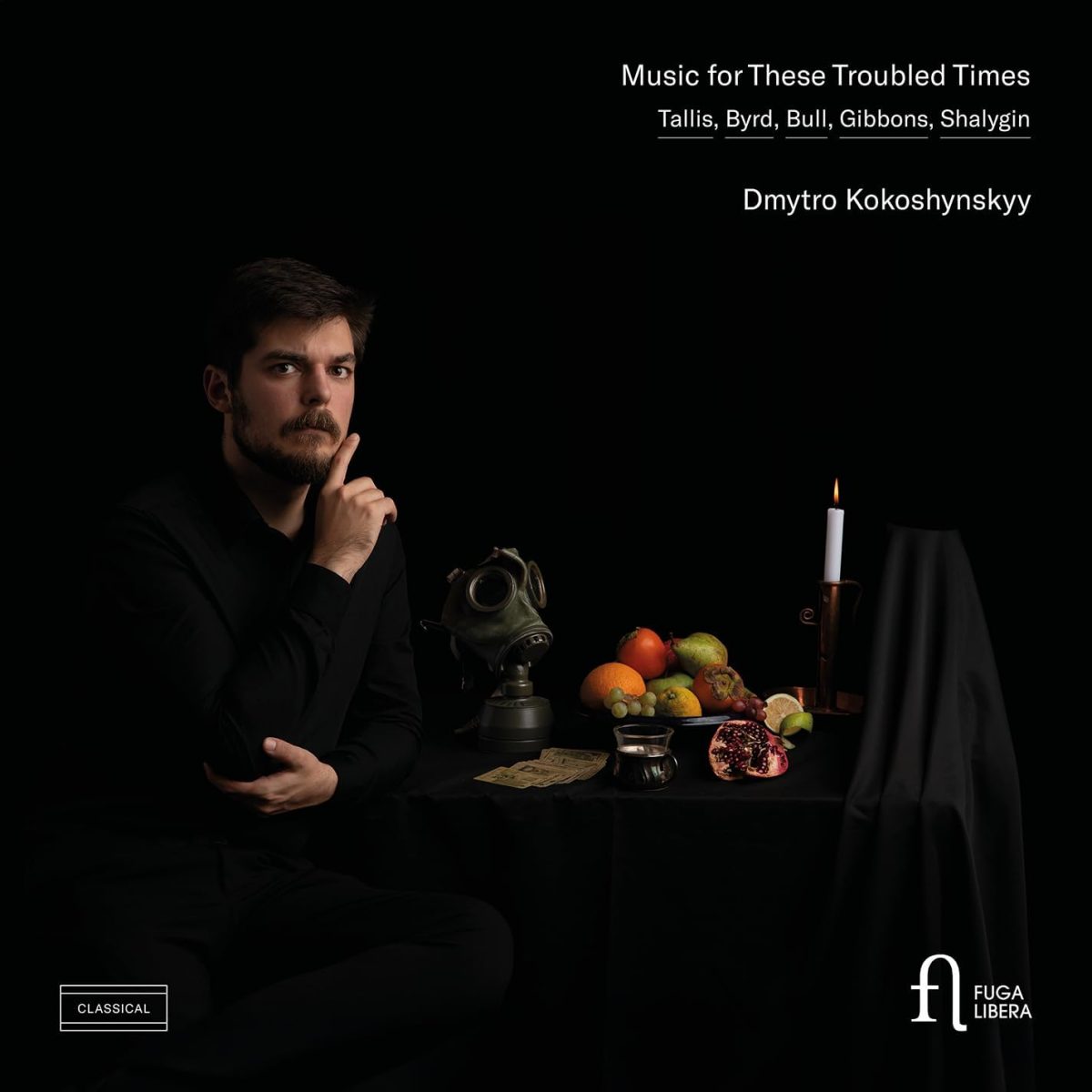
Tallis, Byrd, Bull, Gibbons, Shalygin
Dmytro Kokoshynskyy harpsichord
79:16
Fuga Libra FUG867
This is the debut recording by Dmytro Kokoshynskyy, a young harpsichordist from Ukraine. In the accompanying booklet he relates how music provides him with the solace he deeply needs in the most challenging moments of his life, that no repertoire has done so more fully than the music of the English Virginalists, and that it was no surprise to him that this music filled his mind when his homeland was invaded in 2022. For its evangelists and admirers, these sentiments regarding the English virginalist school of composers are both gratifying and humbling. Dmytro also refers to Robert Burton’s celebrated book The anatomy of melancholy (1621) so there is ample subtext behind his choice of repertory for this recording.
Listening to this disc was, is, for this reviewer a compelling experience, and the choice of repertory is one element that goes towards this. The other two elements are the quality of the music, and the incendiary commitment of the performances. The pieces selected from the works of the well-known composers tend to exist beneath their radars. Gibbons’s supremely melancholy and profound pavan is usually elbowed aside by the admittedly great pavan for Lord Salisbury. Byrd’s fantasia with its vestige of Salve regina chant tends to give way to his pioneering and unsurpassed fantasia in A minor. Even Tallis’s mighty Felix namque settings tend to be prioritized for the organ. That said, its emotional variety renders the programme all the more enthralling – it is not stuck in trouble and melancholy, and Dmytro mentions Burton’s reference to “a pleasing melancholy”, a form of catharsis. In the cinema, a good director has the confidence and knows when to insert a flash of comedy into a predominantly serious film, and here Dmitry includes sunnier works such as Byrd’s John come kiss me now, Wakefield on a green (incomprehensibly attributed elsewhere to Byrd) and the attractive anonymous arrangement of Dowland’s Can she excuse (its modern printed source given wrongly in the printed booklet but correctly above). Applauding in passing the five powerful pieces by Bull, it remains to mention two others, one ancient, one modern. Seemingly the anonymous A Ground receives its premiere on disc here, and this is long overdue, being a work of substantial proportions for the period and of considerable excellence. Finally, KHORA by the Ukrainian/Dutch composer Maxim Shalygin is a thrilling and passionate response to Burton’s book, its highly appropriate title helpfully explained in the booklet.
This is a fine recording which is both moving and inspiring. It manages to be powerful without being oppressive, the wonderful music anatomized beautifully by Dmytro, none more so than Bull’s pavan and galliard for Lord Lumley, so as to externalize his own profound, innermost thoughts. From the turmoil of the Reformation, the English Virginalists provide catharsis four centuries later for a Ukrainian harpsichordist contemplating the invasion of his homeland, who in turn encapsulates this in performance and transmits it for the world.
Richard Turbet