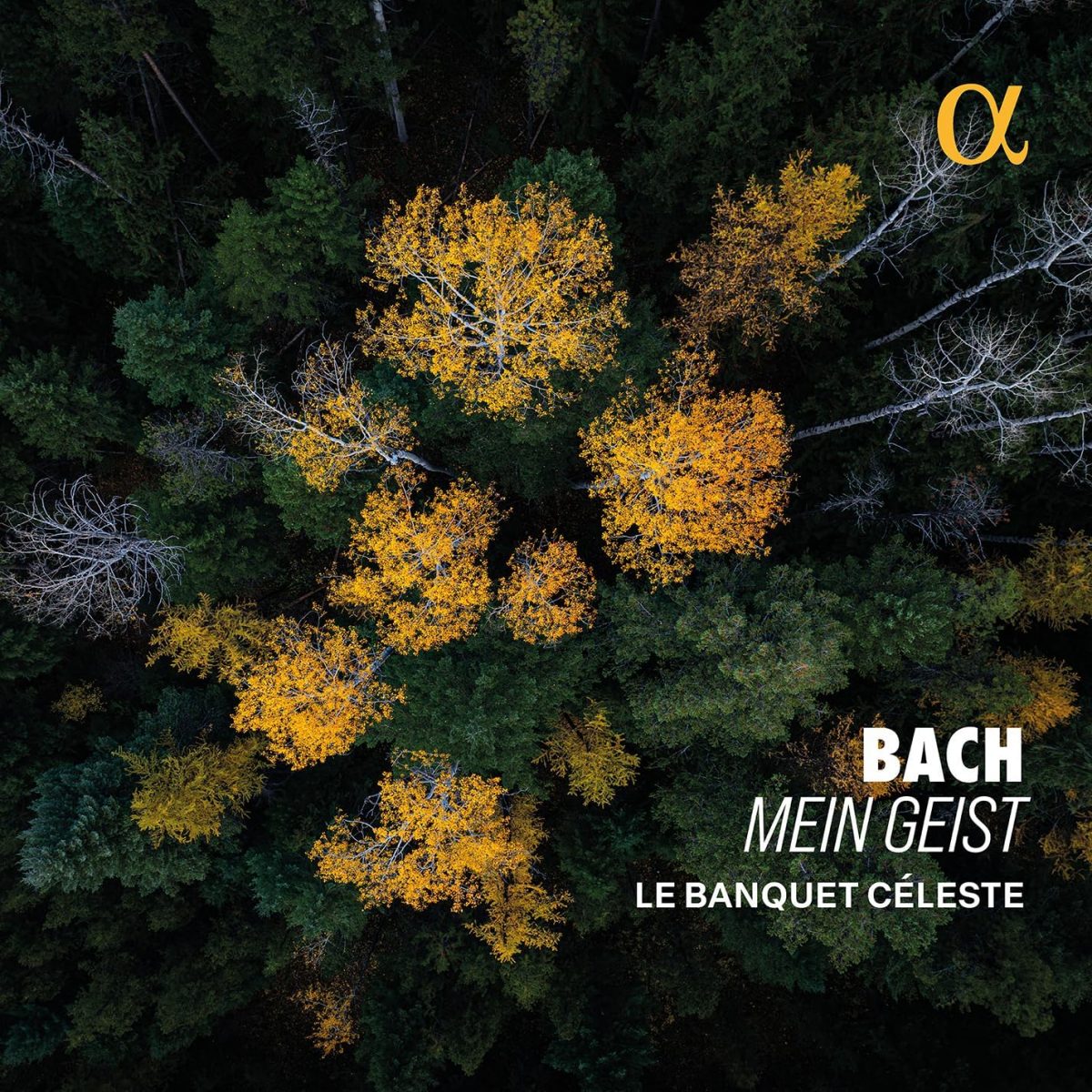
Le Banquet Céleste, Julien Barre vc piccolo
70:30
Alpha 1190
The framing of the solo Cello Suite No 6 in D by two of Bach’s cantatas, BWV 115, ‘Mache dich, mein Geist, bereit’ and No 85, ‘Ich bin ein guter Hirt,’ is a somewhat unusual format. Alpha’s note-writer tries, none too successfully, to make spiritual connections, but more convincingly also explains the practical reason for the link. Both cantatas are among a group of Leipzig cantatas from Bach’s second cycle (1724-1725) that specify the use of the violoncello piccolo as an obbligato instrument, now considered also the most likely instrument intended for the 6th Cello Suite, though it is also possible Bach also had the viola da spalla in mind for it.
As it turns out, the performance of the Cello Suite by Julien Barre, co-principal cellist of the B’Rock orchestra, is the highlight of the CD, an extraordinarily beautiful performance of this happy, airy work. Not only does Barre produce an exquisitely nuanced timbre from his instrument, but his technique is impeccable, with cleanly defined and articulated passaggi always at the command of the music. In the opening Prelude, the outdoor spirit of the movement is perfectly captured, with braying hunting calls and the energy of the chase clearly suggested, while in the succeeding Allemande the generous spatial imagery is projected with a broad expressivity that gives this most extensive of the suite’s movements a timeless, musing quality. At the other extreme, the following Courante takes us back out into the natural world on a madcap gallop projected by Barre with virtuosic delight, while the wistful Sarabande features some splendid double-stopping and clean chordal playing. And so continues to the conclusion of this treasurable performance.
On one level, the one-voice-per-part performances of the cantatas earn high commendation, too, but they are marred by a significant flaw. BWV115 is a chorale cantata composed for 5 November 1724. From the outset, the text is dominated by rhetorical demands or commands to which the Christian must attend – ‘Mache dich, mein Geist’ (Make ready, my spirit) in the opening chorale. The following aria for alto scolds the ‘slumbering soul’ – ‘Ermuntre dich doch’ (Rouse yourself!). The only other aria, for soprano, continues the theme of man’s inadequacy in the eyes of God, ‘Bete aber auch dabei’ (But pray, too). It is, as Alfred Dürr wrote in his classic study of the cantatas, ‘conceived in vividly text-related terms’. It is, however, exactly this sense of rhetoric that is almost entirely missing from these neatly turned performances. Listen, for example, to alto Alexander Chance’s singing of that alto aria, ‘Ach schläfrige Seele, wie? ‘Ah, slumbering spirit, what?’ It is neat and capable, but diction is poor, and it lacks any real penetration of the text, so it is hardly surprising that the ear is constantly drawn from the voice to the expressive oboe d’amore obbligato of Patrick Beaugiraud.
BWV 85 dates from April 1725. It takes its topic from consideration of the famous words in the Gospel of St John, ‘I am a good shepherd’, which are quoted at the outset by the bass soloist in a kind of mixture of accompagnato and arioso. The cantata is unusual in that the four soloists come together only in the brief final chorale, the chorale in the body of the cantata being for solo soprano, here beguilingly intoned by Céline Scheen, whose bright, fresh voice is one of the pleasures of the recording. Here the rhetorical element is less to the fore, though I would still like a stronger emphasis on diction. Again, one of the great pleasures of the performance is the instrumental contribution, especially once again the violoncello piccolo, which makes a splendid obbligato contribution to the alto aria.
I’m conscious that there are many admirers of Bach’s cantatas for whom the rhetorical element, the strong impact of the words, means less than it does to others, and they will doubtless place less emphasis on the topic of rhetoric. They are likely to find few reservations. Nonetheless, rhetoric meant a great deal to Bach and his fellow congregations, and if we are to understand fully the precept and message of these timeless works, it is something that should be of importance to us, too.
Brian Robins