
Categories
Recording

Bach: Peasant Cantata, Amore traditore, Non sa che sia dolore

Mojca Erdmann, Dominik Wörner SB, Bach Collegium Japan, Masaaki Suzuki
63:25
BIS-2191 SACD

[dropcap]V[/dropcap]ol. 7 of Suzuki’s Secular cantatas explores the scoring of the Peasant Cantata  that has soprano and bass soloists and a flute and horn in addition to strings and continuo, and so couples it with the two secular cantatas that set Italian texts, Non sa che sia dolore  which has prominent flute obbligati  with the soprano and Amore traditore  for the bass.

The potpourri of folk music, tavern songs and social commentary in the ‘Peasant Cantata’ provide Bach with a licence to step outside his normal, serious style and let us see something of his social life and more rustic context.The music is tuneful, but rarely moving. I found Erdmann a more convincing soloist in this semi-operatic burlesque, with her nimble voice and dramatic sense of expression, and certainly she is very at home in the anguish of leave-taking that is the core of Non sa che sia dolore. Wörner’s background is in church music, and hitherto I have heard him most under Suzuki in the church cantatas. This suggests to my ears he is rather too ‘correct’ in a role where a certain amount of rustic jollity, rolling in the hay and raising a glass could do with a more plummy sound: he sounds a bit prim for his more racy lyrics! I though he was better in Amore traditore.The playing – specially the flute and horn (as well as the unattributed Dudelsack) – is fine, without, in the strings especially, quite capturing every dramatic innuendo. Suzuki’s players don’t, as far as I know, play many Mozart operas and you really need that sense of underscoring the drama that those who play in opera pits absorb over time.

But this is a worthy part of the Suzuki oeuvre, and given that there are few recordings of all the secular cantatas, will be widely welcomed.

David Stancliffe

[iframe style=”width:120px;height:240px;” marginwidth=”0″ marginheight=”0″ scrolling=”no” frameborder=”0″ src=”//ws-eu.amazon-adsystem.com/widgets/q?ServiceVersion=20070822&OneJS=1&Operation=GetAdHtml&MarketPlace=GB&source=ss&ref=as_ss_li_til&ad_type=product_link&tracking_id=infocentral-21&marketplace=amazon&region=GB&placement=B01HUFN7IY&asins=B01HUFN7IY&linkId=3627b924a973b9e05f61ca3168135656&show_border=true&link_opens_in_new_window=true”]

[iframe src=”http://www.jpc-partner.de/link.php?partner=ngr&artnum=4193648&bg=ffffff&tc=000000&lc=008442&s=0&t=1&i=1&b=1″ width=”170″ height=”214″ scrolling=”no” frameborder=”0″]

[iframe style=”width:120px;height:240px;” marginwidth=”0″ marginheight=”0″ scrolling=”no” frameborder=”0″ src=”//ws-na.amazon-adsystem.com/widgets/q?ServiceVersion=20070822&OneJS=1&Operation=GetAdHtml&MarketPlace=US&source=ss&ref=as_ss_li_til&ad_type=product_link&tracking_id=earlymusicrev-20&marketplace=amazon&region=US&placement=B01HUFN7IY&asins=B01HUFN7IY&linkId=a2a1bfadd1a784940f3192bf289ee20a&show_border=true&link_opens_in_new_window=true”]

Categories
Festival-conference

Eeemerging at the 2016 Ambronay Festival

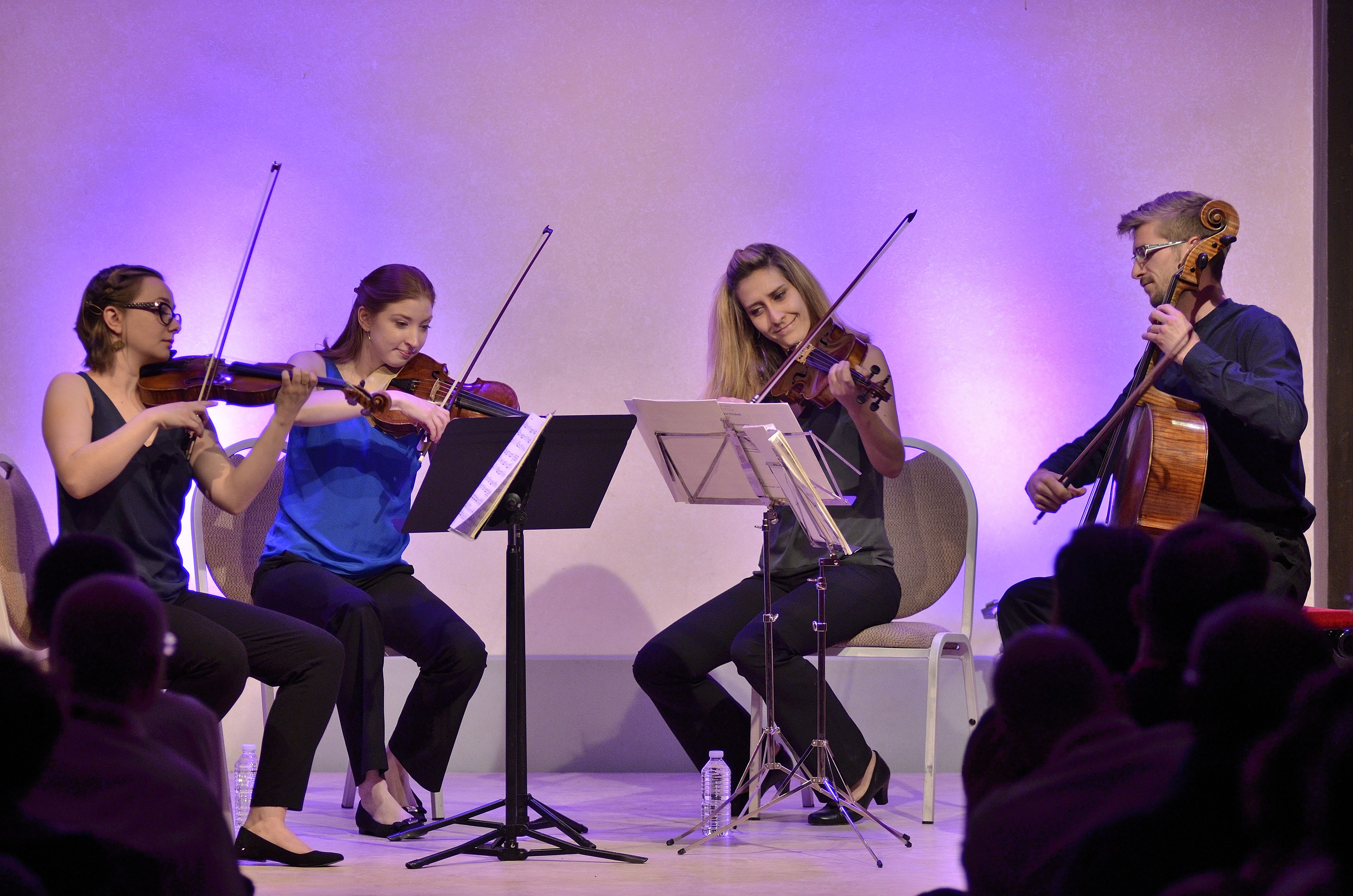
The Consone String Quartet in performance
The Consone String Quartet, Photograph: © Bertrand Pichène

[dropcap]A[/dropcap]s noted in my report of the 2015 Ambronay Festival, an excellent reason for going to the last weekend of the festival in early October is its incorporation of a ‘festival within a festival’, the competition for young early music ensembles held under the auspices of eeemerging, an EU initiative (and, no, I’m not going there). Each concert of some 45 minutes length takes place before a team of judges from Ambronay’s festival partners and an enthusiastic audience, which is also encouraged to participate by selecting its own winner. Once again six ensembles were chosen, this year from 47 applications (down on last year). Once again the first, perhaps most important, thing to say is that it is immensely uplifting to see so many exceptionally gifted young musicians involved in this kind of exercise.

That said these gifts do not always take right the direction, as the opening concert on the morning of 8 October demonstrated. This was given by Nexus, an ensemble consisting of two recorders, cello and keyboard playing 17th-century Italian works by Legrenzi, Castello, Marini, in addition to featuring vocal items by Merula, Barbara Strozzi and Monteverdi sung by mezzo Marielou Jacquard. Sadly, as with one of the ensembles last year, Nexus showed scant evidence of having paid attention to 17th-century style, their performances showing little sign of nuance, colour or the bizzarie  (imagination) so essential if this music is truly to come to life. I find it odd and not a little depressing that talented young musicians such as these are not getting (or seeking?) more guidance on matters of musicology and style. The succeeding program by I Discordanti, a vocal quartet with continuo support of gamba, theorbo and harpsichord featured repertoire from much the same period. They perhaps concentrated a little too heavily on chromaticism (it really is time Luigi Rossi’s ubiquitous ‘Toccata settima’ was given a rest), but brought a welcome sense of the stylistic needs of the music. This was particularly true of two extended cantatas by Rossi, which were well projected. I Discordanti are not yet the finished article, but they deserve every encouragement.

The opening concert of the afternoon session introduced Prisma, yet another ensemble that specialises in early 17th-century instrumental music (Cima, Bertali, Salomone Rossi etc.), its membership being violin, recorder, gamba and archlute. Their approach was a striking advance on that of Nexus. Violinist Franciska Hajdu not only possesses an excellent technique but has also taken the trouble to employ a 17th-century ‘Biber’ bow (though not yet to have her violin set up with low tension strings) and throughout played with a real sense of style well matched by her partner, recorder player Elisabeth Champollion. The continuo playing was equally of a high standard and I would not quarrel with voting that saw Prisma end up with the audience prize. For me their main competitors were the succeeding Goldfinch Ensemble, an ensemble of former students of The Hague Royal Conservatoire comprising of violin, flute, gamba and harpsichord. They were particularly impressive in technically accomplished and expressively musical performances of two fine trio sonatas by Élisabeth Jacquet de La Guerre. This is another group that is certainly worth keeping an eye on.

On the following morning two remaining ensembles presented programmes, the first of which was mainly devoted to Haydn’s wonderful late String Quartet, op 77/1 in G. The performers were the very young-looking Consone Quartet, who had a very good shot at a work they will play better when their own maturity comes closer to matching that of the music. This was particularly true of the Adagio, one of Haydn’s most deeply profound quartet movements. Finally The Curious Bards, an ensemble based in nearby Lyon that specialises in the research and performance of traditional Irish and Scottish airs and dances. Their programme of 18th-century arrangements was put across with great accomplishment and verve, but I would question the validity of its inclusion in this context. And isn’t there something rather ridiculous about an audience sitting in serried rows in a 21st-century concert hall listening to music that was never intended for such a purpose? Still, to avoid ending what was overall another joyous experience on a sour note, it must be confessed that said audience loved The Curious Bards.

Brian Robins

Categories
Recording

Christine Schornsheim

Bach: Goldberg Variations
Buxtehude: La Capricciosa
(2 CDs in a jewel case)
Capriccio C5286

[dropcap]C[/dropcap]hristine Schornsheim has recorded the Goldberg Variations  before (in 1997) and more recently has become known for her complete Haydn and perhaps more as an exponent of the fortepiano and other late Baroque and Classical keyboard instruments. She is now professor of period keyboard instruments at the Munich academy, and is committed to teaching as well as playing.

She was persuaded to make a second recording say the liner notes by Christof Kern, whose workshop produced the harpsichord on which she plays in 2013. It is a double ‘after’ the Michael Mietke in Berlin dated to around 1710, (a maker from whom Bach is known to have secured an instrument for Köthen when he served there) and is extended to a full five octaves and strung with brass. It is a powerful instrument, and the frequent registration changes are made silently – presumably edited out.

This time Schornsheim prefaces the 32 Goldberg  variations with Buxtehude’s La Capricciosa, BuxWV 230, a set of 32 partitas on an Italianate-sounding Bergamesca  as his theme. In both sets, the technical challenges increase as the works progress, and in both cases the listener is left wondering if there is going to be any other possible invention left.

I have become used to other performers’ versions of the Buxtehude – notably Lars Ulrich Mortensen and Colin Booth, and I found Schornsheim’s Buxtehude less satisfying. She plays with an incredible fluency but constant registration changes and a pretty driven rhythmic style make it rather unyielding for my taste. But linking the two works is a fine idea. And I suspect she is more at home with her oft-performed Goldbergs. Here the rather more expansive music seems to breathe more freely, and the changes in registration more obvious: I have certainly enjoyed performances of the Goldbergs  on the organ occasionally.

The instrument is recorded pretty close, and her finger-work is fluent if just slightly mechanical. It certainly shows off Christof Kern’s instrument splendidly. It is tuned in a meantone tuning at 415 for the Buxtehude, and then in a version of Kirnberger III based on D for the Bach. If this was close to the sound that Bach favoured, then we owe Kern a debt.

David Stancliffe

[iframe style=”width:120px;height:240px;” marginwidth=”0″ marginheight=”0″ scrolling=”no” frameborder=”0″ src=”//ws-na.amazon-adsystem.com/widgets/q?ServiceVersion=20070822&OneJS=1&Operation=GetAdHtml&MarketPlace=US&source=ss&ref=as_ss_li_til&ad_type=product_link&tracking_id=earlymusicrev-20&marketplace=amazon&region=US&placement=B01IQEGBYU&asins=B01IQEGBYU&linkId=16610b805880524e02a74f9237529d27&show_border=true&link_opens_in_new_window=true”]
[iframe src=”http://www.jpc-partner.de/link.php?partner=ngr&artnum=4188423&bg=ffffff&tc=000000&lc=008442&s=0&t=1&i=1&b=1″ width=”170″ height=”214″ scrolling=”no” frameborder=”0″]

[iframe style=”width:120px;height:240px;” marginwidth=”0″ marginheight=”0″ scrolling=”no” frameborder=”0″ src=”//ws-na.amazon-adsystem.com/widgets/q?ServiceVersion=20070822&OneJS=1&Operation=GetAdHtml&MarketPlace=US&source=ss&ref=as_ss_li_til&ad_type=product_link&tracking_id=earlymusicrev-20&marketplace=amazon&region=US&placement=B01IQEGBYU&asins=B01IQEGBYU&linkId=16610b805880524e02a74f9237529d27&show_border=true&link_opens_in_new_window=true”]
Categories
Recording

Boismortier: Six Sonates, Op. 51

Elysium Ensemble (Greg Dikmans flute, Lucinda Moon violin)
71:24
resonus RES10171

[dropcap]T[/dropcap]his is the second in a series exploring ‘neglected or newly discovered chamber music 1600-1800’. The first was of Quantz’s Op. 2. There’s certainly plenty to explore with the prolific and very capable Boismortier: has anyone heard or played all eight of his collections of flute duets? Here, however, we have Op. 51 for flute and violin and very charming they are, a most agreeable and varied listen. Much of the time the violin part is a high bass line to more ornate flute writing but there also more democratic contrapuntal movements as well as quasi-three-part writing via double-stopping. The playing is very accomplished (though there is an odd-sounding moment in the middle of track 10) with clear articulation, neat ornaments and sense of space to the phrasing. The booklet is as comprehensive as one could wish (though in English only) but there is one incorrect cross reference to the track list.

David Hansell

[iframe style=”width:120px;height:240px;” marginwidth=”0″ marginheight=”0″ scrolling=”no” frameborder=”0″ src=”//ws-eu.amazon-adsystem.com/widgets/q?ServiceVersion=20070822&OneJS=1&Operation=GetAdHtml&MarketPlace=GB&source=ss&ref=as_ss_li_til&ad_type=product_link&tracking_id=infocentral-21&marketplace=amazon&region=GB&placement=B01JGNS1PW&asins=B01JGNS1PW&linkId=cfa68dc66b8c00aceb9d6e4e9b1517f8&show_border=true&link_opens_in_new_window=true”]

[iframe src=”http://www.jpc-partner.de/link.php?partner=ngr&artnum=4241593&bg=ffffff&tc=000000&lc=e5671d&s=120&t=1&i=1&b=1″ width=”120″ height=”214″ scrolling=”no” frameborder=”0″]

[iframe style=”width:120px;height:240px;” marginwidth=”0″ marginheight=”0″ scrolling=”no” frameborder=”0″ src=”//ws-eu.amazon-adsystem.com/widgets/q?ServiceVersion=20070822&OneJS=1&Operation=GetAdHtml&MarketPlace=GB&source=ss&ref=as_ss_li_til&ad_type=product_link&tracking_id=infocentral-21&marketplace=amazon&region=GB&placement=B01JGNS1PW&asins=B01JGNS1PW&linkId=15548f1ecb25b0c2b3d11adcdc47efd2&show_border=true&link_opens_in_new_window=true”]

Categories
Recording

Rameau: Pièces de clavecin en concerts

Korneel Bernolet, Apotheosis

Et’cetera KTC 1523

[dropcap]I[/dropcap]t may not bother others, but for my taste these performances tinker too much with Rameau’s instrumentation to earn a recommendation. Yes, I know that alternatives are offered by the composer but I find it ineffective and fussy to change instrumentation between the movements of a concert, let alone within them. And while there’s no reason not to transcribe other Rameau movements for these forces please present these movements as a discrete suite. Had J-P wanted the second concert  to start with an overture he’d have written one. There are some nice touches in the interpretations but I’m afraid I may have been too irritated to notice them all. The booklet does not include a track list.

David Hansell

[iframe style=”width:120px;height:240px;” marginwidth=”0″ marginheight=”0″ scrolling=”no” frameborder=”0″ src=”//ws-eu.amazon-adsystem.com/widgets/q?ServiceVersion=20070822&OneJS=1&Operation=GetAdHtml&MarketPlace=GB&source=ss&ref=as_ss_li_til&ad_type=product_link&tracking_id=infocentral-21&marketplace=amazon&region=GB&placement=B019NU7DD4&asins=B019NU7DD4&linkId=6f8a7ff2564f8155b447a08bd3a6db92&show_border=true&link_opens_in_new_window=true”]

[iframe src=”http://www.jpc-partner.de/link.php?partner=ngr&artnum=8523015&bg=ffffff&tc=000000&lc=e5671d&s=120&t=1&i=1&b=1″ width=”120″ height=”214″ scrolling=”no” frameborder=”0″]

Categories
Recording

Campra: Messe de Requiem

Salomé Haller, Sarah Gendrot, Rolf Ehlers, Benoît Haller, Philip Niederberger SSATB, ensemble3 vocal et instrumental, Hans Michael Beuerle
59:35
Carus 83.391

[dropcap]C[/dropcap]arus has become quite a force in the vocal/choral music world, publishing excellent editions at sensible prices and a very useful series of companion recordings, some of epic proportions (anyone for 10 CDs of Rheinberger’s sacred vocal music?). They publish both the works on this recording and I for one will be buying and performing them. Campra’s Requiem  may be mysterious in origin and have an unorthodox tonal scheme but it is nevertheless a really fine work, well served by this recording in which the forces are conspicuously all on the same side. The integration of choral, instrumental and solo elements is consistently neat. There are a few intonation issues in the Sanctus  for the baritone soloist and solo ensembles in general do not always meet perfectly on unisons at cadences but none of this prevented my enjoying either the mass or the accompanying De profundis, also a very strong work. The booklet (Ger/Eng/Fre) is not immune from minor translation oddities but is both thorough and complete (essay, biograghies, Latin translated into all the modern languages used elsewhere).
David Hansell

David Hansell

[iframe style=”width:120px;height:240px;” marginwidth=”0″ marginheight=”0″ scrolling=”no” frameborder=”0″ src=”//ws-eu.amazon-adsystem.com/widgets/q?ServiceVersion=20070822&OneJS=1&Operation=GetAdHtml&MarketPlace=GB&source=ss&ref=as_ss_li_til&ad_type=product_link&tracking_id=infocentral-21&marketplace=amazon&region=GB&placement=B01D29J48E&asins=B01D29J48E&linkId=7b7a48579e5fd08a9be47f526c7c3fee&show_border=true&link_opens_in_new_window=true”]

[iframe src=”http://www.jpc-partner.de/link.php?partner=ngr&artnum=2291782&bg=ffffff&tc=000000&lc=e5671d&s=120&t=1&i=1&b=1″ width=”120″ height=”214″ scrolling=”no” frameborder=”0″]

[iframe style=”width:120px;height:240px;” marginwidth=”0″ marginheight=”0″ scrolling=”no” frameborder=”0″ src=”//ws-na.amazon-adsystem.com/widgets/q?ServiceVersion=20070822&OneJS=1&Operation=GetAdHtml&MarketPlace=US&source=ss&ref=as_ss_li_til&ad_type=product_link&tracking_id=earlymusicrev-20&marketplace=amazon&region=US&placement=B01D29J48E&asins=B01D29J48E&linkId=770302a80d8b089ab01bcf8174fa7642&show_border=true&link_opens_in_new_window=true”]

[iframe src=”//tools.applemusic.com/embed/v1/album/1118505973?country=gb&at=1001laS” height=”500px” width=”80%” frameborder=”0″]

Categories
Festival-conference

JACOB 3.0

[dropcap]O[/dropcap]n Sunday 4th September I attended the world premiere of a new collaborative venture to promote the life and music of Jakob van Eyck. Known to millions of recorder players around the world due to the many sets of variations he wrote for the instrument based on popular tunes of his day, he is less familiar to the citizens of Utrecht (where he worked for most of his adult life) and of the Netherlands in general. This project, which also opened the 2016 season of Cultural Sundays (Culturele Zondagen), aimed to correct that wrong by making van Eyck’s music relevant in the 21st century, and to give music history a new “local hero”.

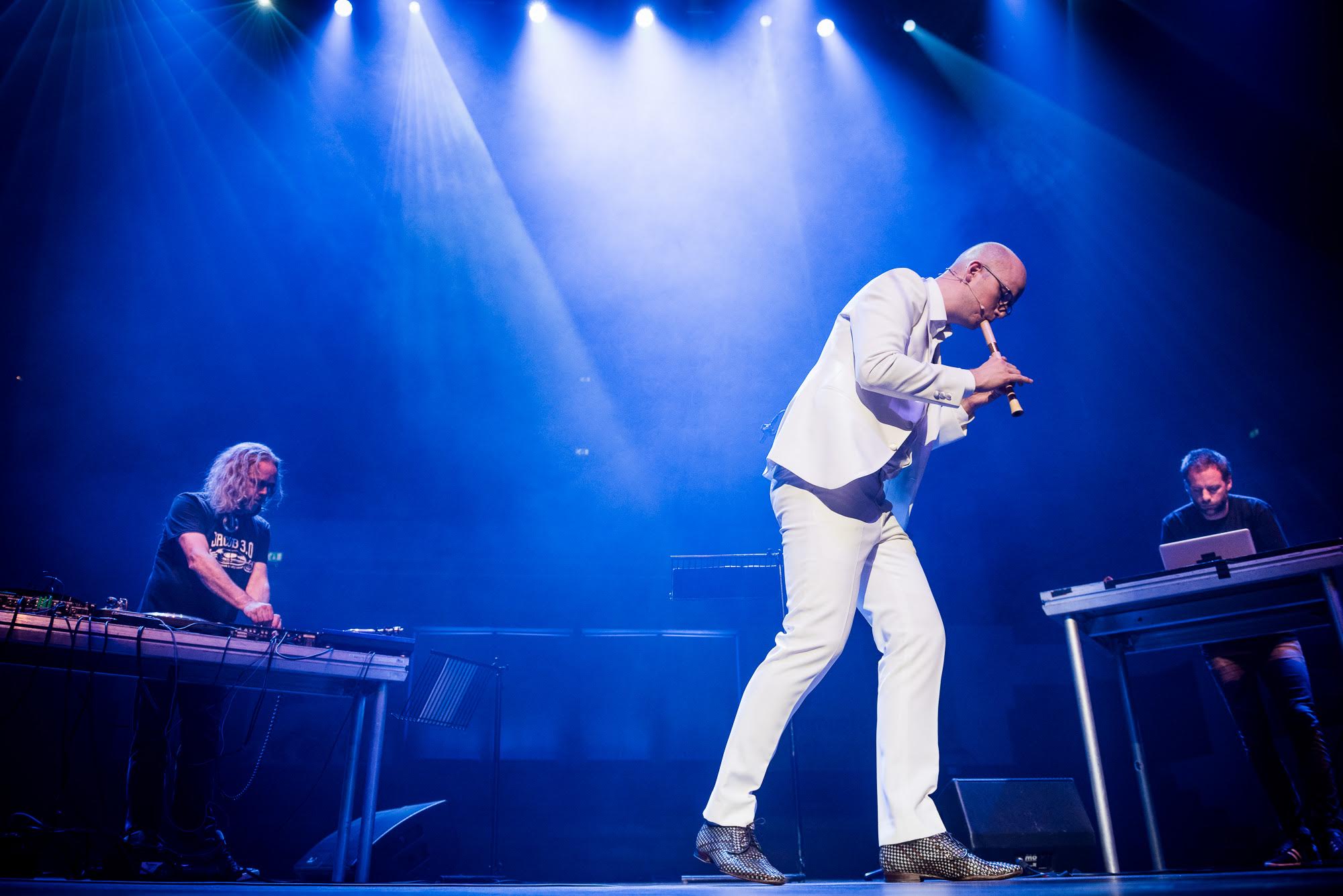
photo of performers at Jacob 3.0

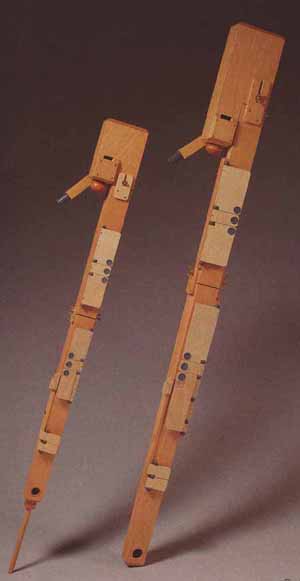
The Grote Zaal in the Vredenburg had been transformed into something resembling a jazz club by purple lighting and synthetic smoke. On the central stage there was a large DJ’s mixing table with a variety of turntables and other devices, and a second table with an Apple device. These were the domains of Arjen de Vreede (DJ DNA) and Jorrit Tamminga respectively. I learned that recorder sound samples had been cut onto vinyl discs to allow the background use of chords. Another machine, which had been acquired at great expense from Kraftwerk in the 1990s, transformed sounds into growls. While the DJ accompanied using a variety of techniques, Tamminga sampled and mixed and looped the live performance of star recorder player, Erik Bosgraaf. In a dramatic white suit, he made his entry playing one of the later variations of a van Eyck piece, and worked backward until he ended up at the relatively long notes of the original tune. He then progressed up some stairs and transferred to a metallic instrument upon which he produced flashes of white noises. Up another flight of stairs saw him encounter and play what he later called his great bass ikea flute (similar to those shown below). From here he descended once again to the stage, played some more van Eyck on a different, higher pitched recorder and then walked off, leaving DNA and Tamminga to wind down the accompanying sounds and the impressive light show to a subdued ending.

Paetzold recorders

I must be honest and say that I found the concert a challenge. I understand that van Eyck and his music deserve to be more widely known. I also appreciate that new approaches have to be taken to give it modern currency. The concert hall was packed and the audience highly appreciative of the performance. I found it a powerfully thought-provoking experience – if slightly shocking in the context of the early music which filled the rest of my time in Utrecht – but having one’s preconceptions challenged and boundaries pushed is never a bad thing. Samples from the show are available HERE, so you can listen for yourselves.

Brian Clark

My thanks to:

  • Residenties in Utrecht
  • Festival Oude Muziek
  • Gaudeamus Muziekweek​
  • Culturele Zondagen
Categories
Recording

C. P. E. Bach: Cello Concertos

Nicolas Altstaedt, Arcangelo, Jonathan Cohen
64:37
Hyperion CDA68112
H432, 436, 439 (Wq 170-172)

C. P. E. Bach’s three concertos for cello and strings date from the early 1750s, existing also in versions for harpsichord and flute. Between them they represent fine examples of the variants to be found in Bach’s highly distinctive style, the A minor dominated by the nervous intensity and fragmentary writing typical of Sturm und Drang, the B flat a more relaxed work that comes closer to Rococo sentiment. The most original of the trio is the A major, with its central Largo con sordini, mesto  (sad) that, as Richard Wigmore observes in an excellent note, might be seen as the epitome of the impassioned Empfindsamkeit  style associated with Bach and North German colleagues such as the Benda brothers.

Nicolas Altstaedt is a German-French cellist who has come very much to the fore in recent years both as a modern and period instrument performer. The first thing to say about his performances here is that they are as technically near-flawless as it is possible to come and that the solo playing throughout owns to a rich tonal beauty evoking a bewitching sensuality. If that sounds like sufficient to entice you, then you probably need read no further.

The overriding objectives of both Sturm und Drang  and Empfindsamkeit  – in both their literary and music forms – was to stir the deepest of passions and, in the case of the latter, profoundly touch the heart. Both are open to sentimentality of the modern variety and it is here that my own reservations about the present performances have their roots. Too often I have an uncomfortable impression that they are skating too close to the surface. Yes, Arcangelo’s strings dig into the notes with trenchant vigour and, yes, yearning themes yearn, but awakening the passions or potentially inducing the tears of ladies? Perhaps not. We can take that remarkable central movement of the A major Concerto to provide a clear example that illustrates the point. Here the sighing, longing unison theme sets out too slowly for an 18th-century Largo, tempting Altstaedt and Cohen into a self-conscious interpretation that in its overuse of such imposed effects as portamento loses much of its spontaneity. Interestingly, an earlier version of this concerto I have to hand by Alison McGillivray and the English Concert (harmonia mundi, 2006) takes the movement only marginally faster, but achieves an inner intensity that is for me lacking in the present performance.

A further example of Altstaedt’s self-indulgence that might be cited is his heavily-underscored direct quote of ‘Es ist vollbracht’ (from the St John Passion) in the cadenza of opening movement of the A minor Concerto on the grounds that it bears a resemblance to the cello’s opening theme. Well, so it might, but it’s not that close and the equally vague resemblance of the opening theme of the B-flat Concerto to ‘Where‘er you walk’ does not receive similar treatment. As suggested above, many will be unconcerned by these caveats, choosing instead simply to relish the ravishing beauty of the playing. There are certainly many passages and moments when I can do that, but overall the CD left me less engaged than I felt I should have been.

Brian Robins

[iframe style=”width:120px;height:240px;” marginwidth=”0″ marginheight=”0″ scrolling=”no” frameborder=”0″ src=”//ws-eu.amazon-adsystem.com/widgets/q?ServiceVersion=20070822&OneJS=1&Operation=GetAdHtml&MarketPlace=GB&source=ss&ref=as_ss_li_til&ad_type=product_link&tracking_id=infocentral-21&marketplace=amazon&region=GB&placement=B01HFRB82Y&asins=B01HFRB82Y&linkId=b25f2dcc5dd1120b2652776655c19d5e&show_border=true&link_opens_in_new_window=true”]

[iframe src=”http://www.jpc-partner.de/link.php?partner=ngr&artnum=4126811&bg=ffffff&tc=000000&lc=e5671d&s=120&t=1&i=1&b=1″ width=”120″ height=”214″ scrolling=”no” frameborder=”0″]

[iframe style=”width:120px;height:240px;” marginwidth=”0″ marginheight=”0″ scrolling=”no” frameborder=”0″ src=”//ws-na.amazon-adsystem.com/widgets/q?ServiceVersion=20070822&OneJS=1&Operation=GetAdHtml&MarketPlace=US&source=ss&ref=as_ss_li_til&ad_type=product_link&tracking_id=earlymusicrev-20&marketplace=amazon&region=US&placement=B01HFRB82Y&asins=B01HFRB82Y&linkId=ce5634599ca7a994a0e2b06dc0d3fb5d&show_border=true&link_opens_in_new_window=true”]

Categories
Recording

The Haydn Album

Daniel Yeadon cello, Erin Helyard harpsichord, Australian Haydn Ensemble, Skye McIntosh (dir).
ABC Classics 481 206
69:25
Cello Concerto in C, Symphony No 6 in D ‘Le matin’, Harpsichord Concerto in D

[dropcap]B[/dropcap]ehind the prosaic title lie vital, perceptive period instrument performances of three of Haydn’s most popular orchestral works. Both the C-major Cello Concerto and the Symphony No. 6, part of a trilogy devoted to the times of the day, date from the mid-1760s, a period when the young Haydn was settling into his new post at Esterházy.

With its many concertante elements, ‘Le matin’ gives a strong sense of the composer delighting in assessing the strength of his newly acquired orchestra. The fine evocation of dawn is here given a real sense of expectancy, though the keyboard continuo flourishes seem to me out of place. When day breaks the main allegro is given a bright-eyed, sharply observed focus, the concertante wind playing full of character and technically outstanding. The improvisatory second movement features a splendidly played violin solo from Skye McIntosh, but the rhythm of the central andante section sounds a little mannered and I’m unconvinced by Erin Helyard’s note arguing justification for the use of organ continuo in this movement. The peaceful suspensions of the final pages sound truly lovely. The Minuet is finely rhythmically sprung, the central trio section again given real character by the bassoonist, while the concertante element is again to the fore in the zestful Finale.

The Cello Concerto opens at an agreeably comfortable tempo allowing full reign to its lyricism, while at the same time not neglecting rhythmic impetus. Daniel Yeadon’s solo playing is technically accomplished and tonally secure across the register, with some particularly sensitive playing in the development. The central Adagio is felicitously phrased, with some subtle use of portamento and rubato along the way, while the final movement carries real nervous intensity in its strong forward momentum. Is the cello a little too forwardly recorded? Maybe, but it’s only in the busy activity of the finale that such thoughts really comes to mind.

Erin Helyard’s performance of the well-known D-major Keyboard Concerto (1784) is given on a copy of a Goujon of 1749 by Andrew Garlick. It’s a mellifluous instrument with an especially attractive silvery upper register, played here by Helyard with firm-fingered accomplishment. If I’m marginally less taken with the performance than the other two, it is because some of the tempo fluctuations made in cause of dramatic effect in the opening Vivace seem to me to come dangerously close to mannerism. But the cantabile of the operatic central Adagio is compellingly laid out, while the famous Hungarian rondo finale is given with all the unbridled élan that anyone could want.

This is a disc that serves as an eloquent reminder that there are few more rewarding experiences than an hour or so spent in Haydn’s company.

Brian Robins

[iframe style=”width:120px;height:240px;” marginwidth=”0″ marginheight=”0″ scrolling=”no” frameborder=”0″ src=”//ws-eu.amazon-adsystem.com/widgets/q?ServiceVersion=20070822&OneJS=1&Operation=GetAdHtml&MarketPlace=GB&source=ss&ref=as_ss_li_til&ad_type=product_link&tracking_id=infocentral-21&marketplace=amazon&region=GB&placement=B01IR88XY6&asins=B01IR88XY6&linkId=7c425caca21c78fefab55dbe8d5e5b35&show_border=true&link_opens_in_new_window=true”]

[iframe style=”width:120px;height:240px;” marginwidth=”0″ marginheight=”0″ scrolling=”no” frameborder=”0″ src=”//ws-na.amazon-adsystem.com/widgets/q?ServiceVersion=20070822&OneJS=1&Operation=GetAdHtml&MarketPlace=US&source=ss&ref=as_ss_li_til&ad_type=product_link&tracking_id=earlymusicrev-20&marketplace=amazon&region=US&placement=B01IR88XY6&asins=B01IR88XY6&linkId=9f1421be2d2635a3b87bdc467a65d20a&show_border=true&link_opens_in_new_window=true”]

Categories
Recording

Sweet Melancholy

Works for viol consort from Byrd to Purcell
cellini consort
59:13
Coviello Classics COV 91604

[dropcap]F[/dropcap]or an apparently restricted genre, the English viol consort enjoyed a surprisingly long life. From its first stirrings in the 1520s until Purcell’s final homage to this highly refined and cultivated genre in his great 3 and 4-part Fantazias, the viol consort remained at both court and country the chamber music-form par excellence in England.

The present disc gives a survey of this repertoire for two- and three-part consort across most of the period it was at its highest point. Superficially music for viol consort developed relatively little throughout its long history. We find the same equality of parts exploring an often dense labyrinth of counterpoint that obviously owes its genesis to the great tradition of vocal polyphony. Yet as the two opening and cleverly juxtaposed items on the CD clearly demonstrate there is world of difference between the gravely dignified Fantasia of Thomas Lupo (1571-1627) – a piece that might well qualify under the disc’s ‘Sweet Melancholy’ rubric – and the first of Purcell’s 3-part Fantazias. There, although the emphasis on contrapuntal complexity remains fundamentally unchanged, the textures are more open, with contrasted sections that owe their place to 17th century Italian influences on the form.

Although the discs title might serve as a catchy handle, it also implies a restriction of mood that is not borne out by the repertoire included. Take, for example, the first of three fantasias by Orlando Gibbons, a piece that employs brief, almost fragmentary motifs to create a dynamic thrust that hints at the restless impetuosity of William Lawes. Consider, too, the music of Matthew Locke, given a more generous share than anyone. The first of a pair of 2-part Fantasias finds Locke exploiting chromaticism to disquieting effect, while the second owns to the new expressivity imported from Italy.

The performances by the Swiss-based Cellini Consort are exceptionally accomplished, give or take the occasional rough edge, with richly expressive and musical playing from its three members, all of whom apparently play both treble and bass viol on the disc. The disc might indeed well qualify as a fine introduction to the repertoire, though it should be remembered that much its greatest music was composed for larger consorts.

Brian Robins

Brian Robins

[iframe style=”width:120px;height:240px;” marginwidth=”0″ marginheight=”0″ scrolling=”no” frameborder=”0″ src=”//ws-eu.amazon-adsystem.com/widgets/q?ServiceVersion=20070822&OneJS=1&Operation=GetAdHtml&MarketPlace=GB&source=ss&ref=as_ss_li_til&ad_type=product_link&tracking_id=infocentral-21&marketplace=amazon&region=GB&placement=B01D3XKQPY&asins=B01D3XKQPY&linkId=385cb7fbdfb807ba9a52a7c852258bac&show_border=true&link_opens_in_new_window=true”]

[iframe src=”http://www.jpc-partner.de/link.php?partner=ngr&artnum=2405752&bg=ffffff&tc=000000&lc=e5671d&s=120&t=1&i=1&b=1″ width=”120″ height=”214″ scrolling=”no” frameborder=”0″]

[iframe style=”width:120px;height:240px;” marginwidth=”0″ marginheight=”0″ scrolling=”no” frameborder=”0″ src=”//ws-na.amazon-adsystem.com/widgets/q?ServiceVersion=20070822&OneJS=1&Operation=GetAdHtml&MarketPlace=US&source=ss&ref=as_ss_li_til&ad_type=product_link&tracking_id=earlymusicrev-20&marketplace=amazon&region=US&placement=B01D3XKQPY&asins=B01D3XKQPY&linkId=d64f3710d965e311a5ce0fcadf1b67d9&show_border=true&link_opens_in_new_window=true”]