Categories
Uncategorized

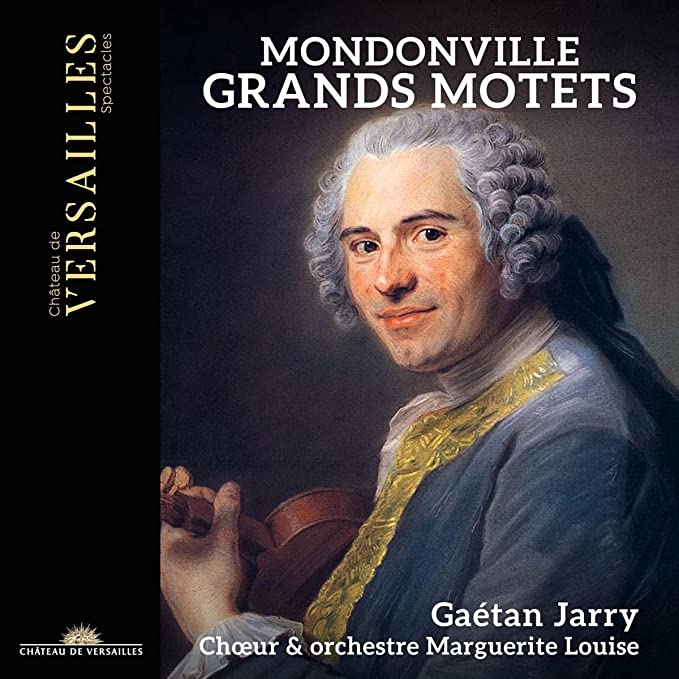
Mondonville: Grands Motets

Choeur & Orchestre Marguerite Louise, directed by Gaétan Jarry
67:39
Versailles  Spectacles CVS 063

Click HERE to buy this on amazon.co.uk
[Clicking these sponsored links keeps this reviews site free to access]

This continues the invaluable Versailles Spectacles series devoted to the grand motet, large-scale psalm settings for soloists, chorus and orchestra that were the principal form of sacred music in the France of Louis XIV and Louis XV. Those of Mondonville belong among later examples, succeeding and indeed vying in popularity with those of Rameau, whose small output was the subject of the previous release in the series, performances given by the same ensemble. My review of that outstanding CD can be found on this site.

Jean-Joseph Cassanéa de Mondonville was born in 1711, a member of a poor but aristocratic Languedoc family. At the age of about twenty, he went to Paris, quickly establishing himself as a composer of instrumental music and a violinist. The cover portrait of him by Quentin de la Tour depicts an agreeable and handsome man in his late 30s whose social skills won him favour at court from the likes of Mme de Pompadour. Mondonville gained a number of posts in the Chapelle Royale, including in 1739 that of master (Intendant) and his music was so successful at the famous Concert Spirituel in Paris that he became its most frequently performed composer of all time. A number of his motets were first performed there. Although Isbé (1742), his first work for the Paris Opéra, was a failure, Mondonville’s later operas achieved considerable success, the ballet-héroique Le carnaval du Parnasse (1749) in particular opening with a run of no fewer than 27 consecutive performances.

The present recording includes three of Mondonville’s nine grands motets. Of these Dominus regnavit (a setting of Psalm 93), composed in 1734, is the earliest and indeed the first of the motets, while Coeli enarrant gloriam Dei (Psalm 19) and In exitu Israel (Psalm 115), dating from 1749 and 1753 respectively are late works that represent his final examples of the genre. Of these, In exitu is an outright masterpiece, a superbly dramatic work that fully captures the grand sweep, colourful diversity and rich harmonic texture of a text that tells of the flight from Egypt. The passages narrating the miraculous crossing of the Jordan are vividly depicted, the seething swirling river parted to the stuttering wonderment of the chorus alternating between declamatory homophony and contrapuntal writing. Perhaps even more remarkable is the succeeding haute-contre solo, later with chorus, coloured by dark bassoon sonority, ‘Montes exultaverunt’ (The mountains skipped like rams’) and following rhetorical bass solo, ‘Quid est tibi, mare …? (What aileth thee, O thou sea). Also noteworthy is the Italian influence of a passage such as the soprano ariette ‘Qui timent’ (Ye that fear the Lord). The entire work bears more than eloquent testimony to Mondonville’s mature style.

Unsurprisingly neither of the other motets quite matches this quality, though the colourful text of Psalm 93, which also speaks of floods, evokes a powerful pictorial response to ‘the surges of the sea’ and praise of the ‘voices of many waters’. Coeli enarrant, planned on a less ambitious scale, opens more conventionally, but is elevated to near transcendence in a wonderful passage that speaks of God’s creative handiwork, the setting of a ‘tabernacle for the sun, which is as a bridegroom coming out of his chamber’. There is a marvellous sense of mystery in Mondonville’s setting, a bass solo, rising from the darkest pianissimo to full glory and the restrained entry of the chorus.    

I gave the highest praise to the performances of the Rameau motets by Gaétan Jarry and his supremely talented forces, praise that can be fully reiterated in the present case. On every level, this is another issue that demands to be heard by anyone remotely drawn to the music of the French Baroque.

Brian Robins

Categories
Recording

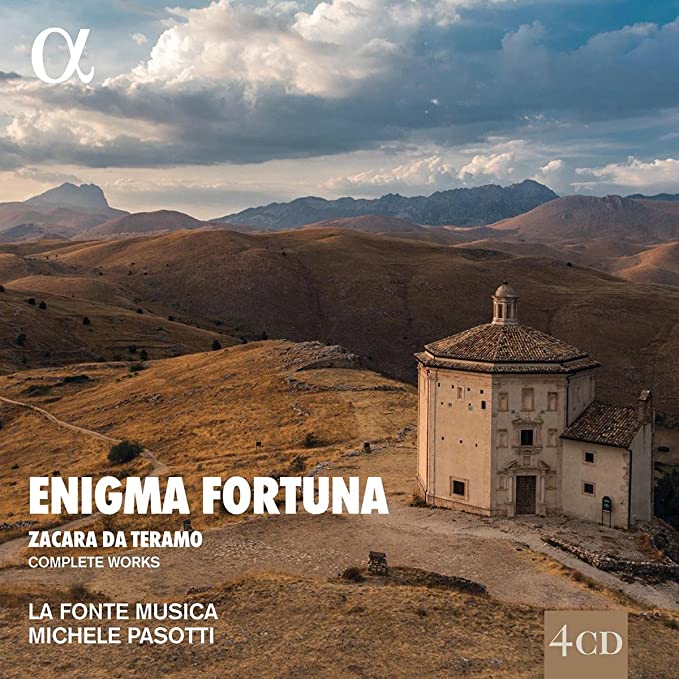
Enigma Fortuna

Zacara da Teramo : Complete Works
La Fonte Musica, Michele Pasotti
237:00 (4 CDs in a card box)
Alpha Classics Alpha 640

Click HERE to buy this on amazon.co.uk
[These sponsored links help the site remain alive and FREE!]

Zacara of Teramo, AKA Antonio di Berardo di Andrea, is a kenspeckle figure who has only recently coalesced out of a number of shadowy figures of the period as a result of scholarly research into the early Italian Renaissance. (The ‘new’ Zacara now incorporates all of the first three entries under Z in J and E Roche’s excellent 1981 ‘Dictionary of Early Music’!) Active in the Brescia region, Zacara (‘Tiny’) probably acquired his nickname due to his restricted growth, while further deformities meant he had only ten digits altogether on his hands and feet, a fact unshrinkingly demonstrated in a surviving portrait. Now that a larger body of music by this one composer has been identified, he has emerged as an extremely important link between the ars subtilior of the 13th century and the music of the early Renaissance. This comprehensive 4-CD account of his complete sacred and secular oeuvre, including many premiere recordings, is a revelation, both sacred and secular works receiving very fine performances indeed on convincing blends of voices and instruments. It is perhaps easier to identify a specific individual style once a body of work has been confidently ascribed to one composer, but it is hard to see why it wasn’t clear all along that this was the work of a single distinctive and highly talented musical mind. There is also satisfaction for us nowadays in the discovery that a man coping with considerable physical challenges could be so successful in his chosen career and lead such a long and fruitful life in the 14th and 15th centuries. The sacred music (recorded on the first two CDs) in particular is among the finest I know from the period, and these superb idiomatic accounts by La Fonte Musica go a long way to re-establishing Zacara’s seminal role in the development of sacred Italian music. This is not to diminish the attractiveness of the two CDs of Zacara’s secular music, which open with his splendid Cacciando per gustar with its vivid evocation of a busy marketplace.

D. James Ross

Categories
Recording

A 14th-century Salmagundi

Blue Heron
40:04
BHCD 1011

Click HERE to buy this on amazon.co.uk
[These sponsored links help the site remain alive and FREE!]

How lovely to see the enterprising Bostonian vocal ensemble Blue Heron back in the recording studio, albeit for this rather brief CD of music earlier in period than their previous impressive discography – particularly memorable was a ground-breaking series of CDs of music from the Peterhouse Partbooks. Perhaps unsurprisingly, Blue Heron prove superbly in tune with this 14th-century music, which I notice they have approached through recordings of the secular music of Johannes Ockeghem. The voices are occasionally joined by instruments for music by Machaut, Cruce, Vitry, Landini, Jacob Senleches and Jacopo da Bologna. Incidentally, this CD has nothing to do with psalms, the title coming from Rabelais’s Pantagruel and denoting a hodgepodge, and its contents consisting of secular songs! The performances are as I have suggested entirely enjoyable, although I noticed some unfortunate mic popping on a couple of tracks. It is interesting to hear the voices of Blue Heron sounding so natural one-to-a-part and with instruments, including a fine idiomatic contribution on bray harp by the group’s director, Scott Metcalfe. 

D. James Ross

Categories
Recording

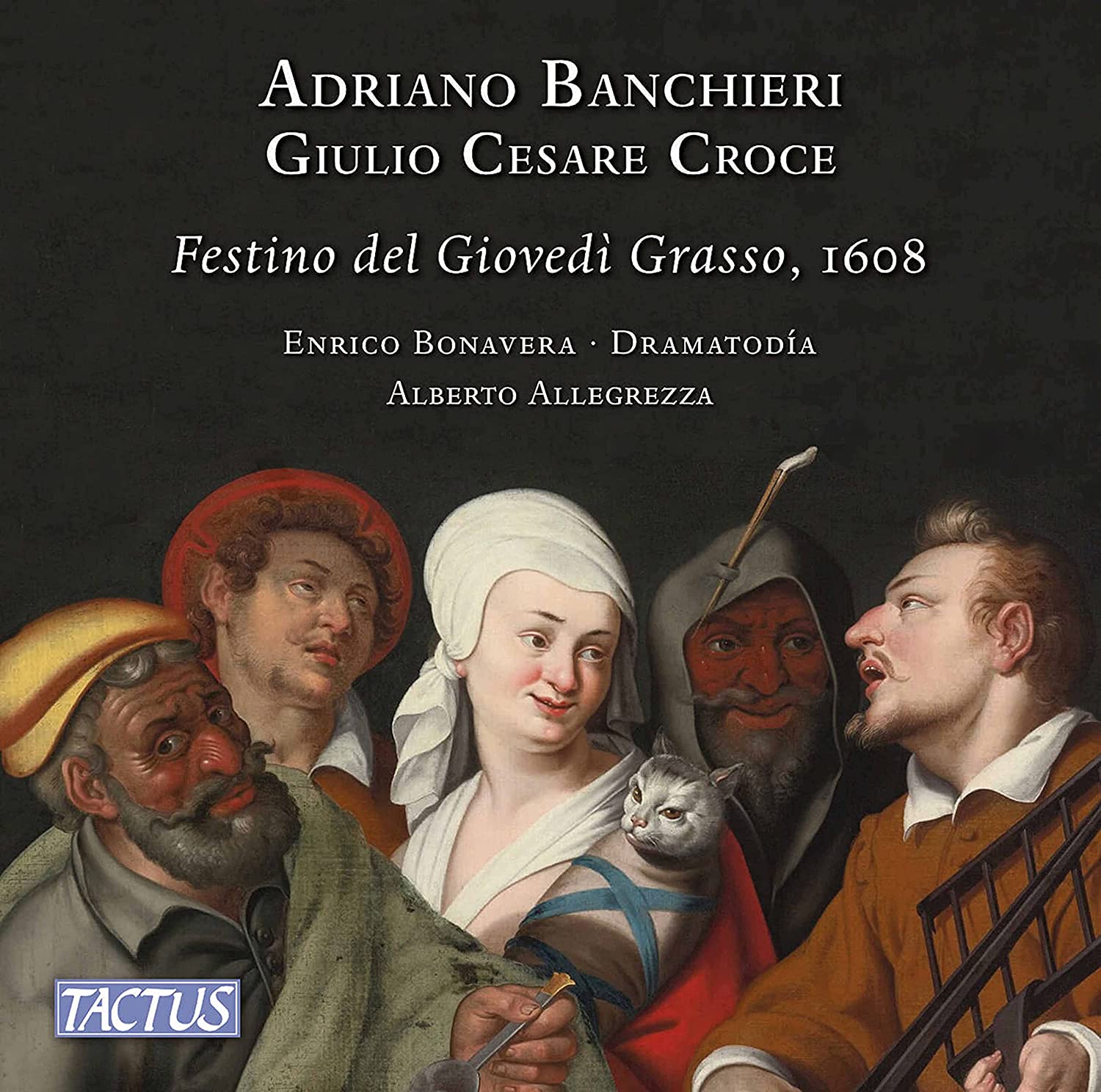
Banchieri | Giulio Cesare Croce: Festino del Giovedi Grasso (1608)

Dramatodía, Alberto Allegrezza
78:36
Tactus TC 550008

Click HERE to buy this on amazon.co.uk
[Sponsored links like this keep this website free to view]

This performance of extracts from sequences of music and texts for Carnival time by Banchieri and Croce is presented with the irony and humour essential for this celebration of the reversal of the normal order of things. Like the comedic tightrope walker whose technique must be flawless, the singers of Dramatodía adapt their singing style to a range of parody productions, but at the same time demonstrate that they can sing beautifully too. If I found this element of the CD slightly outweighed by caricature and narration, and felt occasionally that we needed a visual element to bring the programme fully to life, the more seemly performances were entertaining and enjoyable. This is one of the many musical elements in early Baroque Italy, which eventually aggregated into the first operas, and it is intriguing to hear this fine music put into something of a dramatic context. The highlight is undoubtedly Banchieri’s Contrapunto bestiale alla mente!

D. James Ross

Categories
Concert-Live performance

A Bach Family Concert at the Thomaskirche, Leipzig

It was only a fleeting visit. But even a fleeting visit to the Bach Festival in Leipzig is not to be spurned if you’ve not previously visited the city in which the majority of Bach’s greatest sacred works were composed. Their composition of course formed part of his duties as Kantor of the Thomaschule, the choir school that served to provide choristers for Leipzig’s churches, most importantly the Nicolaikirche, at that time the principal town church, and the Thomaskirche.

First impressions of  21st-century Leipzig to a new visitor are likely to be of a city positively seething with life and energy, not so surprising when one learns it is home to one of the largest student populations in Germany. This bustle and vitality spills over into the annual Bachfest, which far from being restricted to the hallowed ground of the churches in which Bach worked or concert halls includes among nearly 150 events popular concerts that take over the central market square.

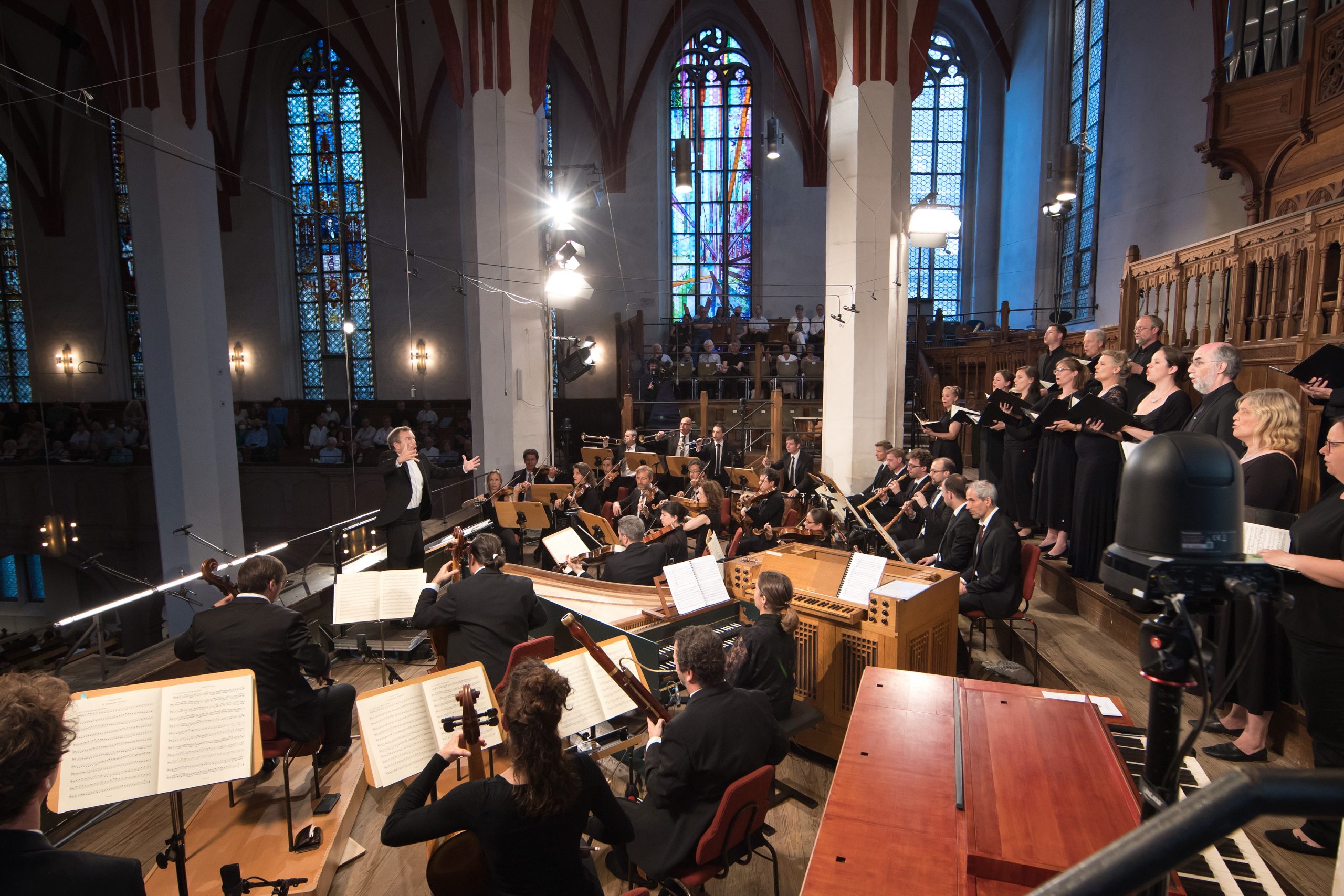
This year’s festival was held under the theme ‘Bach – We Are Family’, a motto certainly appropriate for the concert I attended in the Thomaskirche on 11 June. It was given by Les Talens Lyriques under their director Christophe Rousset, with the Vocalconsort Berlin and soloists Rachel Redmond (s), Hagar Sharvit (a), William Knight (t), and Krešimir Stražanac (b-bar).  As in Bach’s day, the performers were situated in the unusually spacious organ gallery, doubtless the reason we know Bach favoured the Thomaskirche for larger-scale choral works. The programme was an intriguing one, if curious by modern-day tastes. It took the form of a concert given in Hamburg by C. P. E. Bach in 1786, a concert that would be the last given by Bach’s now 72-year-old son. It appears to have served two purposes, one practical, since it was a charity concert, the other Bach’s desire at the end of his life to promote his own legacy and, unusually for the time, include historical works that served to preserve the heritage of his father and Handel, his father’s great contemporary.

Rousset’s reconstruction made little attempt at pure historical accuracy, not least because he used only the smallish choir possible in the Thomaskirche gallery (three voices per part), when accounts of the Hamburg concert tell us C. P. E employed a large choir that included amateur women singers with Bach’s professional males. Notwithstanding the use of small numbers made the performance of Credo from the B-minor Mass especially interesting to one long ago convinced by the Joshua Rifkin/Andrew Parrott argument in favour of Bach’s use of one-voice-per-part in his choral works. From where I sat in the pews facing the nave near the front of the church contrapuntal sound tended to become confused in quicker music, but sounded much better in slower music and, significantly, at its best with solo passages such as the duet ‘Et in unum’, where the sweetness of the strings was also noteworthy. It would of course be idle to try to draw too many conclusions from such a brief encounter in one place in the Thomaskirche, especially as I’m told there was more wood in the church in Bach’s day; that may well have soaked up more of the resonance. Notwithstanding it made for a fascinating, thought-provoking experience.

Credo, which having been written as part of a work designed for the Catholic court in Dresden could never have been performed in the Thomaskirche in Bach’s day, was in fact the only work of J. S’s to be included, the remainder being devoted to two excerpts from Messiah, ‘I know that my redeemer liveth’ and ‘Hallelujah’, given the context incongruously if very well sung in English. The remainder of the concert featured music by C. P. E himself, most notably in his Magnificat in D, originally composed in 1749 as an informal application to succeed his father as Thomaskantor, but here given in the version adapted for Hamburg that added three trumpets. As my illustration shows,Rousset used players employing ‘holeless’ trumpets and to exciting effect (they can be seen to the far right of the orchestra). The performances by choir and orchestra throughout were excellent, though the solo singing was more variable, the best of it coming from the outstanding young Croatian bass Krešimir Stražanac. But this was not really an occasion for detailed critical analysis, rather for this listener at least an intensely moving opportunity to hear the music of Bach and his most talented son just a few metres from where the remains of the great Kantor now lie at rest after their reburial in the chancel after the Johanniskirche was bombed in World War II.

Brian Robins

PHOTO CREDIT: Christophe Rousset directs Vocalconcert Berlin and Les Talens Lyriques in the Thomaskirche, Leipzig © Bachfest 2022

Categories
Recording

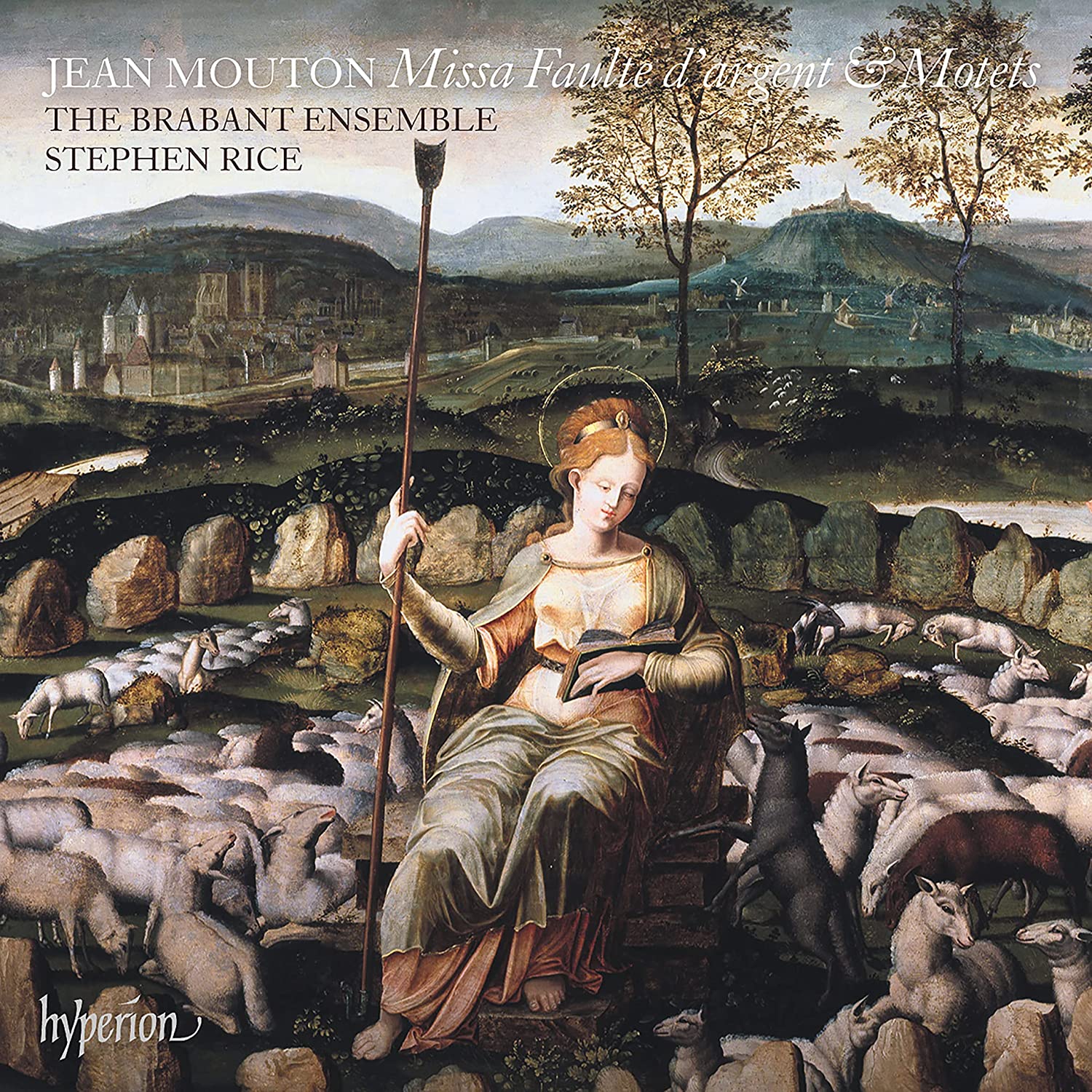
Mouton: Missa Faulte d’argent & Motets

The Brabant Ensenble, conducted by Stephen Rice
72:53
Hyperion CDA68385

Proclaiming Jean Mouton as one of the finest Franco-Flemish composers in the musical era between Josquin and Palestrina – which he is – does not make him outstanding. It merely renders him equal with a substantial number of similarly fine composers from that era who have enriched the canon of sacred vocal music with their works. Thanks to advances in scholarship and in performance practices, we can now also appreciate the intense distinctiveness of each of these composers, and that same singularity in each of their compositions. This second recording of Mouton’s music by The Brabant Ensemble (following CDA67933; acclaim also for The Tallis Scholars with another Mass and motets on CDGIM 047) introduces yet more hitherto unmined riches from his oeuvre with only one brief item having been commercially recorded previously. These wonderful tracks simply roll out one after another, individually varied while combining to create a disc that is both enjoyable and at the same time rewarding, spiritually and aesthetically. Characteristics of Mouton’s personal style include judicious use of reduced scoring, often employing pairs of voices successively; passages showing the influence of faburden; and the dramatic use of dissonance, not just at cadences. All these are in the context of the finest melody and harmony imparting a sense of spaciousness and yet an uncanny knack to give the impression that more voices are singing than is actually the case: there was more than one point at which I needed to confirm that a particular work was indeed in four parts throughout and not what had begun to sound like five (at least!).

The seven motets that form the first half of this programme all exhibit the edifying and excellently wrought features mentioned above. Subsequently they all appear in the Mass, to such an extent that it emerges as one of the finest from this remarkable generation of supremely gifted – and presumably well-taught – composers. Settings of the Agnus from Josquin, culminating in those for five and (especially) four voices by Byrd composed during the early to mid 1590s, can rise to sublime levels, not only here in Mouton’s Mass, but also in so many of these Masses by so many of these composers. Meanwhile today we are blest with choirs who understand this music, not just reproducing the notes accurately, but doing so with comprehension and empathy, both for the meaning of the music and for the manner in which that music, and the knowledge of that music, can best be dispensed. The entire performance of the Missa Faulte d’argent, which forms the second half of this programme, epitomizes all that is currently best in the performing and recording of Renaissance choral music. Every note is clear. Every melodic line is audible and can be followed in each part without difficulty by the listener. Every harmonic interaction, be it in the weaving and occasional clashing of melodic lines or in homophonic passages, is perfectly weighted. Tempi and volumes are calibrated to respond sensitively to the text and to the sound made by the music itself, so that there is never bland perfection nor emotional exaggeration, and the music and its text can be expressed as rhetoric or narrative, to inform, edify and delight the listener. Mouton has done humanity an enormous favour by composing this Mass. The Brabant Ensemble has done Mouton an enormous favour by selecting this Mass, and by recording it so eloquently. And the great thing is: there is so much more of this quality of music, by composers of this quality, still waiting to be rediscovered, and so much that has already been rediscovered that is waiting to be performed and recorded. And this is besides all the works we know already by (randomly adding to names already dropped) the likes of Fevin, Phinot, Gombert, Manchicourt, Crecquillon, Clemens and a heavenly host of others. In conclusion, I should like to make a plea to The Brabant Ensemble to consider making a disc like this one, consisting of the music of Lheritier. His few commercially recorded sacred pieces are spread over several discs; these motets are superb; he was respected by Palestrina … Meanwhile we can be grateful for this second recording by The Brabant Ensemble of motets and a mass by Mouton – he has proved more than worthy of their (exceptional) further attention.

Richard Turbet

Categories
Sheet music

Nathaniel Giles: English Sacred Music

Early English Church Music [volume] 63
ISBN 978 0 85249 965 8 | ISMN 979 0 2202 2643 4 (Hardback)
xxx, 130pp. £70
Stainer & Bell

This second volume dedicated to the few surviving works of Nathaniel Giles (1558?–1634) contains service music. While presenting an edition of the First Service is straightforward, the Second Service can only be reconstructed from the surviving sources to within a certain degree of completeness and the editor Joseph Sargent has had to put his creative hat on for passages where the solo parts are not available, and the Short Service is very fragmentary indeed but both Sargent and the series editor, David Skinner, recommend their contrapuntal possibilities to would-be reconstructionists. After a detailed biography of the composer, Sargent surveys the sources and lays out his editorial approach. Then come detailed descriptions of the sources and a meticulous editorial commentary on the three services. Then to the music itself, laid out on pages larger than A4 size that can accommodate the up to ten voices (two five-part choirs – cantoris and decani, according to Anglican tradition) and the organ part(s). I had to do some brain juggling when systems were compressed and a voice from the lower group appeared in the middle of the combined groups, but generally the approach works. The added parts are printed in smaller notation. The paper is slightly shiny – I did not find that a problem but I have heard others complain about using such paper for music because it can sometimes catch light awkwardly and become difficult to read. I hope more than anything else that this marvellous tome (at another bargain price of only £70!) will encourage performances of the music – it very much deserves to be heard!

Brian Clark

Categories
Sheet music

Kusser: Serenatas for Dublin

Recent Researches in the Music of the Baroque Era, 210
Edited by Samantha Owens
xxi, four plates, 262pp.
ISBN 978-1-9872-0450-6

This is Samantha Owens’ latest contribution to the (long overdue!) rediscovery of Kusser’s music. It contains the three surviving serenatas (of 21!) that the composer wrote during his time in Ireland: “The Universal Applause of Mount Parnassus” (1711 for Queen Anne’s birthday), “An Idylle on the Peace” (1713 on the Utrecht settlement), and the rather oddly named “No! He’s not dead” (ca. 1707-14, again for Queen Anne). After a French overture, each is a sequence of recitatives, arias and choruses, many with colourful scorings displaying the versatility of the musical establishment in Dublin. The state pomp of the serenata on the Peace inspires the use of three trumpets, while the 1711 work calls for no fewer than nine solo sopranos. Many of the arias are built on dance forms, and Kusser reveals himself to be quite the tunesmith. He was also a self-borrower, here recycling arias from operas he had written in Germany. Two of the serenatas have recorded in full on Hungaroton, and portions of the other by the Irish Baroque Orchestra under Peter Whelan, both groups drawing out the charm of these neglected pieces. Hopefully the publication of this magnificent volume will inspire others to take up the challenge.

Brian Clark

Categories
Recording

Schütz: Historia Nativitatis

Ensemble Polyharmonique
84:25 (2 CDs in a single jewel case)
cpo 555 432-2

Click HERE to buy this recording on amazon.co.uk
[Please use these sponsored links – we have no other source of income!]

Ensemble Polyharmonique, led by their primus inter pares and alto Alexander Schneider, have embarked on an interesting project: Schütz published the narrative of his Historia without the rich and characterful intermedii scored for the richly furnished Dresden court orchestra, with the comment that these additional parts could be hired for a small fee. He was clearly trying to make the Evangelista’s narrative widely available as the framework for a Christmas reflection and encouraged prospective performers to compose or gather their own material for intermedii to be inserted in his narrative. This is what Schneider’s Ensemble have done, and the result – performed by the six singers, two violins and a basso continuo of organ, theorbo and harp, with gamba/violone and dulzian/flauto – makes a good programme, bringing the outline of the work within reach of those who do not have the extensive resources of Schütz’s Kapelle in Dresden. A note says that the score and parts of the entire programme are available online at www.polyharmonique.eu , but I think you would have to ask them for it.

The narrative is divided into three parts: there is a Marian/Advent section (tracks 1-5) featuring Hammerschmidt, Michael, Schütz, Eccard and Frank’s fine Hosianna dem Sohne David before we reach the Birth of Jesus itself and the message alerting the Shepherds, where Schütz’s narrative based on Luke’s gospel forms the storyline. The intermedii include just one from Schütz’s Weihnachtsoratorium – Ehre sei Gott, with its scoring of six voices, two violins and fagotto with bc fitting the available resources exactly. Otherwise, the material includes interesting versions – usually more richly set than we hear in our carol services – of well-known German Christmas music like Ein Kind ist uns geboren, Joseph lieber Joseph mein, Es ist ein Ros entsprungen and Psallite unigenito.

On CD 2, we move to Herod, the visit of the Three Kings and the Flight into Egypt. Here there are more treasures: a version by Schein of Nikolaus Herman’s chorale associated with Christmas, Lobt Gott, ihr Christen allzugleich, that features at the end of BWV 151 and 195; a setting by Hammerschmidt based on the Kings’ enquiry to Herod, scored for voices and two violins; and music by Carl, Gesius and Briegel setting the Matthean texts that intersperse the narrative before Schütz’s setting of John 1.14 from his Geistliche Chor-musik (1648) and Scheidt’s triumphal setting of In dulci jubilo conclude this well-crafted Historia.

And the performances as usual with this group are excellent. OVPP singing, with a handful of instruments and a well-tuned basso continuo group in a flattering but clean acoustic make this a welcome addition to their discs of 17th-century German music. Let’s hope many will that up their – and Schütz’s – offer to plan an inventive and tuneful Historia next Christmastide.

David Stancliffe

Categories
Recording

Marc’Antonio Ingegneri: Volume Two: Missa Voce mea a5

Choir of Girton College, Cambridge; Historic Brass of the Royal Welsh College of Music and Drama led by Jeremy West, directed by Gareth Wilson
62:44
Toccata Classica TOCC 0630

Click here to buy this recording on amazon.co.uk
[The sponsored links are the only way you can support this FREE site]

My review of volume 1 (TOCC 0556) was posted on 12 April 2020. Those who enjoyed the recording will be pleased to know that Gareth Wilson adheres to much the same format in this second helping of Ingegneri. This time the Historic Brass does not embrace the Guildhall School of Music and Drama beside the Royal Welsh, and he includes the motet on which Ingegneri’s mass is based. The composer seems to have assumed that he was paying tribute to his teacher Cipriano de Rore, to whom this motet had become attributed even as early as the sixteenth century, but seemingly it is the work of the less distinguished but worthy Paolo Animuccia, whose brother Giovanni has a higher profile. Paolo’s motet Voce mea is nowhere near as fine a work as Palestrina’s Laudate pueri and it is surprising that the latter is not included on volume one as a prelude to Ingegneri’s mass which is based upon it. Although the ways in which Ingegneri uses Animuccia’s motet are audible and interesting, the inferior material renders this mass (which is in only five parts) less gripping than his Missa Laudate pueri (which is in eight parts) from volume 1. That said, there is a sumptuously beautiful passage built on suspensions which emphasize the profundity of the emotional appeal “miserere nobis” in the Gloria. The majority of the intervening motets are set to texts familiar from the works of significant contemporary composers, and it is interesting to compare Ingegneri’s creative responses to theirs.

Like its predecessor, this recording comes with a detailed booklet containing two impressive and readable essays. Carlos Rodriguez Otero, who sings tenor on this disc, tells us about “Ingegneri in focus: sacred music and religious life in Cremona”, while Gareth Wilson’s article “Ingegneri against the odds” is an enthralling account of how the challenges and obstacles thrown up by the pandemic were overcome in the making of this recording. For this reason alone it is worth supporting the disc.

Perhaps because of the circumstances under which the music was recorded, the Girton Choir sounds different –but not worse – on this album, with more of an edge to the tone, especially in the upper parts. This is by no means detrimental to Ingegneri’s music. As before Historic Brass have an equal role, playing some motets by themselves, or taking over sections of certain pieces, such as the second Agnus in the mass, or simply playing some parts while members of the Choir sing the others. There are also some gung-ho full passages such as the amens concluding the Gloria and Credo. Listeners will either like or dislike this approach, and will relish the variety of sounds or be annoyed by the switches of timbre. Or they will simply take it as it comes.

Richard Turbet