Categories
Recording

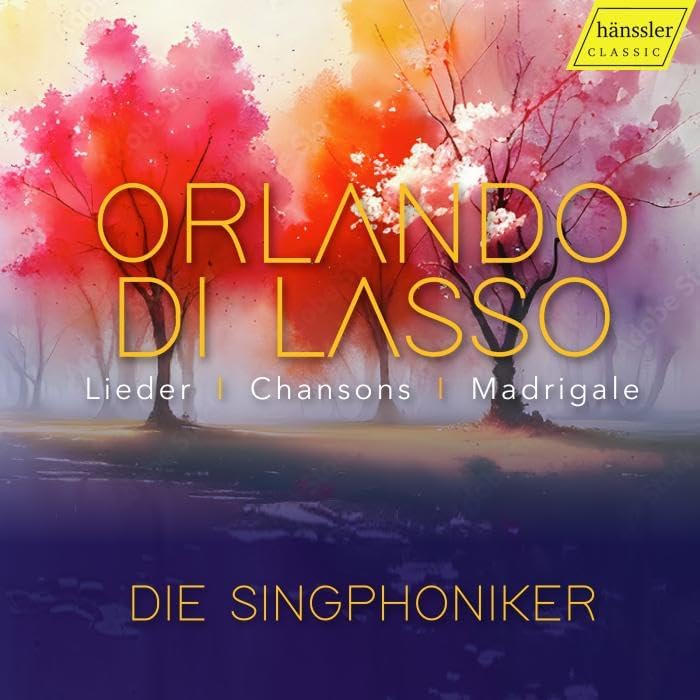
Orlando di Lasso: Lieder, Chansons, Madrigale

Die Singphoniker
51:51
Hänssler classic HC24007

This programme emphasises Lassus’s cosmopolitan status, working in Munich at the centre of Europe and composing secular songs in German, French and Italian – technically the title should read Orlandus Lassus, Rolande de Lassus, Orlando di Lasso! This remarkable chameleon composer manages to adapt completely to each of the musical worlds he enters. The German Lieder, many of them comic novelty songs, are wonderfully mischievous, an aspect fully exploited by the Singphoniker, a sort of German equivalent of our own King’s Singers. Like the latter, they produce a perfectly tuned, wonderfully unified and beautifully blended sound. The transition to the French repertoire is seamless, as is Lassus’ transformation into Rolande de Lassus, and they provide genuinely moving accounts of these delicious French lovesongs as well as trippingly lively performances of the comedy songs Quand mon mari, O vin en vigne, and Dessus le marché d’Arras. Perhaps of his three guises, di Lasso is least typically represented in the madrigals and villanelle, with the concluding extended Sestina setting Là ver l’aurora sounding much more French than Italian in style. Recorded back in 1992, this CD stands the test of time very well with thoroughly modern standards of recorded quality and performance.

D. James Ross

Categories
Recording

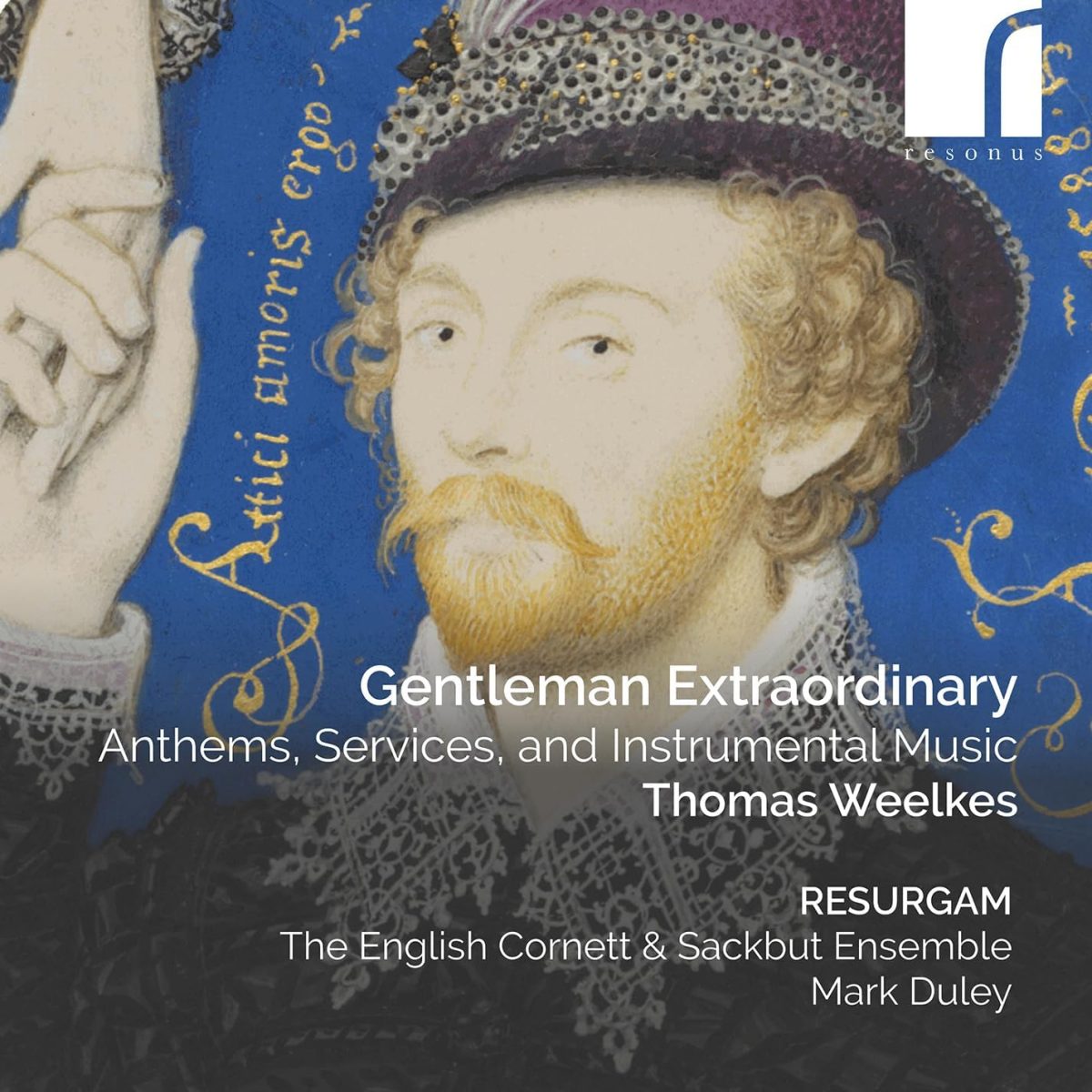
Gentleman Extraordinary

Weelkes: Anthems, Services, and Instrumental Music
RESURGAM, The English Cornett & Sackbut Ensemble, directed by Mark Duley
79:21
resonus RES10325

This collaboration between the choral ensemble Resurgam and The English Cornett & Sackbut Ensemble marks the 400th anniversary of Thomas Weelkes, and features a fine selection of his anthems, service music and instrumental pieces in beautiful performances. The combined sound of the wind instruments, organ and voices is magnificent indeed, while Weelkes’ lively musical imagination and his ear for rich textures are well served here. Resurgam, both as soloists and in full ensemble, sing with a lovely pure tone and blend beautifully with the instruments, while Mark Duley’s direction is purposeful while also allowing room for the anthems to unfold. To contrast with the full items for voices and instruments, we have several stately pavans and a fantasia played by the wind consort, as well as a couple of voluntaries for organ, played on an Organ Calcant fed by hand-operated bellows. In these instrumental interludes, as also in the accompaniments to the larger pieces, the wind instruments employ pleasing ornamentation. The acoustics of the Holy Trinity Church, Minchinhampton, seem ideal for this enterprise, and both soloists and full choir seem to enjoy its richness and depth. I am currently preparing a programme of 17th-century English verse anthems, and this CD has inspired me to include several of these magnificent works by Thomas Weelkes.

D. James Ross

Categories
Recording

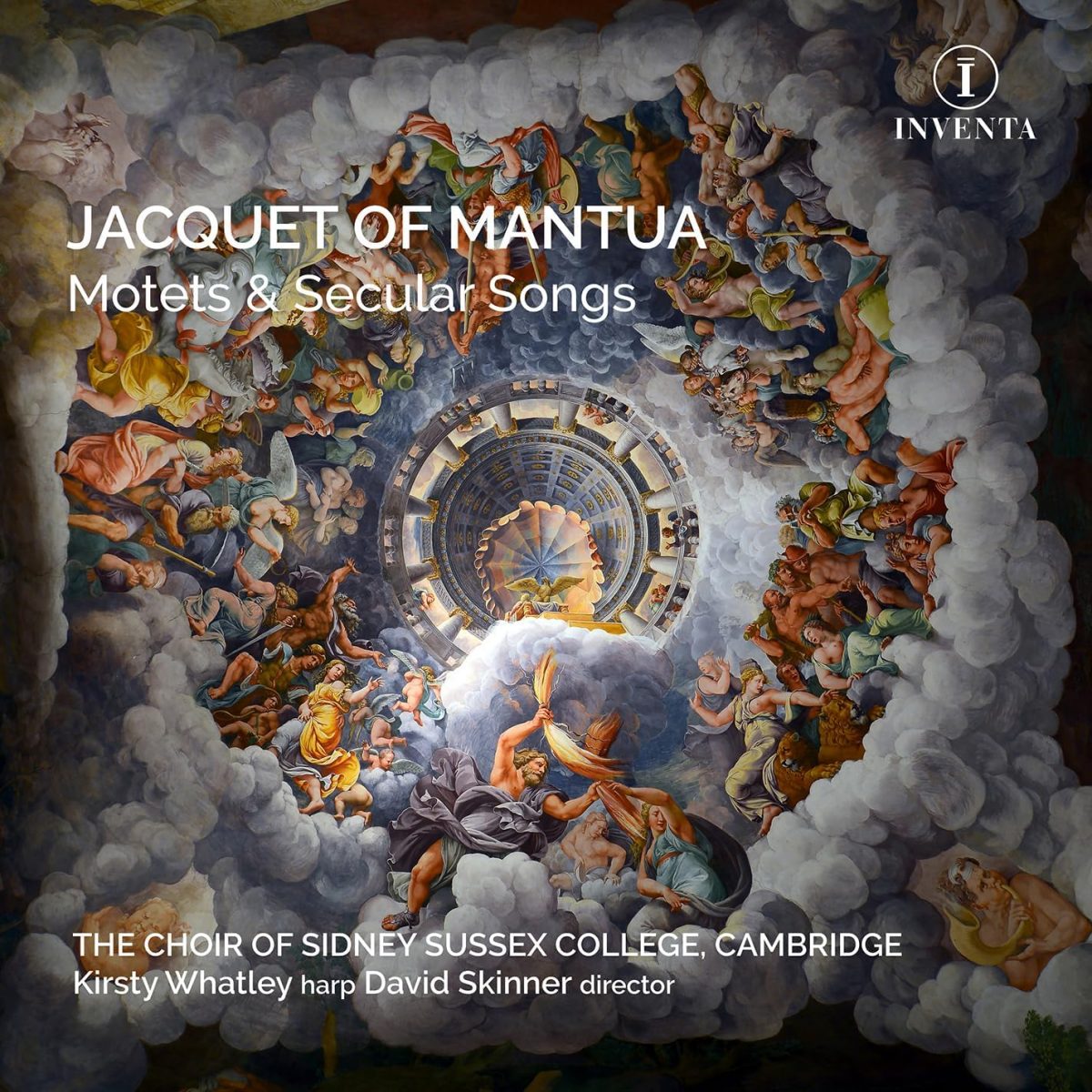
Jacquet of Mantua: Motets & Secular Songs

The Choir of Sidney Sussex College, Cambridge, Kirsty Whatley harp, directed by David Skinner
80:18
Inventa Records INV1017

A disciple and student of Josquin, like so many of his contemporaries, Jacquet was drawn to leave his native France for Italy, undoubtedly in search of fame and fortune, and his soubriquet derives not from his place of birth but his ultimate destination and the place of his death at the age of 75. Regarded as one of the leading composers of choral polyphony between Josquin and Palestrina, Jacquet held various positions throughout Italy under the patronage of the Este and Gonzaga families, and intriguingly research by David Skinner indicates that he may have spent some time in England at Magdalen College Oxford, where an Italian named Jacquet directed the collegiate choir for some years and where a copy of Jacquet of Mantua’s motet Aspice Domine (recorded here) is found in the Peterhouse Partbooks. Whether these Jacquets are one and the same man remains inconclusive, and at any rate there is little evidence of English influence on Jacquet of Mantua’s music. The Choir of Sidney Sussex College is perhaps less prominent than other Oxbridge Choirs, but the college has a long tradition of musical activity, and since the admission of women in 1976 has established a considerable reputation for performing contemporary and Renaissance choral music – in 2009, choral composer Eric Whitacre was appointed Composer in Residence. The combination of this established Oxbridge choral group and the renowned musicologist and choral director David Skinner, whose work particularly with The Cardinall’s Musick was ground-breaking, is a winning one, and these performances are meticulously prepared and beautifully executed. Mention should also be made of Kirsty Whatley, who contributes solo harp accounts of three of Jacquet’s three-part motets and also joins the singers for three of his secular songs, for one of which she switches on her brays! This is an important CD which can only enhance Jacquet’s reputation as a leading master of polyphony.

D. James Ross

Categories
Recording

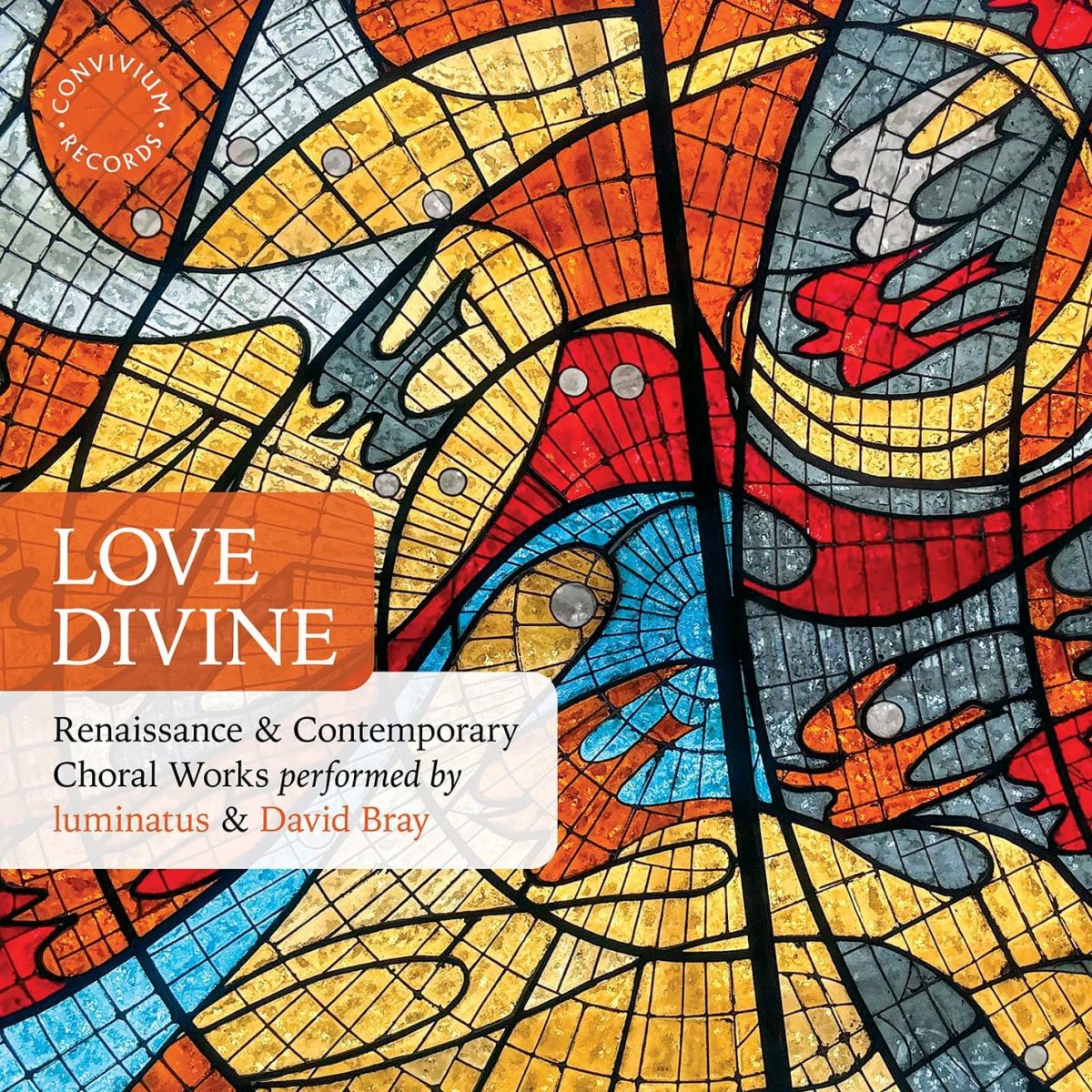
Love Divine

Renaissance & Contemporary Choral Works
luminatus & David Bray
75:18
Convivium Records CR102

Dedicated to the performance of new and previously unrecorded choral music, luminatus under their director David Bray present music by the Renaissance masters Cipriano de Rore, Philippe de Monte, Ippolito Baccusi, Tiburtio Massaino, along with contemporary music by female composers including Agneta Sköld, Becky McGlade and Eleanor Daley. The unfamiliar Renaissance material is of high quality and is performed with languid elegance by the ensemble. Particularly impressive is the de Monte Mass based on a de Rore motet. The music of Massaino and Baccusi contains few surprises – Baccusi’s small body of compositions was published in Venice but little is known about his life and he is little performed. Massaino, by contrast, travelled widely and composed prodigiously in a variety of sacred and secular genres, occasionally betraying a musical debt to de Monte, whom he met in Prague and where much of his music was published. The contemporary choral music, settings of English texts, is uncontroversial and makes for unchallenging if pleasing listening. If I might have wished for more animation from the choir in some of the Renaissance repertoire, the contemporary music draws more dynamic singing from them. The ensemble is performing a valuable service in bringing this neglected early repertoire to our attention in such polished performances, while recordings of contemporary choral music, particularly with an emphasis on female composer,s are always welcome.

D. James Ross

Categories
Book

Unpeeling Bach

By David Stancliffe
The Real Press 2025
372pp. ISBN
Available from Amazon

This is an engaging and comprehensive study of the music of J S Bach, which places it expertly in a historical and religious context. A former Bishop of Salisbury, Stancliffe is ideally placed to consider the spiritual dimensions of Bach’s sacred music, an important aspect of this devout composer’s essence and world view which is often glossed over in other studies of his music. While this understanding pervades the whole book, we also have appendices, including one dealing with Bach’s understanding of St John’s theology, drawing on his St John Passion, which are fascinating. However, intriguing as this is, it is just one aspect of a wonderfully wide-ranging approach to Bach. We have an updated treatment of Bach’s musical context, taking into account the surprising range of earlier polyphonic music still in currency in Bach’s time. We are cleverly drawn into the issues relating to the historically informed performance of the music by an account of Stancliffe’s own journey into grappling with these issues. As a performer/director as well as a scholar, he has a rewardingly ‘hands-on’ approach to the music, extending to the most successful layout for performances as well as a detailed treatment of instrumentation, voice-types, and voice production. Again, in a very practical approach, he cites performances and recordings by leading ensembles at work right now on the music of Bach, evaluating the success of their various approaches. In this way, his reader can easily access illustrations of the points he is making, and as so often in this volume, his encyclopaedic knowledge speaks of extensive listening, which matches his voracious reading. Just occasionally, the author makes a throw-away comment which opens a thought-provoking doorway – for example, in mentioning the pair of Litui which accompany the motet O Jesu Christ, meins Lebens Licht (BWV 118), he moots the idea that the nature of their accompaniment ‘argues for at least an outdoor if not processional performance’ – intriguing! My review copy is a pre-release edition, with editorial corrections, but as these are mainly layout issues, I assume they have all been addressed in the final edition. Stancliffe’s writing style is fluent and expressive, and the structure of the book makes the material easy to access and to enjoy either by dipping in and out or simply consuming it as a good and satisfying read. Although there are regular informative quotations from contemporary sources, there are no musical examples or visual illustrations – I was initially struck by this omission, but found myself less and less aware of it as I read on. On the back of the book, David Stancliffe is described as ‘an enthusiast and expert’, and in ‘Unpeeling Bach’ we find that this is a compelling combination which gives the author a unique perspective on Bach’s music.

D. James Ross

Categories
Recording

Hope soars above

Truro Cathedral Choir, James Anderson-Besant (Director of Music and Organist), Andrew Wyatt (Assistant Director of Music)
Regent REGCD599
56:38

Just when it seemed that the quatercentenary of Orlando Gibbons’ death would slip by with little discographical attention, two fine recordings featuring his choral music
have been released during November. A review of the disc consisting entirely of Gibbons’ music sung by The Choir of the Chapel Royal, Hampton Court Palace, was reviewed in EMR last month. The recording under review here features his music beside works by three of his most eminent contemporaries.

There are four works by Gibbons himself: a verse anthem, a fantasia for organ, and two evening Services, one a verse setting, the other full; both settings consist of the
usual two canticles, Magnificat and Nunc dimittis, providing six individual pieces. The verse anthem is O thou the central orb, the modern contrafactum of what was originally O all true faithful hearts but furnished with nineteenth-century words to offer a more general application, the original text having expressed thanks for King James I’s recovery from illness. Soloists from all four voices – treble, alto, tenor and bass – are required, as is an accompaniment for the organ. Similarly the expansive Second Service calls upon soloists from all voices with organ accompaniment. The Short (or
First) Service on the other hand is for voices alone and is a more succinct setting than the other. Gibbons’ piece for organ is the famous Fantazia of foure parts.

That was the easy bit. Now the controversy. Also attributed to Gibbons is the anthem for six voices Out of the deep. However, this is now considered to be an early
composition by Byrd. Three pre-Reformation sources provide attributions, of which two are to Byrd and only the third – merely an entry in an index – is to Gibbons.
There is also evidence within the music that the anthem is more likely to be an early work by Byrd. But the attribution to Gibbons has proved adhesive, and this is because the collected edition of Gibbons’ anthems (in Early English Church Music) was published several years before the similar volume of anthems by Byrd (in The Byrd Edition) and so the attribution to Gibbons took hold (three recordings, two predating the earlier recording attributed to Byrd) while the revised attribution to Byrd (two recordings) has taken time to seep through to general usage. Without going into
so much detail, the notes in the accompanying booklet, which are excellent throughout, by Alan Howard, reflect this dubiety surrounding the attribution to Gibbons. Notwithstanding the identity of the probable composer, and the early stage in his career when probably he composed it, the work is comfortable in this elevated company. It is the sort of piece which can be dismissed by some editors and
musicologists, whereas in performance it comes across effectively, and is anecdotally appreciated and enjoyed by singers – consider for instance the extended heartfelt outburst at “and with him is plenteous redemption”.

Incontrovertibly by Byrd is his anthem Sing joyfully, also for six voices, his most recorded sacred work in English, particularly popular in the USA, and as Alan Howard observes, an effective emotional counterweight to Out of the deep. The other (third!) work on this disc by Byrd is his well-known fantasia in C, A fancy for my Lady Nevell.

John Bull is enterprisingly represented not by one of his many fine works for keyboard but rather by his verse anthem Almighty God which by the leading of a star known to contemporaries as “the starre anthem”, a star anthem indeed, and one of only a handful of sacred works by him known to survive.

And to conclude the disc Truro includes two works by the greatest composer born in Wales, Thomas Tomkins. Both are sombre masterpieces: his great A sad pavan for these distracted times and one of the finest of all anthems in English Almighty God the fountain of all wisdom, its beautiful harmonies and melodies seasoned with a sudden profound and penetrating exploitation of dissonance, all followed by an Amen which can truly be described as divine.

Although all these works have received commercial recordings already, such is the quality of the music and, thankfully, of the performances that it is all worth hearing in these fine performances, however familiar one is with some or all of the works. For instance, Byrd’s Sing joyfully boasts no fewer than 35 current recordings on the Presto website, yet one would not want to be without Truro’s rousing yet sensitive rendition, with its resounding yet perfectly balanced final chord. The sleevenotes specify which treble line (14 boys, 13 girls) sings in which piece – both lines are excellent and they join for Out of the deep which has two treble parts, and for Gibbons’ Short Service. The 13 layclerks – five altos (two contraltos, three countertenors), and four each of tenors and basses – do a similarly good job on the lower parts. All three organists play a solo. Organ scholar Jeremy Wan plays Tomkins’ pavan – omitting the repeat of the second strain; assistant organist Andrew Wyatt plays Byrd’s fantasia; and in his first commercial recording as Cathedral organist James Anderson-Besant plays Gibbons’ familiar fantasia, but when it is played as well as this there can be no complaint about its inclusion. This is Anglican
cathedral music at its best, a credit to James’s predecessors, Andrew Nethsingha and Christopher Gray, in nurturing the tradition at Truro, and to the current choir and organists in sustaining it.

Richard Turbet

Categories
Recording

Orlando Gibbons at the Chapel Royal

The Choir of HM Chapel Royal, Hampton Court Palace. The English Cornett and Sackbut Ensemble, conducted by Carl Jackson
Resonus Classics RES10375
67:00

Following the choir’s excellent discs of music by Tallis and Tomkins, this recording is all the more welcome for marking the quatercentenary of Orlando Gibbons’ premature death in 1625 at the age of only 42. The choral items are well chosen, and include hymns, full and verse anthems, and canticles. None of these are obscure or neglected items, with the possible exception of the morning canticles for the Second Service – the Te Deum and Jubilate – of which there have been few previous recordings. This pair makes for the heftiest contribution to the programme, emphasized by the use (seemingly warranted by contemporary documentation) of winds in the accompaniment, and inspired perhaps by the recording of Byrd’s Great Service by Alamire. They are also employed in the much more familiar evening canticles, and for those anthems which survive in versions as consort anthems.

A small but varied selection of Gibbons’ always attractive keyboard works is included, but the most significant items on the disc are those for consort played by the winds. Gibbons left us six such works in six parts which are definitely for instruments, plus two which are considered less likely to be instrumental and might be surviving wordless versions of choral works, plus one further which is considered even less likely to be instrumental. The six definites have all been recorded several times, and the ninth least likely one has been superbly recorded by the fine French consort of viols L’Acheron, but the intervening pair, numbers 7 and 8 (Musica Britannica v. 48, nos 37 and 38 in John Harper’s edition of Gibbons’ complete music for consort) had never received a commercial recording until now. Whether Gibbons’ individual pieces are familiar or not, all are unfailingly worth hearing, but the recorded premieres of these two works elevate this disc into the status of being essential for admirers of Gibbons, and highly recommendable for anyone interested in the music of this period.

The Hampton Court brand of Chapel Royal choir sounds in excellent voice, though the recording itself does no favours to the inner voices – countertenors and tenors – and favours trebles and basses. But all seems well for the winds, and the English Cornett and Sackbut Ensemble is of course a world leader in its field, a truism confirmed in its contributions to this exciting disc.

Richard Turbet

Categories
Recording

Lully: L’Idylle sure la Paix, Charpentier: La Fête de Rueil

Boston Early Music Vocal & Chamber Ensembles, directed by Paul O’Dette & Stephen Stubbs
75:50
cpo 555678-2

During the 17th and 18th centuries, it was customary to celebrate a major peace treaty or important victory with both sacred and secular music, in the case of the former a Te Deum, often freshly composed. Meanwhile, poets and composers would occupy themselves producing an ode in praise of the victor, or less frequently, a dramatic work crafted for the occasion. The present disc presents secular works from both these categories by the leading French composers of the 17th century, Jean-Baptiste Lully and Marc-Antoine Charpentier. Both were written to celebrate the same event, the Truce of Ratisbon (or Regensburg), which brought an end to the war Louis XIV had fought against the Holy Roman Empire and Spain. Signed in 1684, the Truce initiated what would be a short-lived period of peace that would be widely celebrated in a France increasingly wearied by Louis’s military exploits.

Such occasional works by their very nature present difficulties for modern performers and audiences. Laudatory and often sycophantic in the extreme, there is often little literary interest or emotional content to grasp. Lully’s Idylle sur la Paix is in this respect rather different in that it has a text written by no less than Jean Racine, which if not major Racine is by definition superior to the dozens of such texts churned out by hacks. The occasion of the lavish first performance of the Idylle was a fête attended by the king and his court and given by the Marquis de Seigneley in the orangery at his château at Sceaux, near Versailles in July 1685. Contemporary accounts – several quoted in Gilbert Blin’s long historical note in the booklet – testify to the glittering grandiosity of the occasion. What is not clear is the kind of forces likely to have been employed, but it seems unlikely it would have been the small chamber music ensemble employed in this new cpo. The recording is based on performances originally given by the Boston Early Music Festival in 2022 and subsequently recorded in Bremen. The Idylle consists of a sequence of brief airs and récitatives alternated with the odd ensemble number, choruses and dances, both the latter at times employed as ritornelli. Probably at least in part due to the reason given at the outset of this paragraph, the performances do little to present the work in a positive light, being vocally largely uninteresting and not helped by poor diction. But what really finishes them off is a familiar complaint against Boston Festival performances: the incessant, intolerable and a-historical continuo strumming on theorbo and – even worse – Baroque guitar by Boston’s joint directors, Paul O’Dette and Stephen Stubbs. Both are outstanding players – I count O’Dette’s set of the complete Dowland lute works to be one of the treasures of my collection – but their persistent intrusive contributions to Boston Festival recordings is highly regrettable.

It goes without saying that the same caveat applies to Charpentier’s La Fête de Rueil, but here the presence of a dramatic context does seem to have helped the singers to a higher level of communication and better, though not perfect, diction. The work takes its name from the château built by the statesman Cardinal Richelieu at a small town on the outskirts of Paris. According to Blin, the work was commissioned by Richelieu, who celebrated his 100th birthday this same year, but no contemporary performance of it has been recorded, which is extremely odd if it was indeed commissioned. That it was intended for Richelieu is not in doubt, since the anonymous text mentions his name twice. Catherine Cessac, Charpentier’s biographer, is more circumspect, suggesting only that it ‘may have been performed at Rueil’. Cessac also points to the work being planned on a ‘lavish scale’, for six solo voices, a four-part choir, and a sizable orchestra that includes a continuo section composed of bass violins, bassoons and harpsichord (NB – no mention of lutes of any kind). La Fête de Rueil is a staged dramatic pastorale featuring shepherds, among them a pair of reluctant lovers, Pan, and, incongruously, an ‘Egyptian Woman’, a fortune teller. The work certainly here makes a greater impression than the Lully, with some attractive singing from tenor Aaron Sheehan (Tirsi) and Danielle Reutter-Harrah (Iris), the possessor of a pure, youthful-sounding soprano.

In truth, neither of these occasional pieces adds anything significant to our understanding of its respective composer, but those tempted to explore the CD will need to go online to see the libretto, it seemingly having become cpo’s policy not to include texts in its booklets.

Brian Robins

Categories
Recording

Clérambault: Te Deum, Histoire de la femme adultère

Choeur de Chambre de Namur, A nocte temporis, directed by Reinoud Van Mechelen
58:36
Versailles Spectacles CVS163

Member of a family with a long musical association with the French court, Nicolas Clérambault (1676-1749) is today remembered principally as arguably the finest composer of the French secular cantata. However, he was also a distinguished organist who held the post of organist of Saint-Sulpice in Paris from 1715. Commenced in the mid-17th century, the building of the church of Saint-Sulpice (a replacement for a much smaller original church) was not completed until a century later. It is likely that Clérambault’s Te Deum was one of a number of his works given at the lavish opening celebrations in July 1745. Although designated ‘à grand choeur’ and according to reports originally performed by 100 musicians, it is overall less ostentatiously spectacular than familiar examples of the hymn by Lully and Charpentier. While the scoring includes the expected trumpets and drums, they are used sparingly, while in keeping with the custom for French settings the work is colourfully multi-sectional, contrasting solo passages with full choral passages. The composer makes the hub of the work the verse ‘Tibi Cherubim et Seraphim’ (To thee Cherubim and Seraphim), at once the most extended and elaborate passage in the work. Opening with the ethereal high voices of the angels’ praise of God, the section segues into dramatic contrast with the outburst of trumpets and drums at ‘Pleni sunt caeli’ (Heaven and earth are full). Other notable moments include the exceptionally lovely choral devotional passage at ‘Te ergo’ (We therefore pray).

While not aspiring to the use of 100 performers – the forces are fewer than half that number – the intimacy of so much of the writing makes for a highly satisfying reading of the work. The many solos and duets, often involving quite florid melisma, are well taken by a fine team, with haute-contre Reinoud Van Mechelen, tenor Guy Cutting and bass Lisandro Abadie particularly distinguishing themselves. The choral singing and orchestral playing are equally satisfying.

If the Te Deum is something of a discovery, I’m tempted to say that here it must give way to an even more exceptional work. As French Baroque music expert Catherine Cessac notes in her customarily valuable notes, L’Histoire de la femme adultère is something of an anomaly, an oratorio after the style of those of Charpentier, composed well after such works had passed into history. Like those of Charpentier (and his model Carissimi), it employs a narrator to tell a biblical story, in this case one of the most touching of those involving Christ’s ministry on earth. The story of the adulterous woman comes from the Gospel of St John, and tells of Christ’s forgiveness of a woman accused of adultery, a crime for which she would of course have been put to death. The story revolves around the famous words by which He puts her accusers to shame – ‘He that is without sin among you, let him cast the first stone’. Unsurprisingly, Clérambault’s setting puts these words at the heart of the oratorio, with a sublime passage of wonderment for the Narrator and chorus. But the work’s remarkable quality is apparent from the outset, a darkly sombre ‘simphonie’. In addition to the Narrator (Abadie) there are roles for Jesus (Van Mechelen), the Adulterous Woman, beautifully sung with sensitive insight by Gwendoline Blondeel, and two Jewish accusers.

Anyone yet to discover Clérambault is urged to hear this exceptional recording. Then go on to explore some of the composer’s secular cantatas, starting with Orphée.

Brian Robins

Categories
Recording

Traetta: Rex Salomon

Suzanne Jerosme, Eleonora Bellocci, Marie-Eve Munger, Grace Durham, Magdalena Pluta SSSmSA, NovoCanto, Theresia, conducted by Christophe Rousset
111:37 (2 CDs)
cpo 555 654-2

We owe the existence of Tommaso Traetta’s oratorio Rex Solomon arcam faederis adoraturus in Templo to a single vote. That was the margin by which the governors of the Ospedaletto dei Derelitti in Venice decided in the spring of 1766 not to adopt a motion calling for the suspension of all musical activities in the institution. As a result, in June Traetta was elected as maestro di capella of the Derelitti, one of four Venetian orphanages for girls, the best known of which is course the Pietà. The oratorio was first given the same year on the occasion of the feast of the Assumption of the Virgin Mary that year (August 15). A decade later, it was again taken up by Traetta shortly after his return from a period of service in Russia with Catherine the Great. It is the score of the revised 1776 version that survives today and is employed in the present recording, which therefore includes the changes made by Traetta to accommodate different singers in a couple of roles.

Sung in Latin, the oratorio is in the customary two parts and is almost entirely without dramatic event, featuring only the visit of the Queen of Sheba (Marie-Eve Munger) to Solomon (Suzanne Jerosme ) and the conversion to Christianity of Adon (another visitor to Solomon’s court and a worshiper of the god Malach) (Magdalena Pluta). Otherwise, there is much in the way of obsequious praise of the wisdom of Solomon, the topic of the opening and closing choruses, which are well sung by NovoCanto, here being for women’s voices only composed of SAB parts, the bass part being sung an octave higher. Arias are of the da capo type, with the main section fully developed but generally a very brief central B section. They are spread evenly between the five singers in each half of the oratorio, it being testimony to the high quality of the tutelage received by the girls of the Derelitti that a number of the arias, in particular those for Solomon and the Queen of Sheba are extremely demanding, requiring coloratura displays. In addition to the choruses and arias, the final number is a duet between Adon and ‘his’ mentor Abiathar (the excellent Eleonora Bellocci), who also gets the most dramatic of several highly effective passages of accompagnato recitative.

The present performance stems from the Innsbruck Festival’s 2023 edition and in particular pays tribute to the festival’s wholly admirable policy of including one production featuring talented young artists. Often, they may have been prize-winners in the festival’s own prestigious Cesti Competition, as is the case here with Suzanne Jerosme and British mezzo Grace Durham (Sadoc). The latter was indeed the winner of the competition in 2019, the year I attended the final (see report) and I’m delighted to say that here she contradicts my prediction that although I appreciated ‘the warm, rounded quality’ of her voice, Durham’s future career was unlikely to involve much early music. Her opening aria, ‘In alto somno’ in particular is sung with affecting dignity, and includes well-managed passaggi, while she does full justice to that in part 2, one of the loveliest in the work.

The most breathtaking bravura displays come from Marie-Eve Munger’s Queen of Sheba aria in part 2, ‘Tuba Sonora in monte’ and Solomon’s ‘In pace respirando’ (part 2). The former is sung with a superb display of confidence and control across a range that requires some chest notes and inspires a cadential high trill as well as stylish and elaborate da capo ornamentation. The Solomon aria is an outburst of overwhelming emotion in contemplation of the love felt for God. Jerosme is the possessor not only of a gleaming soprano but a splendid technique, including a trill, and the ability to communicate text meaningfully.

There are many other moments to cherish in a performance that is not only a joy in itself, introducing a fine work to the catalogue, but also to be cherished for the excellence of the singing by an outstanding, fresh-voiced cast. The experienced hand of Christophe Rousset guides this uplifting rendition unerringly, while obtaining excellent playing from the young players of Theresia, an international period instrument orchestra based in Austria. Potential buyers, who ought to be numerous, should note that although the booklet suggests it includes German and English translations of the text, it doesn’t. For those, you have to go online, from where they can be downloaded.

Brian Robins