Categories
Recording

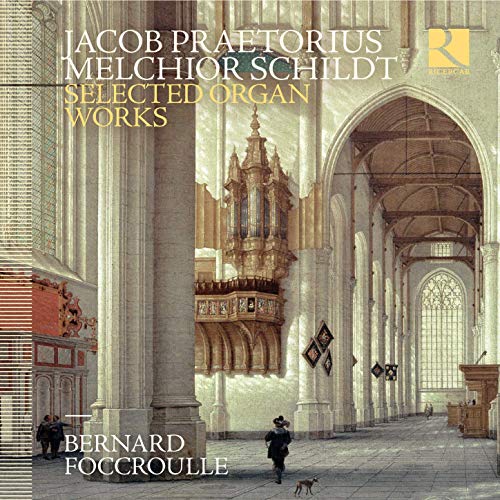
Jacob Praetorius, Melchior Schildt: Selected Organ Works

Bernard Foccroulle
68:05
Ricercar RIC400

At the heart of this fascinating presentation of two of Sweelinck’s pupils’ organ works by the scholarly Bernard Fouccroule is one of Germany’s more remarkable organs – the Stellwagen organ in its substantially original late gothic case that hangs on the north wall of the Jacobikirche in Lübeck.

Not only is the music beautifully played and presented – the latest in Fouccroule’s anthology of Northern German early Baroque music – but the instrument is splendid for the music.  A Schwalbennestorgel (a swallow’s nest organ) was built here in 1467 and this great Blockwerk organ – a substantial principal chorus of 16’, 8’, 4’ and six ranks of upperwork giving the characteristic full organ sound of the period before perforated sliders were introduced to ‘stop’ some of the ranks of pipes sounding – was restored in 1515 when the main case was provided. Then the organ was enlarged in 1636-37 by the addition of a Rückpositiv, a Brustwerk and a pedal organ by the great organ builder Friedrich Stellwagen, the builder of the magisterial instrument in the Marienkirche in Stralsund along the coast to the East.

By great good fortune, he kept the late gothic Blockwerk with only minor additions, so the organ speaks with the authentic voice of the period when both composers were in their prime. The pedal organ has not survived, but the careful conservation and renovation of 1978 (reversing some of the post-WW II ‘restoration’) has given us a Stellwagen-type pedal organ including reeds at 16’, 8’, 4,’ and 2’ pitches.  Dominique Thomas is credited with the expert tuning of the organ, which is pitched at A=494 Hz (i.e., a whole tone above modern A=440) in Werkmeister III modified where I was expecting something a little more obviously mean-tone, but it sounds splendid and the reeds are perfectly regulated.

The music from both composers is dominated by the Lutheran chorale, with sets of variations as well as chorale fantasias using Sweelinck’s chromaticism and echo effects as well as plenty of verses where the chorale moves in slower notes in the pedal.  The booklet, in English, French and German, has an essay by Fouccroule and not only detailed information about the history of the organ and its specification but importantly detailed registration of every piece, including stop changes. This is surely a must for every significant recording on a historic instrument such as this, where interest in the instrument and its presentation will be of equal significance to the cognoscenti who might buy the CD – as I would encourage them all to do.

David Stancliffe

Categories
Recording

Handel: Judas Maccabæus

Tarver, Breiwick, Harmsen, Fernandes, Willetts, NDR Chor, FestspielOrchester Göttingen, Laurence Cummings
137:00 (2 CDs in a card triptych)
Accent ACC 26410

Handel’s Judas Maccabæus, dating from 1747, was second only to Messiah in popularity in Handel’s lifetime. Here Laurence Cummings puts out a spirited version, recorded live last May at the Stadthalle Göttingen, where Cummings has been director of the Handel Festival since 2012. His orchestra, regularly assembled for this festival, is 6.6.4.4.2 strings with all the wind and brass you could need and sound not only proficient, but gracious. The string playing is particularly fine, and the occasional sounds of the wind – like the flutes in the final duet O lovely peace – offer lovely glimpses back to an earlier world before the ‘orchestra’ was essentially a string band.

The chorus, sharp and punchy when required but capable of a mellow and sustained gloom when called for, is the North German Radio Choir, their regular partners in this festival, and the text (and programme notes) are in both German and English.

Followers of the Festival’s productions will not be disappointed – the standards in every department are high. The main questions I have are about the size and scale of the performance.

Directors have to choose in presenting large-scale Handel – and even more so in Bach – between the stricter demands of period performance, which might call for voices especially of less developed power, and what will fill a venue and make the whole project financially viable. The solo singers here are admirable, but undoubtedly use more modern techniques of projection. They only rarely out-sing their accompanying band, and, of course, the oratorio is a heroic tale, but it was given first in the relatively small Theatre Royal in London.

The bass, Joäo Fernandes, is quite excellent in the very exposed The Lord worketh wonders, and Judas, Kenneth Tarver, is suitably heroic in Sound an alarm, where the silver trumpets eventually make their appearance to introduce the chorus, praising the abstract virtues of laws, religion and liberty, for much of the actual action takes place off stage making the work for all its political overtones in the wake of the Duke of Cumberland’s victory over the Stuart Pretender’s rebellion at Culloden so much more of an oratorio than an opera.

The opening of Act III marks Handel at his tuneful best in Father of Heav’n where the instrumental lines with their overlapping counterpoint suggest the all-encompassing divine favour. The March has cheerful bumpy jollity, and the unanimity of the chorus following, introduced by single voices, is a splendid advertisement for the about 21 strong NDR Chor, as is David Staff’s trumpet obligato in With honour let desert be crown’d, Judas’ surprisingly reflective final aria in A minor.

At the end of the brief final chorus, the burst of applause reminds us that this is a live take, and after such a seemingly effortless performance it is well deserved.  Nothing is amiss, tempi are beautifully judged and if the scale of the performance calls for more modern vocal techniques than I would ideally have liked, then many people will enjoy this cracking good version.

David Stancliffe

Categories
Book

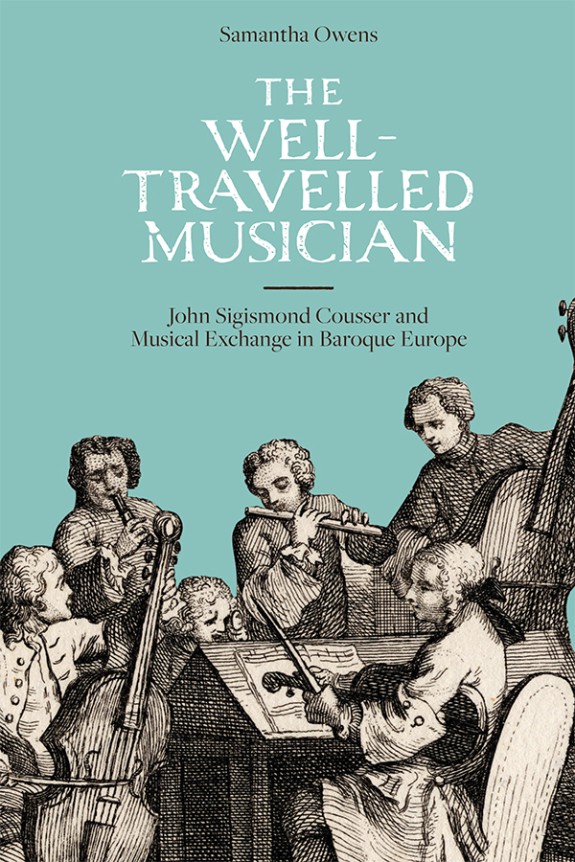
The Well-Travelled Musician

John Sigismond Cousser and Musical Exchange in Baroque Europe
Samantha Owens
xvi+385pp. £60 (hardback), £19.99 (eBook).
Boydell Press, 2017. ISBN 978-1-78327-234-1

Apologies to both the author and the publisher of this extraordinarily detailed book – convinced that I had already published a review, it has lain on my bookshelves for months since… Only when I came to file it away did I realise that, although I had jotted down some notes, I had never sat down at the computer to commit them to public scrutiny.

The first 180 pages of the book are taken up with nine chapters devoted to aspects and/or phases of the composer’s 67-year-long life, each of them oozing the volume of minutiae that in the hands of a lesser writer would have caused brain numbing. Somehow Owens always finds just the right combination of words to maintain enough interest to make the reader want to know more. And there is plenty to learn!

This is nowhere more evident than in her summary of the composer/musician/copyist/impresario’s commonplace book, in her transcription of his Address Book (complete with identifications of almost everyone mentioned!), and in another transcription, this time of notes made on a journey he made in 1716. The latter is little more than a tantalising list of people, music and places but it is just this kind of diplomatic transcription being published that makes other music historians’ jobs easier – somewhere in amongst the seemingly meaningless, someone will find a link that is a crucial part of their puzzle. For this, if nothing else, the world of research into Baroque music owes both Owens and Boydell a huge vote of thanks. Of course, there is much else to absorb and enjoy – the book itself is a thing of beauty.

As the HIP scene in Dublin takes off, Cousser’s music will become more widely known, so get hold of this excellent volume and immerse yourself in his world.

Brian Clark

Click here to visit the publisher’s website.

Categories
Sheet music

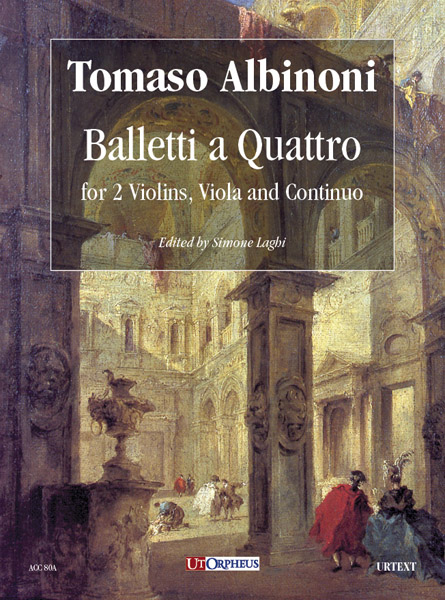
Tomaso Albinoni: Balletti a Quattro

Edited by Simone Laghi
Ut Orpheus ACC80A £30.95 (score, 96pp), ACC80B £29.95 (parts)

Chamber music for 2 violins, viola and continuo from the early 18th century is not that common, so this collection of 12 Balletti (four-movement “dance suites”) will be a welcome addition to any group’s repertoire or teacher’s library. Five of them are in minor keys and most give the first violin the lion’s share of the musical interest. I would call the layout “generous” – the brevity of some movements and the placement of repeat signs at the ends of systems and pages left the typesetter with few options. The four parts present each of the suites on a single opening, which is perfect. According to the introduction (in Italian and slightly odd English), notes have been beamed according to modern principles, yet groupings of matching rhythm are not consistent. Editorial changes are given in tabular form at the end of the score; this could have done with a little copy editing. These small criticisms do not detract from a beautiful presentation of Albinoni’s fine music – this repertoire is just perfect for junior orchestras as everyone plays continually. Highly recommended.

Brian Clark

Click here to visit the publisher’s website.

Categories
Recording

Les arts florissants

40[th anniversary]
235:57 (3 CDs in a card triptych)
harmonia mundi musique HAX 8908972.74
CD1 Music and theater CD2 Sacred music CD3 Secular music

Here’s the least surprising (re-)release of the year, three generously filled discs recalling and celebrating the work of LAF over the last four decades. It’s a shame that a little more effort hasn’t gone into the presentation, however. No details or dates of the source recordings; no texts or translations; and not all prominent instrumentalists are named (the flautist contributes at least as much as the singer to Bach’s Benedictus). In this context, it would be unreasonable to expect notes on the music but we do get a brief history of the ensemble and a flagging-up of its future projects.

The musical content is well-planned. Each disc has a theme (Music and the Theatre; Sacred Music; Secular Music); each programme includes one or two substantial works or extracts; and there is an amazing amount of music included. I was pleased to be reminded of and to enjoy again Lully’s Atys (on CD1 – a notable recording), his Salve Regina for high voices and Charpentier’s remarkable Le Reniement de saint Pierre (CD2) and the Monteverdi, including Il Combattimento, on CD3. There are, inevitably, one or two tracks I won’t return to, though they did make me think before I decided ‘no’! I also felt that the continuo instrumentation could often, and to all-round musical advantage, be less fussy but nothing diminishes my gratitude to LAF for their pioneering work, especially in French repertoire 1650-1770ish. They’d be no less admired and appreciated if that were all they’d ever done. Without them we may never have given Brossard’s haunting Miserere as much as a glance.

David Hansell

Categories
Recording

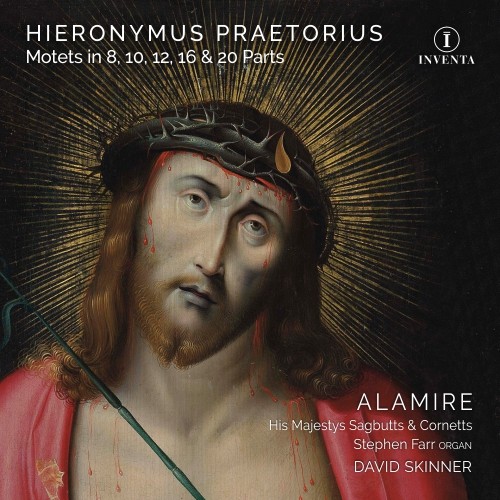
H. Praetorius: Motets in 8, 10, 12, 16 & 20 parts

ALAMIRE, His Majestys Sagbutts & Cornetts, Stephen Farr organ, David Skinner
100:25 (2 CDs in a single case)
Inventa Records (Resonus Limited) INV001

The music on this disc unfolded exactly as I had anticipated it would: mainly homophonic, predominantly Gabrielian, with some cute quirks of harmony. For this reviewer, one of the few miscalculations that Stile Antico have made in the course of their recordings is on A Wondrous Mystery: Renaissance Choral Music for Christmas (Harmonia Mundi HMU 807575) where they intersperse the movements of Jacob Clement’s Missa Pastores quidnam vidistis with later German music: the teutonic matter of the latter is entirely the wrong flavour to mingle courses with the refined and piquant Franco-Flemish helpings of Clement (note: please can we dispense with the cumbersome and no longer hilarious moniker Jacobus Clemens non Papa?). The current recording provides a banquet of such Teutonic matter with 16 pieces, including ten motets for from eight to 20 parts, by the Hamburg composer Hieronymus Praetorius (1560-1629), many of them seasoned with historic brass. For variety, there is his complete Missa summum for (mainly) organ with chanted plainsong, two sequentiae similarly for organ and voices, and a couple of motets played by brass alone. For all their differing vocal resources, the motets began to sound much of a muchness, and in fairness to David Skinner, he shuffles the pack to some extent, with usually no more than two similar works adjacent. Nevertheless, not everyone who relishes barnstorming motets full of voices and brass might be enthusiastic about the interspersed movements of the Missa summum with its long passages played on the historic organ at Roskilde. This is performed sensitively by Stephen Farr, but even he cannot make a case for Praetorius’s uninteresting writing for the organ here in the Mass and in the sequentiae. I take respectful issue with David Skinner’s description of this Praetorius (no relation of his contemporary Michael) as a master polyphonist. This reviewer was left desperate for some counterpoint amidst the onslaught of homophony, apart from some passages in the two motets a8 entrusted to the historic brass. One of Praetorius’s motets – perhaps the opening Dixit Dominus a12 – would stand up well on a disc of music varied by genre, period or locality. Together they become monotonous, and the music chosen to provide some variety within this disc is itself undistinguished. The performances are of course excellent, although perhaps inevitably, given the material, there is a residual impression of some shoutiness in the wake of the polychoral motets. Exultate iusti a16 brings the proceedings to a sonorous conclusion, but perhaps the finest work on this pair of discs is the dramatic Levavi oculos meas a10. It has a structural momentum not apparent in the other motets, which feel more sectional, and this momentum builds to an electrifying climax, with harmonic sparks flying.

Richard Turbet

Click here to visit the record company’s website.

Categories
Recording

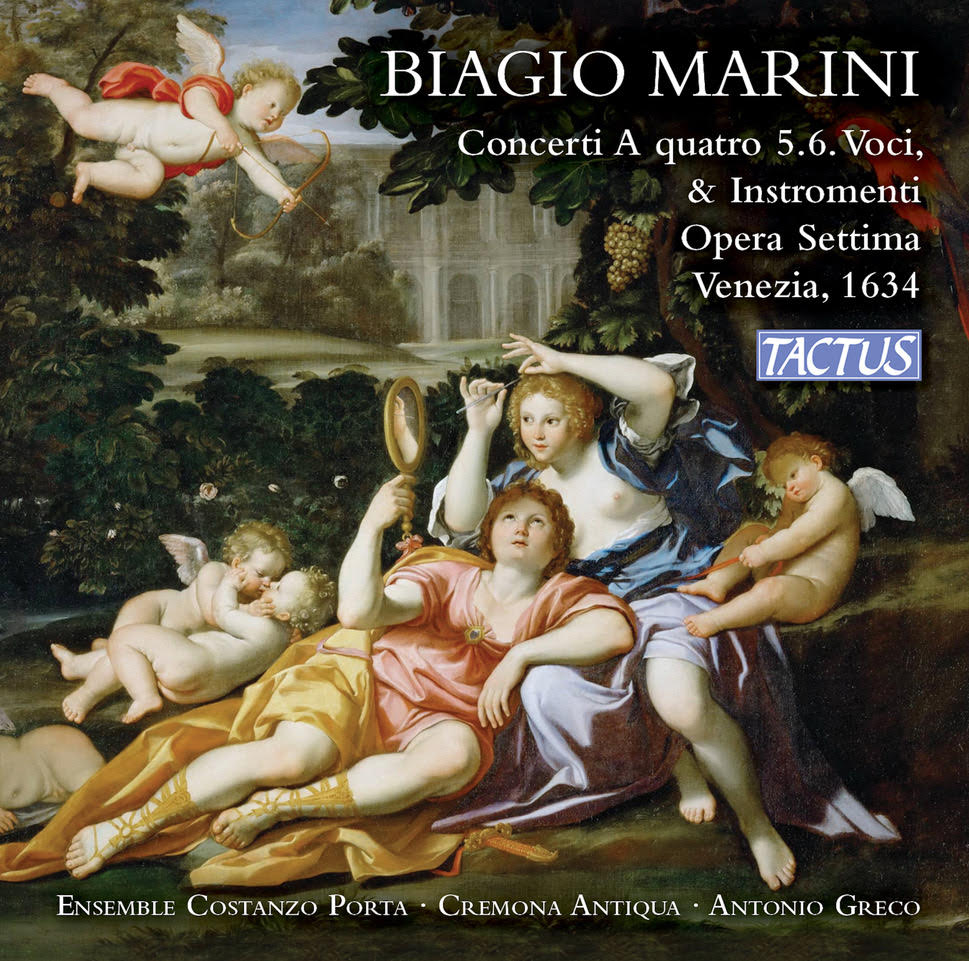
Marini: Concerti A quatro 5. 6. Voci & Istromenti op. 7

Ensemble Constanza Porta, Cremona Antiqua, Antonio Greco
81:25 (2 CDs in a single jewel case)
Tactus TC 591390

Famous primarily as a virtuoso violinist and as a composer for that instrument, Marini also composed very effectively for voices and instruments in ensemble. Writing around the middle of the 17th century when the madrigal was acquiring increasingly lavish instrumental accompaniment and flirting with the newly created world of staged opera, it is a testimony to Marini’s skill that his concerti sound not unlike the comparable work of the great Claudio Monteverdi. The concerti recorded here are pleasingly rich in texture with a powerful element of drama. In these world premiere recordings, the vocal Ensemble Costanza Porta is ably supported by the instruments of Cremona Antiqua, and the combined sound is wonderfully rich and expressive. The concerto Non lagrimar complements the two tenor voices and continuo with two obbligato parts for solo violins, and it is nice to think that the composer might have played one of these himself.

D. James Ross

Click here to visit the record company’s website.

Categories
Recording

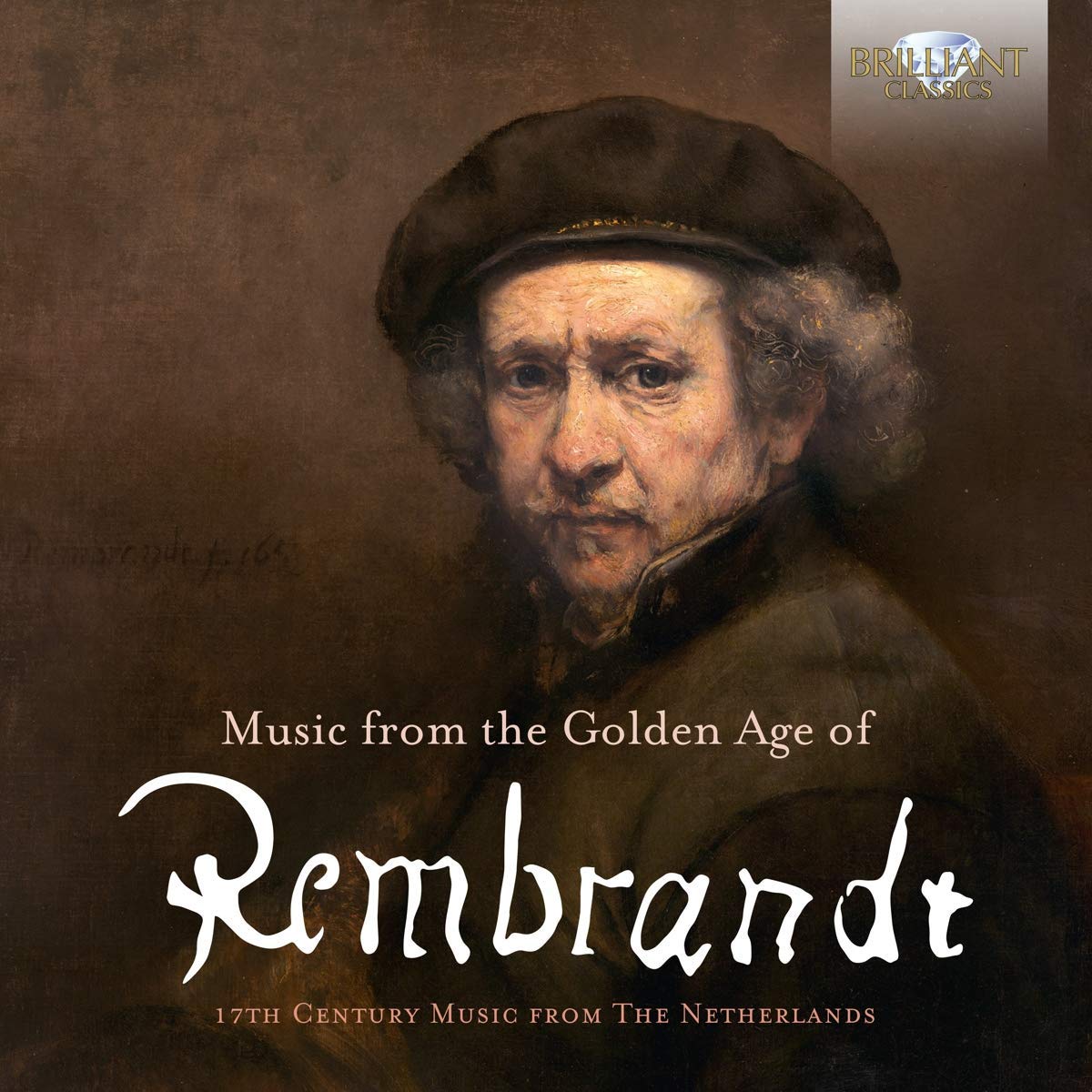
Music from the Golden Age of Rembrandt

Musica Amphion, Pieter-Jan Belder
132:01 (2 CDs in a single jewel case)
Brilliant Classics 95917

I am not a huge fan of musical programmes which use visual artists as a peg – music and painting were often at dramatically different expressive places, a fact illustrated by these CDs of music – delightfully mannered, elegant songs and dance music – which the programme attempts to attach to Rembrandt, who was engaged in an entirely unrelated project of striking gritty realism. Still, I suppose as the music he would have heard around him, it must have some bearing on his work, and anyway two lovely CDs of 17th-century Dutch music beautifully performed are a welcome addition to the canon. The performers have delved deep into the archives and have researched beyond the familiar van Eijck, Hacquart, van Noordt and Sweelinck to find some genuinely unknown music from the period to widen our knowledge. The playing from a wonderfully sonorous consort of viols, with violins and viola, complemented by a fine quartet of vocal soloists and harpsichord and recorder soloists, is beautifully expressive throughout. The music ranges from the sacred to the secular, and from the very beginning of the 17th century with music by Cornelis Schuyt to its very end and a trio sonata by the splendidly named Benedictus Buns. By this time, the artist had been dead for thirty years, but this music usefully rounds off the century and the Golden Age of Rembrandt Harmenszoon van Rijn. If this was the soundtrack behind the paintings of Rembrandt, probably the best way to approach it is to have it playing gently in the background much as the original music would have done, and who knows, perhaps you too will be inspired to put brush to canvas.

D. James Ross

Categories
Recording

Bach in Bologna

Mauro Valli
195:18 (3 CDs in a card folder)
Arcana A459
Bach: Cello suites; D. Gabrielli: 7 Ricercari

This epic project presents the complete music for solo cello by perhaps the greatest of the Baroque composers, J. S. Bach, interspersed by the complete solo cello oeuvre of one of the lesser composers of the period, Domenico Gabrielli. Did the two ever meet? As Bach was only five when Gabrieli died prematurely at the age of just thirty, the answer is almost definitely no. Did Bach know Gabrielli’s music? Just possibly, although there is absolutely no circumstantial or musical evidence. So why juxtapose the two sets? I must admit I was sceptical at first, seeing this as just another excuse to add to the already groaning piles of recordings of the Bach. Valli gives thoughtful and musically consummate accounts of the Bach, although I still prefer the absolutely luminous accounts by David Watkin on resonus (RES10147). Valli’s sound is darker, his playing more unrelentingly intense and the recording generally closer. But what eventually got me about these performances was precisely the juxtaposition with the Gabrielli. As the programme note is quick to concede, this is not an attempt to place the Bach and Gabrielli on the same pedestal, but what I found really interesting is that the Gabrielli did have something to say about the Bach and vice versa. For all the differences in style, texture and melodic sense, as Baroque works for solo cello these pieces have more in common than they first seem. Gabrielli’s belong in a simpler, more innocent world than Bach’s, but the juxtaposition brings out the profundity of these Ricercars, suggesting that they deserve much wider attention from cellists than they have hitherto received. So these CDs with their powerful accounts of Bach and Gabrielli are after all more than just the sum of their parts.

D. James Ross

Click here to visit the record company’s website.

Categories
Recording

Purcell: The Cares of Lovers

Rowan Pierce, Richard Egarr, William Carter
59:47
Linn Records CKD 592

Approaching some of these well-worn Purcell songs must be a similar experience for singers as the prospect of a great Shakespeare soliloquy is for an actor. What to do with this familiar material? Rowan Pierce with her musical team decide to approach this music as if they were the first ever to perform it, and the resulting freshness and spontaneity are hugely engaging. Of course, to be able to present Purcell’s music as effectively as this demands consummate technique, but it is technique that must be worn lightly and the present performers do this very effectively. The accompanying texture of harpsichord with lute/theorbo works very well indeed, and variety is achieved by thinning this out occasionally. The success of this sort of recital relies of course ultimately on the solo voice, and Rowan Pierce has a beautifully flexible, sweet, and technically secure instrument at her disposal which she employs with musicality and intelligence to produce highly engaging accounts of her chosen songs. As ever, the Linn engineers capture every nuance perfectly, and the result is a charming and highly enjoyable CD which rewards repeated listening.

D. James Ross

Click here to visit the record company’s website.