Categories
Recording

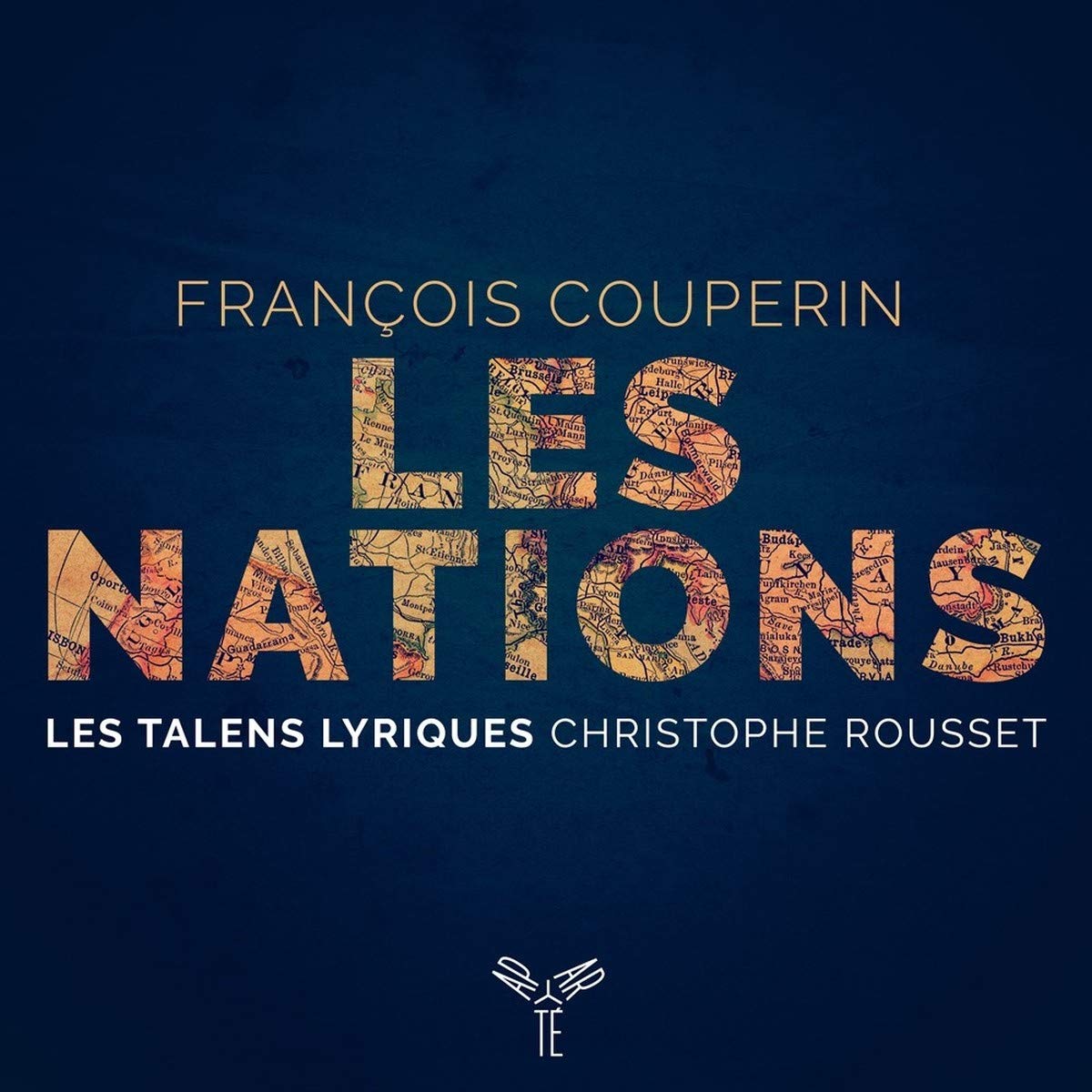
François Couperin: Les Nations (1726)

Les Talens Lyriques, Christophe Rousset
109:01 (2 CDs)
Aparté AP197

Although first published in 1726, Les Nations largely consists of music conceived some years earlier. An example of François Couperin’s pre-occupation with les goûts reunis (the combination of French and Italian styles), it contains four instrumental works that each open with a trio sonata in the Corellian style before continuing with a sequence of dances familiar from the French suite. Couperin provided a charming explanation of how his motivation stemmed from the works of Corelli and Lully, ‘both of whose compositions I shall love as long as I live’. Amusingly, he goes on to explain how knowing that the French are averse to foreign innovation he passed off the first of the sonatas (which he termed ‘sonades’) as being the work of an obscure Italian composer, in fact an anagram of his name. It was, Couperin relates, greeted with such acclaim that he felt encouraged to go on and write the remaining sonatas. Although three of the works are named after nations – France, Spain and Piedmont – there are no specific national characteristics other than the stylistic elements mentioned.

The score makes no indication as to the instrumentation of Les Nations, but it is usual for strings to be employed, as, for example, in the fine recording by the Purcell Quartet (Chandos) involving just five performers. By contrast, Christophe Rousset gives us a sumptuous version with no fewer than ten players, including pairs of violins, flutes, oboes, bassoon, viola da gamba and theorbo, directed by Rousset from the harpsichord. In the wrong hands such a venture might have become a vulgar exhibition of brash daubing of instrumental colours, but so sensitive to the music is Rousset, so deftly handled and musical are the alternations that the results are utterly enchanting. Obviously types of movement suggest a particular instrumentation: slower movements such as those marked ‘gravement’ in the sonatas or dances such as the sarabandes, obviously work better with cool, sensually drooping flutes or expressive violins, while ‘vivement’ movements are well suited to the classic trio combination of piquant oboes and bassoon. To a considerable extent Rousset’s choice conforms to expectations, but it is by no means hidebound and occasionally springs a surprise, as in the noble Allemande of the Suite in the 4me Ordre, ‘La Piemontaise’, which is given to the wind trio. In some bigger movements like chaconnes or passacailles, Rousset parades a riot of colour and texture where the constant tossing of material from one instrumental group to another resembles nothing so much as jazz riffs. The results are exhilarating, spontaneous-sounding music making.

One or two memorable individual moments. The Allemande that opens the suite of ‘La Française’ (1er Ordre) features elegant interweaving between flute and violin, the balance between instruments (which is exceptional throughout) and rhythmic flow perfectly caught in playing that somehow distils the very essence of French Baroque music into this one movement. Later there is a Sarabande in which the two flutes caress in a kind of idealized reverie. The 2me Ordre (‘L’Espagnole’) finds the Allemande allotted to oboe/bassoon trio, where the wonderful modulation to the minor in the second half is handled with loving care. The Sonata of the 3me Ordre (‘L’Impériale’) was composed later than much of the music of Les Nations and is remarkable throughout. The most Corellian of all the sonatas, it opens with the violins weaving imitative sequential chains of gracious nobility, before proceeding to a brief Vivement given to the oboe/bassoon trio, a contrapuntal dotted Gravement for strings, a gently undulating Légèrement for the flutes, another quick section for the wind trio and a complex concluding fugal movement for the strings.

Finally a few words on the sound, which is exceptional by any standard That is doubtless in large part as a result of the recording having been made in the extraordinary acoustic of the magnificently lavish Galerie dorée of the Banque de France, once the home of the comte de Toulouse. I note too that the Banque was one of the sponsors of the recording. I wonder when the Bank of England last sponsored a recording of, say, Purcell? Mid-summer is rather early to start talking of best recordings of the year, but something remarkable is going to have to happen if this delectable issue is not right in the forefront of claimants.

Brian Robins

Categories
Recording

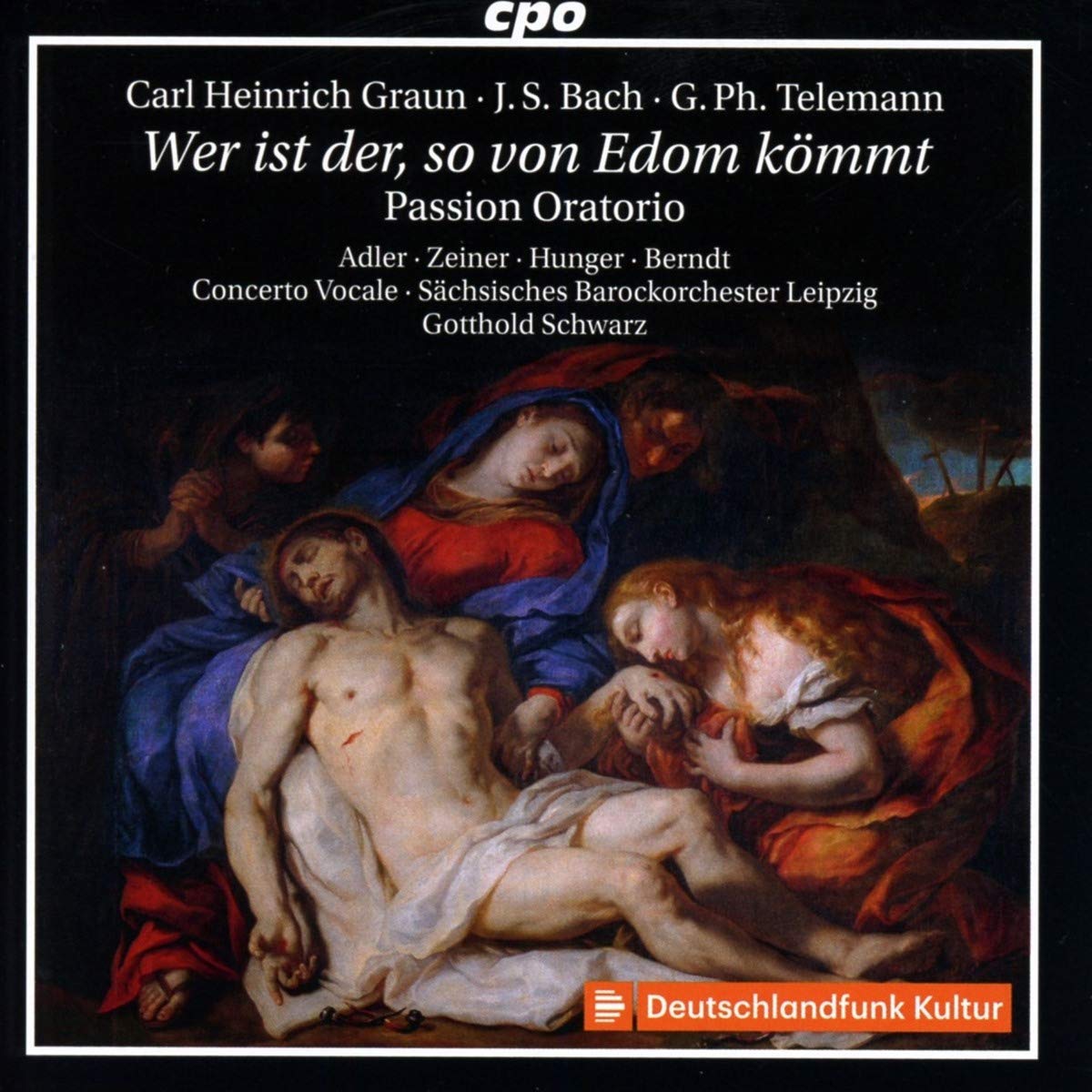
Wer ist der, so von Edom kömmt

Passion Oratorio
C. H. Graun, J. S. Bach, Telemann
[Gesine] Adler, [Klaudia] Zeiner, [Tobias] Hunger, [Tobias] Berndt, Concerto Vocale, Sächsisches Barockorchester Leipzig, Gotthold Schwarz
cpo 555 270-2
115:58 (2 CDs in a single case)

The booklet that accompanies this set includes a well-argued essay by Bach expert Andreas Glöckner on the genesis and formation of this intriguing pasticcio; essentially it is Graun’s Ein Lämmlein geht und trägt die Schuld (dating from c. 1730), the first half preceded by two extracts from the Telemann cantata that gives the release its title, and the second half padded out by music which may or may not be by J. S. Bach. This seems to have been the driving force behind the project – it is such a shame that, even in 2019, we need the name of “a great composer” to justify a recording of Graun’s very fine work.

Pretty much for the first time ever, I must confess myself disappointed by the performance. The orchestra (lush double woodwinds, 33211 strings with just organ!) is very fine with some lovely contributions and the tenor and bass soloists are in a different class to the other singers. This is rather naive music; the complexities of the baroque are largely receding and being replaced with a slower harmonic rhythm – the focus has shifted to cantabile melodies and a lightness of touch is required. I understand that it is difficult for some singers to ease off without losing form, so the soprano and alto (whom I have heard to great effect elsewhere) have my sympathy. Even more troubling, though, was the choir – tuning is a problem at various points, as is ensemble. I had to re-listen several times just in case my ears were having an off day, but no.

If there is one reason to buy this set, it would have to be the glorious singing of Tobias Hunger – his floated high notes are out of this world.

Brian Clark

Categories
Recording

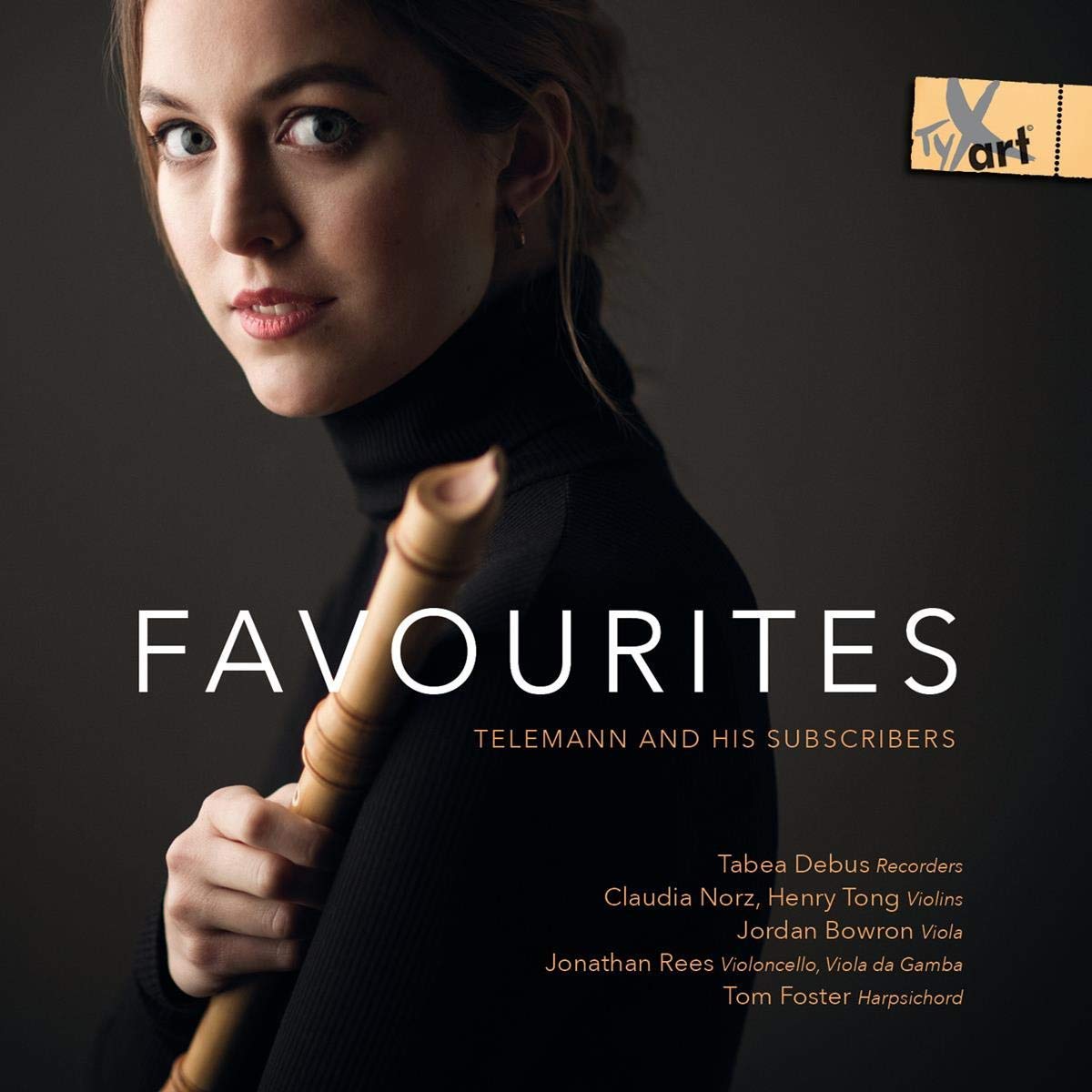
Favourites

Telemann and his subscribers
Tabea Debus recorders, Claudia Norz & Henry Tong violins, Jordan Brown viola, Jonathan Rees violincello & viola da gamba, Tom Foster harpsichord
TT= 66:34
TYXart CD TXA18107

This is a very cleverly conceived recording which has several threads woven into it. The interspersing of works by G. P. Telemann within the time frame of 1728-9, using a selection of Handel’s and Telemann’s operatic arias to compile instrumental Sonatas, (Tracks 5-9, 13-16) a Blavet-Telemann Suite (Tracks 17-22) and some familiar Bach Sinfonias (BWV35, 156) whilst acknowledging the known self-publishing impetus of one of the baroque’s most prolific composers, with two Sonatas from Der getreue Music-Meister. Equally, it links the music to his esteemed and numerous subscribers. There’s also a most salient Bach link to BWV156/1056! Often overlooked!

Telemann took over as impresario of Hamburg’s Gänsemarkt opera house in 1722, right up until its fading appeal and final decline in 1738. The actual number of operas written during his Hamburg, Frankfurt and Leipzig years is still being defined, especially the “Etliche und Zwanzig” 20 odd for Leipzig! During his Hamburg years, there were often performances of his long-standing creative friend Handel’s operas, often a mere year or two after their London premieres. In some cases, the Hamburg “arrangements” were tailoured for the local tastes, with German arias and recitatives at selected moments. Occasionally, a few comic characters were added for a “Buffa” effect. The opera house was in full swing by 1727 through to 1729, with Telemann’s own works appearing, alongside these re-workings of Handel’s original: the original Riccardo Primo Re d’Inghilterra HWV23 (London 1727) became Der mißlungene Brautwechsel/Richardus I König von England (Hamburg 1729), TWV22:8(The thwarted mix-up of brides).

It should be noted that Track 5 ought to read HWV23, for ALL the Italian Arias in the 1729 Hamburg version are lifted from Handel! The 1729 opera Flavius Bertaridus TWV21:27, defined as Telemann’s sole opera seria, did have Italian arias of various contrasting nuances (times martial, times regal) with usual emotive content. Bracketing these instrumental versions of operatic arias, we have two fairly well-known recorder works from Der Getreue Music-Meister (1728-9), the serial publication of multifarious musical pieces, including some of Telemann’s own operatic arias. Perhaps a missed opportunity on this CD to have played the apt “Introduzione” Trio (Suite) a due Flauti, from the same publication?

The playing itself, is alert and crisp. Just occasionally the recorder comes across a tad blasé, sometimes over- strident, yet never without articulation, revealing some quite fascinating insights into these life-long musical friends within a “quid pro quo” of exchanged transformative ideas of the time, devoid of any plagiarism, moreover of happy fusions, hybrids and pasticcios.

Finally, to the Bach and Blavet chosen here, the former being perhaps the least operatic, back to the church style, but not without its salient link to Telemann! Professors I. Payne* (Severinus Press**) and S. Zohn* thrashed out the extremely detailed analysis of Bach’s borrowings from the family friend, with some inescapable conclusions! One being that the original motif found in Bach’s BWV156/1056 actually stems from the opening “Andante” of TWV51:G2, an oboe (or flute) concerto (SUTE 95**).

( * In The Journal of the Riemenschneider Bach Institute, Baldwin-Wallace College, Vol.XXX. No1., Spring-Summer 1999)

Blavet’s Le jaloux corrige (1752) offers a pertinent French connection in a musical confection or Assemblage compiled by Tabea Debus, with a dusting of extracts from Flavius Bertaridus TWV21:27 of 1729.

This recordings draws interesting connections to the influential and respected maestro and cantor, who ran a most successful “self-publishing” service, disseminating music to all those who were openly receptive to it, far and wide.

(Addendum)

Track listings: 1-4 TWV41:C2 , 5-9 Sonata of Handel & Telemann’s Arias, 10-12 Sinfonias BWV35 and 156, 13-16 Sonata of Handel & Telemann’s arias, 17-22 M.Blavet/Telemann Suite 23-26= TWV51:F1

Daivd Bellinger
Categories
Recording

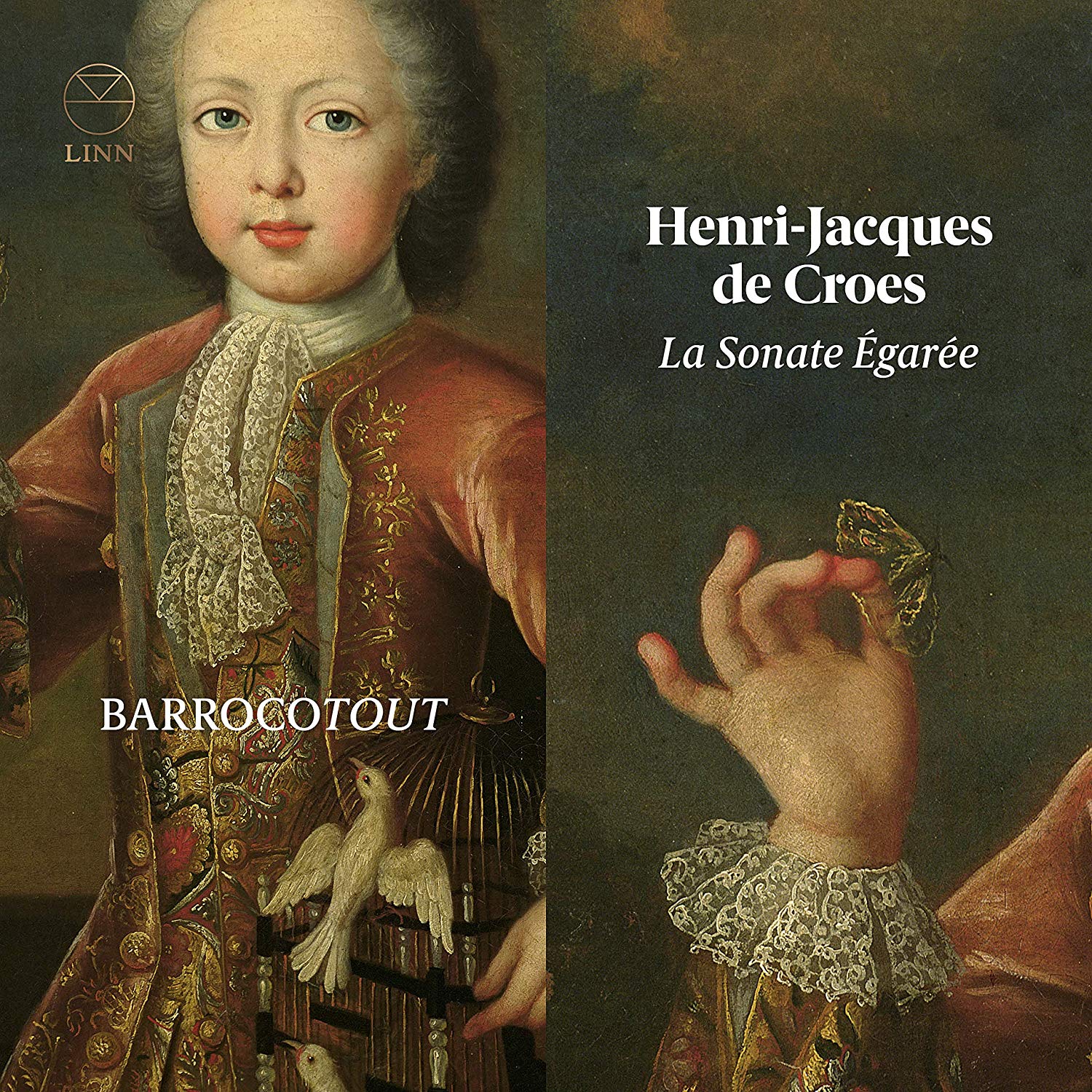
Henri-Jacques de Croes: La Sonate Égarée

Barrocotout
62:19
Linn CKD 597

The re-evaluation of established composers and repertoire has been an important element in the ‘Early Music Movement’, complemented by the re-discovery of those whom history has elbowed to the fringes. The sonatas recorded here, though published c1740, survive only in a single copy (and among the works by this composer still on the ‘lost’ list are 24 symphonies and a quantity of sacred music.)

I must say that I’m glad that this fast-developing group has brought them to our attention in performances that happily embrace both the graceful galant and the grittier contrapuntal aspects of the music. Sonata VI is especially strong. Tempi are well chosen and I appreciated the natural balance of the ensemble’s recorded sound. Also a relief is their unchanging continuo sonority – no ‘let’s have just the lute on the repeat’ here – though I would like to know if the occasional cello pizzicato is a whim of performer or composer.

The booklet note (in English and French) is just what’s needed in the context, though the English translation is in rather stilted language.

David Hansell

Categories
Recording

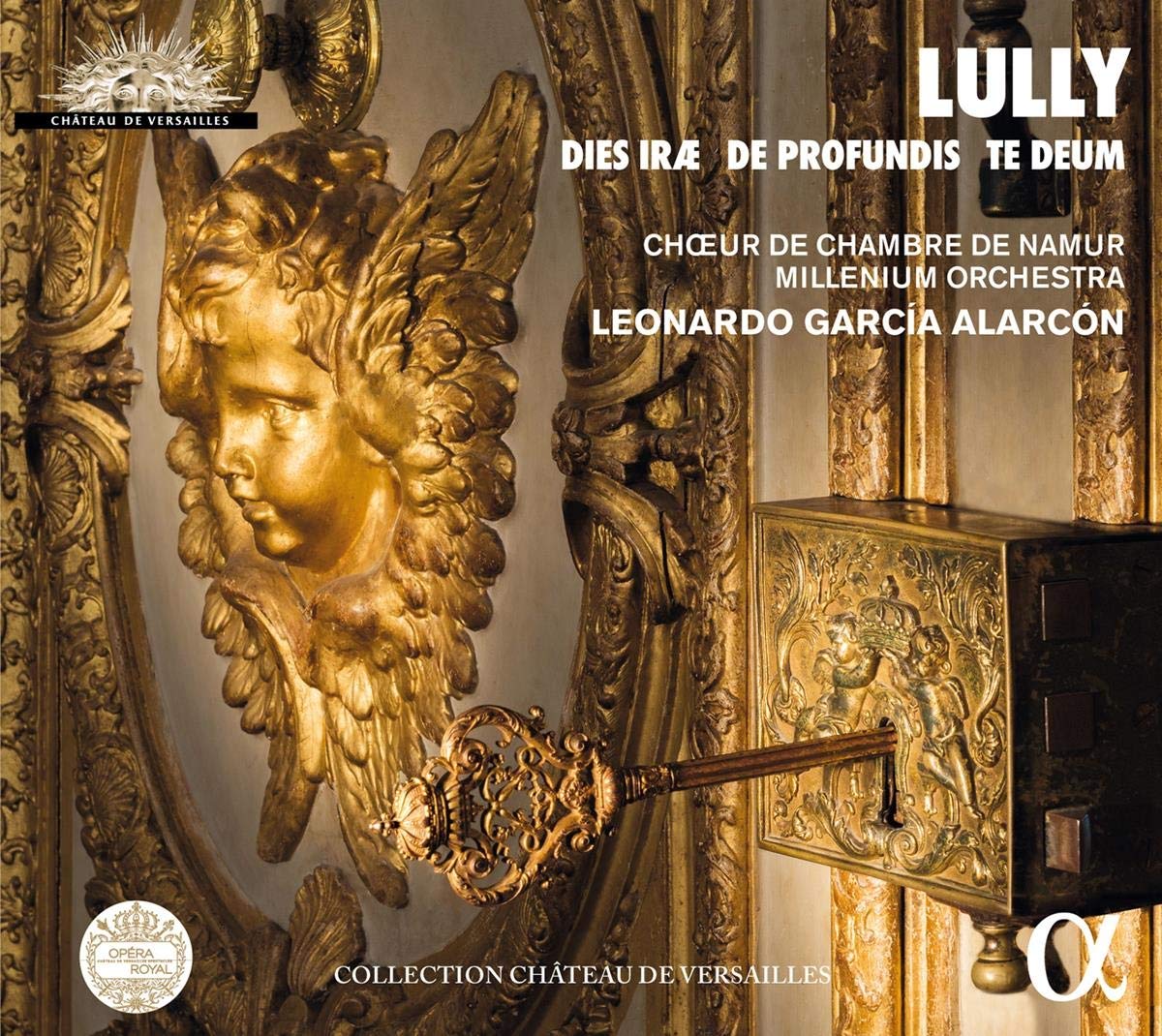
Lully: Dies iræ, De profundis, Te Deum

[Sophie Junker, Judith Van Wanroij, Matthias Vidal, Cyril Auvity, Thiabut Lenaerts, Alain Buet], Choeur de Chambre de Namur, Millenium Orchestra, Leonardo Gracía Alarcón
82:50
Alpha Classics Alpha 444

This is the kind of repertoire (and the kind of performances) that make it easy to understand why Lully was the favoured royal composer and how his was such an important voice in the development of the grand motet even though he had no involvement with the regular chapel music. There is an interesting and clear explanation in the notes of the musical politics involved. The Dies Irae opens as if it were to be a standard overture but the startling entry of the choir men singing the solemn plainchant rather sets the tone for the dramatic variety to come. The choir and orchestra are both very accomplished and comfortable in the style, though there are a few moments when the former’s crisp rhythms veer too close to clipped for my taste. Other small reservations are a few rather laboured ornaments and some less-than-beautiful tone from one of the male soloists but I still really enjoyed the programme. It was while ‘conducting’ the concluding ebullient Te Deum that Lully sustained (possibly) the most famous injury in the history of music.

David Hansell

Categories
Recording

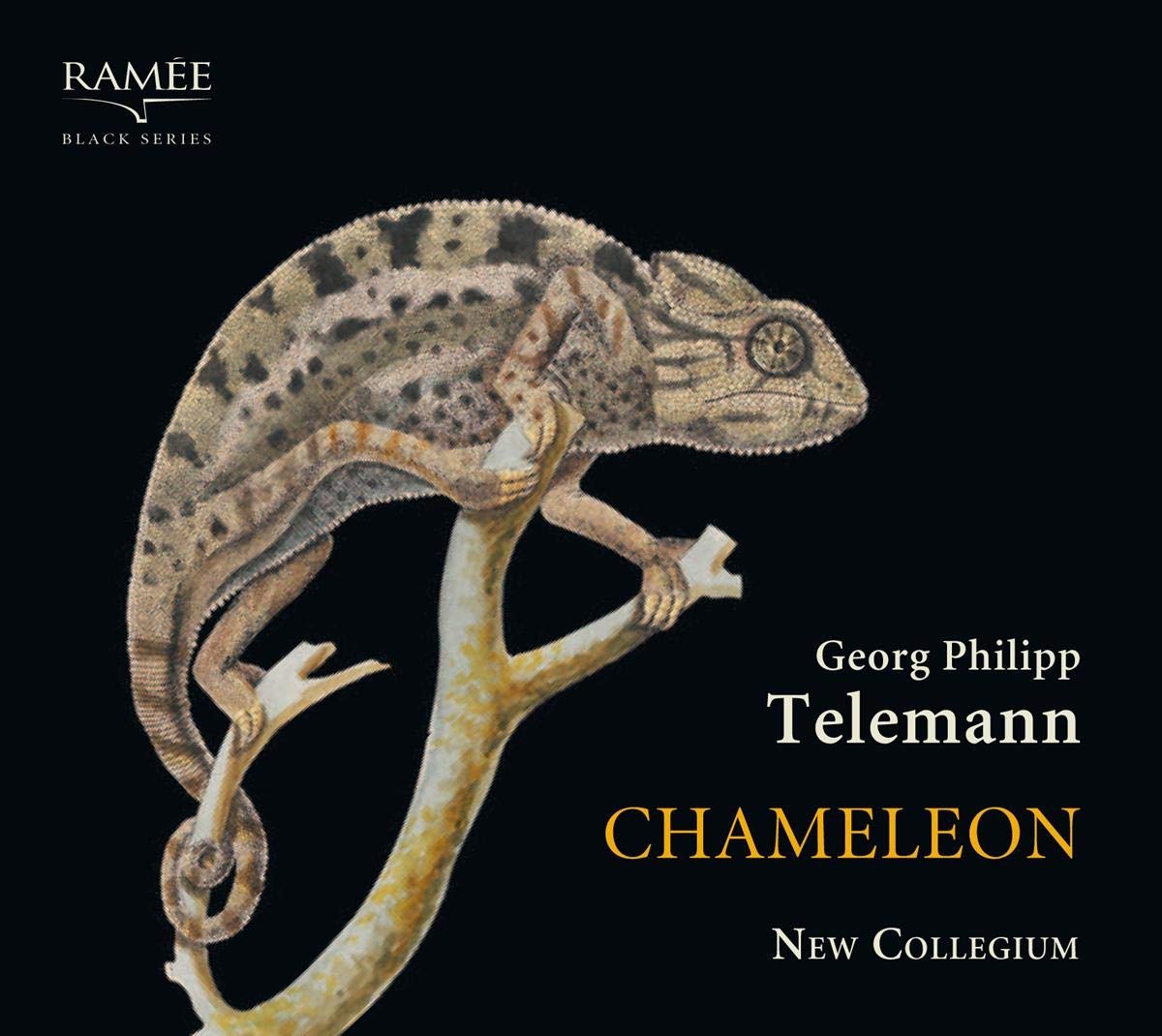
Georg Philipp Telemann: Chameleon

Chamber music in changing colours
New Collegium, directed from the harpsichord by Claudio Ribeiro
73:51
Ramee RAM1904 (Black series)

Examined from a purely discographic point of view, this recording brings just four little premieres to our attention, the menuets from TWV34; the other works comply to a befitting Latin phrase: Non nova sed nove, “nothing new, but told in a new way”! From the most elegant opening Prelude of TWV43:e4, the sixth of the Nouveaux Quatours of 1738 to the final, enchantingly elegiac chaconne from the same work which closes the CD, there’s a charismatic display of incredibly balanced musicianship, a most perfect synergy between polished musical application and skill, and the engaging joy of an enthralling interpretation.

The various members of New Collegium (Formerly Collegium Musicum den Haag) feel totally at ease with the musical polyglot, Telemann’s intentional blend of national colours in these cleverly nuanced ouvrages. The impeccable and quite irresistible élan captured in the “Allegro assai” (Track 5) in TWV42:a4 feels like a dazzling Polish stomp found elsewhere in equally familiar works. From the marvellous sonata TWV42:G7, first heard about ten years ago from Concerto Melante (with members of the Berlin Philharmonic and a couple of the Berliner Barocksolisten) the ravishing cantabile lines in the adagio, sitting in the middle of this work (Track 8), almost certainly an aria in disguise, are played to perfection with just enough melting tenderness. Another fine stand-out moment in miniature, the sublime A minor menuet of just over one minute (Track 19) feels so incredibly French! Before this beguiling little gem, there’s a splendid little composite Suite, comprising cleverly extracted movements from works found in the pages of Der Getreue Music-Meister (1728) running from Track 11-18; perhaps the “Polonaise” TWV41:D4 could have been included, but it’s a real masterful stroke highlighting fine fragments from this accessible and enticing musical journal.

Anh. (Appendix) TWV42:A1 (related to the work with flute, TWV43:A7, heard at the Boston Early Music Festival some years ago) takes us back to one of Reinhard Goebel’s very first outings on LP then CD, 1979 and 1987 respectively. The two scordatura violins make this work feel very much akin to the works of Biber, and possibly Schmelzer, yet there’s an individual style present.

Besides the trip through “Les gouts reunis” from this neat selection of Telemann works, we have “Les talents reunis” of New Collegium in dynamic musical interplay that could easily enchant and captivate veteran Telemannophiles and many new converts…speaking to us in compelling, chameleonesque new ways through these mostly known works.

David Bellinger

Categories
Recording

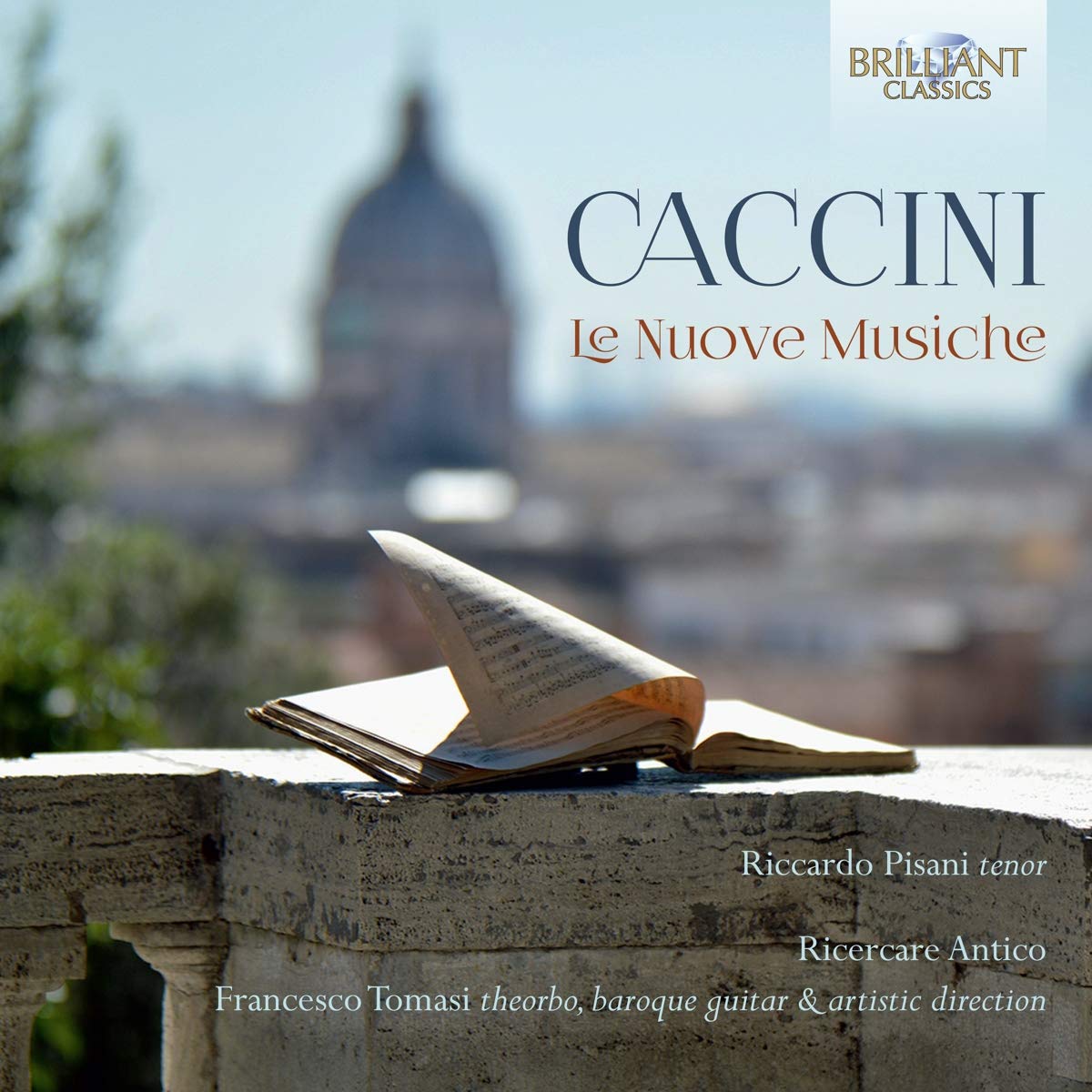
Caccini: Le Nuove Musiche

Riccardo Pisani tenor, Ricercare Antico
66:41
Brilliant Classics 95794

Giulio Caccini’s Le Nuove Musiche, the first volume of which appeared in 1602, is for the most part better known by name than in performance. As every student of music history knows, it is a collection of solo songs composed over some two decades. It owes its name and existence to the experimentation and theories of the Count Bardi’s Florentine Camerata, an academic gathering of which Caccini was a member. Although not quite as ground-breaking as its composer suggested, this ‘new music’ played a fundamental role in the birth of a form that emerged at much the same time as publication of Le Nuove Musiche and which to this day plays a major role in musical life – opera.

Presciently, as if its author was unconsciously aware of its epoch-making importance, the volume was preceded by a lengthy forward that is part manifesto, part singing tutor that is essential study for any singer aspiring to sing the vocal music of the 17th century. Basically the songs fall into one of two forms: strophic songs with a number of verses, often punctuated by an intervening ritornello, and freer structures, sometimes in several sections responding to the verse. The former are generally of a lighter character, often dance-like and incorporating hemiola (syncopated) rhythms – what Caccini terms ‘airy musics’ – while the latter are used for more serious topics. Anyone familiar with Monteverdi’s Orfeo will realise that it includes examples of both.

Caccini’s prime prerequisites for the performance of these songs are recognition of the importance of the text and its communication to the listener. In the Preface he lays stress on realising the emotions, which may change rapidly and which, in Caccini’s words, require an ‘increasing and abating’ of the voice. He also has much to say on ornamentation, in particular the trill, repeated note decoration, and gruppo, which more closely resembles the later Baroque trill.

So how do these performances by the Italian tenor Riccardo Pisani measure up to such tutoring? Not too well, I’m afraid. On the credit side he has obviously taken the trouble to think about the text, while he also articulates and projects words well. But though the voice itself is agreeable enough it lacks the colour and personality to make enough of this music, even the most famous of the songs, ‘Amarilli’ failing to beguile as it should. In short, there is little in the way of responding to Caccini’s ‘increasing and abating’ of the voice. Technically, too, although Pisani shows a reasonable grasp of the style, the voice is not always evenly produced, there is a surfeit of vibrato and the singer’s handling of those all-important ornaments lacks confidence. Too often the need for decoration is passed over and embellishment that is attempted often sounds sketchy. It is sobering to recall that Nigel Rogers was singing this kind of repertoire with far greater style and grasp of the correct ornamentation nearly 50 years ago. Pisani is not helped by the over- elaborate and at times intrusive continuo contribution of Ricercare Antico (violin, harp, archlute and theorbo, violone and (sigh) Baroque guitar), who also intersperse rather more satisfying instrumental performances of items by Filippo Nicoletti, Frescobaldi and Stefano Landi, the last named rather curiously described in the notes as ‘a specialist in instrumental music’.

As is customary with Brilliant Classics you will have to go their website for the Italian/English texts, but be warned that if you print them off (as I did) you will get some odd spacing results.

Brian Robins

Categories
Recording

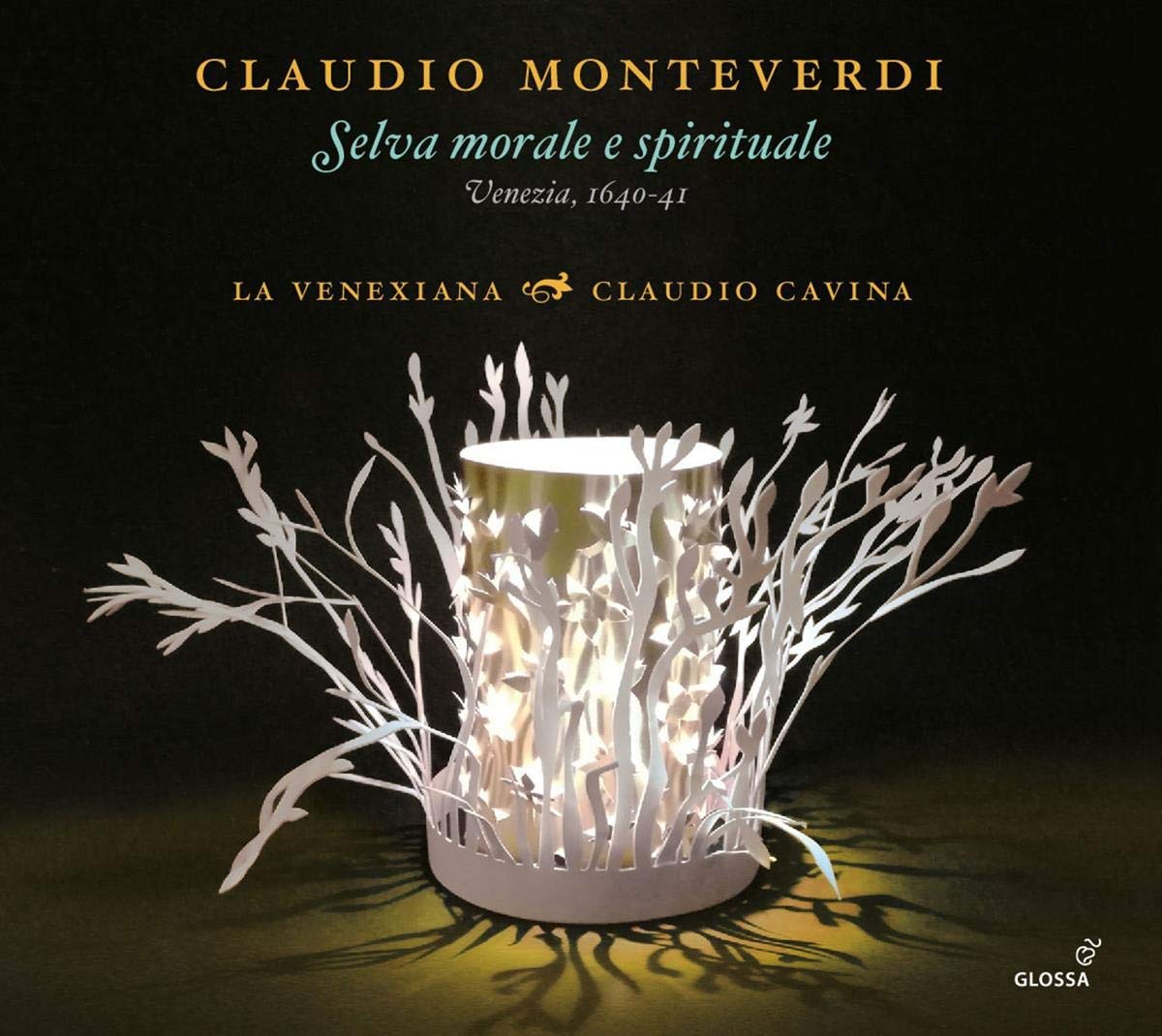
Monteverdi: Salve morale e spirituale

La Venexiana, Claudio Cavina
208:44 (3 CDs in a card triptych)
Glossa GCD920943

Claudio Cavina’s La Venexiana has hit on a good way of presenting the Selva morale e spirituale, Monteverdi’s late collection of music (largely) for the church, which they seem to have recorded way back in 2005, in the week-long festival of Church Music in Cuenca in Spain, but have only released in this form this year.

The music is divided between three CDs, the first two cast in the form of extended settings of Vespers and the third as a Missa Solemnis. This enables them to use almost all the religious music in the great compendium. I say ‘almost’ advisedly. For example, the seven-voice Gloria is substituted for that in the Missa for four voices, and the Credo has the fuller scored Crucifixus, Et Resurrexit and Et iterum substituted for those parts. The third Confitebor finds a place as the Offertorium in this third CD and Memento Domine David (Psalm CXXXI – 132 in the Coverdale scheme) is squeezed in as a kind of Post Communion, with a couple of Marian pieces – the extended Salve Regina – Audi cœlum verba mea and then the Pianto della Madonna doing duty for the Angelic salutation at the end of mass. There is no space for two of the hymns or Ab æterno but everything else religious is there in the three CDs that total 210 minutes.

La Venexiana in those days comprised three soprani and an alto (Cavina) with two tenori and two bassi, with SAATTB ripieni; two violini, four tromboni, violone, organ and two chitarroni complete the band.

Like Monteverdi’s better-known 1610 publication, the later collection exhibits Monteverdi’s dazzling ability to write in a wide variety of styles, to use parody techniques, and to provide music for virtually every kind of occasion. Selva is less coherent as a collection than 1610, but Cavina’s shaping of the material shows how versatile and useful his late assemblage proves to be. For the most part, his ‘scoring’ is exemplary, even if some of the voices – especially the soprani, with a pretty dramatic and so at times rather vibrato-laden tone – are probably not what everyone would choose 14 years later. If you were brought up – as I was – on Andrew Parrott’s Reflex/EMI recording of some of the Selva material in Vespers format with Emma Kirkby singing, nothing will quite replace the clarity and vivacity of that ground-breaking 1980s disc.

The performances, with a good deal of vocal OVPP singing, are stylish, if slightly dated. The broken voices blend well, and balance – including contrasts between florid solo singing and more substantial homophonic writing – are carefully worked out and executed. It is good to have (almost) the whole of the Selva available in a coherent form – I have reviewed other partial collections in the past few years – but this doesn’t quite set me on fire as I had hoped.

Partly it is the acoustic, which make much of the music sound too distant or just a bit foggy – it may well reflect the reality of Venice in the 1630s and 40s, but it is nowhere near as good as the continuing series of Schütz, for example, published by Carus to coincide with their new complete edition. Partly it is the feeling of sameness, which characterises the very different styles. Seconda prattica and various older styles rub shoulders and I was expecting a greater degree of differentiation.

But with these small reservations, I welcome this undertaking. I just wish that Andrew Parrott would gather today’s equivalent of his 1980s, and give us the rest!

David Stancliffe

Categories
Recording

Buxtehude: Membra Jesu nostri

La Maîtrise de Garçons de Colmar, La Chapelle Rhénane, Benoît Haller
60:35
Christophorus CHR 77436

This is a recent re-issue of a live recording made in October 2007. It is made with single strings, six single voices (one soprano – Tanya Aspelmeier – only sings in cantata 6), a very large basso continuo section including harp, theorbo, organ, harpsichord, bassoon and violones in both G and D. In addition it has a choir, La Maîtrise de Garçons de Colmar, employed largely to give weight to the biblical texts in some numbers.  This is a possibility suggested by Gilles Cantagrel, an excerpt from whose biography of Buxtehude published in 2006 in French forms the essay in the liner notes, and is translated into German and English. The text in Latin is translated into German and English as well.

I find the contrast between the sections with single voices and those that use the whole choir unconvincing. The single voices of Stéphanie Révidat, Salomé Haller, the haute-contre Rolf Ehlers, Julian Prégardien (T) and Benoît Arnould (B) are well blended, and are capable of fine expressive singing, occasionally marred in the sopranos by vibrato on the weak notes. The lower parts are cleaner on the whole – 12 years later, standards have changed vocally more than instrumentally. The playing is splendid, and the key progression from C minor to E flat major, G minor to D minor to A minor to E minor and then to C minor to finish give a fine series of distinct tunings (though details of instruments, pitch and temperament are not given).

The final Amen is light and bright, and has more of the vocal quality I would have liked in some of the sections with single voices. The recording balances the different vocal and instrumental lines well, though the Maîtrise is toned down till the final Amen. Who is this choir of youngsters and their director Arlette Steyer? There is nothing about them (or indeed anyone else!) in the notes.

David Stancliffe

Categories
Recording

Künstel: Markus Passion

Polyharmonique, L’arpa festante
138:00 (2 CDs in a card triptych)
Christophorus CHR 77435

This is an excellent recording of a great new discovery – probably the oldest surviving oratorio passion. Settings of the Passion according to Mark are rare in themselves, and this is a fascinating bridge between the older passion settings in the style of Schütz and the fully developed Passion Oratorios of J. S. Bach.  Künstel (c. 1645–1694) seems to have had his musical formation in the court at Ansbach, but from 1684 was in the service of Duke Albrecht III at Coburg, where his Markuspaßion was frequently performed after his death.  This substantial work (consisting of 99 numbers) was performed over two services on Maundy Thursday and the substantial Good Friday liturgy, including the motet Ecce quomodo moritur Justus by Jacobus Gallus.

The singers of Polyharmonique are headed by Hans-Jörg Mammel, who sings the measured music of the Evangelist accompanied by violoncello, organ and lute. Felix Rumpf, a baritone, sings the music of Jesus with the five-part string band (two violins, two violas and bass.)  The vocal ensemble has two sopranos, two altos, two other tenors, another baritone and two basses who between them sing the character parts and the arias, together with the director, Alexander Schneider, nicely entitled primus inter pares.

What is especially interesting is the way in which the narrative and the character parts merge into arioso passages as well as the more formal choruses. And all of this is woven around Lutheran chorales, often sung by a solo voice and ensemble alternating line by line. It is as if the late style of Carissimi were transported into the German Lutheran world, while at times the instrumental sound is that of Buxtehude’s. The formulaic cadences of the Evangelist belie Künstel’s dramatic characterisation of Peter, Judas and the other parts, where the verses of their arias are interspersed with instrumental ritornelli. Melodic material is partly derived from the chorales, but the whole substantial two-day event breathes its own character.

No-one who is interested in the pre-history of the Bach oratorio passions should miss this. And it is not just a vital link in the historical chain; it is really good and characterful music, admirably performed. Singers do not wobble or need to over-sing; lines are clear and the dramatis personae are well-characterised; balances are excellent and the whole production has a coherence and intensity that I was not expecting.

This is an excellent first recording of this newly-discovered work, and if you learn from it as much as I did, you will be eternally grateful. This is an alpha production and deserves to be widely known and enjoyed.

David Stancliffe