Categories
Recording

Sieur Demachy: Pieces de Violle

Flore Seube
119:55 (2CDs in a card triptych)
Les Belles Ecouteuses LBE 82

This complete account by Flore Seube of the surviving viol music of Sieur Demachy, eight suites in all on two CDs, is a world premiere of this evocative repertoire from the reign of Louis XIV. Demachy, a contemporary of Sainte-Colombe and Marais, has left us only this single collection of music, although its authoritative voice and unerring creativity suggest that much else has been lost. Ms Seube plays a wonderfully resonant seven-string bass viol by Pierre Jacquier in the generous acoustic of the Gîte de Lavaud Blanche, which enhances the instrument’s rich timbres without any loss of clarity. She treads a fine line between affectation and expression to produce eloquent readings of this rich repertoire. Each Suite comprises exactly seven movements, generally following the standard form of Prelude, Allemande, Courante, Sarabande, Gigue, Gavotte and Minuet, with one Suite only replacing the final Minuet with a quirky Chaconne. Sieur Demachy is at his most imaginative in the slightly freer Preludes, and Flore Seube adopts a suitably more exploratory approach in these, following the composer’s imaginative musical journey. However, this is consistently engaging repertoire deserving of wider attention, and Flore Seube has done both Sieur Demachy and her listeners a valuable service in providing these fine performances. A translation of the French programme notes printed in the booklet is available on the Belles Ecouteuses website.

D. James Ross

Categories
Recording

The Edward Lewis Viol of 1703

Henrik Persson
72:44
Barn Cottage Records BCR 028

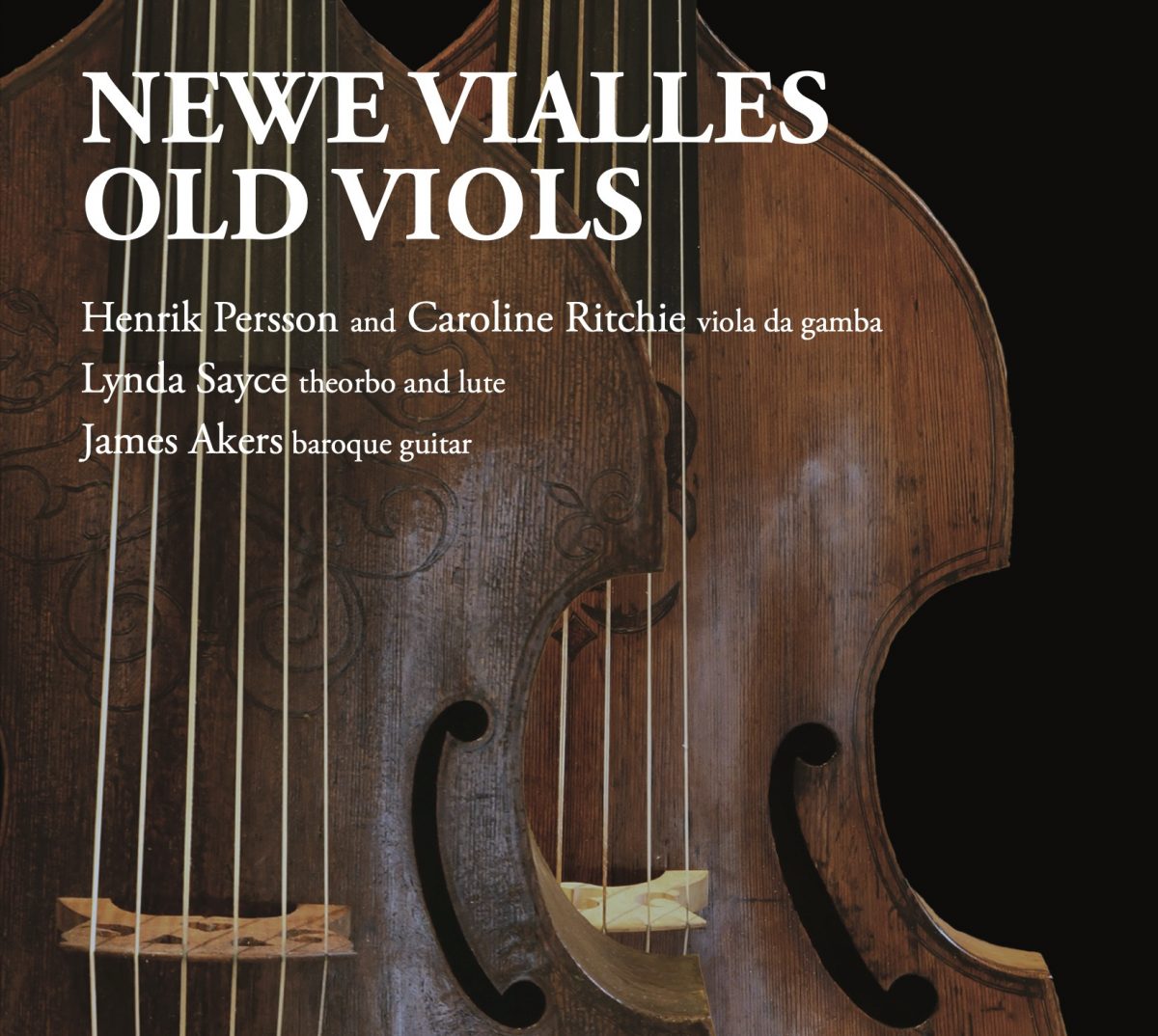
This venerable bass viol by the London maker Edward Lewis, which has been through a number of manifestations since it was built, including a spell as a cello, has been restored in 2020 to its original form. The remarkable survival of an original label dates it to 1703, while its elegant decorations undoubtedly ensured the survival of the instrument itself. Violist Henrik Persson has selected a programme of music which could plausibly have been played on the viol, including a couple of the now familiar Telemann Fantasias, music by that flamoboyant violist/composer Tobias Hume and less familiar repertoire by Benjamin Hely, Thomas Brown and Richard Sumarte as well as anonymous music from the Williamsburg Musick Song Book, attesting to the fact that some of the early American colonists from England brought music and their beloved viols with them. While Henrik Persson plays with complete technical assurance and a wonderful musical expressiveness, the star of the show has to be the Lewis viol, which, in its restored state, has an absolutely beautiful, rich voice and a freshness which it must have had when it was first made. Clearly, from its lavish adornment and its stunning sound, this was a prestige instrument, but just think how many such fine instruments fell victim to changing tastes and musical demands. It is a testimony to the art of restorer John Topham that this remarkable instrument was saved from adaptation and dilapidation, and to the art of Henrik Persson that it has been allowed so eloquently to play the sort of repertoire so perfectly suited to it.

D. James Ross

Categories
Recording

The Ghosts of Hamlet

Lost arias from Italian Baroque operas
Roberta Mameli, Le Concert de l’Hostel Dieu, Franck-Emmanuel Comte
68:04
Arcana A574

Who knew there were so many Italian Baroque operatic representations of Ambleto? Composers such as Giuseppe Carcani, Francesco Gasparini and Domenico Scarlatti turned their hand to operas based on Hamlet, albeit not the iconic play by Shakespeare, but the earlier story contained in the 12th-century Gesta Danorum picked up and adapted by the Venetian librettist Apostolo Zeno. In addition to arias from these now almost entirely forgotten Hamlets, we have a pasticcio version of arias by Carlo Francesco Pollarolo and Handel, the latter a textual rewriting of “Tu ben degno” from Agrippina to press it into service as a Hamlet aria. These are augmented by a stormy D-minor sinfonia by Scarlatti, which, given the composer’s interest in the Hamlet narrative, may be seen to reflect the mercurial moods of the Danish prince. Produced in the first half of the 18th century in Venice and Rome, this wealth of Hamletiana, augmented by the London pasticcios, is not without merit – these were competitive times in musically dynamic milieux in which almost nothing mediocre saw the light of day, and these tuneful arias, dramatically sung by Roberta Mameli are a testimony to the quality of the many operas of the time which have fallen into neglect along with their composers. Le Concert de l’Hostel Dieu, an ensemble new to me, plays with an admirable precision and musicality, avoiding the extremes of articulation which have become the fashion with other specialist Baroque ensembles, and under the direction of their founder Frank-Emmanuel Comte they produce authoritative accounts of this unfamiliar material. Roberta Mameli is a technically assured Baroque specialist who invests the music with a memorable passion.

D. James Ross

Categories
Recording

The Gentle Shepherd

Makaris
71:23
Olde Focus Recordings FCR924

Alan Ramsay’s pastoral opera of 1725 is a remarkable piece which I feel has never received the attention or status that it deserves. Written/compiled three years before the iconic Beggar’s Opera, it essentially kicked off the whole ballad opera vogue of the early 18th century and remains one of the finest examples of the genre. Borrowing from a wide range of traditional and ‘classical’ sources of the time, Ramsay has produced a work with genuine folky charm and elegance. The text itself, in literary Scots, is linguistically accomplished, with a wicked ironic squint, which it bequeathed to the later ballad operas. The ensemble Makaris takes a very creative approach to the music, with imaginative use of a variety of early/traditional instruments. Amongst them is the stock-and-horn, a mainly Scottish woodwind instrument, which came into prominence in the 18th century, and has an oboe-like body ending in a cow-horn bell. It has a free-vibrating single reed, making it an early member of the clarinet family, and it has a pleasant and mellow tone. It appears as a prop in many 18th-century engravings and paintings of Scottish rural scenes, including some depictions of Ramsay’s Gentle Shepherd. In this recording, lively and convincing accounts of the 21 songs are peppered with six well-chosen instrumental interludes selected from 18th-century sources. Just occasionally, a couple of the singers struggle with the upper register of the implausibly extensive tessitura of these mock rustic pieces – I have often wondered if this suggests that originally a semi-spoken delivery might have been employed by 18th-century actresses? The original ballad opera has an extensive rhyming text and a cast of eleven – the present recording rationalises a few of the characters and features radio broadcaster David ‘Jock’ Nicol as narrator, who sets scenes and links the narrative. Talking over some of the music and sounding very much like an electronic add-on, I found this aspect less than successful. A semi-staged performance of the complete ballad opera some years ago directed by David McGuinness with his Concerto Caledonia and a full cast demonstrated the merits of the complete work, and perhaps like The Beggar’s Opera, this important piece deserves to be committed to CD in its entirety. McGuinness went on to produce an authoritative edition of the piece and to record all the songs. In the meantime, this sympathetic and entertaining account of the songs by Makaris speaks powerfully for more attention to be paid to this neglected work – and perhaps it is overdue another production!

D. James Ross

Categories
Recording

In Chains of Gold

The English Pre-Restoration Verse Anthem vol 3
Magdalena Consort, Fretwork, His Majestys Sagbutts & Cornetts
Signum SIGCD931
83:39

This third volume in the excellent “Chains of Gold” series entitled Ah His Glory: Anthems of Praise, Prayer and Remembrance brings together three leading ensembles, the choral group the Magdalena Consort, the viol ensemble Fretwork and the wind consort His Majestys Sagbutts and Cornetts in performances of verse anthems composed before the Restoration of Charles II. These consort anthems, as they are probably more accurately termed, were composed partly during the reign of Charles I but also during the ‘distracted times’ of the Civil War and the ensuing Protectorate and are generally on a modest scale with the notable exceptions of the lavish setting of This is a joyful, happy holy day by John Ward and Know you not by Thomas Tomkins, which respectively open and close the programme. The former was written in the reign of Charles I, the latter during the Protectorate and probably written by the aging Tomkins more in hope than expectation of performance – his chosen texts mourning a fallen Prince were hardly ‘on message’ for Cromwellian England. There is a wonderful clarity about these accounts by the Magdalena Consort and Fretwork – the more intimate numbers achieve a perfect balance between the voices and viols, while the two larger-scale works incorporating the wind instruments manage to sound wonderfully opulent without any loss of definition. The concluding work by Tomkins is a tantalising taste of ‘what might have been’ in the history of English music if Puritanism had not triumphed so thoroughly. Tomkins was clearly aware of the magnificent music for voices and instruments being composed in Italy at the time, but here is a distinctively English voice using these rich textures to express a distinctively English idiom. A number of less well-known composers are also represented here – John Amner, William Stonnard, Richard Nicholson, William Pysinge and Simon Stubbs – a reflection of the decentralisation of music-making to the provinces at this period of disruption, where music collections had more of a chance of surviving warfare and puritanical purges. Reflecting the limited resources available, this music is on a much more modest scale, but is nonetheless expressive and beautifully crafted.

D. James Ross

Categories
Recording

Cupid’s Ground Bass

Music by Biber, Cavalli, Farina, Kapsberger, Monteverdi, Strozzi, Uccellini
Bellot Ensemble
First Hand Records FHR183
60:55

This charming collection of love-songs and instrumental pieces explores the joys and sufferings of love in a selection of 17th-century music with an emphasis on Italy. The solo voices are soprano Lucine Musaelian and tenor Kieran White, whose vocal contribution is individually very fine, before they symbolically finally come together in Monteverdi’s Zefiro torna. The instrumental playing, both as accompaniment and in the instrumental interludes, is also wonderfully imaginative and lyrical. Recorder, violin, viola da gamba, cello, baroque guitar/theorbo and harpsichord/organ blend together beautifully in music ranging from the delightfully celebratory to the plangently affecting. The Ensemble specialises in ornamentation, consulting a number of historical sources but ultimately embodying the rules and bringing them to impressive fruition in rehearsal and performance. Several highlights for me were the Sinfonia and Act I aria “Delizie contenti che l’alma beate” from Cavalli’s hit opera Il Giasone, sparklingly played by the Ensemble and ravishingly sung by Kieran White, and “Che si può fa” by Barbara Strozzi, exquisitely sung by Lucine Musaelian, while accompanying herself on the gamba as in the famous Strozzi portrait. This is mainly musical territory which has been explored previously, but the Bellot Ensemble and their engaging vocal soloists give even the very familiar material a novel twist, providing us with a programme which is constantly intriguing and enjoyable.

D. James Ross

Categories
Recording

Vivaldi: Quattro sonate per due violini

Duo Gelland
Olde Focus Recordings FCR 925
45:50

These four charming duets for two violins RV 68, 70, 71 and 78 differ from Vivaldi’s opus 1 set of duos for two violins in that these are ‘senza il basso’. Published after the composer’s death, they possibly date from the 1730s when Vivaldi toured central Europe with his father – certainly the option of performing without continuo accompaniment would lend itself to the unpredictable conditions of international touring. On the other hand, the mature style of the writing and the technical demands suggest that they were probably composed later for Vivaldi to play with one of the talented violin soloists of the Ospedale della Pietà.

The Duo Gelland, a married couple of violin virtuosi, take a wonderfully fresh and spontaneous approach to this music, living up to the group’s ethos ‘never to perform anything exactly the same way twice.’ In this way, the duets they play are treated as ‘live’ dialogues between the two players, and any performance, including this recording, is just one of many options. An element they don’t mention in their notes (perhaps understandably) is the strongly competitive element of these accounts! Whatever the circumstances, these duets could hardly hope for a more vivacious and electrifying performance than this short but charming recording.

D. James Ross

Categories
Book

Unpeeling Bach

By David Stancliffe
The Real Press 2025
372pp. ISBN
Available from Amazon

This is an engaging and comprehensive study of the music of J S Bach, which places it expertly in a historical and religious context. A former Bishop of Salisbury, Stancliffe is ideally placed to consider the spiritual dimensions of Bach’s sacred music, an important aspect of this devout composer’s essence and world view which is often glossed over in other studies of his music. While this understanding pervades the whole book, we also have appendices, including one dealing with Bach’s understanding of St John’s theology, drawing on his St John Passion, which are fascinating. However, intriguing as this is, it is just one aspect of a wonderfully wide-ranging approach to Bach. We have an updated treatment of Bach’s musical context, taking into account the surprising range of earlier polyphonic music still in currency in Bach’s time. We are cleverly drawn into the issues relating to the historically informed performance of the music by an account of Stancliffe’s own journey into grappling with these issues. As a performer/director as well as a scholar, he has a rewardingly ‘hands-on’ approach to the music, extending to the most successful layout for performances as well as a detailed treatment of instrumentation, voice-types, and voice production. Again, in a very practical approach, he cites performances and recordings by leading ensembles at work right now on the music of Bach, evaluating the success of their various approaches. In this way, his reader can easily access illustrations of the points he is making, and as so often in this volume, his encyclopaedic knowledge speaks of extensive listening, which matches his voracious reading. Just occasionally, the author makes a throw-away comment which opens a thought-provoking doorway – for example, in mentioning the pair of Litui which accompany the motet O Jesu Christ, meins Lebens Licht (BWV 118), he moots the idea that the nature of their accompaniment ‘argues for at least an outdoor if not processional performance’ – intriguing! My review copy is a pre-release edition, with editorial corrections, but as these are mainly layout issues, I assume they have all been addressed in the final edition. Stancliffe’s writing style is fluent and expressive, and the structure of the book makes the material easy to access and to enjoy either by dipping in and out or simply consuming it as a good and satisfying read. Although there are regular informative quotations from contemporary sources, there are no musical examples or visual illustrations – I was initially struck by this omission, but found myself less and less aware of it as I read on. On the back of the book, David Stancliffe is described as ‘an enthusiast and expert’, and in ‘Unpeeling Bach’ we find that this is a compelling combination which gives the author a unique perspective on Bach’s music.

D. James Ross

Categories
Uncategorized

William Lawes: Lighten mine eies

Ensemble Près de votre oreille, directed by Robin Pharo viola da gamba
62:19
harmonia mundi HMM 905391

There was a time when the idea of a French ensemble recording sacred and secular vocal music by William Lawes justaposed with instrumental ensemble pieces by the composer might have seemed unlikely, even bizarre. Yet such now is the predominance of French early music performers who have mastered not only the Baroque music of their own country but that of, for example, England, Germany or Spain. The ensemble founded by the gamba player Robin Pharo, which translates as ‘Ensemble Close to Your Ear’, lives up to its name by performing music of chamber-like intimacy that includes Byrd’s Mass for Four Voices, the major work they performed when I first encountered them at the festival based at Chateau d’Hardelot in the Pas de Calais. On that occasion, they performed the Mass with one voice per part, recognition of the many private – indeed secretive – celebrations of Mass that took place in the dangerous world of Elizabethan England.

The vocal line-up, different to the one I heard at Hardelot, includes soprano Maïlys de Villoutreys, Anaïs Bertrand (mezzo) and the splendid American bass Alex Rosen, currently one of the go-to singers in France. The programme is principally based around a selection drawn from 30 three-part Psalms published posthumously by Lawes’s brother Henry in 1648, which, along with a similar number of Henry’s own psalms, were published three years after William’s death, serving as a Cavalier at the Siege of Chester. Also included are several other songs including ‘Music, the Master of thy Art is Dead’, the elegy composed on the death of Lawes’s colleague and friend John Tomkins, organist of the Chapel Royal, and – by some way the longest item – the strophic song ‘O my Clarissa’, here given, as would have been intended, with each verse treated to adroit ornamentation, the whole sung by Maïlys de Villoutreys, who throughout brings her pure, bright-toned and characterful soprano to bear on the music in way that is never anonymously ‘white’. Much is made, too, of the psalm paraphrases, miniature masterpieces of a mostly penitential character that include starkly original harmonies within their condensed framework. ‘Ne irascaris, Dominus’, the only Latin text (taken from Isaiah 64), for example, is an extraordinary setting that closes with the deeply affecting line, ‘Jerusalem desolata est’. But all these settings belie their brevity by means of the density of musical thought.

Interspersed throughout are instrumental pieces, in the main selected from the collection known today as the Harp Consorts, among Lawes’s most intriguing and little-known instrumental pieces. There are thirty pieces arranged into dance suites and uniquely scored “For the Harpe, Base Violl, Violin and Thoerbo”. While maintaining the principle opf the dance suites, Lawes is here concerned with exploiting variation techniques, each work consisting of paired variations on dance movements by Lawes himself and others, They include three large-scale pavans for bass viol, including one (No. 10 in G minor) in which Lawes elaborates on a bass theme by Coprario that has recently been shown to include a quotation by another composer who also influenced Lawes, Alfonso Ferrabosco. Much scholarly debate has been devoted to the type of harp Lawes intended for this startlingly original music, the density of the writing suggesting either a double or triple. Here it is played on a opy of an Italian harp built by Simon Capp, an instrument perhaps like the “Arpa Doppia” Monteverdi specified in the score of L’Orfeo.

The Byrd Mass concert left some distinct reservations as to performance practice, but here there are none. Robin Pharo and his fine musicians have entered fully into the world of the enigmatic William Lawes to provide a vivid portrait of the composer.

Brian Robins

Categories
Recording

Vivaldi: La Gloria e Imeneo

Teresa Iervolino mS, Carlo Vistoli cT, Abchordis Ensemble, directed by Andrea Buccarella
54:41
Naïve OP8877

La Gloria e Imeneo belongs to a category of occasional works termed serenatas that were widely employed in the 17th and 18th centuries to celebrate events such as royal or noble weddings, birthdays, name-days and so forth. The marriage of Louis XV to the Polish princess Maria Leszczy in September 1725 inspired widespread celebrations not only in France, but also among French communities elsewhere, such as Venice. Here they were organised by the recently-installed French ambassador Count Jacques-Vincent Languet, the performance of the work commissioned from Vivaldi taking place in a loggia at the end of the garden at his residence, known as the Palais de France.

Vivaldi composed eight serenatas for this kind of tribute, three of which are known to survive today. Typically, they were semi-dramatic works for two or three usually allegorical characters (La Gloria has just two, Gloria (Glory) and Hymen (Imeneo), the god of marriage) who, between them, attempt to eclipse each other in a stream of panegyrics expressed in alternating recitatives and arias. Most were constructed in two parts, with an interval during which guests would be served refreshment, but La Gloria has no such break. The text – that for the present work is anonymous – was characteristically cobbled together by a court poet or similar. Given that by definition serenatas were ephemeral, it was not unusual to find composers drawing on previous works or re-using material in subsequent compositions. La Gloria has examples of both, including Vivaldi’s recent operas Giustino and Il Tigrane (both Rome, 1724) and La Silvia (Milan, 1724), while two numbers would find their way into the more elaborate serenata La Senna festeggiante, composed the following year, probably for the name day of Louis XV.

Regular visitors to this site will be accustomed to my general praise for Naïve’s magisterial Vivaldi edition, of which the issue at hand is vol. 73. With a project this size recorded by a widely varied contingent of artists obviously not all the recordings will be of the highest order, although the overall quality – once a few early problems had been iron-out – has been astonishingly high. Regrettably, this new issue is unlikely to be included among the most memorable of the series. The principal problem is the inflexible, unbending direction of the string ensemble that, in this case, forms the membership of the Abchordis Ensemble. As would be expected in a work of this kind, the majority of the arias are quick; here given Buccarella’s propensity for extremely brisk tempos they frequently take on a relentlessness that is tiresome, a feeling exacerbated by the endless plucking of lute chords and arpeggiations. Indeed, the lute’s contribution to the continuo in this kind of work is in any event contentious.

For the singers works such as this pose particular problems, since to convey texts that are paeans whose endless flattery of its subjects is of little or no interest to a modern listener takes particular skills that neither singer here possessed or is at least allowed to demonstrate. Originally probably intended for castratos, Gloria is here sung by Teresa Iervolino, a mezzo, albeit one with a bronzed timbre that in the lower register has tonal colours more associated with a contralto, while Imeneo is sung by Carlo Vistoli, one of Italy’s best-known counter-tenors. While both sing well enough, contending efficiently with extensive passaggi that frequently require bravura treatment, they are never allowed by the director to be truly expressive or communicative to any significant degree. Embellishment is at a minimum, while any hope of hearing something as exotic as a trill is soon abandoned. Just how uninteresting the performance is can be demonstrated by turning to Robert King and his splendid Vivaldi series (Hyperion), where La Gloria e Imeneo is coupled with La Senna festeggiante on an excellent two-CD set. There, while we are obviously still stuck with the stilted text, at least an effort is made to bring colour and expressive life to some fine music.

Brian Robins