Categories
Uncategorized

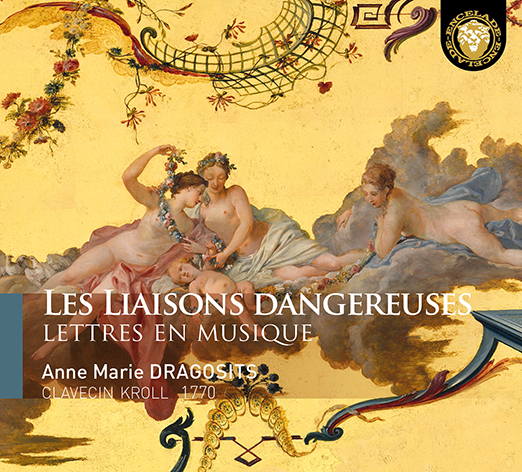
Les liaisons dangereuses

Lettres en musique
Anne Marie Dragosits
74:00
L’Encelade ECL2402

From its first explosive entry on this CD in music by Claude Balbastre, the clavecin by Christian Kroll of 1770 from the Collection François Badout, Fondation du Sautereau, Neuchâtel establishes itself as an instrument demanding our attention. At full volume, it has a huge voice, but is also capable of much more subtle and gentle utterances. Anne Marie Dragosits certainly puts it through its paces and timbres in music by a selection of largely unfamiliar French composers of the 18th century. The inspirations of the CD are the characters in Pierre Choderlos de Laclos’s 1782 troubling novel Les Liaisons Dangereuses, to whose letters Dragosits attaches the music. Although this idea is an intriguing one, a linking device of this sort is not really needed from my perspective as a framework for music that more than stands on its own two feet. However, fans of the novel or the ensuing films will undoubtedly enjoy the music as a soundtrack to the various ongoing intrigues of the plot. What is striking musically is the unerringly high standard of the music, regardless of the obscurity of its composer, and Anne Marie Dragosits and her Kroll clavecin are its ideal advocates.

D. James Ross

Categories
Uncategorized

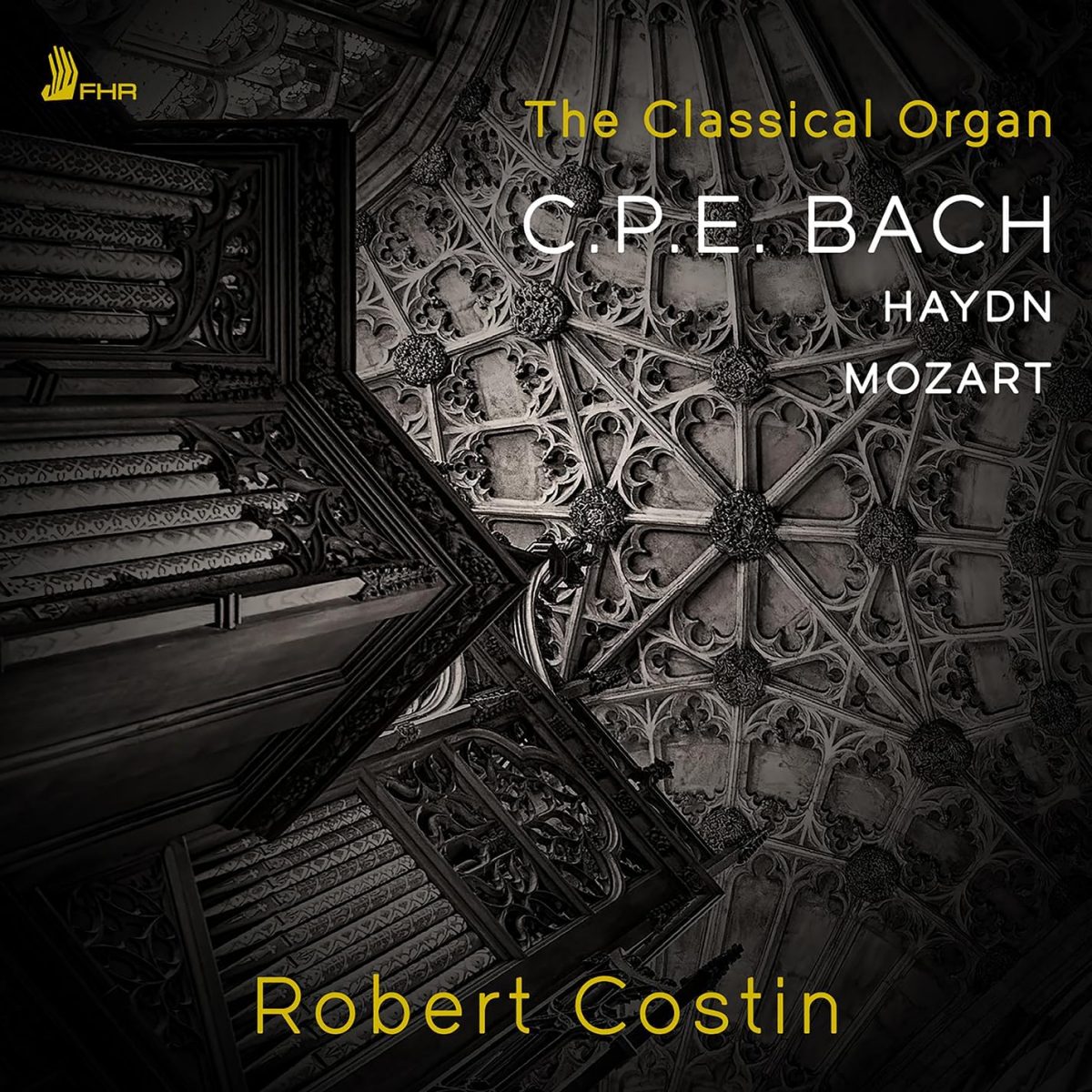
The Classical Organ: CPE Bach, Haydn, Mozart

Robert Costin
79:47
firsthandrecords FHR 173

These accounts of five of CPE Bach’s Wq 70 Sonatas with a selection of fillers for mechanical clock by Haydn and Mozart are played by Robert Costin on the organ of Sherborne Abbey. Originally built in 1856, this Gray & Davison instrument has undergone extensive adaptation over the years, including having its mechanism adapted to electro-pneumatic action and back again to purely mechanical action! Built over fifty years after the deaths of the featured composers, it doesn’t seem like an obvious choice for this repertoire, and it seems unlikely that the classical period composers would have had anything like the choice or types of stops available to Robert Costin. In this respect we are very much in the player’s hands regarding the appropriateness of the timbres he has chosen, and I have to say I am not always entirely persuaded of the authenticity of the sounds chosen here – exacerbated by the generous acoustic, this recording sometimes sounds to me like a Victorian interpretation of classical period music, often sounding a little bit overblown, like later ‘improvements’ on the scores of Handel and Bach. The CD notes suggest an association with Princess Anna Amalia of Prussia, sister of CPE Bach’s patron, Frederick the Great, and a musician and composer in her own right, who had an organ installed in her living room in the same year as Bach published his Sonatas. While Bach’s music would also have been intended to meet the growing demands of the concert hall, I think that this inventive music would sound much more effective with the focussed timbres of a smaller instrument. This mismatch of material and instrument comes even more into focus in the slighter repertoire for mechanical clocks, which concludes the CD. While I would personally have preferred the sounds of a less portentous instrument for these Bach Sonatas, Robert Costin plays with refinement and elegance, and we are given a very full account of the details of the chosen instrument. Incidentally, the first of the Bach Sonatas is omitted as it does not appear in the composer’s catalogue – this seems an odd decision as this missing sonata would clearly have completed the set of six Sonatas and filled the CD without resorting to the unrelated and more trivial music for mechanical clock.

D. James Ross

Categories
Uncategorized

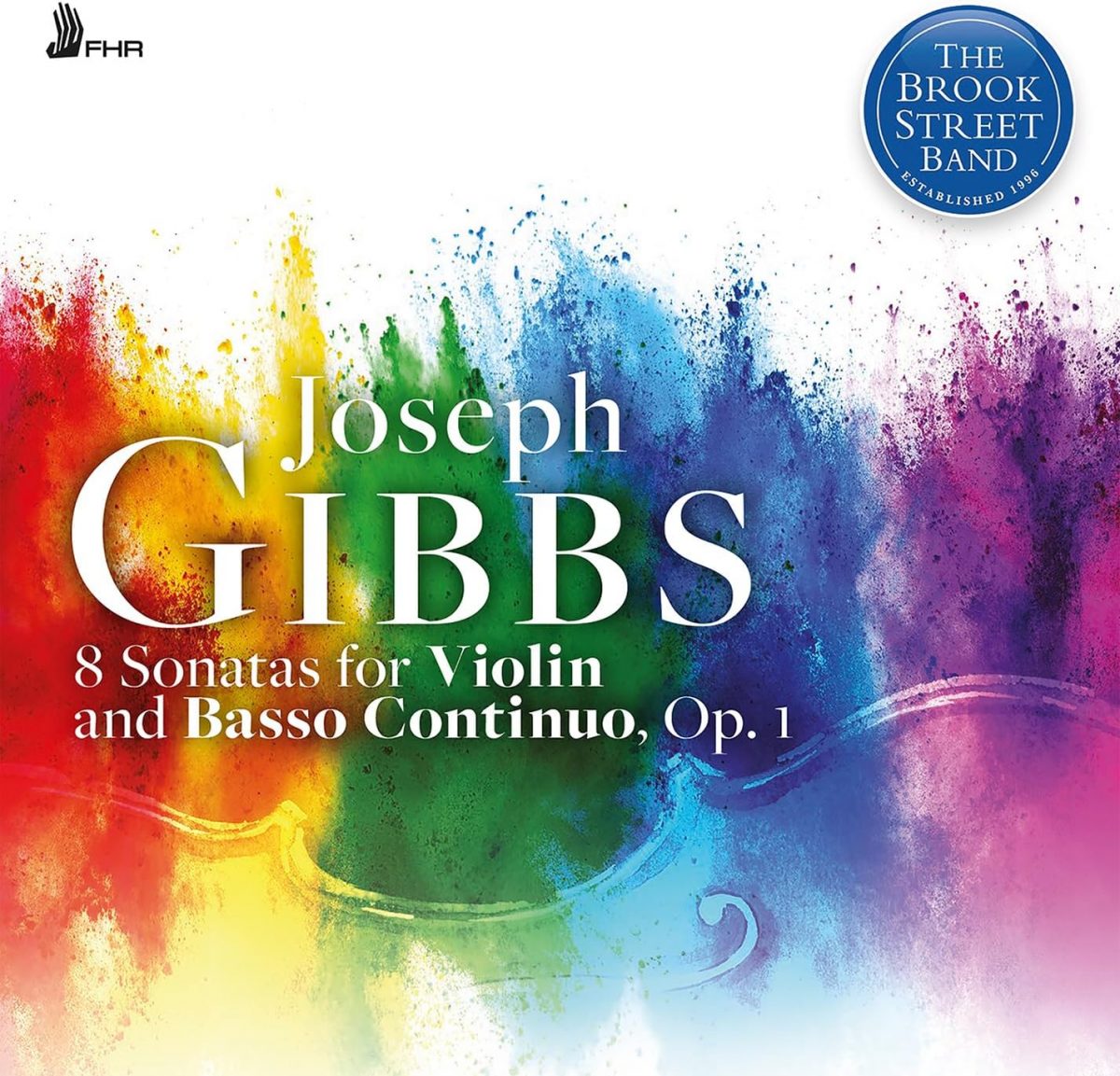
Joseph Gibbs: 8 Sonatas for violin and BC op 1

The Brook Street Band
83:44
First Hand Records FHR188

Joseph Gibbs was lucky enough to have been painted by his friend and fellow musician Thomas Gainsborough, a fine portrait reproduced in this CD case, while the programme notes by Tatty Theo, the group’s cellist, perhaps rather ungenerously suggest that it is this association with greatness that has saved Gibbs’ music from obscurity. In fact, although he lived to the ripe old age of 89, he only seems to have published one further collection of music, a set of quartets, and remained a composer of only parochial importance. This seems a shame as these opus 1 Sonatas seem much more than merely competent, and in these sympathetic and imaginative performances by the Brook Street Band they emerge as fine compositions in their own right. The group’s violinist Rachel Harris brings her extensive understanding of the music of this period to bear on Gibbs’ felicitous melodic lines and rhetorical phrases to bring out his unique musical voice. It seems sad that the compositional potential of these promising works was never really fulfilled – perhaps the highly competitive milieu of London at the time, which produced so many masterpieces, was something which Gibbs chose to avoid, preferring local celebrity to an international reputation. In any case, it is lovely to have some fine music persuasively played as a soundtrack to Gainsborough’s vivid portrait of his friend.

D. James Ross

Categories
Uncategorized

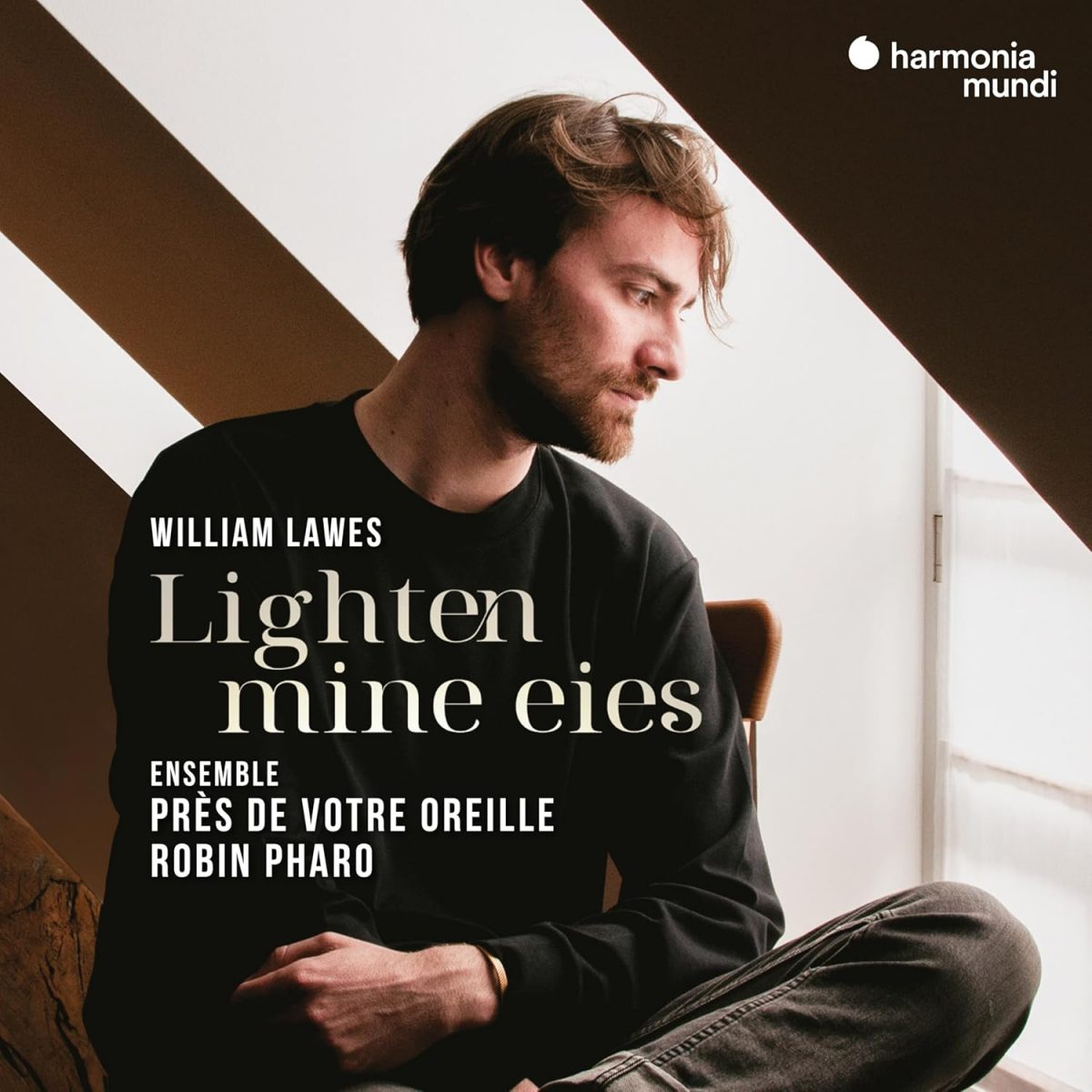
William Lawes: Lighten mine eies

Ensemble Près de votre oreille, directed by Robin Pharo viola da gamba
62:19
harmonia mundi HMM 905391

There was a time when the idea of a French ensemble recording sacred and secular vocal music by William Lawes justaposed with instrumental ensemble pieces by the composer might have seemed unlikely, even bizarre. Yet such now is the predominance of French early music performers who have mastered not only the Baroque music of their own country but that of, for example, England, Germany or Spain. The ensemble founded by the gamba player Robin Pharo, which translates as ‘Ensemble Close to Your Ear’, lives up to its name by performing music of chamber-like intimacy that includes Byrd’s Mass for Four Voices, the major work they performed when I first encountered them at the festival based at Chateau d’Hardelot in the Pas de Calais. On that occasion, they performed the Mass with one voice per part, recognition of the many private – indeed secretive – celebrations of Mass that took place in the dangerous world of Elizabethan England.

The vocal line-up, different to the one I heard at Hardelot, includes soprano Maïlys de Villoutreys, Anaïs Bertrand (mezzo) and the splendid American bass Alex Rosen, currently one of the go-to singers in France. The programme is principally based around a selection drawn from 30 three-part Psalms published posthumously by Lawes’s brother Henry in 1648, which, along with a similar number of Henry’s own psalms, were published three years after William’s death, serving as a Cavalier at the Siege of Chester. Also included are several other songs including ‘Music, the Master of thy Art is Dead’, the elegy composed on the death of Lawes’s colleague and friend John Tomkins, organist of the Chapel Royal, and – by some way the longest item – the strophic song ‘O my Clarissa’, here given, as would have been intended, with each verse treated to adroit ornamentation, the whole sung by Maïlys de Villoutreys, who throughout brings her pure, bright-toned and characterful soprano to bear on the music in way that is never anonymously ‘white’. Much is made, too, of the psalm paraphrases, miniature masterpieces of a mostly penitential character that include starkly original harmonies within their condensed framework. ‘Ne irascaris, Dominus’, the only Latin text (taken from Isaiah 64), for example, is an extraordinary setting that closes with the deeply affecting line, ‘Jerusalem desolata est’. But all these settings belie their brevity by means of the density of musical thought.

Interspersed throughout are instrumental pieces, in the main selected from the collection known today as the Harp Consorts, among Lawes’s most intriguing and little-known instrumental pieces. There are thirty pieces arranged into dance suites and uniquely scored “For the Harpe, Base Violl, Violin and Thoerbo”. While maintaining the principle opf the dance suites, Lawes is here concerned with exploiting variation techniques, each work consisting of paired variations on dance movements by Lawes himself and others, They include three large-scale pavans for bass viol, including one (No. 10 in G minor) in which Lawes elaborates on a bass theme by Coprario that has recently been shown to include a quotation by another composer who also influenced Lawes, Alfonso Ferrabosco. Much scholarly debate has been devoted to the type of harp Lawes intended for this startlingly original music, the density of the writing suggesting either a double or triple. Here it is played on a opy of an Italian harp built by Simon Capp, an instrument perhaps like the “Arpa Doppia” Monteverdi specified in the score of L’Orfeo.

The Byrd Mass concert left some distinct reservations as to performance practice, but here there are none. Robin Pharo and his fine musicians have entered fully into the world of the enigmatic William Lawes to provide a vivid portrait of the composer.

Brian Robins

Categories
Uncategorized

Benevoli: Missa Benevola

I Fagiolini, dir. Robert Hollingworth

70:17

Coro COR16208

For many, the name Orazio Benevoli (1605-1672) will be more associated with a work he did not compose than with those he did. For long believed to be the composer of the famous 53-part Missa Salzburgiensis, the authorship of that work has in more recent times become firmly ascribed to Heinrich Biber. Nonetheless, Benevoli was the composer of a number of large-scale multi-choir works that fall into a well-established Roman tradition of polychoral music sometimes designated Colossal Baroque. The present recording is the second of three CDs I Fagiolini are devoting to Benevoli’s masses for four choirs.

The Missa Benevola, also known as Missa Maria Prodigio Celeste, may, the booklet note suggests, have been composed for the feast of the Assumption (15 August) during Benevoli’s tenure as maestro at S Maria Maggiore in Rome from 1646 until his death. Scored for 16 solo voices supported by instruments, the mass makes its considerable effect by means of contrasting almost chamber music-like textures with passages, usually climaxes, of overwhelming power that remind us that if it was anything Colossal Baroque is pure counter-Reformation theatre. Throughout these passages and the build-up to them are quite superbly handled by Robert Hollingworth. At the other extreme is the sheer lyrical beauty of, for example, Kyrie I, which opens with the soprano’s long melismatic lines intricately interwoven. Christe equally involves the upper voices interweaving in gentle, but at times sensuous textures, another example of the intrusion of the secular world into the sacred in the service of the counter-Reformation. More unusually, it is the high voices that are also given the heart of Credo, ‘Et incarnatus est’ and ‘Crucifixus’, the latter eschewing the expected darker texture for luminescence, while ‘Et resurrexit’ brings lively dance-like rhythms. Agnus Dei rounds the setting off with prayful, largely syllabic writing that introduces some harmonic surprises before being brought to a final glorious climax. The performance of this fine mass is beautifully balanced and exceptionally accomplished, the voices excellently tuned. The dispersal of the choirs is not spectacular; a glance at the promotional YouTube video – well worth a watch – shows they were not that distanced. It is worth noting that S Maria Maggiore does not have the kind of balconies employed for polychoral music by Venetian composers. I found listening through headphones separates the choirs more effectively.

Each of the three recordings is designed to complement the featured Benevoli mass with works by another composer, here Benevoli’s near-exact contemporary Giacomo Carissimi (1605-1674), represented by two motets preserved in sources in Uppsala (Sweden). Paratum, cor meum, which has an obbligato violin part, is for soprano or bass, here well, if slightly too reservedly sung by Frederick Long, while the more ambitious Super flumina Babylonis is scored for four voices and continuo, its contrasts of mood and, at times, virtuoso demands both well met.

Finally the work by which Carissimi is best known today, the Latin oratorio Jephte, composed for the German College, one of the most significant musical establishments in Baroque Rome, in 1648. Relating the tragic story of Jephtha’s vow to God to sacrifice the first person he meets – it transpires to be his only daughter – in return for victory against the Ammonites, the oratorio concludes with an extraordinary lament for the unnamed Daughter, a few minutes of music that must be among the most influential ever composed. But the whole oratorio is a remarkable piece of drama that includes a change of mood as stark as that of the Messenger’s arrival in Monteverdi’s Orfeo at the point Jephtha realises it is his own daughter he must sacrifice. The performance is excellent, with particular kudos going to baritone Greg Skidmore’s superbly sung and dramatically compelling Jephte. Julia Doyle’s Daughter is scarcely less impressive, an intensely moving, if arguably marginally understated portrayal. My one reservation would be to question the addition of tympani and percussion to underlay the Daughter’s first words, ‘Start the beating of tambourines and the striking of cymbals’, obviously illustrative (too obviously illustrative?), but which more seriously masks the singer. But overall this is an exceptional CD, and I look forward greatly to the last of the trilogy.

Brian Robins

Categories
Uncategorized

Rosenmüller: Dixit Dominus

Ensemble 1684, conducted by Gregor Meyer
73:24
cpo 555 657-2

The unusual career of Saxon-born Johann Rosenmüller (1619-1684) was shaped by a dramatic non-musical incident that occurred in 1655. In May that year, he was arrested in Leipzig, where he was building a career as an outstandingly gifted musician, and accused of pederasty with one of the boys of the Thomasschule, where he was tutoring. Following escape from prison, Rosenmüller fled to Hamburg, from where he made his way to Venice, remaining there until he finally returned to Germany shortly before his death in 1684. It was his near 30-year sojourn coupled with an earlier stay in Venice in the 1640s that laid the foundations that would forge Rosenmüller’s unique place in German Baroque music history. His adoption of Italian style, already in part apparent in the music of Schütz, would henceforth change German sacred music in the wake of the devastation of the Thirty Years War (1618-1648).

The present CD is a varied collection featuring both large-scale and more intimate sacred works. Among the more extended works are two Vespers psalms belonging to the composer’s Venetian years, a relatively modestly scored Dixit Dominus in four parts with strings and continuo and a larger 8-part setting of Laetatus sum with cornetti and trombones in addition to strings. Both feature the colourful contrasts of texture and interplay familiar from the sacred music of Monteverdi and his contemporary compatriots, with vocal scoring that features strong contrasts between favoriten (soloists) and the capell (full choir). Also designed on an elaborate scale is the German-language setting based on Psalm 147, Preise, Jerusalem in six parts and also including brass and strings. In addition, two brief sacred chamber-music concertos of the kind familiar from Schütz’s output and one of the Sonatas for strings from the collection published in 1682 make for intelligent contrast.

I’ve so far omitted one other large-scale work because it leads helpfully to consideration of the performances. In some ways it is the most remarkable work on the CD, not least because of its extraordinary non-biblical German text by Rosenmuller’s friend Caspar Ziegler on which it is based. Entsetze dich, Natur is known from a surviving print of the text to have been performed on Christmas Day in 1649. The elaborate scoring for six voices, cornetti and strings is used throughout this long concerto setting to arresting affect in a cyclical structure with two alternating ritornellos. The whole effect is as strikingly colourful as the metaphors employed in Ziegler’s text. The setting of such a lengthy text is largely syllabic – reminiscent of Schütz – and without any great degree of repetition, relying substantially on the kind of powerful rhetoric that opens the poem – ‘Tremble, Nature: all must change for you, God Himself becomes a man’.

It is certainly an extreme example but the tame delivery of this opening heard here is sadly typical of the basic problem I have with the present performances. They are neat, tidy and well-executed, the voices featured – with particularly ‘white’ sopranos – are capable and have good technique. But it is all so tame. Take the delivery of that stunning opening line of Entsetze dich, Natur with its pregnant pauses. It positively demands to be communicated with a strong sense of declamation. Much the same applies throughout the disc, though some of the full choral passages make a fine effect. But in general the singing here reminds me strongly of much earlier days of the early music revival, when what was sought was clarity and purity, a cleansing escape from the excesses of romanticism, but I believe we’ve increasingly come to recognise that escape was at the expense of expressive interpretation. Cantus Cölln (harmonia mundi) have recorded Entsetze dich, Natur in an expressive performance that does it more justice (as part of a conjectural Rosenmüller Weihnachtshistorie), although even there I feel there is the opportunity to convey a greater sense of the text’s inherent rhetoric.

I’ve perhaps been a little unkind to these thoroughly honest performances so obviously born of integrity. But conductors like Stéphane Fuget are showing us dramatically that we have surely now moved on from performing early music solely from the perspective of decent respect?

Brian Robins

Categories
Uncategorized

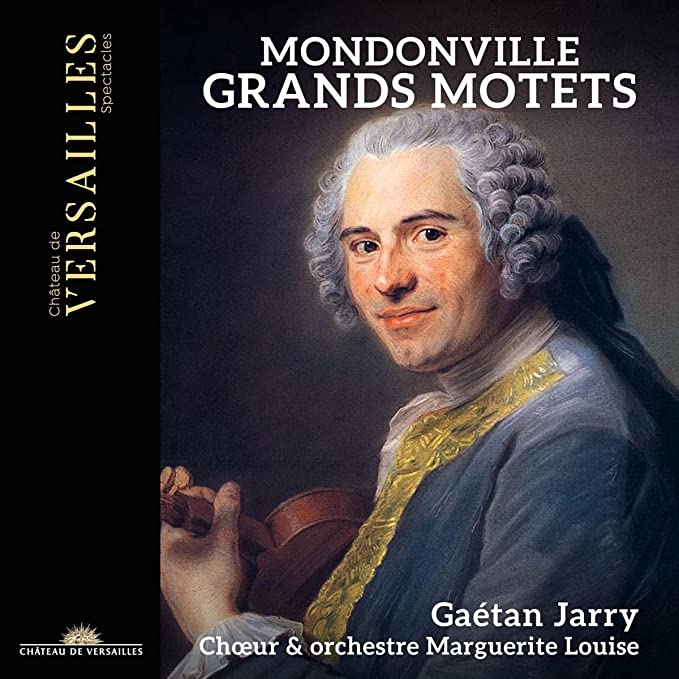
Mondonville: Grands Motets

Choeur & Orchestre Marguerite Louise, directed by Gaétan Jarry
67:39
Versailles  Spectacles CVS 063

Click HERE to buy this on amazon.co.uk
[Clicking these sponsored links keeps this reviews site free to access]

This continues the invaluable Versailles Spectacles series devoted to the grand motet, large-scale psalm settings for soloists, chorus and orchestra that were the principal form of sacred music in the France of Louis XIV and Louis XV. Those of Mondonville belong among later examples, succeeding and indeed vying in popularity with those of Rameau, whose small output was the subject of the previous release in the series, performances given by the same ensemble. My review of that outstanding CD can be found on this site.

Jean-Joseph Cassanéa de Mondonville was born in 1711, a member of a poor but aristocratic Languedoc family. At the age of about twenty, he went to Paris, quickly establishing himself as a composer of instrumental music and a violinist. The cover portrait of him by Quentin de la Tour depicts an agreeable and handsome man in his late 30s whose social skills won him favour at court from the likes of Mme de Pompadour. Mondonville gained a number of posts in the Chapelle Royale, including in 1739 that of master (Intendant) and his music was so successful at the famous Concert Spirituel in Paris that he became its most frequently performed composer of all time. A number of his motets were first performed there. Although Isbé (1742), his first work for the Paris Opéra, was a failure, Mondonville’s later operas achieved considerable success, the ballet-héroique Le carnaval du Parnasse (1749) in particular opening with a run of no fewer than 27 consecutive performances.

The present recording includes three of Mondonville’s nine grands motets. Of these Dominus regnavit (a setting of Psalm 93), composed in 1734, is the earliest and indeed the first of the motets, while Coeli enarrant gloriam Dei (Psalm 19) and In exitu Israel (Psalm 115), dating from 1749 and 1753 respectively are late works that represent his final examples of the genre. Of these, In exitu is an outright masterpiece, a superbly dramatic work that fully captures the grand sweep, colourful diversity and rich harmonic texture of a text that tells of the flight from Egypt. The passages narrating the miraculous crossing of the Jordan are vividly depicted, the seething swirling river parted to the stuttering wonderment of the chorus alternating between declamatory homophony and contrapuntal writing. Perhaps even more remarkable is the succeeding haute-contre solo, later with chorus, coloured by dark bassoon sonority, ‘Montes exultaverunt’ (The mountains skipped like rams’) and following rhetorical bass solo, ‘Quid est tibi, mare …? (What aileth thee, O thou sea). Also noteworthy is the Italian influence of a passage such as the soprano ariette ‘Qui timent’ (Ye that fear the Lord). The entire work bears more than eloquent testimony to Mondonville’s mature style.

Unsurprisingly neither of the other motets quite matches this quality, though the colourful text of Psalm 93, which also speaks of floods, evokes a powerful pictorial response to ‘the surges of the sea’ and praise of the ‘voices of many waters’. Coeli enarrant, planned on a less ambitious scale, opens more conventionally, but is elevated to near transcendence in a wonderful passage that speaks of God’s creative handiwork, the setting of a ‘tabernacle for the sun, which is as a bridegroom coming out of his chamber’. There is a marvellous sense of mystery in Mondonville’s setting, a bass solo, rising from the darkest pianissimo to full glory and the restrained entry of the chorus.    

I gave the highest praise to the performances of the Rameau motets by Gaétan Jarry and his supremely talented forces, praise that can be fully reiterated in the present case. On every level, this is another issue that demands to be heard by anyone remotely drawn to the music of the French Baroque.

Brian Robins

Categories
Uncategorized

Purcell: Dido and Aeneas

Purcell Society Edition, volume 3
Edited by Bruce Wood
ISBN 978 0 85249 966 5 | ISMN 979 0 2202 2644 1
xlv (including 6 plates), 112pp. £60 (Hardback)

This beautiful volume contains the most comprehensive appraisal of the sources and review of the current thinking on the work’s genesis you will find in one place. Bruce Wood has a long association with Dido and here, as well as the superb musicology, he makes two musical contributions – he has composed the missing chorus, “Then since our charms have sped”, and adapted a movement from Circe for the ensuing “Groves dance”. I’m surprised – given that this is a once-in-a-lifetime opportunity – that he (and The Purcell Society) didn’t go further and supply even more of the missing music; for example, why print an overture almost certainly from the Prologue without any music for the prologue? One excellent feature of the edition is the inclusion of the Tenbury version of the Sorceress music (where the words are sung by a mezzo-soprano rather than a bass, but the string parts are also subtly different) in parallel with the more familiar setting. The inclusion of a realisation of the figured bass makes this also a valuable performing resource. At this price, this impressive volume is an absolute bargain, and I commend it to anyone planning a production of Dido.

Brian Clark

Categories
Uncategorized

Dominico Mazzocchi: Prima le Parole

Madrigali a Cinque Voci, Roma 1638
Les Traversees Baroques, directed by Etienne Meyer
52:47
ACC 24384

Click HERE to buy this recording on amazon.co.uk
[Doing so helps maintain this free-to-view site…]

Over-petalled garlands of lyric poetry by Tasso, Ciampoli and others are responded to in the most extraordinary ways by Domenico Mazzocchi. This Roman composer is less known than his older contemporary, Monteverdi, whose influence can be heard, extended by later developments and by Mazzochi’s own fecund imagination. We need not hear the words to know that here we are descending a staircase of sleep or despair, there on a mountain top, open to breezes or distant echoing valleys. Particularly vivid are the tumbling mountain streams, swathes of swaying flowers and rumbles of bad weather – and all symbolic of course of the one universal topic. These effects are wonderfully enhanced by the imaginative choices of instrumentation in the continuo mix and concerted instrumental parts. A remarkably flowing and lyrical cornett sound, along with truly breath-inspired recorder playing, judicious use of dulcian and a varying spectrum of continuo sounds provides appropriate background canvasses for the vivid vocal parts. These vary from dramatic dialogues to rich quintets, sung with not a little ebullience. Another illuminating recording from this creative ensemble.

Stephen Cassidy

Categories
Uncategorized

Cabinet of Wonders, Vol. 2

Works for the violin and basso continuo from the 18th-century Schrank II Collection, Dresden
Kinga Ujszászi violin, Tom Foster harpsichord
57:15
First Hand Records FHR121

Click HERE to buy this recording from amazon.co.uk
[These sponsored links keep this site FREE]

This CD of 18th-century music for violin and continuo associated with Dresden offers premiere recordings of works by Martino Bitti, Henricus Albicastro and Carlo Fiorelli, as well as two anonymous works, possibly by Nicolò Laurenti and Antonio Montanari. They are from a collection probably compiled by the violin virtuoso Johann Georg Pisendel, an almost exact contemporary of J S Bach. Pisendel was the leading violinist of the Dresden Hofkapelle, becoming its official concertmaster in 1730. An eclectic and assiduous collector of music, Pisendel subsequently left his library of music to the Court, where it was preserved in Schrank II, the cabinet of the title, which found its way in due course into the Saxon State and University Library in Dresden. It is indeed a cabinet of wonders, both in the range of flavours of the music it contains and the varying demands the music places on the players. These performances by Ujszászi and Foster are delightfully expressive, while the decision to have the harpsichord play the continuo part alone rather than supported by a cello lightens the texture and creates a compellingly informal and spontaneous atmosphere. It is extraordinary to think that none of this music has been recorded before, and it is a mark of the sheer volume of fine music lying tucked away in archives that nobody has hitherto touched this resource. I have enjoyed both volumes of this series, and look forward to this rich collection providing us with further volumes of unanticipated treasures.

D. James Ross