Categories
Recording

Bach: The Art of Fugue

James Johnstone harpsichord (+ Carole Cerasi)
100:13 (2 CDs in a card triptych)
Metronome METCD 1111 & 1112

This is an amazing performance of The Art of Fugue (BWV1080) by the expert harpsichordist and organist, James Johnstone, with the assistance of Carole Cerasi, who often produces his recordings, and does so here when she is not playing a second harpsichord.

One of Johnstone’s gifts – central to his Bach recordings on the organ – is that of choosing the right instrument for the particular repertoire, and that is true of this performance of the Art of Fugue as well. He plays a 1995 copy by Stephan Geiger after an instrument by Johann Christoph Österlein of 1792. While this may sound anachronistic, it ‘shares significant characteristics with the instruments from Michael Mietke’s workshop, with which Bach was familiar’, he comments. It is certainly crystal clear, and has a mellow, bell-like sound: there are few harpsichords I would be happy to listen to for the unbroken 100 minutes these two CDs employ to record the whole work, but this was ideal for such an intense and concentrated performance. And its companion, lent by Trevor Pinnock, built by John Phillips in 2007 after a 1722 original by Johann Heinrich Gräbner the elder seems an excellent match for tracks 1, 2, 10 & 11 of CD2 which Carole Cerasi plays.

Johnstone has chosen to give us ‘the first integral recording of this posthumous 1751 print’, and it therefore concludes with the choral Wenn wir in höchstein Nöten sein played on the 1737 Treutmann organ in Grauhoff. And in listening to the whole Art of Fugue straight through, I was struck by how coherent it is, even if it might have been re-edited by Johann Sebastian in some details had he lived longer – there are signs that even as the plates were being prepared, he was tinkering with details.

There are, of course, many other performances available. For many years, I have been wedded to Fretwork’s take on a consort of viols, and there is one by Phantasm too; and both Jordi Savall in 2001 and Shunske Sato’s All-of-Bach version from 2001 use a wide variety of scoring. The first recording Johnstone bought as a teenager was by Lionel Rogg on the large organ of St Peter’s Cathedral, Geneva – and still to be found today. But for its clarity, intensity and depth of feeling this version is hard to beat, and I come away from the experience convinced that this is the best way to engage with such a deeply cerebral score, and mildly irritated by the apparent random assortment of instruments scored by Sato. The coherence of the developing depth of the individual variations, when those that are only in two parts suddenly feel as if they are in many more, reflects something that is true of the apparently simple solo sonatas for a single violin, where, around the apparently simple line of a single instrument, you suddenly hear the parts of a complete polyphonic structure. To test this, said his son-in-law, Bach would try out a piece for a solo instrument on a keyboard, adding just enough implied harmonic structure.

Something like this is what you get from this performance. It may seem deceptively minimalist, but Johnstone’s skill in pacing the canons as well as his unrivalled fluency in shaping the material shines through the textures with a clarity and inevitability which does more than justice to this towering work. I know of no better performance.

David Stancliffe

Categories
Recording

Hope soars above

Truro Cathedral Choir, James Anderson-Besant (Director of Music and Organist), Andrew Wyatt (Assistant Director of Music)
Regent REGCD599
56:38

Just when it seemed that the quatercentenary of Orlando Gibbons’ death would slip by with little discographical attention, two fine recordings featuring his choral music
have been released during November. A review of the disc consisting entirely of Gibbons’ music sung by The Choir of the Chapel Royal, Hampton Court Palace, was reviewed in EMR last month. The recording under review here features his music beside works by three of his most eminent contemporaries.

There are four works by Gibbons himself: a verse anthem, a fantasia for organ, and two evening Services, one a verse setting, the other full; both settings consist of the
usual two canticles, Magnificat and Nunc dimittis, providing six individual pieces. The verse anthem is O thou the central orb, the modern contrafactum of what was originally O all true faithful hearts but furnished with nineteenth-century words to offer a more general application, the original text having expressed thanks for King James I’s recovery from illness. Soloists from all four voices – treble, alto, tenor and bass – are required, as is an accompaniment for the organ. Similarly the expansive Second Service calls upon soloists from all voices with organ accompaniment. The Short (or
First) Service on the other hand is for voices alone and is a more succinct setting than the other. Gibbons’ piece for organ is the famous Fantazia of foure parts.

That was the easy bit. Now the controversy. Also attributed to Gibbons is the anthem for six voices Out of the deep. However, this is now considered to be an early
composition by Byrd. Three pre-Reformation sources provide attributions, of which two are to Byrd and only the third – merely an entry in an index – is to Gibbons.
There is also evidence within the music that the anthem is more likely to be an early work by Byrd. But the attribution to Gibbons has proved adhesive, and this is because the collected edition of Gibbons’ anthems (in Early English Church Music) was published several years before the similar volume of anthems by Byrd (in The Byrd Edition) and so the attribution to Gibbons took hold (three recordings, two predating the earlier recording attributed to Byrd) while the revised attribution to Byrd (two recordings) has taken time to seep through to general usage. Without going into
so much detail, the notes in the accompanying booklet, which are excellent throughout, by Alan Howard, reflect this dubiety surrounding the attribution to Gibbons. Notwithstanding the identity of the probable composer, and the early stage in his career when probably he composed it, the work is comfortable in this elevated company. It is the sort of piece which can be dismissed by some editors and
musicologists, whereas in performance it comes across effectively, and is anecdotally appreciated and enjoyed by singers – consider for instance the extended heartfelt outburst at “and with him is plenteous redemption”.

Incontrovertibly by Byrd is his anthem Sing joyfully, also for six voices, his most recorded sacred work in English, particularly popular in the USA, and as Alan Howard observes, an effective emotional counterweight to Out of the deep. The other (third!) work on this disc by Byrd is his well-known fantasia in C, A fancy for my Lady Nevell.

John Bull is enterprisingly represented not by one of his many fine works for keyboard but rather by his verse anthem Almighty God which by the leading of a star known to contemporaries as “the starre anthem”, a star anthem indeed, and one of only a handful of sacred works by him known to survive.

And to conclude the disc Truro includes two works by the greatest composer born in Wales, Thomas Tomkins. Both are sombre masterpieces: his great A sad pavan for these distracted times and one of the finest of all anthems in English Almighty God the fountain of all wisdom, its beautiful harmonies and melodies seasoned with a sudden profound and penetrating exploitation of dissonance, all followed by an Amen which can truly be described as divine.

Although all these works have received commercial recordings already, such is the quality of the music and, thankfully, of the performances that it is all worth hearing in these fine performances, however familiar one is with some or all of the works. For instance, Byrd’s Sing joyfully boasts no fewer than 35 current recordings on the Presto website, yet one would not want to be without Truro’s rousing yet sensitive rendition, with its resounding yet perfectly balanced final chord. The sleevenotes specify which treble line (14 boys, 13 girls) sings in which piece – both lines are excellent and they join for Out of the deep which has two treble parts, and for Gibbons’ Short Service. The 13 layclerks – five altos (two contraltos, three countertenors), and four each of tenors and basses – do a similarly good job on the lower parts. All three organists play a solo. Organ scholar Jeremy Wan plays Tomkins’ pavan – omitting the repeat of the second strain; assistant organist Andrew Wyatt plays Byrd’s fantasia; and in his first commercial recording as Cathedral organist James Anderson-Besant plays Gibbons’ familiar fantasia, but when it is played as well as this there can be no complaint about its inclusion. This is Anglican
cathedral music at its best, a credit to James’s predecessors, Andrew Nethsingha and Christopher Gray, in nurturing the tradition at Truro, and to the current choir and organists in sustaining it.

Richard Turbet

Categories
Recording

Charpentier: Messe de Minuit

Choeur et Orchestra Marguerite Louise, directed by Gaétan Jarry (organ)
77:53
Versailles Spectacles CVS173

Few Christmas works have worked their way into the affections of music lovers to a greater degree than Charpentier’s Messe de Minuit. One of many sacred works composed by Charpentier while in the service of the Jesuits (1689-1698), the exact date of its composition is unknown; the composer’s biographer Catherine Cessac has suggested Christmas 1693 or 4 as likely possibility. Scored in four parts – soprano, alto, tenor and bass plus a string orchestra and organ, it resembles the idea of the ‘parody’ mass familiar in Renaissance sacred music but well out of fashion by Charpentier’s time. But unlike the ‘parody’ form it uses not one theme, but no fewer than eleven drawn from old French carols, employed by Charpentier with great skill and the addition of nothing more than a modest degree of ornamentation that allows them to retain their naive charm. ‘Joseph est bien marié’, for example, to which the opening ‘Kyrie’ is set, has a delightfully catchy tune that instantly draws the listener into the joyous spirit of Christmastide. It is also aggravatingly insidious and I hope other listeners have better luck getting it out of their head than I did! It was a good idea to include a number of the orchestral arrangements of these carols that Charpentier made several years prior to the Mass and which were collected in two groups, catalogued as H. 531 and H.534 respectively. The new recording was made in the wonderful acoustic of the Chapelle Royal at the palace of Versailles and is as idiomatic and as outstandingly performed as one would expect from Gaétan Jarry and his accomplished performers, among them a quartet of first-rate soloists (Caroline Arnaud soprano, Romain Champion haute-contre, Mathias Vidal tenor and David Witczak bass).

This would be an outstanding CD even without another major work being included, but Dialogus inter angelos et pastores Judae. In Nativitatem Domini, H. 420 is arguably a more important work than the Mass. ‘Dialogus’ here refers more to a type of work than any extended exchanges between the participants, being one of seven so-called dialogues composed by Charpentier. Taking its text principally from St Luke’s Gospel, the work falls naturally into two sections, each preceded by an orchestral introduction. The first lays the foundation for the opening tenor solo appealing to God: ‘How long will you turn your face to us’, the exquisite second an evocation of night with muted strings and delicate flute. That is followed by the shepherd’s wonder at the opening of the heavens – a translucently beautiful chorus – and the Angel’s announcement to the shepherds, a passage sung with radiantly pure tone by Caroline Arnaud.

Dixit Dominus, H. 202, composed around 1690, is one of six settings Charpentier made of the psalm, this one notable for a prelude of a breadth that surprises in the context of the relative brevity of the work. The writing, employing as usual alternating choruses and solos, is particularly notable for the florid, Italianate writing at passages such as ‘De torrente’. Finally on this generously filled CD there is the lovely Noel, ‘O Créateur’, H. 531 originally one of the orchestral arrangements made by Charpentier, but not employed in the Mass and here heard with its original text, the strophic verses sensitively ornamented.

The whole disc is a joy from start to finish; it is strongly recommended to anyone yet to encounter the delectable Messe de Minuit and is open to discovering some refreshingly different Christmas music.

Brian Robins

Categories
Recording

Johann Ludwig Krebs: Keyboard Works volume 6

Steven Devine harpsichord
70:52
resonus RES10376

Steven Devine completes his complete recording of Krebs’ keyboard works with volume 6 which contains the Sechs Praeambulis from the early Vier Pieces, Part 1 of 1740, Suite 5 of the Six Suites (Clavier-Übung, Part IV, 1746: Krebs WV-811) and the Suite in A minor ‘nach dem heutigen Gusto’ (Vier Pieces, Part 2 of 1741: Krebs-WV 819).

Devine’s instrument for this final CD remains his favourite double-manual harpsichord by Colin Booth (2000) after a single manual by Johann Christof Fleischer (Hamburg 1710) at a=415Hz which he tunes to a Modified Young II temperament. The singing quality of this instrument is perfectly suited to this music which in the early 1740s when Krebs was approaching his 30th birthday sounds completely ‘modern’. For example, track 2, Praeludium 2 – Andante ‘A giusto Italiano’ – with its snap rhythms shows Devine’s perfect control and elegant sense of timing. In tracks 4 & 5 he uses the harpsichord’s second manual to give point to Krebs’ echo effects. Krebs spans the shift from the essentially florid style of the toccatas and contrapuntal writing of the late 17th century, of which the prelude and fugue in the A minor Suite (tracks 13 & 14) are an example, to the gallant and appealing 18th century tunefulness of the 5th Suite (tracks 7-12).

Where did this all come from? Krebs – reputedly Bach’s favourite pupil – had left the Bach household in 1737 when he was 24, after 11 years from 1726-35 as a pupil in the Thomasschule, followed by two in the university. He played the harpsichord in Bach’s Collegium while a university student, and was a copyist of a number of Bach’s Cantatas. Was his failure to secure Bach’s post in Leipzig due to him being considered too modern – or too vieux jeu?

As in the previous discs, Devine’s playing is not only incredibly poised and stylish but entirely adjusted to these mercurial compositions which shed such light on the hinge between the old world and the new. He is that most blessèd interpreter who does not let his ego turn the works he plays into the vehicle of some kind of personality cult as so many of the versions chosen by the presenters on Radio 3 seem to think is what is necessary to bring dusty old music to life. This complete edition is not devoid of colourful characterisation, but Devine’s playing is always at the service of the music, not of himself.

For me, Devine’s Krebs stands as a model of how to do it – letting a composer speak for himself – with elegant and sympathetic performances that do not depend on the intrusion of the player’s personality. This will be the best edition of Krebs’ music that you could wish for – even if it fails the BBC ‘Breakfast’ test.

David Stancliffe

Categories
Recording

Haydn 2032: No 17

Dmitri Smirnov violin, Kammerorchester Basel, conducted by Giovanni Antonini
73:55
Alpha Classics 1146

The 17th in the splendid series of the complete Haydn symphonies directed by Giovanni Antonini features him directing one of the two orchestras he is working with (the other is of course his own Il Giardino Armonico) in three early symphonies from the 1760s. But as anyone familiar with the cycle will be aware, it is valuable not only for the symphonies, but also the tasty extras generally thrown into each selection. Here, the CD takes its name from the dedication Haydn wrote to the violinist Luigi Tomasini at the head of his Violin Concerto in C – ‘fatto per il luigi’ (composed for Luigi). Tomasini joined the Esterházy orchestra as leader in 1761, the same year as Haydn became vice-Kapellmeister, and the undated concerto probably belongs to much the same period. In his early years at Esterházy Haydn diplomatically composed many solos in his orchestral works to allow his players to make an impression, the most famous example of course being the ‘times of the day’, trilogy, Symphonies 6, 7 & 8.

Tomasini was something of a capture for Esterházy, an outstanding virtuoso capable of double-stopping with perfect intonation and the possessor of a beautiful, Italianate tone that allowed him to play long, cantabile lines with sustained purity. Both these assets are unsurprisingly fully exploited by Haydn, with double-stopping from the outset of the rather dignified opening Allegro moderato to the aria-like sustained sotto voce of the lovely central Adagio. The third movement is a delightfully bouncy Presto that calls for plenty of double-stopping and considerable agility from the soloist. These demands are met in exemplary fashion by Dimitri Smirnov, a semi-finalist in the 2024 Queen Elisabeth Competition (Brussels), whose unwaveringly sustained lines in the Adagio are particularly admirable. I did wonder if perhaps his cadenza in the opening movement was a little over-elaborate for a work of these proportions, but it’s a relatively minor point in the context of such outstanding playing.

Taken together, the three symphonies included, No 16 in B flat (c.1763), No 36 in E flat (c.1761-2) and No 13 in D (1763), provide a compelling explanation as to why so many music lovers regard Haydn with such affection. There are no masterpieces here, just good humour in spades, an abundance of spirit and energy, affectionately-shaped slower movements, and minuets that seem to belong as much to a country dance as they do to a court ballroom (No. 16 has in fact no minuet and only three movements). But, if not yet a masterpiece, there is one of these symphonies that does point toward the gradual emergence of a master. This is Symphony No 13, composed during a period when Haydn had four horns available at Esterházy. The composer took full advantage to open the symphony with strikingly rich sonorities – wind and horns over an urgent, driving string ostinato. The remainder of the symphony confirms it as something special among Haydn’s early works. The Adagio cantabile (ii) is one of those concertante movements in which the composer gave one of his outstanding instrumentalists a notable solo role, in the present case the cellist Joseph Weigl, who was also given a solo role in the central Andante of Symphony No 16. The final movement of No 13 has become famous for sharing the four-note Gregorian motif in the finale of Mozart’s Symphony No 41, ’Jupiter’, where it of course forms the basis for the extraordinary contrapuntal last movement. Haydn shows less inclination to treat it fugally – though there are hints – writing a movement equally divided between counterpoint and homophonic drive and energy.

The performances throughout attain the high standard that have become a feature of the series, being lithe, witty and pointed in quicker movements, while featuring playing always responsive to Antonini’s Italianate warmth in andantes and adagios. Just occasionally, as in previous issues, he gives cause to wonder if he gets lured into tempi that are a little too fast for the music, if not for his superb orchestras. Here, the final Allegro molto of the E flat Symphony is an example. But in truth the overall level of performance in this splendid series is making life increasingly difficult for the would-be critic!

Brian Robins

Categories
Recording

Orlando Gibbons at the Chapel Royal

The Choir of HM Chapel Royal, Hampton Court Palace. The English Cornett and Sackbut Ensemble, conducted by Carl Jackson
Resonus Classics RES10375
67:00

Following the choir’s excellent discs of music by Tallis and Tomkins, this recording is all the more welcome for marking the quatercentenary of Orlando Gibbons’ premature death in 1625 at the age of only 42. The choral items are well chosen, and include hymns, full and verse anthems, and canticles. None of these are obscure or neglected items, with the possible exception of the morning canticles for the Second Service – the Te Deum and Jubilate – of which there have been few previous recordings. This pair makes for the heftiest contribution to the programme, emphasized by the use (seemingly warranted by contemporary documentation) of winds in the accompaniment, and inspired perhaps by the recording of Byrd’s Great Service by Alamire. They are also employed in the much more familiar evening canticles, and for those anthems which survive in versions as consort anthems.

A small but varied selection of Gibbons’ always attractive keyboard works is included, but the most significant items on the disc are those for consort played by the winds. Gibbons left us six such works in six parts which are definitely for instruments, plus two which are considered less likely to be instrumental and might be surviving wordless versions of choral works, plus one further which is considered even less likely to be instrumental. The six definites have all been recorded several times, and the ninth least likely one has been superbly recorded by the fine French consort of viols L’Acheron, but the intervening pair, numbers 7 and 8 (Musica Britannica v. 48, nos 37 and 38 in John Harper’s edition of Gibbons’ complete music for consort) had never received a commercial recording until now. Whether Gibbons’ individual pieces are familiar or not, all are unfailingly worth hearing, but the recorded premieres of these two works elevate this disc into the status of being essential for admirers of Gibbons, and highly recommendable for anyone interested in the music of this period.

The Hampton Court brand of Chapel Royal choir sounds in excellent voice, though the recording itself does no favours to the inner voices – countertenors and tenors – and favours trebles and basses. But all seems well for the winds, and the English Cornett and Sackbut Ensemble is of course a world leader in its field, a truism confirmed in its contributions to this exciting disc.

Richard Turbet

Categories
Recording

Conti: Il trionfo della Fama

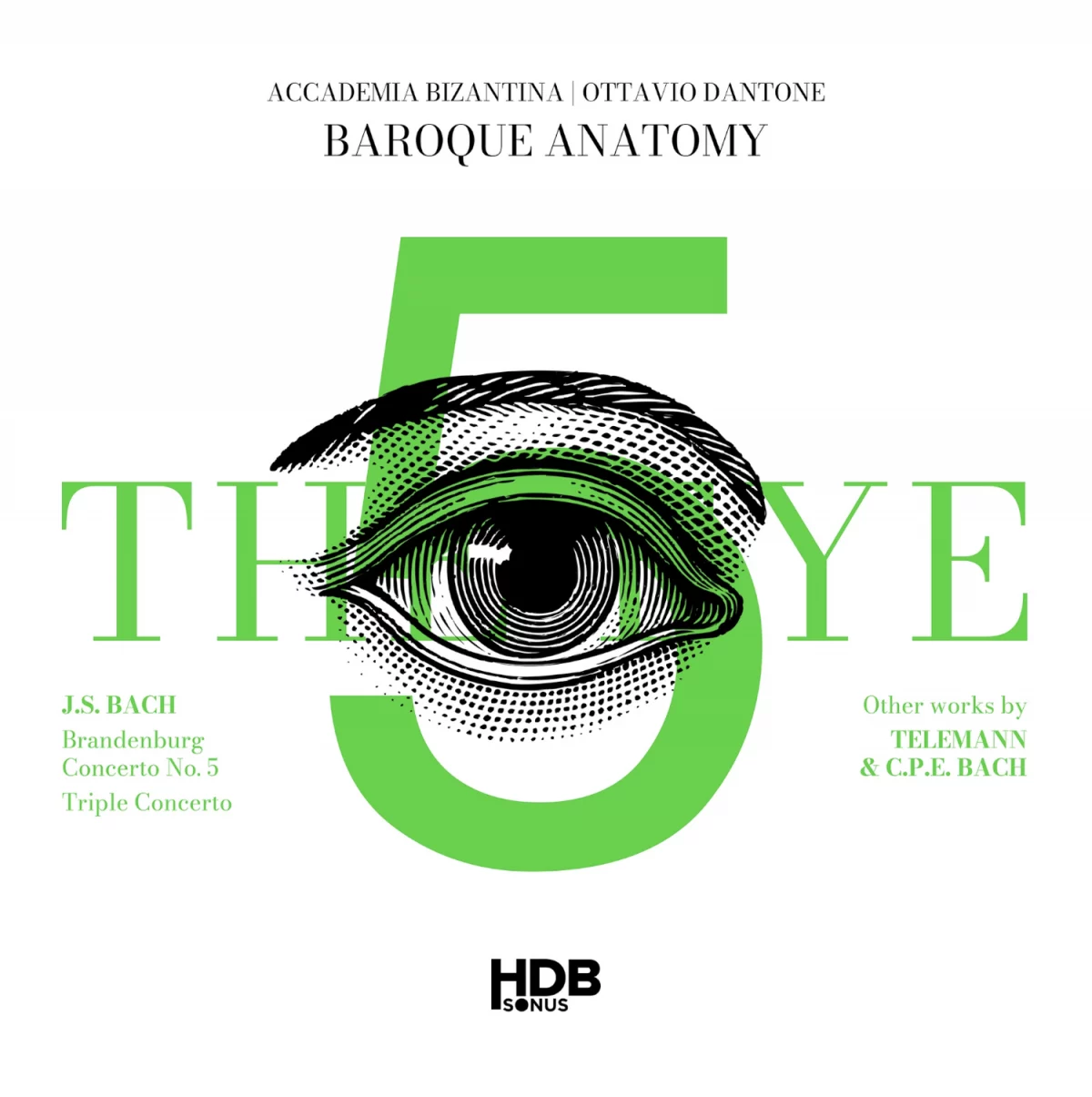
NovoCanto & La Stagione Armonica, Accademia Bizantina, directed by Ottavio Dantone
81:46 (2 CDs)
cpo 555725-2

Il trionfo della fama is one of three serenatas commissioned by the Habsburg empress Elisabeth Christina from Florentine-born Francesco Bartolomeo Conti (1682-1732) in honour of either the birthday or name day of her husband Charles VI. Conti, who served the Viennese court from 1701 until his death in 1732, was initially hired as associate theorbist, in 1708 becoming principal court theorbist. Today Conti is principally remembered as a composer of operas that came to dominate the Viennese Carnival season, the principal period in Vienna for the production of secular dramatic works at a court particularly devoted to sacred music.

Il trionfo was in fact not given in Vienna, but rather Prague on 4 November 1723, the name day of Charles. Cast in a single act, the serenata, typically for the genre, eschews dramatic development in favour of a panegyric text put into the mouths of a group of allegorical characters, here Fama (alto), Gloria (mezzo), Genio (alto), Destino (tenor) and Valore (bass). There is no ‘plot’, the ‘characters’ discourse simply revolving around the reiteration of the monarch’s qualities and achievements voiced in the customary alternation of recitative and aria. There is also a single duet, while the work opens and closes with grandiose double choruses that include trumpets and timpani. The work concludes with a licenza, a scenic representation illustrating the glory of the subject. In keeping with the lavish musical establishment maintained by the Viennese court, a total of 73 musicians in the Hofkapelle in 1721, the work is richly scored, to the point, for example, of ‘L’Asia crolla’, an aria for Valore (Valour) that includes a demanding concertante role for two bassoons. The arias, too, are invariably bravura pieces with extensive melismatic passages combining with the kind of rhetorical writing the verse of this kind of eulogy demands, ‘Asia crumbles, Africa fears this Emperor’s great valour’, and so forth. The singers who first performed Il trionfo were regular court singers and included the celebrated male alto Gaetano Orsini (Fama), who graced the Viennese musical scene over a period of nearly forty years. Conti’s writing is at times highly individual, as is apparent from quirkily fragmented passages in his three-part overture, but at other times there tends to be a reliance on sequential writing that can become predictable.

The present performance stems from the 2024 Innsbruck Early Music Festival. Full of vibrant life, it is typical of the kind of intensity and restlessness associated with the Innsbruck Festival’s new music director. At times, this can work to the disadvantage of the soloists, an aria like Valore’s declamatory ‘Io che regno’, with its wide range and multiple passaggi not made more comfortable for the fine bass Riccardo Novaro by Dantone’s arguably over-agitated direction. But in general terms, Dantone’s is a perceptive performance that reveals Il trionfo as a fascinating example of the occasional serenata. The palm for the best singing goes to Sophie Rennert’s Gloria. She gives a particularly fine account of the character’s second aria, ‘Spira il ciel’, one of the few to include any significant cantabile element. Here, the long winding sequential accompaniments support her evenly produced mezzo and fine mezza voce to provide a pleasing contrast to the prevailing bravura writing, largely coped with by the cast in as accomplished a manner as can be expected today, though diction is at times not exemplary.

It is pleasing to report that, in contrast to a number of recent cpo releases, the booklet does include the Italian text and an English translation.

Brian Robins

Categories
Recording

Lully: L’Idylle sure la Paix, Charpentier: La Fête de Rueil

Boston Early Music Vocal & Chamber Ensembles, directed by Paul O’Dette & Stephen Stubbs
75:50
cpo 555678-2

During the 17th and 18th centuries, it was customary to celebrate a major peace treaty or important victory with both sacred and secular music, in the case of the former a Te Deum, often freshly composed. Meanwhile, poets and composers would occupy themselves producing an ode in praise of the victor, or less frequently, a dramatic work crafted for the occasion. The present disc presents secular works from both these categories by the leading French composers of the 17th century, Jean-Baptiste Lully and Marc-Antoine Charpentier. Both were written to celebrate the same event, the Truce of Ratisbon (or Regensburg), which brought an end to the war Louis XIV had fought against the Holy Roman Empire and Spain. Signed in 1684, the Truce initiated what would be a short-lived period of peace that would be widely celebrated in a France increasingly wearied by Louis’s military exploits.

Such occasional works by their very nature present difficulties for modern performers and audiences. Laudatory and often sycophantic in the extreme, there is often little literary interest or emotional content to grasp. Lully’s Idylle sur la Paix is in this respect rather different in that it has a text written by no less than Jean Racine, which if not major Racine is by definition superior to the dozens of such texts churned out by hacks. The occasion of the lavish first performance of the Idylle was a fête attended by the king and his court and given by the Marquis de Seigneley in the orangery at his château at Sceaux, near Versailles in July 1685. Contemporary accounts – several quoted in Gilbert Blin’s long historical note in the booklet – testify to the glittering grandiosity of the occasion. What is not clear is the kind of forces likely to have been employed, but it seems unlikely it would have been the small chamber music ensemble employed in this new cpo. The recording is based on performances originally given by the Boston Early Music Festival in 2022 and subsequently recorded in Bremen. The Idylle consists of a sequence of brief airs and récitatives alternated with the odd ensemble number, choruses and dances, both the latter at times employed as ritornelli. Probably at least in part due to the reason given at the outset of this paragraph, the performances do little to present the work in a positive light, being vocally largely uninteresting and not helped by poor diction. But what really finishes them off is a familiar complaint against Boston Festival performances: the incessant, intolerable and a-historical continuo strumming on theorbo and – even worse – Baroque guitar by Boston’s joint directors, Paul O’Dette and Stephen Stubbs. Both are outstanding players – I count O’Dette’s set of the complete Dowland lute works to be one of the treasures of my collection – but their persistent intrusive contributions to Boston Festival recordings is highly regrettable.

It goes without saying that the same caveat applies to Charpentier’s La Fête de Rueil, but here the presence of a dramatic context does seem to have helped the singers to a higher level of communication and better, though not perfect, diction. The work takes its name from the château built by the statesman Cardinal Richelieu at a small town on the outskirts of Paris. According to Blin, the work was commissioned by Richelieu, who celebrated his 100th birthday this same year, but no contemporary performance of it has been recorded, which is extremely odd if it was indeed commissioned. That it was intended for Richelieu is not in doubt, since the anonymous text mentions his name twice. Catherine Cessac, Charpentier’s biographer, is more circumspect, suggesting only that it ‘may have been performed at Rueil’. Cessac also points to the work being planned on a ‘lavish scale’, for six solo voices, a four-part choir, and a sizable orchestra that includes a continuo section composed of bass violins, bassoons and harpsichord (NB – no mention of lutes of any kind). La Fête de Rueil is a staged dramatic pastorale featuring shepherds, among them a pair of reluctant lovers, Pan, and, incongruously, an ‘Egyptian Woman’, a fortune teller. The work certainly here makes a greater impression than the Lully, with some attractive singing from tenor Aaron Sheehan (Tirsi) and Danielle Reutter-Harrah (Iris), the possessor of a pure, youthful-sounding soprano.

In truth, neither of these occasional pieces adds anything significant to our understanding of its respective composer, but those tempted to explore the CD will need to go online to see the libretto, it seemingly having become cpo’s policy not to include texts in its booklets.

Brian Robins

Categories
Recording

Beethoven: Complete Violin Sonatas

Shunske Sato violin, Shuann Chai fortepiano
236:02 (3 CDs)
Cobra 0094

If the ten sonatas Beethoven composed for piano and violin over a period of a little over a decade hardly have the significance of his string quartets, that is at least in part due to the genre itself. Traditionally, the violin sonata was fundamentally piano repertoire for ladies – let’s not forget they were invariably written for ‘piano and violin’, not the other way round. She would most likely play them with a male partner, perhaps the lady’s teacher. The ‘violin sonata’ thus remained largely the province of the amateur. Until Beethoven, that is. Already in the first group, the three sonatas of op 12, published in 1799 with a dedication to the composer’s teacher Antonio Salieri, there was sufficient difference for critical comment to note that they are ‘strange sonatas, overloaded with difficulties’. The following sonatas, in A minor, op 23 and F, op 24 (‘Spring’), dating from 1800/1801 were both dedicated to the wealthy young nobleman and arts patron Count Moritz von Fries, the latter of course having taken its place as one of Beethoven’s best-loved violin sonatas.

In retrospect, we can see this period as one in which Beethoven devoted particular energy to the composition of the violin sonata, all with one exception, op 96 in G of 1812, dating from a short period during 1802 and 1803. They include the three sonatas of op 30, the odd story of whose dedication to Tsar Alexander I – Beethoven never had any personal connection with him – is related in the excellent booklet note. Then there is of course the Sonata in A, op 47, generally known as ‘Kreutzer’ after its eventual dedicatee, the French violinist Rodolphe Kreutzer, the work also having a background story that does little credit to Beethoven. There are therefore no ‘late’ violin sonatas, but equally no place for pleasing music designed for young ladies, rather music designed to solicit patronage or, in the case of those of op 30, a declared intent to ‘strike out on a new path’.

The present integral set of performances is important because, like the cycle of the string quartets recently recorded by the Narratio Quartet, they reflect the new wave of interest in finding ways of conveying means of expressivity by employing technical devices known to have been in use in Beethoven’s day. These include particularly rubato and portamento, the first of which can if used with musical intelligence create an agreeable impression of improvisation, while the second, the ‘sliding’ from one note to another, is capable if employed with sensitivity of enhancing expression, though carrying with it the risk of sounding vulgar. Both can be heard used extensively though not thoughtlessly by the Japanese husband-and-wife team Shunska Sato and Shuann Chai, the latter playing on two Viennese fortepianos by Michael Rosenberger, one dating from 1800, used for all the sonatas with the exception op 96, for which Chai turns to an instrument built twenty years later. The earlier instrument is a delight, with a timbre ranging from full and powerful to the captivating sweet mellowness heard in the opening movement of the ‘Spring’ Sonata, a movement that also admirably captures the fluency of Chai’s playing. Sato’s tone is in general fine too, though just occasionally it can sound a little sour, at least as recorded, particularly in portamentos, which are broadly used with discretion, though there are inevitably times when the listener may feel they are being over- (or under-) used. An example of overuse for me would be the second, Adagio expressive movement of Sonata 10 in G, where the warm middle range of the fortepiano envelops the music in a rhapsodic dream perhaps slightly disturbed by an excess of portamenti. Elsewhere, one of the great charms of the performances is the light and often witty approach. I’ll choose as an example the first of the variations of the Kreutzer Sonata’s second movement. Here, the delicate butterfly flutterings of the fortepiano are exquisitely complemented by the violin’s delicate little interactions to form an enchanting Japanese tapestry.

It would be possible but probably tedious to continue enumerating many small points, but I do hope readers with a sense of enquiry will explore these vital and probing performances. They seem to me a part of a definite, but as yet largely unrecognised, and wider movement to re-examine the whole question of rhetorical expression and the release of emotion in music of the 18th and early 19th centuries.

Brian Robins

Categories
Recording

Love’s Labyrinth

Songs and Duets of Monteverdi and his Contemporaries
The Gonzaga Band (Faye Newton, Jamie Savan, Steven Devine)
deux-elles DXL1213
65:45

With the five-star artists of Jamie Savan’s Gonzaga Band, we know that the artistry of the players, their long history of working together in such small-scale projects and Savan’s meticulous scholarship in editing material will produce a programme that offers fine music in captivating performances.

To appreciate the interlaced threads that make up such a well-researched programme, you need to read Savan’s liner notes: these ten columns are a model for how to coax listeners into believing that they understand the nuances behind the choice of some obscure treasures, and to believe that we have been party to the way in which these pearls have been selected and strung together.

They perform this programme at A=440, and the keyboard instruments are tuned in ¼ comma mean tone. They include a harpsichord by Dennis Woolley after an original by Hieronymus Bononiensis (Rome 1521) in the V & A, a single-strung harpsichord by Colin Booth after a 1533 instrument by Domenico da Pesaro in Leipzig and an ottavino of his after a 17th-century original in the Kunsthistorisches Museum in Vienna. The organ is a digitally sampled keyboard after the Goetze and Gwynne St Teilo Tudor Organ.

Faye Newton has a beguiling voice: clear as a bell, yet delivered with a technical mastery that makes her the ideal singer for this Italian repertoire that spans the cusp of the 16th to 17th centuries. Her neat Italian diction coveys the changing emotions of the poems perfectly and the choice and arrangement of material, ranging from solo songs through duets to four- and five-voice madrigals, explores every possible combination of instruments, and, as with the Gonzaga Band’s other programmes, we are left marvelling at how so much rich music can be contrived with such minimal resources. As Savan’s note suggests, ‘If Monteverdi’s five-voice madrigals were performed in the context of the musica secreta in the 1590s, with its emphasis on female vocal virtuosity, they would likely have been so in some kind of arrangement for upper voices with keyboards, as exemplified by Luzzaschi.’

This is a delightful programme, and a very good introduction to the power of song as it was being rediscovered in those formative years for modern music.

David Stancliffe